

Plasma Hits the Top 10: What’s Driving the 85% TVL Surge This Month?
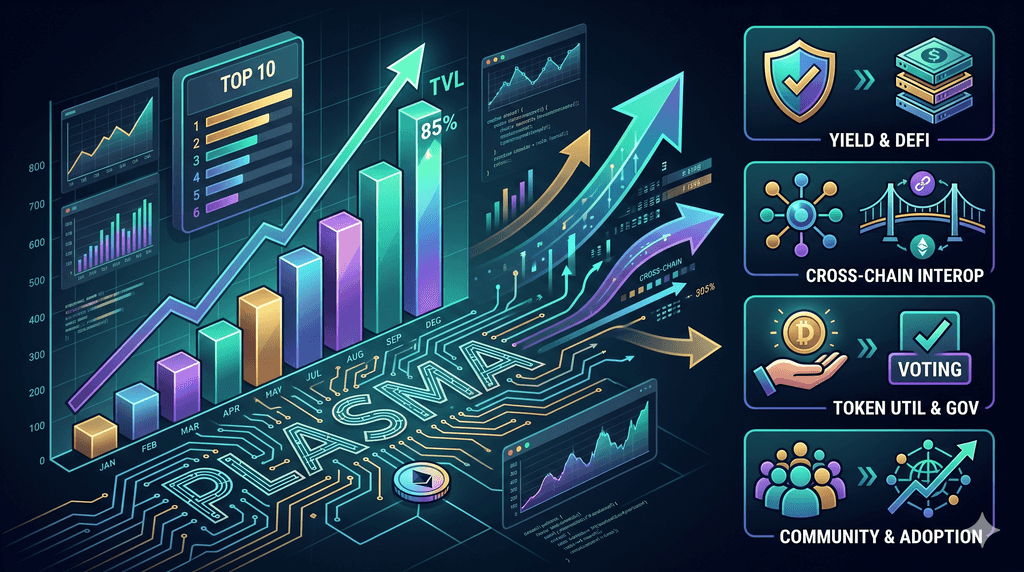
In the fast-moving cryptocurrency landscape of April 2026, one name has dominated the charts: Plasma (XPL). While established giants like Ethereum and Solana maintain their dominance, Plasma has staged a vertical breakout, catapulting its Total Value Locked (TVL) from under $1 billion to over $1.76 billion in just thirty days—a staggering 85% increase.
As of April 16, 2026, Plasma officially ranks as the 8th largest blockchain by TVL, surpassing several long-standing Layer 1 and Layer 2 competitors. This isn't just a speculative spike; it is the result of a perfectly timed confluence of institutional-grade infrastructure, a strategic alliance with the world’s largest stablecoin issuer, and a technical architecture built for the "Stablechain Era." This article explores the catalysts behind this historic surge and what they mean for the future of decentralized finance.
Key Takeaways for Fast Reading
-
Ranking Milestone: Plasma is now a Top 10 public chain, holding the #8 spot globally with $1.76B in TVL.
-
The Tether Connection: Recent integration with tether.wallet and Tether’s Hadron tokenization platform has funneled massive liquidity into the network.
-
Zero-Fee Dominance: Plasma’s "Paymaster" sponsored transaction model enables zero-fee USDT transfers, making it the premier rail for global payments.
-
Institutional Adoption: Partnerships with Ether.fi and major neobanks like Plasma One have introduced institutional-grade yields to the chain.
-
Technical Edge: Sub-second settlement via PlasmaBFT and a throughput exceeding 1,000 TPS have solved the latency issues plaguing rival networks.
The Stablecoin Magnet: Why Capital is Flooding into Plasma
The primary engine behind Plasma's 85% TVL surge is its laser focus on stablecoin utility. In 2026, the market has matured beyond volatile "meme coins," shifting toward functional digital cash. Plasma has positioned itself not as a general-purpose "world computer," but as a high-performance stablecoin settlement layer.
A critical turning point occurred on April 14, 2026, when Tether officially launched its first self-custody software, tether.wallet. Plasma was selected as one of the few launch networks alongside Ethereum and Arbitrum. More importantly, Plasma's native support for gas abstraction—allowing users to pay fees in the asset they are sending—aligned perfectly with Tether’s goal of making crypto "as easy as sending a message."
| Network Metric | March 2026 | April 16, 2026 | Growth |
| Total Value Locked (TVL) | $950 Million | $1.76 Billion | 0.852 |
| Global TVL Ranking | #15 | #8 | +7 Places |
| Daily Transaction Volume | 1.2M | 8.4M | 6 |
| Active Wallet Addresses | 450,000 | 1,210,000 | 1.68 |
| Average Transaction Fee | <$0.01 | $0.00 (Sponsored) | N/A |
By removing the need for users to hold a native gas token (like ETH or SOL) for simple USDT transfers, Plasma effectively lowered the barrier to entry to zero. This "Zero-Fee" narrative has acted as a giant vacuum, sucking liquidity out of higher-cost environments like the Tron network.
Tether’s Hadron Integration: Bridging RWA and DeFi
The second pillar of this month's growth is the integration of Tether’s Hadron tokenization platform. Announced on April 2, 2026, Hadron now supports the issuance of Real-World Assets (RWAs) directly on the Plasma blockchain. This move allows institutions to tokenize securities, bonds, and funds within a compliant framework that utilizes Plasma’s sub-second finality.
This integration solved a massive pain point for institutional investors: the need for speed without sacrificing compliance. Hadron provides the KYC/AML rails, while Plasma provides the high-speed settlement. As a result, we have seen a massive influx of tokenized treasury bills and credit-based products migrating to Plasma to capture the yields generated by its lending vaults.
The synergy here is clear. As more RWAs are tokenized on-chain, the demand for stablecoin liquidity to purchase those assets increases. This creates a "flywheel effect" where TVL in lending protocols like the Plasma Lending Vault grows to meet the demand of institutional borrowers, further pushing Plasma up the rankings.
Technical Superiority: PlasmaBFT and Sub-Second Finality
In 2026, speed is no longer a luxury; it is a requirement. While early versions of Plasma-style technology faced criticism for complex exit games and slow finality, the current iteration of the PlasmaBFT consensus mechanism has silenced skeptics. By using a streamlined Proof-of-Stake model optimized for high-frequency messaging, Plasma achieves transaction finality in under 400 milliseconds.
This technical edge is particularly evident in the gaming and high-frequency trading sectors. Developers who previously struggled with Solana’s network congestion or Ethereum’s high L2 latency have migrated to Plasma. The network’s ability to handle over 1,000 TPS (Transactions Per Second) with consistent sub-second settlement has made it the preferred backend for the new generation of Telegram Mini Apps and decentralized exchanges (DEXs).
Furthermore, the introduction of the Streaming API v2 allows developers to track transaction traces in real-time. This means an app can confirm a payment to a user before the block is even fully finalized, providing an experience that feels identical to a centralized fintech app like Revolut or PayPal.
The Neobank Evolution: Plasma One and Global Payments
Perhaps the most "eye-catching" aspect of Plasma's rise is its move into traditional finance. The rollout of Plasma One, a stablecoin-native neobank application, has bridged the gap between on-chain liquidity and off-chain spending. Through partnerships with payment processors like Rain, Plasma users can now spend their stablecoins at over 150 million merchants worldwide using physical and virtual cards.
This isn't just another "crypto card." Because Plasma supports gas abstraction and zero-fee transfers, the merchant-side experience is seamless. Merchants accept stablecoins without needing to understand the underlying blockchain technology or deal with fluctuating gas costs. This real-world utility has driven a surge in "Organic TVL"—money that isn't just sitting in a pool for yield, but is actively moving through the economy.
The "Stablechain" era, as defined by Plasma’s leadership, emphasizes compliance and institutional readiness. Unlike other chains that often find themselves in regulatory battles, Plasma has embraced a "regulator-friendly" stance, implementing audit trails and AML tools that make global banks comfortable utilizing the network for cross-border settlements.
Yield Dynamics: Why Stakers and Yield Farmers are Shifting
While utility drives the network, yield is what attracts the capital. The collaboration with Ether.fi has been a major catalyst this month. By integrating Ether.fi’s liquid restaking tokens into Plasma’s DeFi ecosystem, users can now earn triple-layered rewards: Ethereum staking yield, restaking rewards, and Plasma network incentives.
The "Lending Vault" on Plasma currently offers an average of 8-10% APY on USDT, significantly higher than the 4-5% found on many other Top 10 chains. This yield is not driven by inflationary token printing, but by actual demand for credit from RWA issuers and traders using the network’s high-speed DEXs. This sustainable yield model has attracted "sticky" capital—large-scale investors who are less likely to leave at the first sign of a market dip.
Future Outlook: The July Unlock and Validator Staking
Despite the current euphoria, savvy investors are keeping a close eye on the horizon. A significant milestone is approaching on July 28, 2026: the first major token unlock event. Approximately 1 billion XPL tokens (10% of the total supply) from the 2025 public sale will become liquid. While this could introduce sell pressure, the market seems to be pricing this in as a "neutral-to-bullish" event for network decentralization.
To counter potential volatility, the Plasma Foundation is set to activate Validator Staking and Delegation in the coming weeks. This will allow XPL holders to delegate their tokens to validators, securing the network and earning a projected 5% annual inflation reward. This move is expected to lock up a significant portion of the circulating supply, acting as a supply sink that balances the impact of the July unlock.
If Plasma can maintain its growth trajectory and successfully navigate the transition to full Proof-of-Stake decentralization, it may not just stay in the Top 10—it could challenge the "Big Three" for a spot on the podium by the end of 2026.
Conclusion: The Era of the Functional Public Chain
Plasma’s ascent to the Top 10 is a testament to the power of specialization. By focusing relentlessly on being the best possible rail for stablecoins and real-world assets, it has carved out a massive niche that general-purpose blockchains are struggling to defend. The 85% TVL surge this month is a clear signal from both retail users and institutional players: the market wants speed, simplicity, and low costs.
As we look toward the second half of 2026, the success of Plasma will likely depend on its ability to turn this "hot" liquidity into a permanent financial foundation. With the backing of Tether, a robust technical architecture, and a clear path toward global merchant adoption, Plasma is no longer just an "eye-catching" project—it is a cornerstone of the modern crypto economy.
FAQs
Q1: Why did Plasma's TVL grow so fast this month?
The surge was driven by three main factors: the launch of Tether's self-custody wallet (which natively supports Plasma), the integration of the Hadron RWA tokenization platform, and a 500-million-dollar liquidity partnership with Ether.fi.
Q2: Is it true that USDT transfers on Plasma are free?
Yes. Plasma utilizes a "Paymaster" system that allows for gas abstraction. In many cases, either the transaction is sponsored by the application, or the user can pay a tiny fee using the USDT they are already sending, eliminating the need for a separate gas token.
Q3: How does Plasma rank against other blockchains?
As of April 16, 2026, Plasma is the 8th largest blockchain by TVL ($1.76B). It currently sits behind Base and Arbitrum but has surpassed networks like Hyperliquid and Provenance.
Q4: What is the XPL token used for?
XPL is the native utility and governance token of the Plasma network. It is used to secure the network via staking, pay for complex smart contract executions, and participate in governance votes regarding network parameters and inflation.
Q5: Is the July 2026 token unlock a risk?
The July 28 unlock will release 1 billion tokens. While this increases supply, the upcoming activation of validator staking is designed to create new demand for the token, potentially offsetting the selling pressure. Investors should monitor staking participation rates leading up to July.