

KuCoin Ventures Weekly Report: Crypto Restructuring in a Higher-Cost Capital Environment: Rising Survival Pressure and Institutional Capital Concentration
2026/07/28 10:59:00

1. Weekly Market Highlights
Well-Funded Web3 Projects Face an Accelerated Shakeout: Movement and Storj Expose Governance and Capital Structure Weaknesses
Last week, Movement Labs and Storj Labs entered Chapter 11 restructuring proceedings in quick succession, once again drawing market attention to the long-term viability of well-funded Web3 projects. Their difficulties stem from different sources: Movement’s crisis was primarily driven by failures in token issuance, market-making arrangements, and internal governance, while Storj is seeking to address legacy liabilities through a court-supervised restructuring while maintaining business operations. Together, however, the two cases demonstrate that fundraising scale, technical narratives, and token valuations can provide only temporary support. They cannot replace effective governance, a healthy capital structure, and sustainable commercialization.
Movement is the more cautionary case. The project quickly attracted capital through its combination of the Move programming language and an Ethereum L2 narrative, raising more than $40 million in publicly disclosed funding and at one point pursuing a new round at a valuation of approximately $3 billion. However, MVMT Labs’ bankruptcy filing shows that the company reported only around $100,000 to $500,000 in assets, against liabilities of up to approximately $10 million, highlighting the sharp contrast between its fundraising history and its remaining asset base.
The turning point came from the market-making arrangements surrounding the launch of MOVE. Agreements involving Rentech and Web3Port gave a single counterparty access to a large allocation of MOVE, with approximately 66 million tokens subsequently sold in a short period following the token’s launch. This contributed to a price decline and was followed by restrictions on the market-making account, a token buyback, internal investigations, and management changes. The central issue was not simply one concentrated sale, but the lack of effective controls over counterparty selection, contract review, checks and balances, and information disclosure. The project’s technical direction and institutional backing did not translate into an equally robust governance structure, allowing token-liquidity problems to spread into fundraising, team stability, and ultimately the company’s balance sheet.
Storj represents a different form of longer-term structural pressure. As one of the earlier decentralized cloud storage projects, Storj has built a functioning product and an actively operating network. Nevertheless, the company chose to use Chapter 11 to address legacy liabilities. Storj has emphasized that the proceedings primarily concern the company’s capital structure, while network services and the existing utility of STORJ will continue. The case is therefore closer to a balance-sheet restructuring than a direct shutdown of the business or network.
This also shows that having a usable product and real customers does not necessarily guarantee sustainable operations. For infrastructure projects with long operating histories, mismatches among early financing terms, legacy liabilities, fixed costs, and revenue growth may become increasingly visible as funding conditions tighten. If business growth cannot cover continued investment, a company may still need to sell assets, adjust its equity structure, or pursue a court-supervised restructuring, even when its network retains genuine usage.
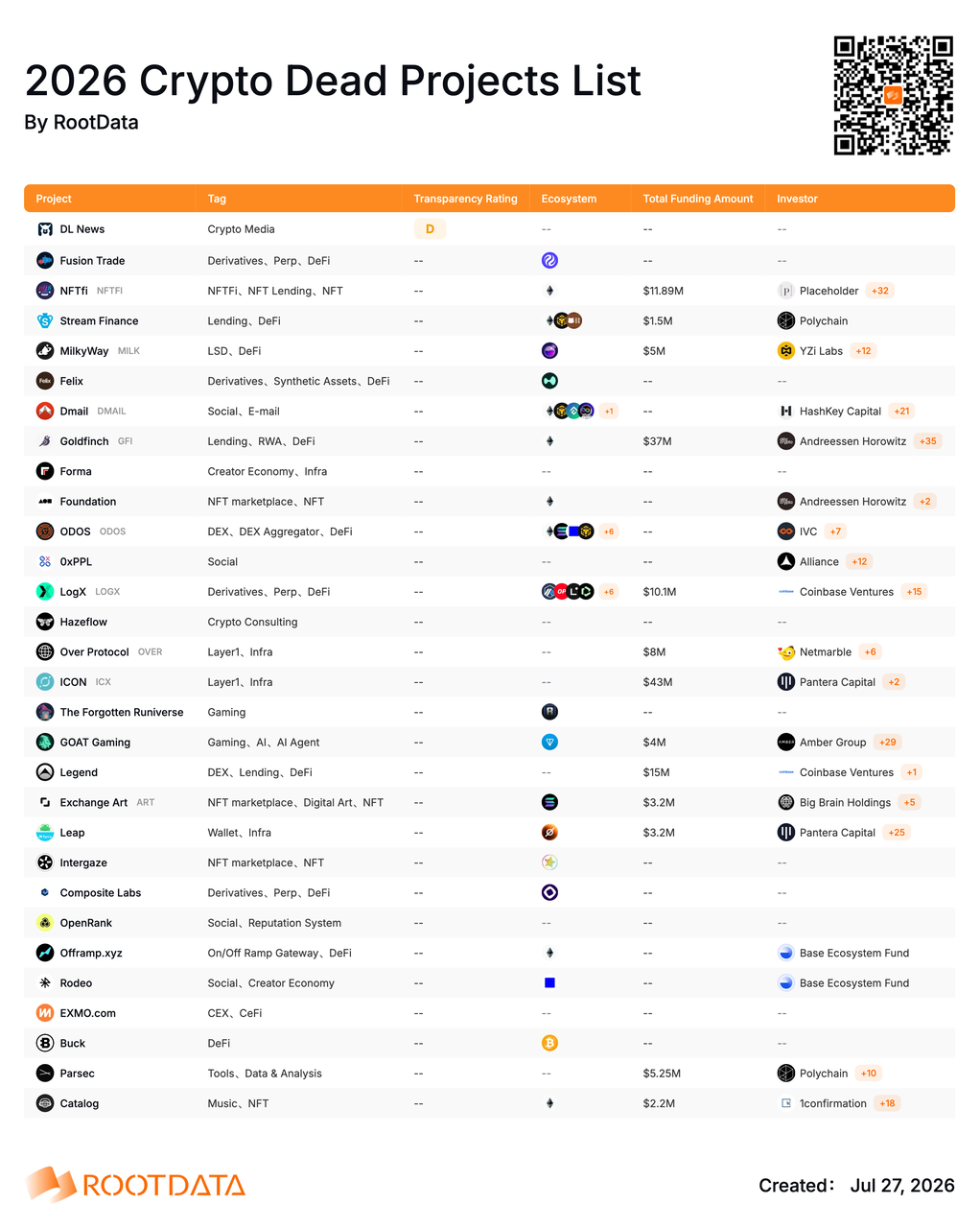
At the industry level, Movement and Storj are not isolated cases. According to RootData, more than 100 crypto projects have shut down, filed for bankruptcy, or entered prolonged inactivity so far in 2026, spanning DeFi, NFTs, GameFi, Layer 2 networks, wallets, and infrastructure. Although the immediate causes differ, many of these projects share similar pressures: difficulty raising follow-on capital, insufficient product adoption, revenue failing to cover operating costs, and weakening growth after token incentives lost momentum. During the same period, several trading platforms also announced shutdowns or orderly wind-downs, further indicating that industry resources are continuing to concentrate among participants with greater scale, deeper liquidity, and more stable revenue. Mid- and long-tail platforms without scale advantages, clear differentiation, or dependable income face similarly rising operational and compliance pressure.
Movement and Storj illustrate two distinct paths of industry consolidation. In Movement’s case, failures in governance and token issuance mechanisms caused the project to move from a high valuation to restructuring within a relatively short period. In Storj’s case, legacy liabilities and commercial-efficiency challenges accumulated gradually over a much longer operating cycle. Together, the cases show that the key indicators of Web3 project survival are shifting away from fundraising scale, valuation, and narrative momentum toward internal controls, real revenue, product adoption, cash burn, and balance-sheet quality.
Overall, the current wave of project failures should not be reduced to the simple conclusion that “well-funded projects fail.” Rather, the market is beginning to reassess the efficiency of capital allocation during the previous cycle. In a bull market, fundraising ability, technical labels, and token expectations can partially conceal weak governance, insufficient product adoption, and an unbalanced cost structure. When access to follow-on funding tightens and token liquidity declines, these weaknesses become more directly reflected in cash flow and the balance sheet.
As the market continues through this period of adjustment, attention should remain on projects with high cash burn, limited revenue, weak product adoption, or a heavy dependence on token prices to sustain their financing capacity. For investors, assessment priorities may also need to move beyond “how much was raised, who invested, and at what valuation” toward runway, revenue quality, legacy liabilities, token liquidity, and governance mechanisms. The next stage of competition among Web3 projects will not be defined only by their ability to raise capital and launch products, but by whether they can maintain genuine business operations without relying on a continuous supply of external funding.
2. Weekly Selected Market Signals
Energy Shocks Reshape Interest Rate Expectations: Global Liquidity Tightening and Structural Rotation of Crypto Funds
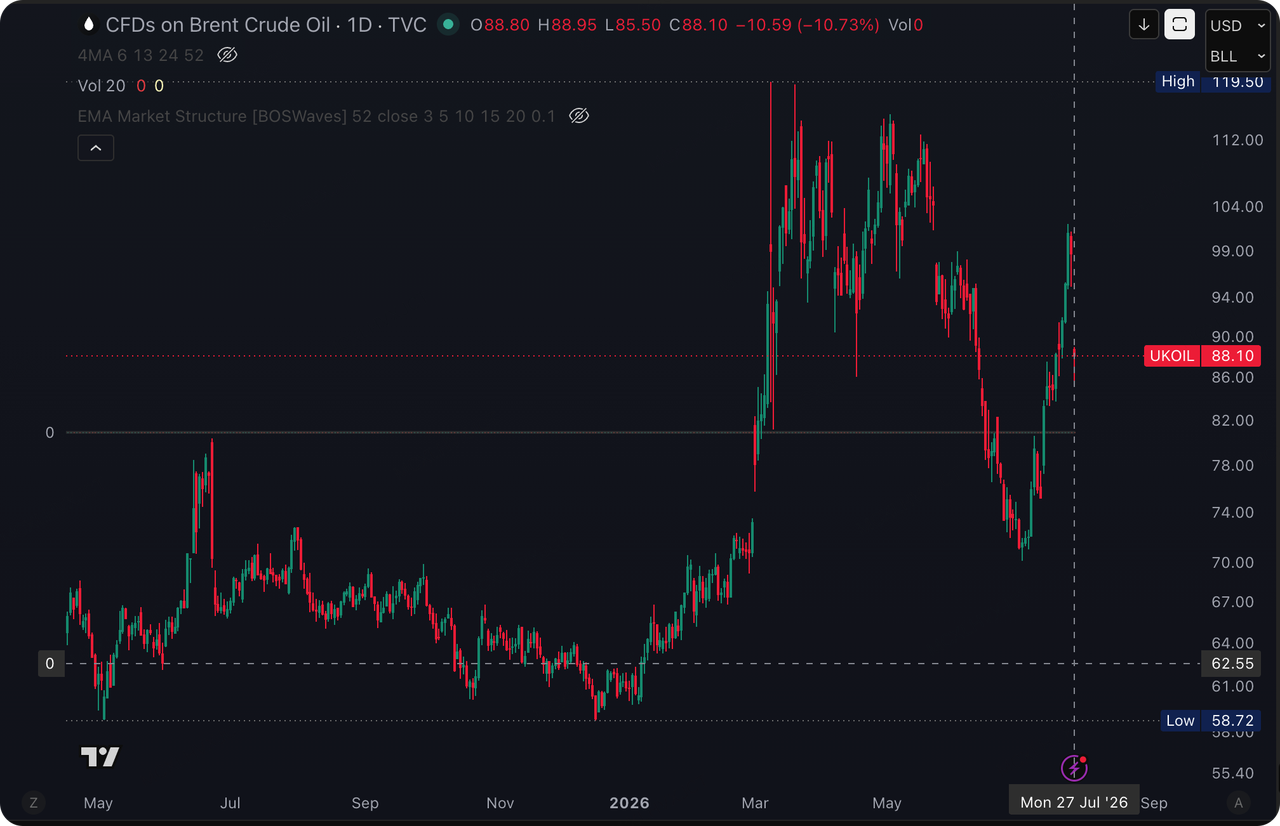
Last week, the primary focal point of global markets shifted from simple economic growth and rate-cut expectations back to the potential resurgence of inflation triggered by energy shocks. Brent crude oil briefly broke back above $100 per barrel, and shipping in both the Strait of Hormuz and the Red Sea was simultaneously disrupted. This prompted the market to re-evaluate the transmission effects of energy prices on consumer spending, corporate costs, and monetary policy.
Data Source: TradingView
Although the consecutive suspension of mutual attacks between the US and Iran over the weekend led to a pullback in oil prices, easing market concerns about an immediate Federal Reserve rate hike, the cooling diplomatic situation has not yet fully transmitted to the physical supply chain. The number of vessels passing through the Strait of Hormuz remains low, while shipping insurance premiums, detour costs, and refined oil crack spreads have yet to normalize.
Concurrently, US long-term Treasury bonds did not show a synchronized, significant recovery. Last week, the yields on the 10-year and 30-year US Treasuries briefly rose to approximately 4.68% and 5.16%, respectively, indicating that in addition to energy inflation, the market is still demanding higher compensation for fiscal deficits, Treasury supply, and term premiums. Pressure on AI-related stocks has also increased, as investors shift their focus from revenue growth and capital expenditure scale to whether AI investments can generate sustainable free cash flow and actual returns.
US tariff policies continue to act as a medium-term cost variable. Under Section 301, the US imposed tariffs of up to 12.5% on 59 countries and the EU, replacing the expiring temporary global tariffs. Subsequent industry investigations into sectors such as overcapacity, semiconductors, robotics, and industrial machinery are ongoing. The actual effective tax rates and exemption conditions at the product level may become one of the important variables for enterprises to re-evaluate their supply chains and investment plans.
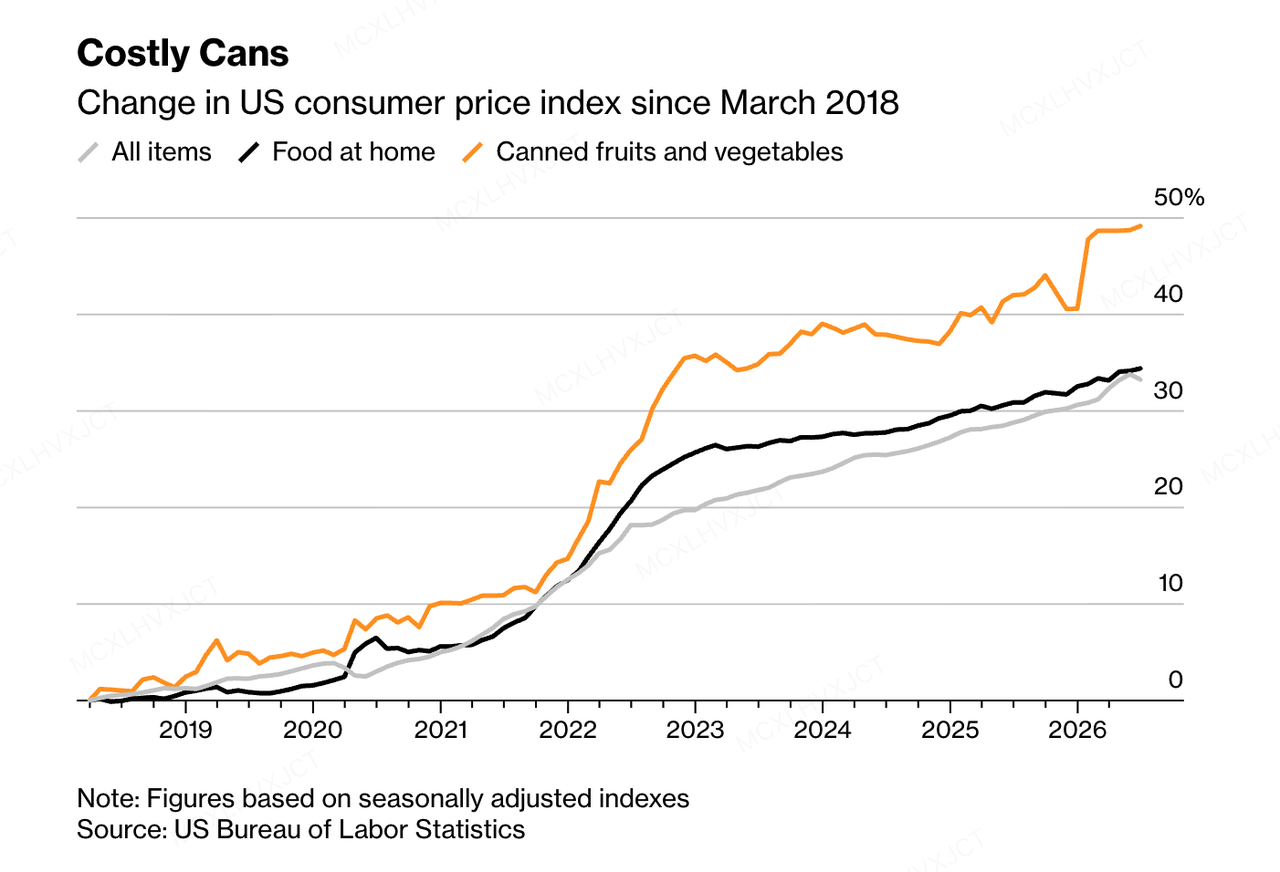
The case of the US tinplate can industry shows that following the implementation of steel tariffs, domestic low-margin tinplate capacity did not increase significantly; instead, can manufacturers became more reliant on higher-priced imported raw materials. Since 2018, the production price of empty cans in the US has surged by nearly 80%, and the price of canned fruits and vegetables has risen by nearly 50%. This suggests that the impact of tariffs might not be limited to a one-time increase in import prices, but may also translate into more sticky price pressures by undermining supply chain efficiency, squeezing corporate profit margins, and driving raw material cost pass-throughs.
In the first half of the year, China's real GDP grew by 4.7%. The economy slowed down slightly in the second quarter, exhibiting a K-shaped characteristic with relatively strong external demand and AI-related industries, but weak domestic demand. The market expects that the July Politburo meeting will accelerate the issuance of in-budget bonds and the execution of existing policy tools, with the policy focus potentially leaning further toward household income and service consumption. On July 27, CXMT's stock price soared 472% on its first day of listing, reaching an opening market value of approximately 3.3 trillion RMB. The retail tranche was oversubscribed by about 212 times, reflecting that the Chinese market continues to concentrate on a few directions where policy and industry trends resonate, such as AI, semiconductors, and technological autonomy.
Overall, the total volume of global market liquidity has not significantly dried up, but the cost of capital faced by risk assets has increased. Fund allocation is further concentrating on a minority of assets backed by policy support, industry trends, or certain cash flows.
During intraday trading on July 27, Bitcoin touched $65,504 before pulling back to fluctuate around $65,100. The $65,000 mark has become the immediate dividing line for long-short contests. If the $62,500 support level is lost, the rebound structure established since July may be disrupted, and $60,000 may once again become a market testing zone. Regarding altcoins, affected by rising oil prices, higher US Treasury yields, and escalating macro risk aversion, the total cryptocurrency market capitalization fell back to $2.30 trillion, with prices of major crypto assets like Ethereum and Solana also being suppressed.
Data Source: SoSoValue
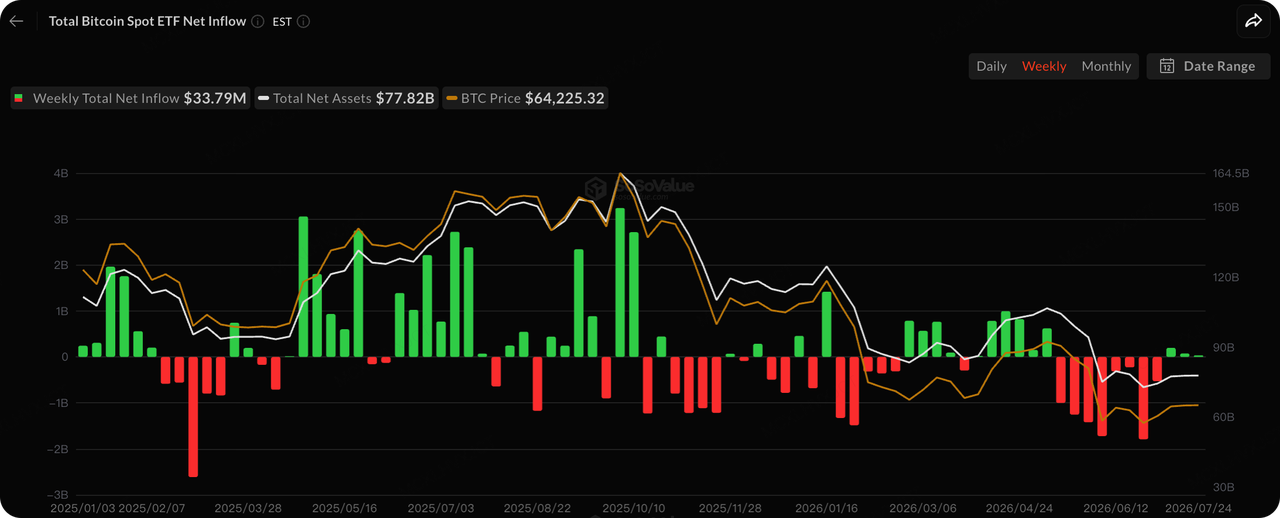
The weekly trading volume of spot Bitcoin ETFs dropped to approximately $8.05 billion, marking the lowest level for a full trading week since October 2024. Although a net inflow of about $33.79 million was recorded for the week, maintaining positive inflows for the third consecutive week, the momentum of funds has weakened significantly. After recording relatively large net inflows in the first half of the week, Thursday and Friday saw net outflows of approximately $225 million and $240 million, respectively, largely offsetting previous inflows. BlackRock's IBIT saw a weekly net outflow of about $95.5 million. Currently, the total net assets of BTC ETFs stand at approximately $77.82 billion.
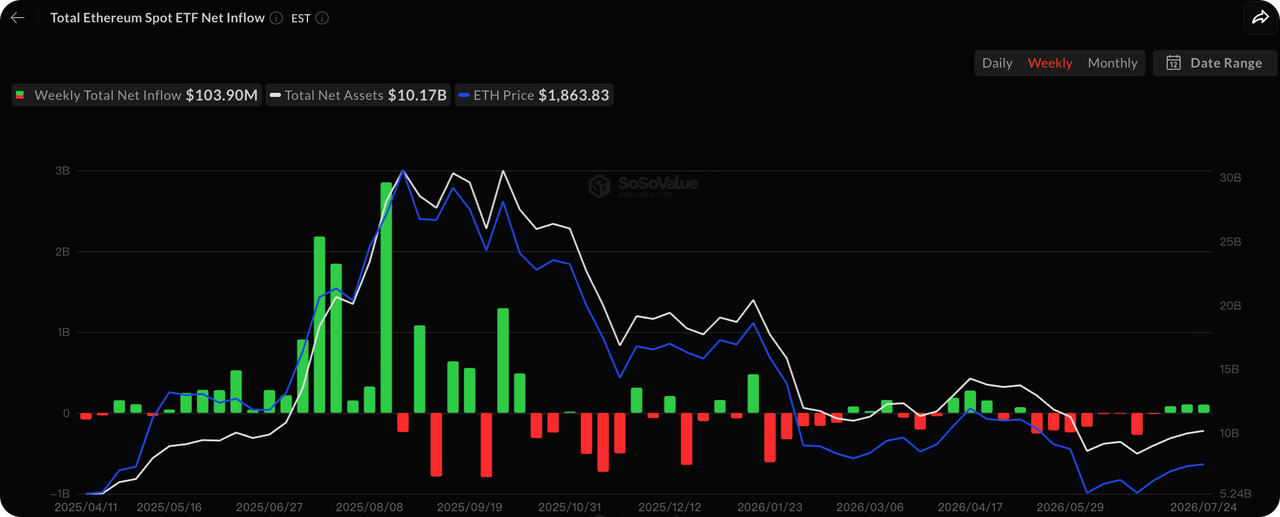
In contrast, spot Ethereum ETFs performed relatively strongly, with a weekly net inflow of about $103 million, surpassing Bitcoin ETFs in net inflow scale for the second consecutive week. BlackRock's ETHA contributed approximately $96.3 million in net inflows for the week, indicating marginal signs of short-term institutional fund allocation tilting towards Ethereum. Currently, the total net assets of ETH ETFs are approximately $10.17 billion.
Data Source: DeFiLlama
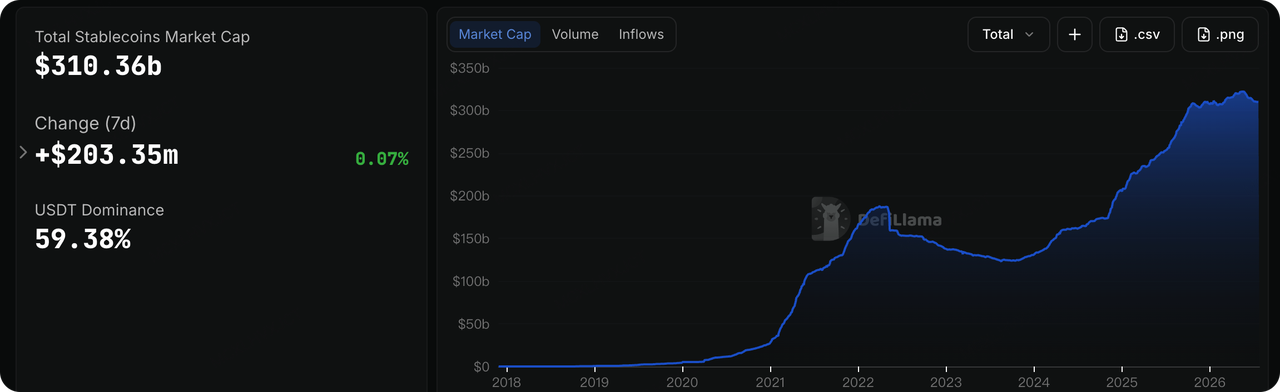
As of today, the total market capitalization of global stablecoins is approximately $310.36 billion, with an increase of about 0.07% over the past 7 days, and a decrease of about 1.12% over the past 30 days. Among them, USDT circulation is about $184.28 billion, accounting for a market share of about 59.4%; USDC circulation is about $73.56 billion. Both saw only marginal growth over the past week.
Data Source: CME FedWatch Tool
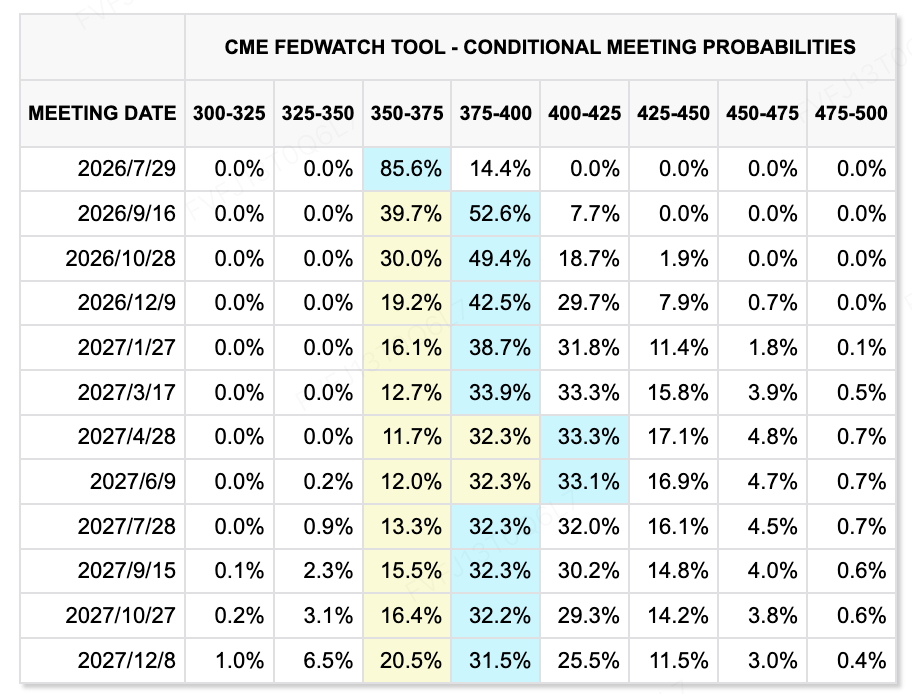
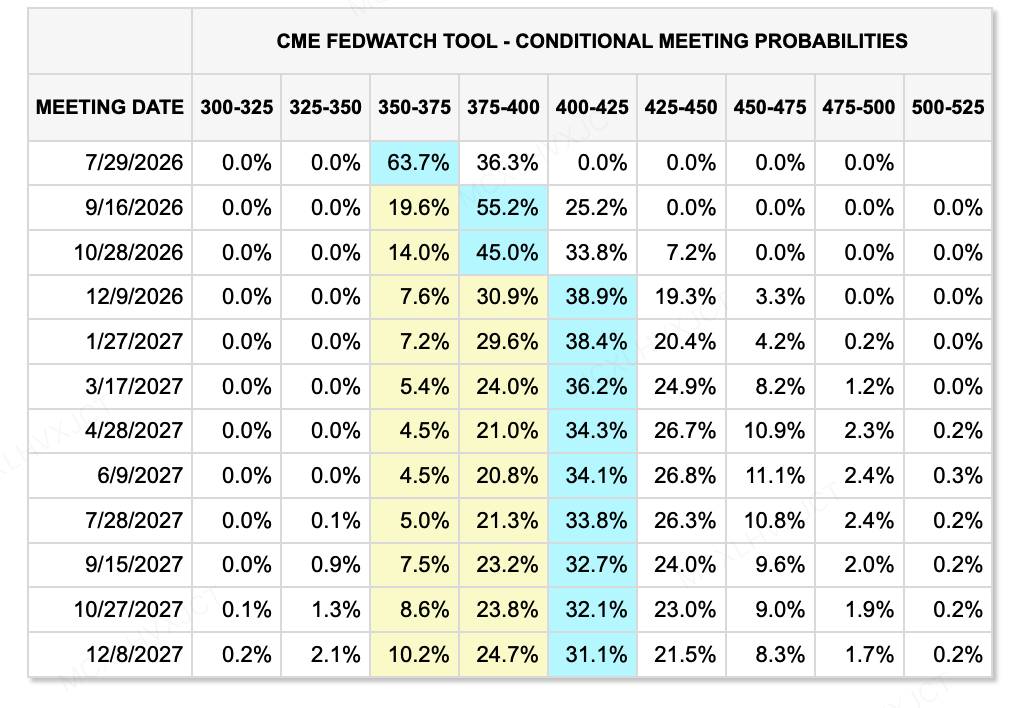
The sharp rise in energy prices has significantly altered the market's interest rate pricing. According to the latest CME FedWatch data, the market prices the probability of a 25-basis-point rate hike by the Fed on July 29 at approximately 36.3%, while the probability of maintaining the federal funds rate at 3.50% to 3.75% is 63.7%. The probability of a rate hike has risen rapidly from 14.4% a week ago, reflecting that the market no longer views a rate hike as a negligible, extremely low-probability scenario. However, maintaining the current rate remains the baseline expectation.
This uncertainty stems not only from oil prices but also from changes in the Federal Reserve's communication mechanism. Since taking office, Warsh has reduced forward guidance and emphasized making decisions based on real-time data, making it difficult for the market to lock in policy paths in advance as it did in the past. Notably, while the interest rate market has priced in a greater than 30% probability of a rate hike, all 76 economists surveyed by Bloomberg still expect the rate to remain unchanged at the July meeting. This creates a rare divergence in recent years where "market pricing is hawkish, while economists' judgments are steady." Even if the Fed ultimately leaves rates unchanged, decreased communication transparency and increased policy path uncertainty may keep the volatility of federal funds futures, the US dollar, and short-term bonds at relatively high levels.
Key Events to Watch Next Week:
In addition to macro data and central bank meetings, several large technology companies will also release their earnings reports next week. The market will focus on cloud computing growth, AI-related revenues, and capital expenditure guidance. The current market is not denying AI demand; rather, it is paying closer attention to whether large-scale investments can gradually translate into revenue, profits, and free cash flow. The performance of technology stocks may still transmit to the crypto market through the Nasdaq index, real interest rates, and overall risk appetite.
-
July 27: Release of China's industrial enterprise profit data.
-
July 28-29: Federal Reserve FOMC meeting. This meeting will not update economic projections or the dot plot. Market focus will center on the policy statement, vote distribution, and the Chair's press conference. Beyond the rate decision, how the Fed describes energy prices, tariff inflation, and the labor market may more directly affect subsequent interest rate pricing.
-
July 30: US Q2 GDP initial estimate, US PCE price index.
-
July 31: Bank of Japan monetary policy meeting; China's official manufacturing and non-manufacturing PMIs; Expiration window for EU economic sanctions against Russia.
-
August 1 / August 5: US ISM Manufacturing and Non-Manufacturing PMI indices.
-
August 7: US Non-farm payroll data and import/export data.
Primary Market Funding Observation:
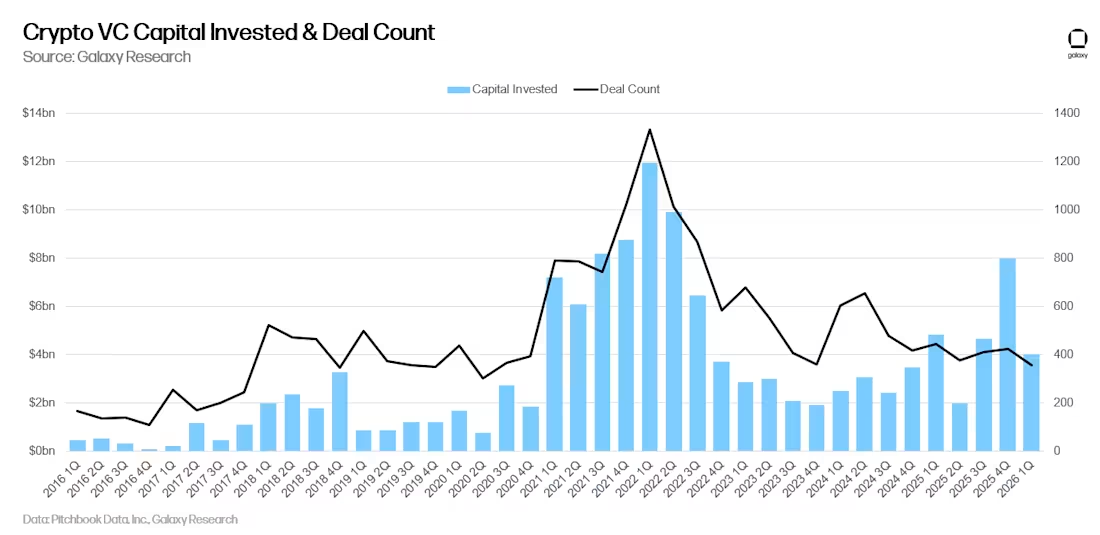
The crypto primary market has yet to show signs of a comprehensive recovery. Funds continue to concentrate on projects with larger funding scales, relatively clear business models, or established institutional client bases. According to Galaxy Research statistics for Q1 2026, the industry completed approximately 355 funding rounds, raising a total of about $4 billion. The funding amount dropped by about 50% quarter-over-quarter, with about 57% of the funds flowing into late-stage projects. This structure is largely consistent with the direction of recently disclosed large-scale funding.
The most notable primary market project last week was Augustus, a stablecoin and cross-border clearing infrastructure company, which announced the completion of a $180 million Series B funding round, reaching a post-money valuation of $1 billion. This round was led by Tiger Global, with participation from Hummingbird, QED, and founders of companies such as Nubank, Ramp, Circle, and Deel. Upon completion, the company has raised a cumulative total of approximately $210 million. The new funds will primarily be used to expand banking and fintech client bases in Latin America, Southeast Asia, the Middle East, and Africa.
Augustus's business focus is on building a clearing bank that connects traditional banking systems with blockchain networks. Its platform plans to simultaneously support Swift, ACH, SEPA, bank accounts, and stablecoin payments, providing financial institutions with US dollar accounts, cross-border settlements, and liquidity management services. Currently, the company provides Euro clearing through regulated entities in Europe and disclosed that its clients include financial and crypto institutions such as Kraken.
The company previously received preliminary conditional approval from the US Office of the Comptroller of the Currency (OCC) for Augustus National Bank in May. Unlike national trust banks with a narrower scope of business, Augustus is applying to establish a full-service national bank covered by deposit insurance. The company also plans to set up a separate stablecoin subsidiary to engage in the issuance, custody, redemption, and payment of US dollar reserve-backed stablecoins.
Although execution and regulatory uncertainties remain regarding whether Augustus can secure final OCC approval, FDIC deposit insurance, and relevant Federal Reserve account qualifications, this funding round reflects that bank-grade stablecoin infrastructure places higher demands on capital strength, regulatory compliance, and risk management capabilities. Relevant market resources may further concentrate on well-funded large institutions. From a broader industry perspective, stablecoin competition is gradually extending from the issuance side and payment interfaces to the account, correspondent banking, and clearing layers. Institutional focus will likely concentrate on how to embed stablecoin settlements into existing banking systems and cross-border payment networks.
About KuCoin Ventures
KuCoin Ventures, is the leading investment arm of KuCoin Exchange, which is a leading global crypto platform built on trust, serving over 40 million users across 200+ countries and regions. Aiming to invest in the most disruptive crypto and blockchain projects of the Web 3.0 era, KuCoin Ventures supports crypto and Web 3.0 builders both financially and strategically with deep insights and global resources.
As a community-friendly and research-driven investor, KuCoin Ventures works closely with portfolio projects throughout the entire life cycle, with a focus on Web3.0 infrastructures, AI, Consumer App, DeFi and PayFi.
Disclaimer This general market information, possibly from third-party, commercial, or sponsored sources, is not legal, compliance, financial, or investment advice, an offer, solicitation, or guarantee. We make no express or implied representations or warranties regarding its accuracy, completeness, or reliability, and disclaim liability for any resulting losses. Investments/trading are risky; past performance doesn't guarantee future results. Users should research, judge prudently, and take full responsibility. Please consult professional legal, tax, or financial advisors if necessary.