

Why Taiko’s TAIKO Token Pumped 136% Immediately After a $1.7M Bridge Hack
2026/07/03 15:30:00
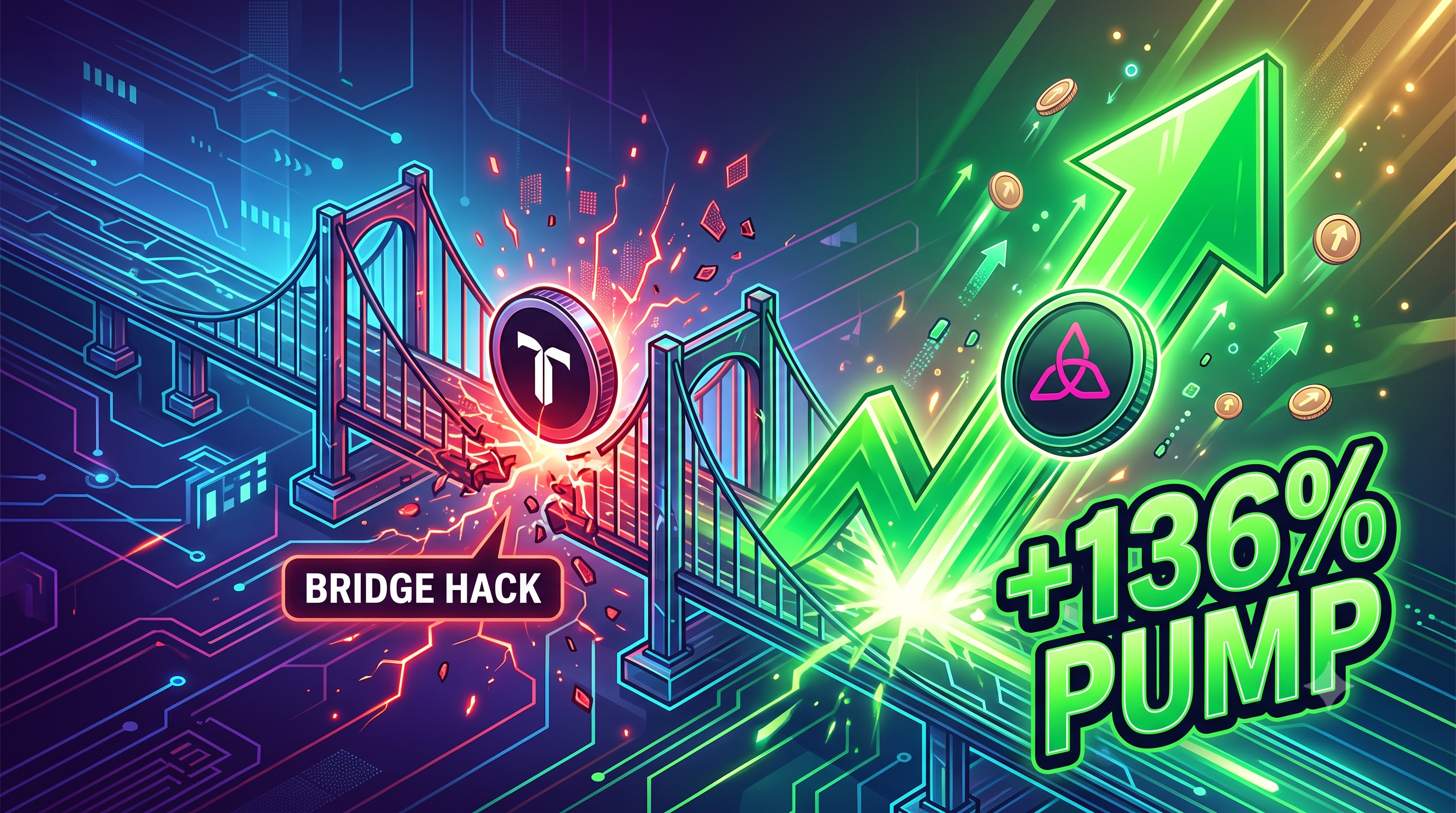
How the Taiko Bridge Exploit Happened
Taiko, an Ethereum layer-2 scaling solution built as a based ZK-rollup, demonstrated notable operational maturity when it fully restored its cross-chain bridge operations just 10 days after a $1.7 million exploit on June 21-22, 2026. The incident stemmed from a compromised SGX signing key that had been inadvertently exposed on GitHub, allowing an attacker to forge withdrawal proofs and drain funds from the protocol’s ERC20 Vault and bridge contracts on Ethereum mainnet. Despite the breach, Taiko’s team acted decisively by halting block production, urging users to withdraw funds as a precaution, and coordinating with exchanges to freeze attacker-controlled assets.
This swift containment minimized long-term damage, with all affected users ultimately made whole through protocol treasury funds and replenished reserves. The market responded positively to the transparent and efficient recovery process, driving the TAIKO token price up as much as 136% in the days following the bridge reopening on July 2, 2026. The substantial TAIKO token rally shows investor confidence in Taiko’s ability to manage security incidents transparently and restore full functionality quickly, highlighting the protocol’s commitment to decentralization and user protection amid the competitive Ethereum L2 ecosystem.
The Technical Root Cause Behind the $1.7 Million Exploit
The exploit originated from an operational oversight where an RSA-3072 private key associated with Taiko’s Raiko SGX prover was publicly committed to the taikoxyz/raiko GitHub repository in a file named enclave-key.pem. This key enabled the generation of cryptographic attestations that the L1 bridge contracts relied upon to verify L2 state transitions. The attacker leveraged the exposed key to register a rogue SGX prover, which the system accepted due to matching the MrSigner verification. Subsequently, forged attestations facilitated processMessage calls that marked unauthorized withdrawals as RETRIABLE, allowing retryMessage executions to release approximately 870 ETH, USDC, and nearly 2 million TAIKO tokens from the ERC20Vault and bridge contracts without corresponding legitimate deposits on the Taiko chain.
Security firms like PeckShield and Blockaid quickly identified the drain, estimating losses at $1.7 million, and traced movements, including transfers to the MEXC exchange. Taiko promptly published attacker wallet addresses and paused operations to prevent further outflows. This incident underscores persistent challenges in key management for ZK infrastructure, even as protocols advance toward greater decentralization. In the broader Ethereum ecosystem, where bridges continue to represent high-value targets handling significant cross-chain flows, such vulnerabilities highlight the critical importance of rigorous operational security practices alongside advanced cryptographic designs. Taiko’s based rollup architecture, which relies on Ethereum’s validators for sequencing and aims for full Ethereum equivalence as a Type-1 ZK-EVM, positions it uniquely but also exposes it to complexities in multi-prover setups like Raiko.
Taiko’s Multi-Stage Recovery Process and Timeline
Following the June 22 incident, Taiko executed a structured recovery involving vulnerability patching, full replenishment of bridge reserves to 1:1 backing, restoration of L2 network activity, and an independent security review of the fixes. The team deployed upgrades through its Security Council multisig and verified no forged checkpoints remained in the chain’s finalized state. By July 2, the bridge reopened under conservative withdrawal quotas to maintain stability while allowing normal usage. This 10-day turnaround stands out compared to many prior bridge incidents that have taken weeks or months for resolution. All users were made whole, with the protocol absorbing the loss from treasury reserves, reinforcing trust. The announcement on X confirmed full restoration, emphasizing that no DMs or claim sites would be used, standard anti-scam measures.
This methodical approach, including post-incident audits, demonstrates proactive governance in a based rollup model that prioritizes permissionless participation and community oversight. In the context of 2026’s DeFi landscape, where total value locked across Ethereum L2s exceeds tens of billions, such efficiency signals operational strength. For traders monitoring bitcoin price dynamics and L2 token performance, Taiko’s recovery offers a case study in how technical resilience can translate to a market sentiment move. The process also involved coordination with ecosystem partners, ensuring minimal disruption to dApps and users bridging assets. The recovery timeline reflects mature incident response planning that aligns with Taiko’s vision of an ownerless, unstoppable ecosystem.
Market Reaction and the Mechanics of TAIKO’s 136% Price Surge
The TAIKO token experienced significant volatility immediately after the hack announcement, initially declining amid panic selling and broader market caution. However, as details of the contained impact and swift recovery emerged, buying pressure intensified, culminating in gains of up to 136% from recent lows. Trading volumes surged dramatically, with reports indicating over $870 million in 24-hour activity at peaks, accompanied by a short squeeze that liquidated millions in positions. This rebound occurred as the market digested the positive signals of full user reimbursement and bridge reopening.
At the time of the surge, TAIKO moved from levels near $0.07 toward higher ranges before some consolidation. Factors contributing to the rally include relief among holders regarding protocol solvency, renewed interest in Ethereum L2 projects with strong security narratives, and overall positive sentiment in smaller-cap tokens during market bounces. Taiko’s existing listings and community engagement amplified visibility. The price action illustrates how effective crisis management can drive speculative interest and restore confidence faster than the incident itself eroded it. Unlike prolonged exploits that damage reputations irreparably, Taiko’s transparent updates fostered a narrative of accountability.
Taiko’s Position in the Competitive Ethereum L2 Ecosystem
Taiko operates as a decentralized, Ethereum-equivalent ZK-rollup, emphasizing based sequencing, where Ethereum validators handle transaction ordering to enhance security and composability. This design differentiates it from centralized sequencer-dependent rollups, aiming for full EVM compatibility without developer friction. As of mid-2025 metrics extending into 2026, the protocol had attracted over 2.4 million unique wallets and more than 100 dApps, with TVL figures in the hundreds of millions during growth phases. Its focus on Type-1 ZK-EVM technology supports seamless smart contract deployment identical to the Ethereum mainnet. In a crowded L2 field including Optimism, Arbitrum, and other ZK solutions, Taiko’s emphasis on decentralization and permissionless provers appeals to users prioritizing long-term security and censorship resistance.
The hack recovery further bolsters its credibility, showing the capacity to handle real-world threats. Broader Ethereum scaling efforts, with combined L2 TVL substantial, benefit from innovations like Taiko’s that push toward Stage 2 rollup classifications and improved preconfirmations. Market participants often compare performance across chains, and for those exploring trading pairs or liquidity, KuCoin features dedicated sections for Ethereum ecosystem tokens that facilitate informed decisions. Taiko’s direction aligns with increasing demand for scalable, secure Layer 2 infrastructure amid growing on-chain activity.
Broader Implications of Bridge Security for L2 Protocols
Bridge exploits remain a prominent risk in cross-chain infrastructure, with 2026 seeing hundreds of millions in cumulative losses across the industry. Taiko’s case, involving a key exposure rather than a sophisticated smart contract bug, highlights the importance of human and operational security alongside technical safeguards, even in advanced zero-knowledge (ZK) systems. The incident prompted immediate pauses and user alerts, a responsible response that helped limit further losses while investigators assessed the scope of the exposure. Protocols increasingly invest in multi-layered security measures, including formal verification, bug bounty programs, regular key audits, and improved operational controls designed to reduce the likelihood of credential-related incidents.
For Ethereum Layer 2 networks, secure and reliable bridging remains essential for liquidity movement, ecosystem growth, and long-term user confidence. Taiko’s experience may encourage broader adoption of stronger operational security practices around SGX environments, prover key management, and access controls. In practical terms, users can reduce risk by relying on official bridge interfaces, verifying announcements through official communication channels, and avoiding unnecessary exposure during active security incidents. The rapid response also helped contain uncertainty within the broader Layer 2 ecosystem, reducing the risk of wider market disruption. As cross-chain infrastructure continues to mature, lessons from incidents like this can strengthen future protocol designs by improving both technical defenses and operational resilience.
Tokenomics and Utility Driving Long-Term TAIKO Value
TAIKO features a total supply of 1 billion tokens, with allocations supporting ecosystem growth, including DAO treasury, grants, airdrops, and community incentives. Governance transitioned to the Taiko DAO on mainnet, empowering token holders in decision-making. Utility includes potential staking, governance participation, and fees within the ecosystem as activity scales. The recent surge reflects not only recovery sentiment but also anticipation of further adoption in Ethereum scaling. Airdrop phases and Trailblazer programs have historically engaged users, helping establish an active community around the network.
As Layer 2 usage grows with lower fees and higher throughput, native tokens like TAIKO may benefit from increased network activity and ecosystem expansion. Market capitalization fluctuates alongside price movements, while long-term valuation is often influenced by adoption, liquidity, and broader crypto market conditions. Investors also monitor protocol upgrades, developer activity, interoperability initiatives, and advancements in preconfirmation technology that could improve transaction efficiency and user experience. Taiko's token design aims to align incentives across proposers, provers, and users within its decentralized architecture, while continued ecosystem development and application growth could further strengthen demand for participation in the network over time.
Investor Sentiment and Community Response Post-Recovery
Many highlighted the full reimbursement and fast timeline as confidence boosters, viewing the response as an indication that the team prioritized user protection and operational continuity. Social channels saw increased engagement around the bridge reopening announcement, with discussions focusing on recovery efforts, security measures, and the protocol's next steps. Traders shared experiences of gains from the volatility, though some also emphasized the risks of over-leveraged positions during periods of sharp price swings. The incident tested but ultimately reinforced the conviction of some holders who value projects with transparent communication and timely execution during challenging situations.
Broader crypto sentiment, influenced by macroeconomic factors and Bitcoin movements, provided a supportive backdrop for the rebound. At the same time, many community members renewed discussions around bridge security, risk management, and the importance of self-custody practices where appropriate. Educational content on security best practices also received increased attention as users sought to better understand how cross-chain infrastructure operates and the potential risks involved. Over the long term, market participants often view a project's response to unexpected events as an important indicator of resilience and governance quality. Monitoring tools, blockchain explorers, and exchange platforms continued to help users track market activity and sentiment in real time. Taiko's commitment to publishing post-mortem reports and sharing lessons learned reflects a broader industry trend toward greater transparency and continuous improvement following security-related incidents.
Comparative Analysis with Previous L2 Security Incidents
While many bridge hacks in 2026 resulted in prolonged downtime and partial or no reimbursements, Taiko’s contained a $1.7 million loss, and a 10-day full restoration set a positive precedent. Other incidents often involved larger sums and more complex on-chain exploits, leading to extended investigations, delayed recoveries, and uncertainty for affected users. Taiko’s operational focus on quickly identifying the vulnerability, deploying a patch, and commissioning additional security audits contributed to the faster recovery timeline. The team also maintained public communication throughout the incident, providing updates as restoration efforts progressed. This efficiency may influence how other Layer 2 teams approach incident response planning, risk management, and bridge security.
Industry data continues to show cross-chain bridges among the most frequently targeted areas in decentralized finance, emphasizing the importance of layered defenses, continuous monitoring, and independent code reviews. Taiko’s based rollup architecture also allowed the network itself to remain operational while bridge services were temporarily suspended, helping preserve core chain functionality during the response period. Such comparisons highlight the varying security approaches and operational maturity levels across protocols. For traders and researchers analyzing historical exploit patterns, examining previous bridge incidents alongside infrastructure responses can provide useful context for evaluating resilience and long-term ecosystem development.
Lessons for Crypto Users and Protocols
The event reinforces the value of monitoring official communications, using hardware security for private keys, and diversifying assets across multiple chains where appropriate. Protocols benefit from comprehensive operational security audits that extend beyond smart contract code reviews to include internal processes, access controls, and key management practices. Users should verify information through official channels, remain cautious of unsolicited messages, and avoid interacting with unverified links or applications. In Layer 2 (L2) environments, understanding bridge mechanics, withdrawal processes, and associated risks can support more informed bridging decisions. Industry-wide, insurance solutions and bug bounty programs continue to play an important role in strengthening ecosystem security by encouraging responsible vulnerability disclosure and providing additional risk mitigation options.
Taiko’s case study also highlights the importance of proactive treasury management and contingency planning to support reimbursement efforts when appropriate. Practical steps for both users and organizations include enabling multi-factor authentication where available, regularly reviewing wallet permissions, keeping software up to date, and staying informed about protocol upgrades and security advisories. Collectively, these practices contribute to stronger operational security and enhance the overall resilience of the blockchain ecosystem.
The Role of Transparency in Rebuilding Trust After Exploits
Taiko’s regular updates, attacker address disclosures, and commitment to a full post-mortem exemplified a transparent communication approach during the incident. In the cryptocurrency industry, where market sentiment can shift quickly, timely and consistent updates help keep users informed as investigations progress. Open communication also allows community members, developers, and ecosystem participants to better understand the steps being taken to respond to an incident. While many factors can influence market performance, transparent crisis management is widely regarded as an important element in maintaining community confidence.
Other blockchain projects can draw lessons from this approach by prioritizing clear, factual communication during security events. Community forums, official social media channels, and developer updates play an important role in distributing accurate information and reducing speculation. Sustained transparency, combined with technical improvements and ongoing security efforts, can support long-term ecosystem development in an increasingly competitive market. For price discovery and project updates, dedicated exchange pages and official Taiko communication channels provide ongoing context for users and investors.
Economic Impact on Taiko Ecosystem Participants
Developers, liquidity providers, and users experienced temporary disruptions but benefited from restored operations without permanent losses. dApp activity is expected to recover as bridge functionality resumes, allowing applications to operate under normal conditions again. Treasury utilization for coverage demonstrates that the ecosystem had dedicated resources available to address the incident and support recovery efforts. Over time, economic security models may continue evolving through additional safeguards, reserve mechanisms, or updated risk management strategies informed by lessons from the event.
The surge in token value delivered gains for some holders while also drawing increased attention from market participants monitoring the ecosystem. Ecosystem growth metrics, including active wallet addresses, transaction volumes, developer activity, and total value secured across applications, remain important indicators of long-term adoption and network health. Balanced incentives continue to play a key role in encouraging participation from provers and proposers while helping maintain the protocol's operational efficiency and security.
Looking Ahead: Opportunities in Ethereum L2 Innovation
Taiko’s recovery positions it well for continued innovation in ZK technology and based rollups. As Ethereum scaling matures, protocols emphasizing security and decentralization stand to gain. Market conditions favoring Layer 2 adoption, driven by lower transaction costs, faster execution, and increasing demand for scalable blockchain infrastructure, continue to support a constructive long-term outlook. Strategic developments in governance, protocol upgrades, ecosystem partnerships, and developer incentives could further strengthen network utility and encourage broader adoption. Continued growth in decentralized applications built on the network may also contribute to higher on-chain activity over time.
Participants can engage through official channels and established trading venues for exposure while monitoring governance proposals, ecosystem updates, and network metrics. Although the security incident presented a significant challenge, Taiko’s response demonstrated its ability to address emerging risks while maintaining development momentum. The event also underscores the importance of continuous security improvements and operational resilience in an increasingly competitive blockchain ecosystem.
Conclusion
Taiko’s handling of the $1.7 million bridge exploit and subsequent TAIKO token performance illustrate the importance of rapid, transparent responses in maintaining credibility within the Ethereum L2 space. Through technical fixes, user protection, and operational excellence, the protocol turned a security challenge into a demonstration of resilience. The incident also underscored the broader reality that security remains an ongoing priority for blockchain infrastructure, particularly as cross-chain bridges continue to serve as critical components of decentralized ecosystems.
For investors, developers, and users, the effectiveness of a project's response can influence confidence as much as the exploit itself. As the ecosystem evolves, such examples inform best practices for security, governance, and market dynamics. Ongoing developments, including continued protocol improvements, ecosystem adoption, and security enhancements, will determine sustained growth, with focus remaining on verifiable progress, transparent communication, and long-term community alignment.
FAQs
What exactly caused the Taiko bridge hack in June 2026, and how was the vulnerability exploited?
The hack occurred due to an RSA-3072 private key for the Raiko SGX prover being accidentally exposed on GitHub. This allowed the attacker to register a rogue prover and generate forged attestations that the Ethereum L1 bridge contracts accepted as valid. Without a corresponding legitimate MessageSent event on the Taiko chain, the system processed unauthorized withdrawals from the ERC20 Vault, resulting in the $1.7 million drain primarily in ETH, USDC, and TAIKO tokens. The protocol quickly identified the issue through security monitoring and halted operations to contain it, publishing relevant wallet addresses for transparency.
How did Taiko ensure all users were made whole after the exploit?
Taiko replenished bridge reserves to full 1:1 backing using protocol treasury funds and coordinated a multi-stage recovery that included patching the vulnerability and independent audits. Affected balances were restored without user losses, and the bridge was reopened with conservative limits initially. This approach, completed in 10 days, prioritized user funds over other considerations, differentiating it from incidents with prolonged uncertainties. The team’s communication emphasized no additional claims or risks, rebuilding confidence effectively.
Why did the TAIKO token price increase dramatically despite the hack?
The surge resulted from market relief over the contained damage, full user reimbursements, and the swift bridge restoration, which signaled strong team execution. High trading volumes and a short squeeze amplified the move, with gains reaching 136% as sentiment shifted from initial FUD to optimism about the protocol’s fundamentals. This reaction reflects how effective crisis management can positively influence token valuation in volatile crypto markets.
What security improvements is Taiko likely implementing following the incident?
Expect enhanced key management protocols, more rigorous GitHub hygiene, expanded audits for prover systems, and potentially additional layers in verification logic. The promised post-mortem will detail further steps, aligning with broader industry efforts to secure ZK infrastructure and operational processes in decentralized environments.
How does Taiko’s based rollup design influence its recovery capabilities?
The design leverages Ethereum validators for sequencing, reducing reliance on centralized components and supporting quicker state verifications during incidents. This architecture aided in maintaining chain integrity during the pause and facilitated secure upgrades, contributing to the fast recovery timeline compared to other L2 models.
What should users consider before bridging assets to Taiko now?
Users should verify the bridge status through official channels, start with smaller amounts if testing, and stay informed on any remaining limits or upgrades. Monitoring for official announcements ensures safe interactions, especially given the recent enhancements post-recovery.
Disclaimer: This content is for informational purposes only and does not constitute investment advice. Cryptocurrency investments carry risk. Please do your own research (DYOR).