

SK Hynix Plunges Over 9%: AI Chip Stocks Tumble as Markets Brace for June 2026 CPI Data and Fed Moves
Introduction
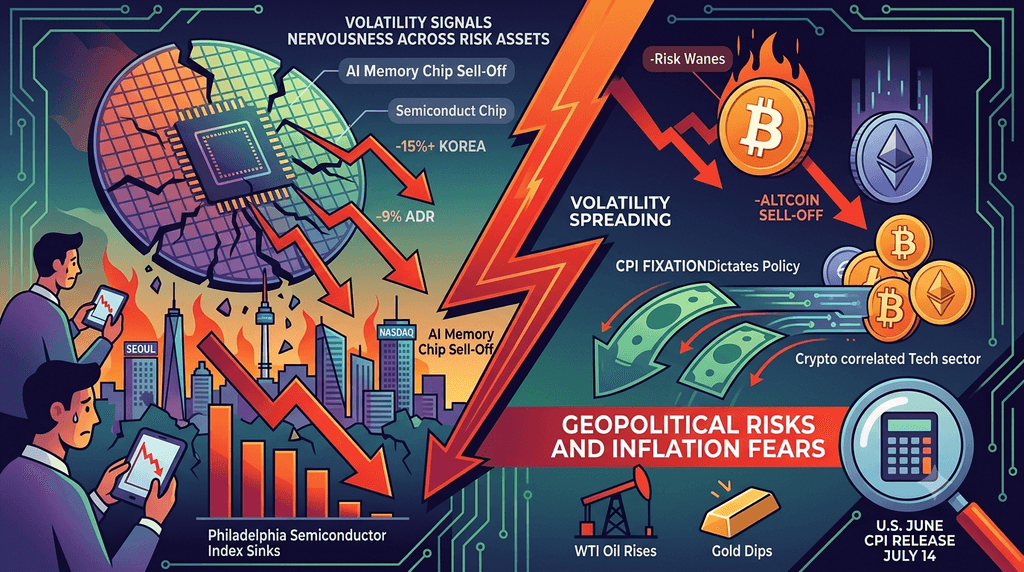
SK Hynix shares dropped sharply in recent trading, with the stock plunging more than 9% in U.S. ADR trading and over 15% in its Korean listing, dragging the Philadelphia Semiconductor Index down around 4.78%. This volatility in AI memory chip leaders signals heightened investor nervousness across risk assets, including cryptocurrencies. Markets now fixate on the upcoming U.S. June 2026 CPI release on July 14, which could dictate the Federal Reserve’s next policy steps amid sticky inflation concerns.
The sell-off reflects broader doubts about the sustainability of the AI capital expenditure boom, liquidity constraints, and macroeconomic headwinds. For crypto traders on platforms like KuCoin, this tech sector turbulence often correlates with Bitcoin and altcoin movements, as risk appetite wanes when traditional tech falters.
Why SK Hynix and AI Memory Stocks Are Plunging Now
SK Hynix and peer AI chip stocks face immediate selling pressure due to profit-taking, lowered earnings expectations, and sector rotation. According to recent reports, SK Hynix’s Korean shares tumbled a record 15% on July 13-14, 2026, after a Korean brokerage cut Q2 profit forecasts by 8% below consensus, citing slower HBM4 growth. Its U.S. ADRs, which debuted strongly on Nasdaq raising $26.5 billion, quickly gave back gains with a roughly 9% drop.
This move mirrors declines in other memory plays: Micron fell over 4%, SanDisk dropped more than 12%, and the broader SOX index shed nearly 5% in a single session. The Philadelphia Semiconductor Index closed around 12,347 after a significant daily loss, underscoring the sector’s sensitivity.
The conclusion is clear: even massive AI-driven demand cannot fully shield high-valuation chip stocks from liquidity shifts and sentiment swings. Investors who piled into high-bandwidth memory (HBM) suppliers on expectations of sustained shortages are now questioning the pace of AI capex continuation.
SK Hynix Volatility Mirrors Meme Coin Dynamics in a Trillion-Dollar Stock
Large-cap SK Hynix, with a market cap exceeding $100 billion, has exhibited extreme daily swings of 10% or more — behavior typically associated with low-float meme coins rather than established tech giants. After its U.S. listing debut saw ADRs hit $168, the stock quickly retreated toward $152 levels following the earnings revision.
This pattern stems from concentrated inflows into AI themes during periods of ample liquidity, followed by rapid exits on any negative catalyst. When liquidity tightens, capital flees riskier growth narratives. Crypto users recognize this: thin order books amplify moves, but here the driver is macro sensitivity rather than pure retail hype.
Markets have grown extremely tense, with capital rotating out of AI at the first sign of weakness. This is not a broad bull market supported by strong fundamentals across assets; instead, AI stocks now dance to the tune of macroeconomic liquidity and policy expectations.
Macro Pressures Amplify the AI Chip Sell-Off
Geopolitical risks, energy prices, and inflation fears compound the chip sector weakness. Gold briefly dipped below $4,000 per ounce while WTI crude climbed above $80, reflecting supply concerns from renewed U.S.-Iran tensions, including potential port blockades.
Fed Governor Christopher Waller recently warned that if core inflation data remains hot, the FOMC may need to consider tightening rather than easing. This shifts the narrative from rate cuts to possible hikes, pressuring growth stocks and correlated crypto markets.
Tightening expectations and geopolitical shocks mean AI chip stocks — and by extension risk assets like Bitcoin — must now contend with higher-for-longer rates and reduced liquidity. The previous environment of easy money fueling AI hype is under strain.
What the June 2026 CPI Release Means for Markets and Crypto
The June CPI data, due July 14, carries outsized importance. Economists forecast the headline year-over-year figure around 3.8%, down from the prior 4.2%, with core measures watched even more closely for persistence in services and goods prices.
A hotter-than-expected print would validate Waller’s hawkish stance, boosting odds of near-term policy firming and weighing on equities and crypto. A cooler reading could provide temporary relief, supporting a soft landing narrative.
The data will likely set the tone for risk appetite through the remainder of July. Crypto traders should monitor Bitcoin’s correlation with Nasdaq and SOX; recent dips below $63,000 in Bitcoin coincided with tech weakness and geopolitical flares.
Broader Implications for AI Narrative and Capital Flows
The AI boom drove extraordinary gains earlier in 2026, with SK Hynix up hundreds of percent at peaks on HBM demand from Nvidia and data center buildouts. Yet recent pullbacks highlight vulnerabilities: potential HBM supply increases, slowing ASP growth, and questions over whether enterprise AI spending will accelerate as projected.
Investors now demand proof that AI capital expenditure will persist despite higher borrowing costs. Memory stocks, once darlings, have entered correction territory, with some names down 20%+ from highs.
The key takeaway: AI remains transformative long-term, but near-term performance hinges on macro liquidity and policy more than technological progress alone. This dynamic directly influences crypto, where Bitcoin often serves as a high-beta proxy for tech risk.
Should You Trade Crypto Amid AI Chip Volatility on KuCoin?
KuCoin offers robust tools for volatile conditions, including futures, spot trading with high liquidity, and risk management features. Traders can hedge tech exposure via BTC/USDT or ETH perpetuals, use leverage judiciously, and access AI-themed tokens that may react to chip sector news. Monitor CPI reactions in real-time through KuCoin’s interface and set alerts for key levels.
KuCoin provides access to a broad range of not only crypto markets, but also stock markets. Now users can also participate in KuCoin's Campaign of Trading US Stock Perps:
-
After complete simple trading missions, users may unlock 100,000 USDT prize pool rewards in TSLA, AAPL, or GOOGL.

Conclusion
SK Hynix’s over 9% plunge, alongside declines in Micron, SanDisk, and the semiconductor index, highlights acute market tension driven by lowered AI expectations, liquidity rotation, and impending CPI data. With Fed officials signaling potential tightening if inflation persists, and external shocks from geopolitics and commodities adding pressure, risk assets face a challenging near term.
For crypto participants, this environment demands caution but also presents opportunities. The AI theme underpinning chip demand overlaps with blockchain innovations in decentralized computing and AI agents. While macro forces dominate short-term price action, structural growth in both sectors endures.
Traders positioned on KuCoin can capitalize on volatility with disciplined strategies, focusing on liquidity, correlations, and data-driven decisions around events like the June CPI release. The current tightness may prove temporary, but it reinforces the need for adaptive approaches in interconnected global markets. Stay informed, manage risk, and prepare for policy-driven moves that will shape both traditional tech and crypto trajectories in the coming weeks.
FAQs
How does SK Hynix performance affect Bitcoin prices?
SK Hynix weakness often pressures Bitcoin as both reflect risk sentiment; tech sell-offs typically lead to crypto outflows until macro clarity emerges.
What is the expected impact of hot June CPI data on crypto markets?
Hotter CPI could strengthen the dollar and reduce risk appetite, pushing Bitcoin and altcoins lower in the short term by raising rate hike probabilities.
Are AI-related cryptocurrencies a good hedge against chip stock volatility?
Some decentralized AI projects on blockchain may benefit long-term from the same demand drivers as HBM chips, but they remain highly volatile and correlated in downturns.