

Russian Forex Liquidity Squeeze: Why the Ruble Is Hitting New Lows Against the USD and CNY
Introduction
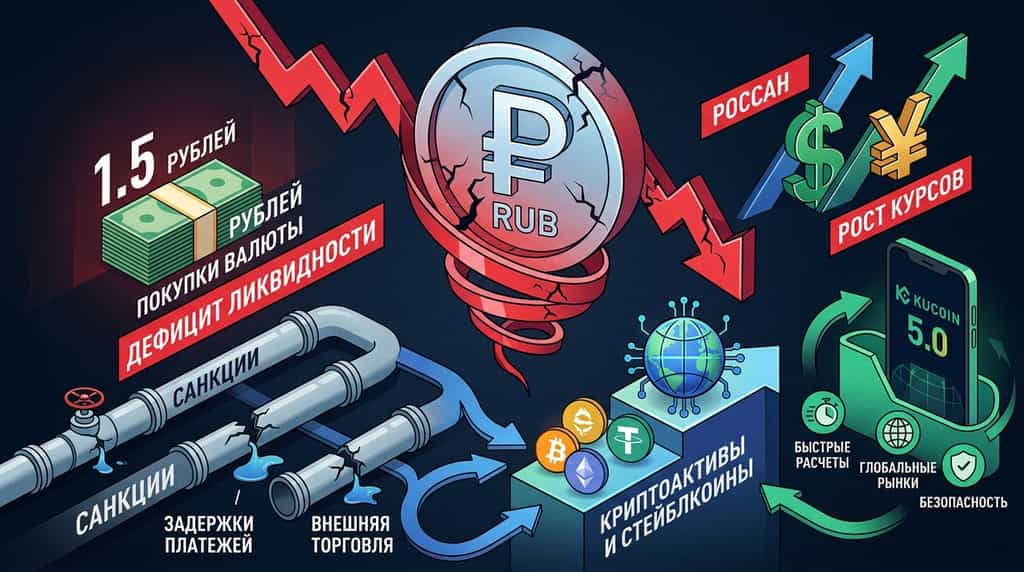
Is Russia’s financial system facing an unprecedented foreign exchange liquidity crunch as structural sanctions and shifting trade settlement mechanics squeeze the national currency? The Russian ruble (RUB) has experienced significant depreciation pressure against major settlement currencies, with foreign exchange liquidity tightening across domestic banking venues. According to financial market data from the Bank of Russia, non-financial enterprises purchased 1.5 trillion rubles ($16.2 billion equivalent) in foreign currency during September 2026—a sharp 37% surge month-over-month that highlighted severe demand-supply mismatches in domestic currency markets.
Why Is the Russian Foreign Exchange Market Experiencing a Liquidity Shortage?
The liquidity shortage in Russia's foreign exchange market is driven primarily by reduced FX inflows from primary commodity exports combined with heightened demand for foreign currencies from domestic importers and corporate debtors. Western financial restrictions have severely restricted access to traditional US dollar and euro clearing networks, concentrating trading volume into offshore venues and over-the-counter (OTC) mechanisms.
According to Bank of Russia statistics released in October 2026, structural liquidity deficits in the domestic banking sector are projected to range between 2.4 trillion and 3.6 trillion rubles. The primary structural drivers causing this currency supply deficit include:
-
Export Revenue Delays: Secondary international banking sanctions have lengthened settlement cycles for Russian energy and industrial exports, delaying the conversion of foreign receipts into domestic currency reserves.
-
Capital Flight and Domestic Currency Demand: Domestic businesses and retail banking clients increased physical cash withdrawals and foreign currency acquisitions to hedge against local inflationary pressures.
-
Shift to Bilateral Settlement Channels: As trade with Asian partners grows, liquidity has bifurcated into regional currency corridors, leaving domestic interbank markets vulnerable to localized dollar and yuan supply shocks.
How Are the USD and CNY Performing Against the Russian Ruble?
The US Dollar and Chinese Yuan have reached multi-month highs against the Russian ruble as foreign currency availability on domestic trading platforms diminishes. Based on exchange rate tracking from the Bank of Russia and international currency benchmarks in October 2026, 1 Chinese Yuan converts to approximately 12.73 Russian Rubles (0.0785 RUB/CNY), while the US Dollar maintains a dominant valuation above key resistance thresholds.
The table above illustrates the sustained upward pressure on foreign currencies relative to the ruble. Chinese Yuan liquidity, which became the primary trading pair on the Moscow Exchange (MOEX) following Western sanctions, has faced periodic squeeze episodes when Chinese regional banks limit correspondent banking lines to mitigate secondary sanction exposure.
What Impact Does the Foreign Exchange Squeeze Have on Russian Foreign Trade?
The foreign exchange liquidity squeeze directly elevates import costs and complicates cross-border transaction settlements for Russian international trading partners. According to official commercial data, Russian import volume reached $30.8 billion in mid-2026, representing a 26% year-over-year increase that created higher aggregate demand for foreign exchange reserves.
Importers face multiple secondary impacts as currency volatility persists:
-
Increased Transaction Costs: Trade intermediaries charge higher spreads to cover currency conversion and settlement risks across non-standard banking corridors.
-
Settlement Bottlenecks: Payments for consumer electronics, machinery, and raw materials experience extended clearing times due to compliance verification checks at foreign intermediary banks.
-
Imported Inflation: Higher foreign exchange purchasing costs are directly passed to domestic end-consumers, fueling domestic core inflation.
How Are Crypto Assets and Stablecoins Being Used to Offset FX Illiquidity?
Digital assets and fiat-pegged stablecoins are increasingly utilized by businesses and institutional traders as alternative cross-border liquidity rails during traditional fiat banking constraints. According to blockchain analytics data, daily trading volumes for USD-pegged stablecoins (such as USDT) across peer-to-peer (P2P) platforms and international cryptocurrency exchanges serving regional markets have expanded significantly during periods of fiat currency volatility.
Cryptocurrency liquidity pools provide structural advantages for global trade settlement:
-
Instant Settlement Finality: Blockchain networks finalize transactions within minutes, bypassing multi-day correspondent bank clearing delays.
-
Continuous Liquidity: Decentralized and centralized order books operate 24/7/365, eliminating domestic market opening/closing liquidity gaps.
-
Reduced Friction: Stablecoin transfers maintain a consistent 1:1 value ratio with underlying fiat benchmarks, enabling precise price discovery without local bank markup fees.
What Actions Is the Central Bank of Russia Taking to Stabilize the Ruble?
The Central Bank of Russia (CBR) uses aggressive monetary policy measures and regulatory interventions to contain foreign exchange volatility and maintain financial system stability. Key central bank policies implemented to address ruble weakness include:
-
Key Interest Rate Adjustments: Maintaining elevated policy interest rates to discourage speculative capital outflows and encourage ruble-denominated bank deposits.
-
Mandatory Export Revenue Conversion Rules: Regulating the proportion of foreign currency earnings that major exporter enterprises must convert into rubles on the domestic market.
-
Interbank FX Interventions: Executing daily foreign exchange sales from sovereign wealth reserves, primarily in Chinese Yuan, under established fiscal rules.
Beyond the Headlines: What KuCoin 5.0 Means for You
Market news moves fast — but where you act on it matters just as much. This October, KuCoin launches KuCoin 5.0, transforming KuCoin into a rebuilt platform. Here's what actually changes for you:
-
One account for everything. Older platforms split your money across separate "spot," "margin," and "futures" accounts and expected you to understand why. KuCoin 5.0's unified account removes that entirely — deposit once, and everything is simply there (only available to VIPs for now).
-
Stocks, indices, and commodities. KuCoin 5.0 expands beyond crypto into global markets. When crypto chops sideways and equities rally (or the reverse), you rotate in minutes instead of opening a brokerage account and waiting days for fiat rails.
-
Real-world assets (RWA). Tokenized exposure to traditional assets like commodities, right inside your crypto account. One of the fastest-growing segments in global finance is no longer reserved for institutions — you access it from the same balance you trade with.
-
Earn while you learn. Not ready to trade? KCUSD lets your stablecoins earn daily, auto-compounding interest. The lowest-stress way to put your idle deposit to work for 4% yield.
-
An AI assistant in plain language. Ask questions, get market context, understand what you're looking at — built into the platform, no jargon required.
-
An app that doesn't overwhelm. Faster, cleaner, and consistent — intuitive from the first tap, not after a tutorial.
-
Safety you can check, not just trust. A MiCAR-licensed EU entity, Proof of Reserves you can verify yourself, and internationally certified security (SOC 2 Type II, ISO 27001:2022).
Create your account in minutes — and start on the platform built for where crypto is going, not where it's been.
Conclusion
The foreign exchange liquidity squeeze in Russia underscores the growing vulnerabilities of traditional fiat interbank rails subject to structural trade imbalances and external financial constraints. With domestic non-financial corporate FX demand surging 37% to 1.5 trillion rubles in September 2026 and central bank liquidity deficits projected between 2.4 trillion and 3.6 trillion rubles, the ruble remains exposed to sustained depreciation pressures against the USD and CNY. As conventional banking channels face settlement friction, digital assets and stablecoins continue to demonstrate their utility as borderless liquidity alternatives for global market participants.
Frequently Asked Questions (FAQs)
What caused the recent liquidity squeeze in the Russian foreign exchange market?
The liquidity squeeze was caused by a combination of delayed foreign currency inflows from exports, increased corporate demand for FX to settle overseas trade, and sanction-related restrictions on traditional international banking clearing networks.
How does the Chinese Yuan (CNY) influence the Russian Ruble's value?
The Chinese Yuan has become the dominant foreign exchange currency traded on official Russian trading venues, serving as the benchmark currency for foreign trade pricing and central bank reserve operations.
Why do importers face higher costs during a foreign exchange shortage?
Importers face higher costs because localized FX scarcity drives up currency conversion spreads and forces business entities to pay premium rates to acquire scarce foreign exchange assets required for international purchases.
Can stablecoins like USDT be used for international trade settlements?
Yes, stablecoins are widely used by business entities globally for cross-border settlements because they provide 24/7 transaction processing, low transfer fees, and instant settlement without relying on traditional correspondent banking networks.
How can crypto traders protect their portfolios against fiat currency devaluation?
Crypto traders manage fiat devaluation risks by holding stablecoins pegged to major global reserve currencies, diversifying into non-sovereign digital assets like Bitcoin, or utilizing platform risk-management tools available on exchanges like KuCoin.
Disclaimer: This article is for informational purposes only and does not constitute financial, legal, or investment advice. Always conduct your own research before interacting with digital assets.