

Russia Mining Restrictions: Why Authorities Can Now Disconnect Crypto Miners Anytime
Introduction
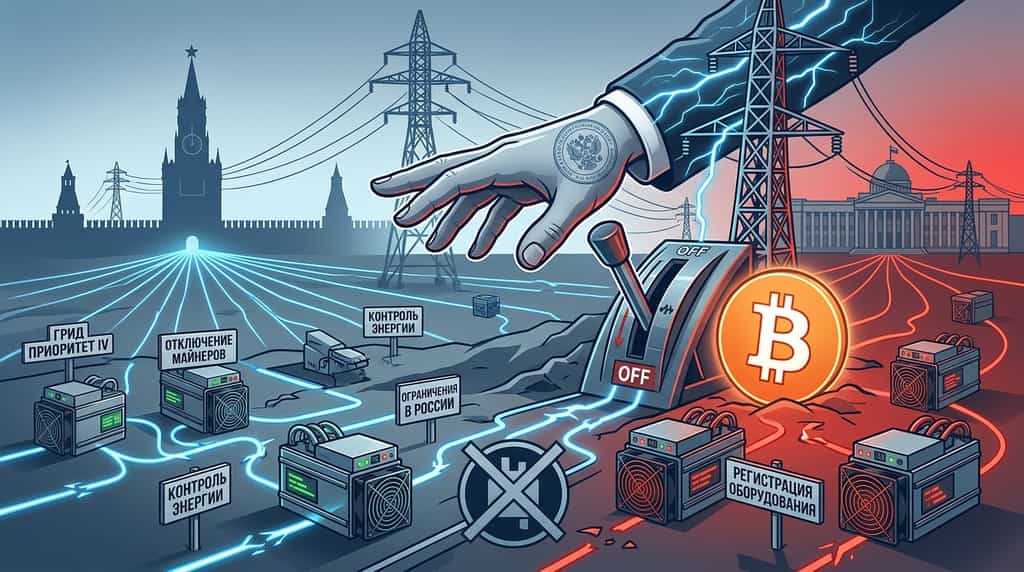
The Russian Federation currently produces over 10% of the world’s total Bitcoin hash rate, making it the second-largest cryptocurrency mining nation globally. Russian energy authorities can now disconnect cryptocurrency mining facilities from the power grid at any moment under newly established reliability classifications. Driven by strict compliance registration mandates, evolving tax frameworks, and critical national energy limitations, the Russian government has enacted stringent policies that fundamentally alter the operational viability of both industrial and retail miners. This contraction of the domestic mining sector reflects a broader push toward state oversight, energy rationing, and tax enforcement across high-density mining regions like Siberia.
How Recent Energy Restrictions Empower Authorities to Disconnect Miners
Russian energy authorities can now disconnect cryptocurrency mining facilities from the power grid at any moment under newly established reliability classifications. According to updates reported by specialized media and energy policy releases, crypto miners are classified under the fourth category of power supply reliability, meaning their electricity access can be curtailed instantly during regional power deficits without prior warning.
This dynamic addresses severe grid bottlenecks in high-density mining regions such as Siberia, where cheap hydroelectric power historically attracted massive operations. The Ministry of Energy implemented these rules to safeguard residential and industrial infrastructure against blackouts, placing digital asset extraction at the absolute bottom of the energy priority list. Consequently, mining farms operating in constrained zones face existential threats to their uptime, making long-term capacity planning nearly impossible without securing dedicated, redundant power sources.
The Impact of Mandatory Compliance Registration and Tax Enforcement
Rigorous compliance registration protocols and aggressive tax enforcement have forced non-compliant or marginal operators out of the Russian market. Based on regulatory updates tracked by official compliance monitors, the Russian government mandates that all commercial and individual miners register their hardware and declare their operational activities in a centralized state registry.
This registry grants regulatory and tax authorities transparent oversight to trace electricity consumption, identify unauthorized "gray" mining farms, and collect targeted industrial taxes. High-profile enforcement actions against major mining executives for tax evasion have further accelerated industry consolidation. Smaller operators unable to absorb the administrative costs of compliance, mandatory reporting, and heavy digital asset taxation are either liquidating their hardware or relocating to friendlier jurisdictions.
Regional Mining Bans and Seasonal Power Deficits
Geographic restrictions and seasonal prohibitions have severely limited where mining operations can legally function within the Russian Federation. According to regional mandates overseen by federal energy agencies, complete or seasonal bans on cryptocurrency mining have been enforced in high-deficit zones including parts of Buryatia, Zabaykalsky Krai, and Irkutsk.
These geographic exclusions were established to combat chronic power shortages during peak winter heating seasons. Miners who previously relied on subsidized residential or low-tier commercial tariffs in these regions are now subject to heavy fines, equipment confiscation, and immediate grid termination if they attempt to operate outside designated industrial zones. This geographic tightening has concentrated remaining legal operations into tightly monitored, highly capitalized industrial parks.
Financial and Operational Pressures on Industrial-Scale Mining Farms
Industrial mining enterprises in Russia are experiencing compressed profit margins due to the dual squeeze of rising compliance costs and unpredictable energy availability. Based on market analysis from specialized tracking groups, capital expenditure required to meet federal safety, environmental, and tax standards has surged over the past year.
Furthermore, the constant threat of sudden grid disconnection introduces severe operational risk for ASIC hardware, which suffers hardware degradation and efficiency loss from abrupt power cuts. Large-scale mining pools and hosting providers are finding it increasingly difficult to attract institutional capital or secure insurance coverage under a regulatory framework where power supply is legally categorized as unstable and deferrable.
How Global Hashrate Distribution Responds to Russian Contraction
The contraction of Russia's domestic mining footprint is actively reshaping the global distribution of Bitcoin hash rate. As Russian operators shut down uncompliant facilities or scale back expansions due to the looming threat of network disconnection, global hash rate is gradually decentralizing toward regions with more stable regulatory frameworks and transparent energy policies.
While Russia remains a significant player due to its remaining large-scale, fully compliant data centers situated near stranded energy sources, the era of unbridled, unregulated "gray" mining in the country is effectively ending. International mining conglomerates are shifting their expansion strategies toward regions in Latin America, the Middle East, and parts of North America where power contracts offer higher reliability guarantees.
Beyond the Headlines: What KuCoin 5.0 Means for You
Market news moves fast — but where you act on it matters just as much. This October, KuCoin launches KuCoin 5.0, transforming KuCoin into a rebuilt platform. Here's what actually changes for you:
-
One account for everything. Older platforms split your money across separate "spot," "margin," and "futures" accounts and expected you to understand why. KuCoin 5.0's unified account removes that entirely — deposit once, and everything is simply there (only available to VIPs for now).
-
Stocks, indices, and commodities. KuCoin 5.0 expands beyond crypto into global markets. When crypto chops sideways and equities rally (or the reverse), you rotate in minutes instead of opening a brokerage account and waiting days for fiat rails.
-
Real-world assets (RWA). Tokenized exposure to traditional assets like commodities, right inside your crypto account. One of the fastest-growing segments in global finance is no longer reserved for institutions — you access it from the same balance you trade with.
-
Earn while you learn. Not ready to trade? KCUSD lets your stablecoins earn daily, auto-compounding interest. The lowest-stress way to put your idle deposit to work for 4% yield.
-
An AI assistant in plain language. Ask questions, get market context, understand what you're looking at — built into the platform, no jargon required.
-
An app that doesn't overwhelm. Faster, cleaner, and consistent — intuitive from the first tap, not after a tutorial.
-
Safety you can check, not just trust. A MiCAR-licensed EU entity, Proof of Reserves you can verify yourself, and internationally certified security (SOC 2 Type II, ISO 27001:2022).
Create your account in minutes — and start on the platform built for where crypto is going, not where it's been.
Conclusion
The contraction of the Russian mining sector marks a definitive turning point toward strict state oversight, taxation, and energy rationing for the cryptocurrency industry. With regulatory frameworks fully recognizing digital asset extraction, the days of informal, low-cost mining operations operating in regulatory gray areas are concluding. The imposition of fourth-category power reliability rules—allowing authorities to disconnect miners instantly during energy shortages—combined with mandatory hardware registration and rigorous tax enforcement, ensures that only well-capitalized, fully compliant industrial players can survive. While these measures successfully protect national energy grids and increase state tax revenues, they simultaneously accelerate the migration of hash rate out of Russia. For the global crypto market, this transition underscores the growing tension between decentralized digital currencies and centralized state infrastructure management.
Frequently Asked Questions
What constitutes the fourth category of power supply reliability for Russian miners?
The fourth category is an energy classification introduced by Russian authorities that assigns cryptocurrency mining the lowest priority during electricity distribution. Under this designation, system operators can legally cut off power to mining facilities instantly during regional energy deficits or peak demand periods without prior notice or compensation.
Are all cryptocurrency miners in Russia required to register their equipment?
Yes, federal regulations mandate that all individuals and entities engaged in commercial or industrial cryptocurrency mining must register their hardware in an official state registry. This registry enables the Federal Tax Service to monitor energy consumption, enforce tax compliance, and curb illegal "gray" mining operations.
Which regions in Russia face absolute or seasonal mining bans?
Cryptocurrency mining is heavily restricted or entirely prohibited during peak consumption seasons in energy-deficient regions such as parts of the Irkutsk Oblast, Zabaykalsky Krai, and the Republic of Buryatia. These bans were enacted to prevent widespread residential heating failures caused by grid overloads from unauthorized mining farms.
How do sudden power grid disconnections impact mining hardware?
Abrupt power interruptions cause thermal shock and potential firmware corruption in ASIC mining rigs, leading to accelerated hardware degradation and reduced operational lifespans. Furthermore, unexpected downtime directly reduces daily coin yield, making revenue forecasting extremely difficult for operators subject to the fourth-category power rules.
What penalties do unregistered or non-compliant Russian miners face?
Operators caught mining without official registration or failing to declare income face severe administrative fines, confiscation of specialized mining hardware, and potential criminal prosecution for tax evasion and illegal electricity usage.
Disclaimer: This article is for informational purposes only and does not constitute financial, legal, or investment advice. Always conduct your own research before interacting with digital assets.