

Russia Approves Crypto for Cross-Border Trade Settlements: What It Means for Global Markets
Introduction
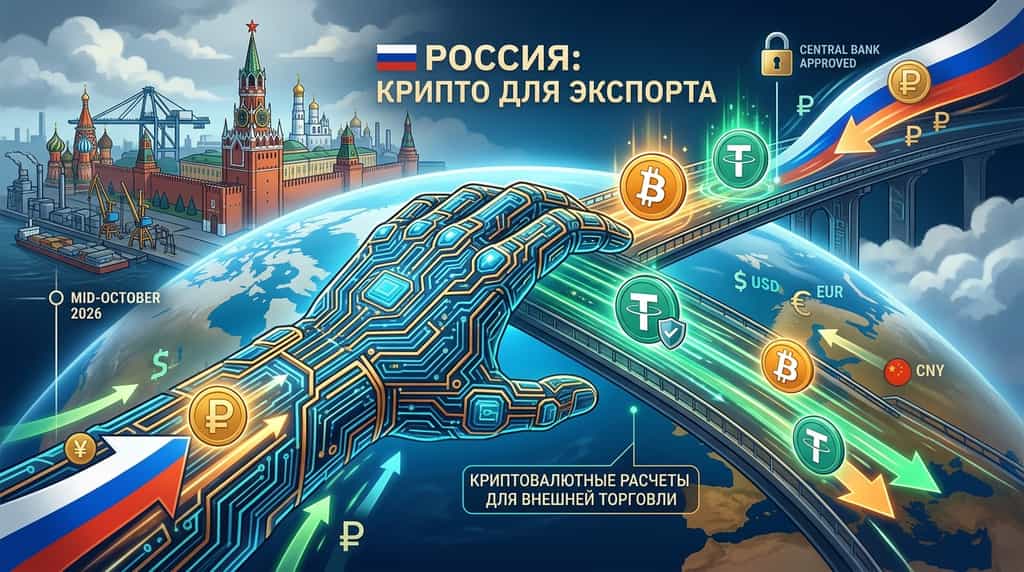
As the global financial architecture continues to adapt under intense geopolitical pressure, Russia has formally updated its legal framework to reshape international commerce. According to joint announcements from the Central Bank of the Russian Federation and the Ministry of Finance, authorized large Russian exporters and foreign importers are officially permitted to use approved digital assets for cross-border trade settlements as of mid-October 2026. Based on regulatory updates from September and October 2026, this landmark transition creates a designated legal corridor designed to bypass traditional Western-dominated banking channels and SWIFT messaging restrictions. While domestic retail crypto payments remain strictly prohibited within Russian borders, the targeted greenlighting of international crypto transactions marks a monumental evolution for global crypto liquidity, trade finance, and blockchain adoption.
Why Is Russia Legalizing Crypto for Cross-Border Trade Settlements?
The primary driver behind Russia's policy shift is the severe disruption of conventional international payment corridors caused by international sanctions. According to reports from the Bank of Russia, traditional fiat clearing times for major export-import routes have ballooned significantly, resulting in billions of dollars in delayed transactions and frozen liquidity across key trade channels.
By authorizing cryptocurrencies and Digital Financial Assets (DFAs) for foreign trade contracts, the Russian government provides a compliant, blockchain-based alternative for enterprises trapped by correspondent banking bottlenecks. This mechanism ensures that energy, agricultural, and industrial commodities can continue flowing seamlessly to international buyers using high-liquidity digital assets like stablecoins and Bitcoin, bypassing traditional financial gatekeepers entirely.
Which Entities and Assets Qualify Under the New 2026 Framework?
Participation in these regulated cross-border crypto settlements is restricted to approved large Russian exporters and verified foreign trading partners under strict central bank supervision. According to the Bank of Russia’s registry rollouts, only authorized entities operating through approved domestic market infrastructure—such as licensed digital depositories and designated major commercial banks like Sberbank and VTB—can facilitate these institutional transfers.
Eligible digital instruments are limited to high-liquidity assets with established global trading history, predominantly major stablecoins and selected cryptocurrencies vetted by financial authorities. These transactions are subject to rigorous reporting under federal anti-money laundering and currency control laws, ensuring that while the rails are decentralized, institutional oversight remains strictly centralized.
| Operational Parameter | Regulatory Standard | Compliance Requirement |
| Domestic Payments | Strictly Prohibited | All internal Russian retail and B2B commerce must use the Ruble or Digital Ruble. |
| Cross-Border Trade | Fully Authorized | Restricted to approved large exporters and foreign non-resident partners. |
| Authorized Assets | Vetted Major Tokens | Focus on high-liquidity instruments like stablecoins and established blue-chip assets. |
| Infrastructure | Licensed Intermediaries | Must route through central bank-registered depositories and authorized institutions. |
How Does This Impact Global Crypto Liquidity and Market Dynamics?
The formal integration of state-backed corporate crypto clearing introduces substantial structural volume into digital asset markets. According to analytics reports from CoinGecko and specialized digital asset monitors, channeling multi-billion-dollar trade flows through blockchain networks permanently alters liquidity patterns for major settlement tokens.
Rather than relying on informal or shadow P2P liquidity pools, institutional trade settlements under this framework utilize transparent, highly capitalized market makers and licensed domestic exchanges. This evolution elevates digital assets from speculative retail vehicles into critical instruments of sovereign macroeconomic policy, bridging the gap between decentralized protocols and state-level international trade.
What Are the Compliance and Risk Controls for Importers and Exporters?
Compliance is heavily enforced, requiring participants to maintain transparent transaction trails and adhere to stringent reporting thresholds. Based on regulatory mandates outlined by the Ministry of Finance, foreign trade contracts utilizing digital currencies valued at 10 million rubles or higher trigger mandatory financial monitoring under federal anti-money laundering statutes.
Furthermore, unauthorized entities attempting to operate commercial crypto-clearing or exchange services outside the central bank registry face severe criminal penalties. Deputy Finance Minister Ivan Chebeskov noted during the autumn 2026 legislative sessions that legal liability targets illegal liquidity providers and shadow exchange operators to protect the integrity of the state-regulated corridor.
Beyond the Headlines: What KuCoin 5.0 Means for You
Market news moves fast — but where you act on it matters just as much. This October, KuCoin launches KuCoin 5.0, transforming KuCoin into a rebuilt platform. Here's what actually changes for you:
-
One account for everything. Older platforms split your money across separate "spot," "margin," and "futures" accounts and expected you to understand why. KuCoin 5.0's unified account removes that entirely — deposit once, and everything is simply there (only available to VIPs for now).
-
Stocks, indices, and commodities. KuCoin 5.0 expands beyond crypto into global markets. When crypto chops sideways and equities rally (or the reverse), you rotate in minutes instead of opening a brokerage account and waiting days for fiat rails.
-
Real-world assets (RWA). Tokenized exposure to traditional assets like commodities, right inside your crypto account. One of the fastest-growing segments in global finance is no longer reserved for institutions — you access it from the same balance you trade with.
-
Earn while you learn. Not ready to trade? KCUSD lets your stablecoins earn daily, auto-compounding interest. The lowest-stress way to put your idle deposit to work for 4% yield.
-
An AI assistant in plain language. Ask questions, get market context, understand what you're looking at — built into the platform, no jargon required.
-
An app that doesn't overwhelm. Faster, cleaner, and consistent — intuitive from the first tap, not after a tutorial.
-
Safety you can check, not just trust. A MiCAR-licensed EU entity, Proof of Reserves you can verify yourself, and internationally certified security (SOC 2 Type II, ISO 27001:2022).
Create your account in minutes — and start on the platform built for where crypto is going, not where it's been.
Conclusion
The joint decision by the Central Bank of Russia and the Ministry of Finance to authorize cryptocurrencies for cross-border trade settlements represents a watershed moment for the intersection of blockchain technology and global geopolitics. By establishing a formalized, tightly regulated pathway for corporate transactions, Russia is effectively institutionalizing digital assets as legitimate tools of international commerce. While strict domestic prohibitions remain in place to protect the national fiat currency, the external integration of blockchain rails provides a blueprint for nations seeking financial sovereignty amidst shifting global trade dynamics. As this regulatory framework matures through 2027, the role of digital assets in facilitating cross-border economic activity will continue to expand, cementing a permanent bridge between traditional state trade and decentralized finance.
Frequently Asked Questions
Does this new regulation legalize cryptocurrency for everyday shopping inside Russia?
No. Domestic retail and consumer payments using cryptocurrency remain strictly illegal within the Russian Federation. All internal goods and services must be transacted in Russian rubles or the official digital ruble.
Are ordinary retail investors allowed to use these cross-border trade corridors?
No. The authorized cross-border settlement channels are strictly restricted to approved large corporate exporters and foreign importers operating under centralized regulatory oversight.
What specific digital assets are permitted for these international trade settlements?
The framework primarily authorizes high-liquidity instruments, including major stablecoins and select blue-chip cryptocurrencies approved by the Central Bank based on robust trading history and market depth.
What happens to unlicensed cryptocurrency exchanges operating within Russia?
Unlicensed exchanges and unauthorized commercial liquidity providers face severe criminal penalties and targeted enforcement under newly enacted legislative measures designed to eliminate shadow financial operations.
Do these cross-border crypto transactions require reporting to tax authorities?
Yes. Foreign trade contracts utilizing digital currencies that exceed specific statutory valuation thresholds are subject to mandatory financial monitoring, strict currency control, and compliance reporting under federal law.
Disclaimer: This article is for informational purposes only and does not constitute financial, legal, or investment advice. Always conduct your own research before interacting with digital assets.