

Volvo Group Tests Proprietary Cryptocurrency for Supplier Transactions and Supply Chain Efficiency
2026/07/21 11:43:00
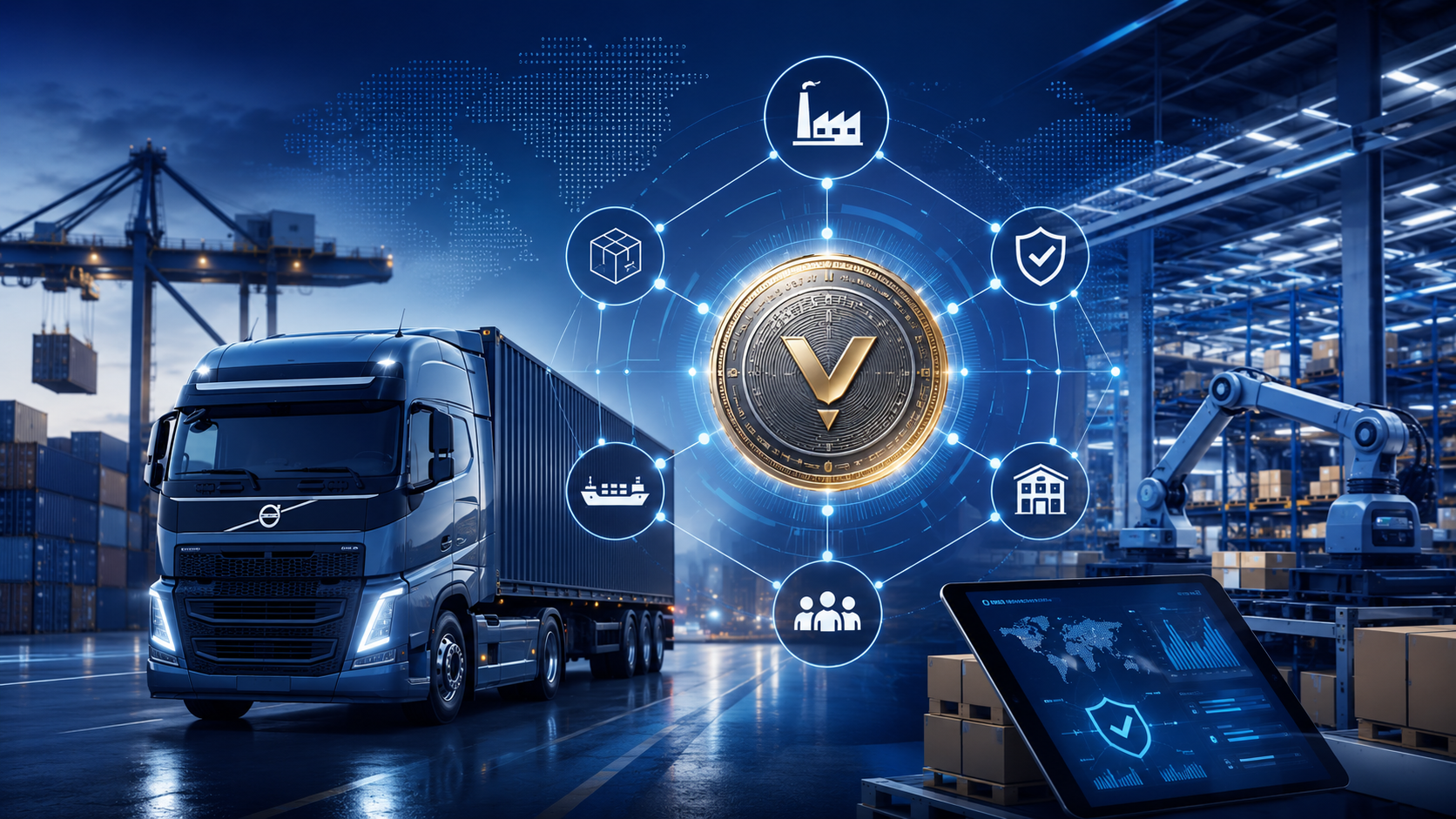
Volvo Group has disclosed that it explored a proprietary cryptocurrency designed to simplify transactions involving the company, material suppliers and transportation providers. The purpose-built digital currency formed part of an enclosed blockchain environment where approved participants could use one transaction unit while maintaining payment, order and transportation information on a shared ledger. The experiment represents a business-focused use of cryptocurrency rather than an attempt to introduce another publicly traded digital asset. Ivan Branco, Head of Information Management, AI and Analytics at Volvo Group, revealed the project during a Cardano Foundation interview published on July 14, 2026. He explained that Volvo examined whether blockchain could reduce the complexity created when suppliers and logistics companies operate across different currencies, accounting platforms and information systems. However, the project remains an internal exploration and has not been industrialized. Volvo has not announced a commercial deployment, public token sale, exchange listing or global rollout.
Volvo Proprietary Cryptocurrency Test for Supplier and Logistics Transactions
Volvo Group’s cryptocurrency experiment approaches blockchain as enterprise blockchain infrastructure rather than a speculative market. Instead of using a token for public investment, the company examined whether a controlled digital currency could help approved businesses coordinate supplier transactions and logistics information. Participation would be limited to relevant organizations, allowing the network to protect commercial data while maintaining a consistent record of authorized activity.
Volvo Group Reveals Its Closed Blockchain Cryptocurrency Experiment
Branco explained that Volvo had conducted explorations with certain transportation suppliers to assess an enclosed blockchain environment for transactions among a material supplier, transportation provider and Volvo. The company created a proprietary cryptocurrency specifically for this investigation rather than using Bitcoin, Ethereum, stablecoins designed to reduce cryptocurrency volatility or another established digital asset. This allowed Volvo to evaluate the technology according to its operational requirements without introducing unrestricted access, external market activity or speculative price movements. The disclosure concerns Volvo Group rather than Volvo Cars. Volvo Group operates businesses covering trucks, buses, construction equipment, industrial power systems, financing and related services, while Volvo Cars has been a separate corporate entity since 1999. The experiment was connected to Volvo Group’s logistics and supplier relationships, meaning it was not a cryptocurrency payment option for consumers buying Volvo cars. It is more accurately described as a business-to-business test of how approved companies could coordinate transactions inside one controlled digital environment.
How Volvo’s Proprietary Cryptocurrency Was Designed for Supplier Transactions
The proposed system would allow participating businesses to use one proprietary digital currency regardless of the national currencies used in their respective countries. A common digital unit could give Volvo, material suppliers and transportation providers a consistent way to represent obligations before completing any required settlement through conventional financial channels. This structure could reduce the number of separate currency records that must be compared when an international order involves several companies using different accounting and payment systems.
The blockchain would also maintain information connected with transportation and purchase orders. Instead of every participant storing an isolated version of an invoice, shipment status, delivery confirmation and payment obligation, relevant businesses could refer to the same authorized ledger. A material supplier could register information about an order, a transportation provider could update the movement of the goods, and Volvo could confirm delivery or completion. Volvo has not published the complete workflow, so it remains unclear whether every stage was tested with transactions carrying real monetary value.
What Volvo Confirmed About the Cryptocurrency Trial
Volvo confirmed that it created the proprietary cryptocurrency for a specific investigation and explored its use with certain transportation suppliers. The digital currency was intended to facilitate exchanges inside the enclosed network, while the blockchain ledger could preserve related order and transportation information. Branco repeatedly described the initiative as an exploration, indicating that it had not entered full-scale commercial operation when the interview was published. Volvo has not released performance data showing whether the test reduced processing costs, reconciliation time, payment delays or supply-chain errors. The company has also not identified the participating suppliers or disclosed the number and value of transactions completed during the investigation. The available evidence confirms that Volvo tested the concept of a proprietary supplier cryptocurrency, but it does not establish that the system has delivered proven efficiency improvements or is ready for wider deployment.
How Blockchain Could Improve Volvo Supplier Payments and Supply Chain Efficiency
Volvo Group works with approximately 50,000 supply-chain partners, employs around 99,000 people, operates production facilities in 17 countries and sells products and services in almost 180 markets. According to Volvo Group’s 2025 annual report, the company recorded net sales of SEK 479.2 billion. Across a network of this size, inconsistencies involving purchase orders, invoices, deliveries and component records can generate significant administrative work, creating a potential business case for blockchain applications in supply-chain management that coordinate data and payment infrastructure.
Reducing Volvo Supplier Payment Delays and Invoice Reconciliation Work
A supplier payment generally requires more than transferring money from Volvo to another company. Before an invoice is approved, information may need to be matched across the purchase order, supplier invoice, quantity received and confirmation that the transportation service or material delivery was completed. These records can exist in separate procurement, logistics, warehouse and accounting systems. When dates, quantities, currencies or payment references do not match, employees must investigate the exception before payment can proceed.
A shared blockchain record could give authorized participants access to the same transaction milestones instead of requiring them to compare different versions of the information. Once an order, shipment or delivery was approved, the relevant status could become visible to the supplier, logistics provider and Volvo team. Potential improvements would need to be measured through invoice-exception rates, average reconciliation time, payment-dispute frequency, processing costs and the time between confirmed delivery and settlement. Volvo has not published these measurements, so lower costs and faster payments remain possible benefits rather than confirmed results.
Connecting Purchase Orders, Transportation Records and Payments
Payment disputes often begin earlier in the supply chain when order and transportation information becomes fragmented. A supplier may record that components were dispatched, while the transportation company maintains separate information about collection, transit and delivery. Volvo’s warehouse system may then record a different time or quantity when the goods arrive. Even when every participant follows its internal procedures, differences in timestamps, formats and approval rules can make it difficult to determine which record should trigger invoicing.
Blockchain could create a chronological history connecting the original purchase order with shipment milestones, proof of delivery, acceptance of the goods and the resulting payment obligation. Authorized users could follow a transaction from order creation through final settlement without gathering records from several disconnected systems. A permissioned network could restrict access so each participant sees only the information required for its role. Volvo would still need to integrate the ledger with existing procurement, warehouse and transportation platforms while maintaining controls to ensure that suppliers submit accurate information.
Strengthening Country-of-Origin Tracking and EU Supply Chain Compliance
Country-of-origin information is important because a truck, replacement part or assembled component can contain materials sourced from several jurisdictions. Branco described origin tracking as a longstanding logistics challenge for Volvo. Sanctions, trade restrictions and import rules can create liability when restricted goods or components reach prohibited markets, including situations where products move through importers, distributors or other intermediaries before reaching their final destination.
A blockchain traceability system could allow origin information to be registered closer to the original supplier and preserved as materials are transported, transformed or assembled. This could support sanctions screening, customs documentation and product-lifecycle reporting, although it would not replace audits or legal compliance procedures. Reliable supplier data is also becoming more important under the EU Batteries Regulation, which requires an electronic battery passport from February 18, 2027 for electric-vehicle batteries, light-means-of-transport batteries and industrial batteries with capacity above 2 kWh. The regulation does not require blockchain, but a shared ledger could help manufacturers maintain consistent battery identity, composition, origin and lifecycle records.
Volvo Cryptocurrency Project Outlook, Commercial Launch Potential and Next Steps
Volvo’s blockchain project has attracted attention because it combines a globally recognized industrial company with a proprietary digital currency. Its future will depend on whether the technology can produce measurable commercial advantages, satisfy corporate governance requirements and gain support from suppliers. The most meaningful next developments would involve business integration and production testing rather than a retail token sale.
-
A public Volvo cryptocurrency launch currently appears unlikely. Volvo has not announced plans to sell the digital currency to consumers, make it freely transferable or list it on an exchange. A public token would introduce price volatility, liquidity requirements, speculative trading and additional regulatory responsibilities that provide limited value for a controlled supplier system. Volvo could expand access to more verified suppliers while keeping the cryptocurrency inside a permissioned enterprise network.
-
The project must demonstrate advantages over existing corporate systems. Creating a functional token does not automatically produce a strong business case. Volvo would need to show that blockchain can reduce costs or operational risk more effectively than conventional databases, supplier portals, banking services and enterprise resource planning platforms. A larger pilot would need to compare payment-dispute rates, reconciliation time, system reliability, manual processing requirements and total integration costs with the company’s current infrastructure.
-
A commercial system would require a clear valuation and settlement model. Suppliers must know what each token represents, when payment becomes final and how their digital balances can be converted into the currencies used for taxes, wages and operating expenses. Volvo could treat the token as an internal accounting unit, link it to a fiat currency or connect it with regulated banking infrastructure. Each approach would create different accounting, legal and operational requirements, including procedures for refunds, incorrect transfers, disputed payments and exchange-rate movements.
-
Supplier adoption, data privacy and network governance would determine scalability. A shared network offers limited value when only a small number of companies participate, but expanding it would require suppliers to integrate new technology, train employees and follow common data standards. Volvo would also need to define who can validate transactions, approve new members, modify network rules and investigate inaccurate entries. Access controls would be essential because suppliers may not want other participants to see confidential prices, volumes, routes or contractual terms.
-
Future progress should be assessed through operational milestones rather than crypto speculation. Evidence of another supplier pilot, integration with Volvo’s accounting systems, confirmation of real-value settlement or publication of performance results would indicate movement toward commercial use. Identification of a technology provider, a broader group of participating suppliers or a formal deployment schedule would also be meaningful. There is currently no evidence that Volvo used Cardano or ADA, and the interview’s publication by the Cardano Foundation does not establish a technical partnership.
-
A successful Volvo rollout could influence enterprise blockchain adoption in other industries. Automotive, aerospace, electronics and pharmaceutical companies face similar challenges when coordinating payments and data across international supplier networks. If Volvo demonstrates that a proprietary digital currency can reduce costs, accelerate settlement or improve transaction records, other manufacturers could examine comparable permissioned systems. If the project fails to deliver measurable savings, it may reinforce the view that conventional databases remain more practical for many corporate processes.
Volvo Group’s experiment is therefore best understood as an early test of tokenized business infrastructure rather than the launch of a public Volvo cryptocurrency. The concept could eventually support supplier payment coordination, logistics records and compliance data, but its commercial importance will depend on published results and wider supplier participation. Until Volvo confirms further development, the project remains a notable exploration of enterprise blockchain rather than a market-ready payment network or public investment opportunity.
Conclusion
Volvo Group’s proprietary cryptocurrency test shows how blockchain and digital tokens can be applied to practical business processes beyond public trading and investment. By exploring a controlled transaction environment for Volvo, material suppliers and transportation providers, the company examined whether a common digital unit and shared ledger could improve payment reconciliation, connect orders with logistics records and strengthen supply-chain visibility. The project could also support increasingly important areas such as country-of-origin tracking, sanctions compliance and product-lifecycle reporting, although Volvo has not published evidence confirming lower costs, faster settlement or fewer transaction errors.
The initiative remains an internal exploration rather than a public Volvo cryptocurrency launch. Its commercial future will depend on a clear token valuation and settlement model, secure integration with Volvo’s existing systems, supplier participation and measurable improvements over conventional databases and payment infrastructure. Further supplier trials, real-value transactions or published performance results would provide stronger evidence that the project can progress beyond its experimental stage. Until those developments occur, Volvo’s cryptocurrency should be viewed as a potentially important enterprise blockchain test, not a publicly traded token or confirmed investment opportunity.
Frequently Asked Questions
Does an enterprise blockchain require a publicly traded cryptocurrency?
No. An enterprise blockchain can operate without a public cryptocurrency or exchange-listed token. Companies may use an internal digital unit, tokenized bank deposit or conventional fiat settlement while using blockchain only to verify and share transaction records. The appropriate structure depends on the network’s purpose, participants, governance requirements and applicable financial regulations.
Could smart contracts automate Volvo supplier payments?
Smart contracts could potentially release or approve payments when predefined conditions are satisfied, such as confirmation that goods were delivered, inspected and accepted. This could reduce manual invoice processing, but the system would need reliable data from Volvo’s procurement, warehouse and transportation platforms. Volvo has not confirmed that smart contracts were used during its cryptocurrency experiment.
Would Volvo suppliers receive cryptocurrency instead of euros or dollars?
Suppliers would probably still require settlement in the fiat currency used for wages, taxes and operating expenses unless they voluntarily retained the digital token. A commercial system would therefore need a conversion or redemption process connecting token balances with conventional money. Volvo has not disclosed how fiat settlement, token redemption or supplier withdrawals would work.
Would Volvo’s cryptocurrency remove foreign-exchange risk?
Not automatically. Using one digital unit could simplify transaction records, but the underlying obligation may still involve companies operating with different national currencies. Foreign-exchange risk would remain unless the token had a fixed valuation and clear rules determining which participant absorbed currency movements between order approval and final settlement.
How could Volvo protect confidential supplier information on blockchain?
A permissioned blockchain could restrict access according to each participant’s role, allowing a supplier to verify its own transactions without viewing another company’s prices or order volumes. Encryption, private transaction channels and privacy-preserving proofs could provide additional protection. Volvo would still need to comply with data-protection requirements and establish clear rules governing who can access, retain or share commercial information.
Can blockchain guarantee that Volvo’s supply-chain data is accurate?
No. Blockchain can make an approved record difficult to alter without detection, but it cannot confirm that the original information was correct. Incorrect quantities, component origins or delivery details can still be recorded if the input process is unreliable. Supplier verification, physical inspections, trusted data sources and procedures for correcting errors would remain necessary.
Disclaimer: This article is for informational purposes only and does not constitute financial or investment advice. Market conditions can change rapidly, so readers should conduct independent research before making financial decisions.