

Russia’s CBDC Push: Putin Orders Public Campaign on Digital Ruble Benefits
Introduction
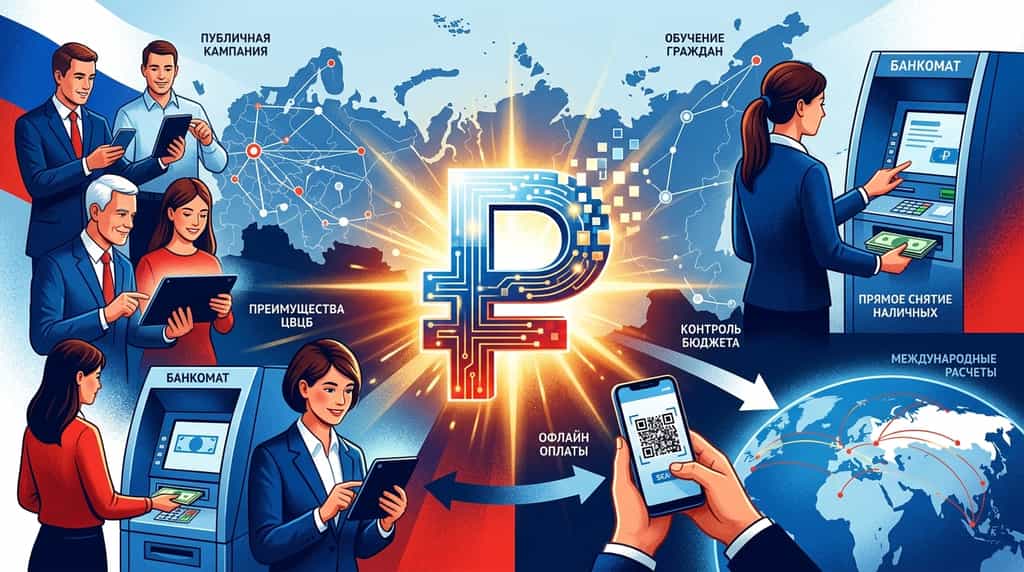
Russian President Vladimir Putin ordered top financial officials to launch a comprehensive public awareness campaign detailing the benefits of the digital ruble. Speaking during an executive video conference with federal government officials, Putin instructed Minister of Finance Anton Siluanov and Central Bank of Russia (CBR) Governor Elvira Nabiullina to clarify how the Central Bank Digital Currency (CBDC) differs from traditional electronic fiat payments. Putin emphasized that ordinary citizens currently lack a clear understanding of the digital ruble’s distinct advantages and operational mechanisms compared to standard bank card transfers and online banking systems.
In response to the presidential decree, CBR Governor Elvira Nabiullina confirmed the central bank’s commitment to expanding CBDC literacy while providing updated operational statistics. According to official statistics released by the Central Bank of Russia, citizens opened approximately 200,000 digital ruble wallets within the first three weeks of broader platform testing, with 36 commercial banks actively integrated into the national CBDC network. Nabiullina highlighted that the digital ruble significantly enhances government oversight and targeted control over state budget allocations. Furthermore, the central bank announced plans to implement cross-border settlement mechanisms using the digital currency alongside offline transaction protocols that enable payments without active internet connections. Complementing these initiatives, CBR Deputy Governor Zulfiya Kakhrumanova confirmed that upcoming technical upgrades will allow citizens to withdraw physical cash directly from automated teller machines (ATMs) using their online digital ruble wallets, eliminating the current requirement to first route funds through commercial bank accounts.
Why Is President Putin Demanding an Awareness Campaign for the Digital Ruble?
President Putin mandated a national public awareness campaign because low public comprehension threatens to slow voluntary adoption rates during the CBDC's expansion phase. During a live federal government meeting, Putin noted that everyday citizens struggle to identify practical distinctions between central bank digital tokens and existing electronic bank balances. Without clear public messaging regarding lower transaction friction, security benefits, and peer-to-peer efficiency, public skepticism could stall the state's broader economic digitization agenda.
The public education initiative directly targets the knowledge gap surrounding sovereign digital currencies across consumer demographics. Central Bank Governor Elvira Nabiullina acknowledged the presidential directive, agreeing that explaining the utility of state-backed digital tokens is essential for widespread integration. Commercial banks and public institutions are expected to roll out explanatory materials and digital interface guides to ensure citizens understand how digital wallet management differs from legacy commercial accounts.
How Does the Digital Ruble Differ From Standard Bank Accounts?
The digital ruble functions as a distinct third form of national currency, operating alongside physical cash and commercial bank electronic deposits as a direct liability of the central bank. Unlike traditional bank deposits stored within private commercial institutions, digital rubles are issued and held directly on the Central Bank of Russia's centralized ledger platform. This architecture removes commercial bank credit risk, ensuring that consumer holdings remain fully backed by the monetary authority regardless of private sector bank solvency.
From a user perspective, digital rubles offer a standardized payment framework across all participating financial institutions. While commercial banks frequently charge interchange fees or apply transfer limits for cross-bank electronic funds, digital ruble transfers operate under uniform central bank fee structures. According to official statements from the Central Bank of Russia, personal transactions between individual digital ruble wallets remain entirely fee-free, creating a cost-effective alternative to private payment gateways.
| Feature / Dimension | Physical Cash | Commercial Electronic Money | Digital Ruble (CBDC) |
| Issuing Authority | Central Bank of Russia | Commercial Financial Institutions | Central Bank of Russia |
| Storage Medium | Physical Notes & Coins | Commercial Bank Accounts | CBR Digital Wallet Platform |
| Credit / Counterparty Risk | None (Sovereign Liability) | Commercial Bank Solvency Risk | None (Sovereign Liability) |
| Internet Dependency | Completely Offline | Requires Active Connection | Online & Developing Offline Modes |
| Consumer Transfer Fees | Zero | Variable Bank Commissions | 0% for Individual Transfers |
| Programmed Budget Control | None | Limited Institutional Rules | Smart-Contract Enabled Oversight |
What Is the Current Scale of Russia’s CBDC Rollout?
Russia’s digital ruble platform achieved rapid initial participation, registering roughly 200,000 active user wallets within its first three weeks of expanded public trial operations. According to official data reported by the Central Bank of Russia, 36 commercial banking institutions have fully integrated their IT architectures into the central bank platform. This infrastructure integration allows clients of participating banks to open digital wallets, transfer funds, and execute merchant payments directly through existing mobile banking applications.
The pilot expansion marks a transition from localized sandbox testing toward broader institutional deployment across commercial sectors. Participating commercial banks act as financial intermediaries, facilitating account onboarding, client verification, and user interface access while the central bank handles settlement finality. The rapid creation of 200,000 digital wallets highlights strong early engagement from technologically adept retail users and partner businesses across the country.
How Will the Digital Ruble Enhance Government Budget Oversight?
The digital ruble provides state authorities with automated tracking capabilities to monitor public spending and prevent misallocation of government funds. Governor Elvira Nabiullina emphasized during the federal cabinet address that smart-contract capabilities embedded within the CBDC architecture allow the government to earmark specific digital tokens for designated purposes. State subsidies, infrastructure grants, and social welfare payouts can be programmed to execute only when predetermined compliance conditions are verified on the central platform.
This enhanced auditability eliminates financial leakage across complex multi-tiered government procurement projects. By utilizing a single ledger maintained by the Central Bank of Russia, treasury officials can observe the entire velocity of public money in real time. Targeted spending controls ensure that allocated state resources are spent strictly according to legislative directives, reducing administrative overhead and strengthening public sector fiscal discipline.
What Advanced Technical Features Are Being Added to the Digital Ruble?
The Central Bank of Russia is expanding the technical scope of the digital ruble platform to include cross-border settlement capabilities, offline transaction functionality, and direct cash withdrawal options. These technical innovations aim to make the sovereign digital token flexible enough for international trade resilience, emergency domestic payments, and daily retail activities.
Cross-Border Payment Integration
Cross-border digital ruble settlements enable direct bilateral trade clearing with foreign partners while bypassing traditional western-dominated messaging networks like SWIFT. According to official statements from Central Bank Governor Elvira Nabiullina, establishing cross-border CBDC settlement corridors represents a key priority for maintaining international trade liquidity. By connecting Russia’s CBDC platform directly to foreign central bank digital currency networks, commercial entities can execute cross-border transactions faster and with lower intermediary conversion costs.
Offline Payment Technology
Offline transaction protocols allow users to execute digital ruble transfers in remote areas or during telecom infrastructure outages without requiring active internet connections. The central bank's technical roadmap includes storing cryptographic balance states within secure enclaves on mobile devices or specialized payment cards. When an offline transaction occurs, funds transfer peer-to-peer between secure hardware modules and reconcile with the master central bank ledger once internet connectivity is restored.
Direct ATM Cash Withdrawals
Direct ATM integration removes operational friction by allowing users to convert digital rubles into physical banknotes directly at automated teller machines. According to technical details disclosed by Central Bank Deputy Governor Zulfiya Kakhrumanova, upcoming updates will enable citizens to interact with ATMs straight from their digital ruble wallets. Under current procedures, users must first transfer digital rubles to standard commercial bank checking accounts before withdrawing physical cash. The streamlined process cuts out secondary intermediary transfers, giving consumers direct cash access straight from the central bank platform.
How Does Russia’s CBDC Strategy Compare Globally?
Russia’s accelerated digital ruble push places it among the leading sovereign nations actively deploying Central Bank Digital Currencies for national economic strategy. According to global central bank research data compiled by the Atlantic Council, over 130 countries representing more than 98% of global GDP are currently exploring, testing, or deploying CBDCs. Russia's focus on domestic budget tracking and cross-border settlement independence mirrors strategies seen in other major emerging markets seeking financial autonomy.
Unlike retail-focused CBDC projects in smaller economies, Russia’s multi-layered approach targets retail payments, institutional treasury auditing, and international trade settlement simultaneously. The digital ruble project positions the nation alongside early movers like China, whose digital yuan pilot has processed hundreds of billions of dollars in transaction volume. By combining state-level spending governance with advanced technical features like offline transfers, Russia aims to build an independent digital payment stack resistant to external economic pressures.
Beyond the Headlines: What KuCoin 5.0 Means for You
Market news moves fast — but where you act on it matters just as much. This October, KuCoin launches KuCoin 5.0, transforming KuCoin into a rebuilt platform. Here's what actually changes for you:
-
One account for everything. Older platforms split your money across separate "spot," "margin," and "futures" accounts and expected you to understand why. KuCoin 5.0's unified account removes that entirely — deposit once, and everything is simply there (only available to VIPs for now).
-
Stocks, indices, and commodities. KuCoin 5.0 expands beyond crypto into global markets. When crypto chops sideways and equities rally (or the reverse), you rotate in minutes instead of opening a brokerage account and waiting days for fiat rails.
-
Real-world assets (RWA). Tokenized exposure to traditional assets like commodities, right inside your crypto account. One of the fastest-growing segments in global finance is no longer reserved for institutions — you access it from the same balance you trade with.
-
Earn while you learn. Not ready to trade? KCUSD lets your stablecoins earn daily, auto-compounding interest. The lowest-stress way to put your idle deposit to work for 4% yield.
-
An AI assistant in plain language. Ask questions, get market context, understand what you're looking at — built into the platform, no jargon required.
-
An app that doesn't overwhelm. Faster, cleaner, and consistent — intuitive from the first tap, not after a tutorial.
-
Safety you can check, not just trust. A MiCAR-licensed EU entity, Proof of Reserves you can verify yourself, and internationally certified security (SOC 2 Type II, ISO 27001:2022).
Create your account in minutes — and start on the platform built for where crypto is going, not where it's been.
Conclusion
President Vladimir Putin's command to launch a public education campaign highlights the strategic importance of the digital ruble within Russia's monetary framework. By directing Finance Minister Anton Siluanov and Central Bank Governor Elvira Nabiullina to clarify how the CBDC differs from commercial electronic money, the state seeks to accelerate consumer trust and voluntary adoption across the national economy.
The digital ruble platform has demonstrated swift momentum, securing roughly 200,000 opened wallets and onboarding 36 commercial banks within its first three weeks of expanded operations. With advanced features on the horizon—including automated budget auditing, cross-border trade settlements, offline peer-to-peer payments, and direct ATM cash withdrawals—the digital ruble provides an advanced blueprint for sovereign currency modernization. As central bank digital currencies reframe national monetary systems worldwide, global investors continue to utilize platforms like KuCoin to navigate broader cryptocurrency market opportunities.
Frequently Asked Questions (FAQs)
What is the primary difference between a digital ruble and an electronic bank transfer?
A digital ruble is a direct digital liability issued by the Central Bank of Russia stored on a unified central bank platform, whereas electronic bank transfers represent digital commercial bank deposits stored across private banking systems.
Will individual consumers be charged fees for using digital ruble wallets?
No, individual consumers pay zero transaction fees for standard peer-to-peer transfers and payments conducted between digital ruble wallets on the Central Bank of Russia platform.
Can citizens withdraw physical cash directly from a digital ruble wallet?
Yes, upcoming platform upgrades announced by the Central Bank of Russia will allow users to withdraw physical cash directly from supported ATMs without needing to route funds through commercial bank accounts first.
How does the digital ruble work when there is no internet connection?
The digital ruble platform incorporates offline payment technology that stores cryptographic balance data in secure hardware enclaves on mobile devices, allowing peer-to-peer transfers that sync with the main ledger once connectivity returns.
Is the digital ruble a cryptocurrency like Bitcoin?
No, the digital ruble is a centralized sovereign fiat currency fully backed and controlled by the Central Bank of Russia, whereas cryptocurrencies like Bitcoin operate on decentralized blockchain networks without central issuing authorities.
Disclaimer:This article is for informational purposes only and does not constitute financial, legal, or investment advice. Always conduct your own research before interacting with digital assets.