

Brent Crude Oil Falls Amid Iran Sanctions: What’s Driving Oil Price Volatility and Market Risks
2026/08/26 12:07:00
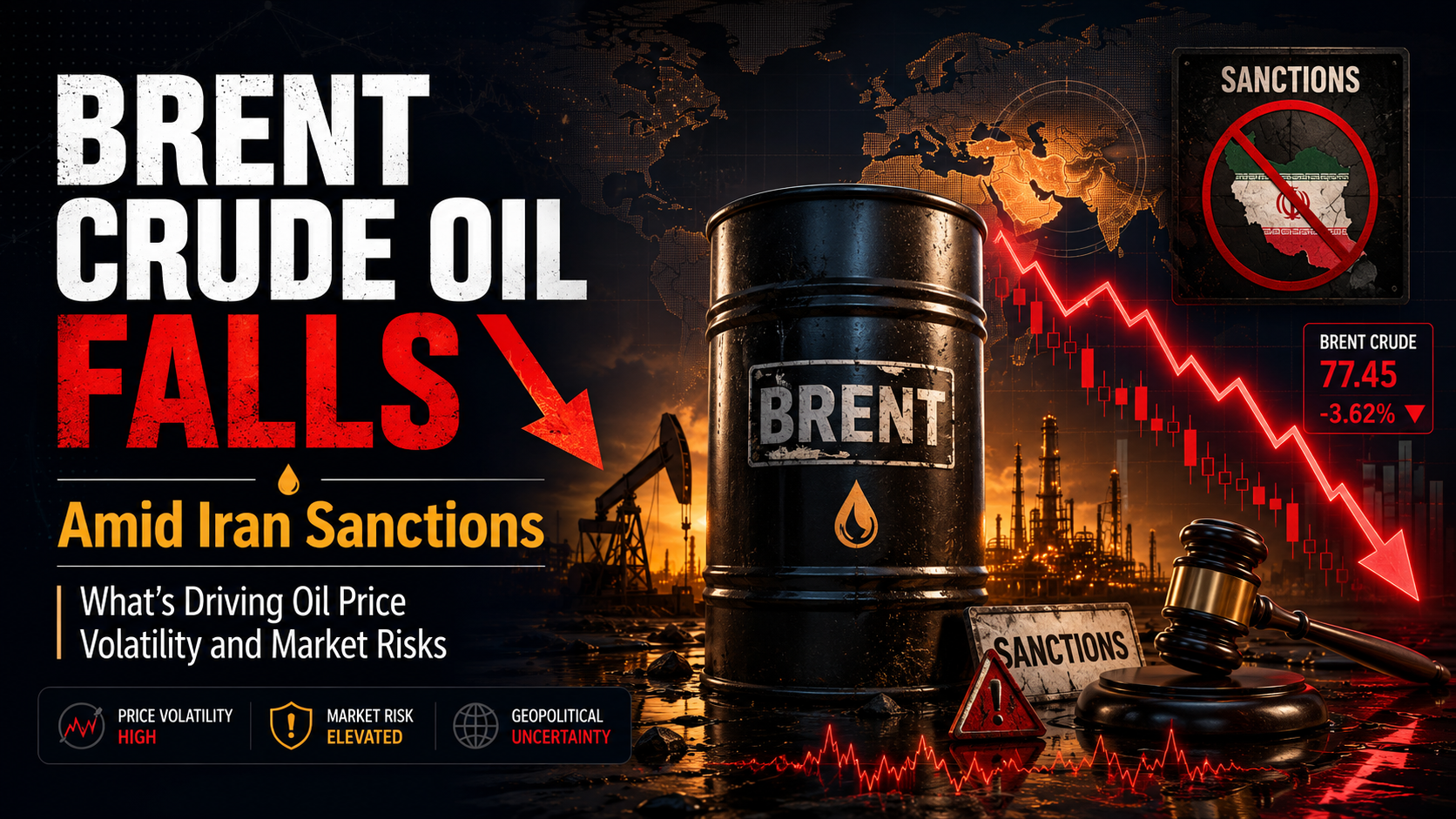
Oil Prices Retreat as Sanctions Shift Geopolitical Risk Assessment
Oil markets delivered a clear signal on August 25, 2026, when Brent crude futures dropped more than 3% to levels near $88–89 a barrel, marking a one-week low. The decline occurred even as the United States expanded secondary sanctions aimed at isolating Iran’s economy nearly six months into the ongoing conflict. Traders interpreted the shift toward economic pressure as less immediately threatening to physical oil supplies than further military escalation, according to reporting. Yet the move does not erase underlying uncertainties. Flows through the Strait of Hormuz remain constrained, Iranian export volumes have collapsed relative to pre-war levels, and refined product markets show tighter conditions than crude benchmarks alone suggest.
The central thesis is that Brent’s recent decline reflects a temporary reassessment of geopolitical risk rather than a resolution of structural vulnerabilities. Volatility continues to be driven by the interplay of incomplete Hormuz transit recovery, uneven enforcement of sanctions, inventory dynamics, demand patterns in major consuming regions, and the residual possibility of renewed kinetic disruption. Understanding these forces requires examining recent price action, the mechanics of the sanctions package, physical supply realities, and the broader risks facing producers, refiners, and consumers.
Latest Brent Price Action Reflects Shift from Kinetic to Economic Pressure
Brent crude futures settled lower by roughly $3–4 per barrel on August 25, 2026, with intraday moves taking the contract to its weakest levels since mid-August. West Texas Intermediate followed a similar path, declining more than 3% to the low $80s. The session followed a Monday drop of about 2.3%, when Brent closed near $92.17 after profit-taking from a prior two-week rally. Market participants cited the tone of the new US measures announced by Treasury Secretary Scott Bessent. Rather than immediate, broad secondary sanctions on major buyers, the package targeted dozens of entities, individuals, and vessels while allowing time for compliance. Analysts at Saxo Bank and others noted that this approach reduced the perceived probability of abrupt supply shocks compared with military options.
The price reaction also incorporated mediation signals, including Pakistani diplomatic contacts with Tehran, which briefly supported hopes of de-escalation. Still, the one-week low does not restore pre-conflict pricing. Brent remains substantially higher than its late-February 2026 levels near $70–72, reflecting the cumulative impact of six months of disrupted Gulf flows. Physical cargo differentials and tanker tracking data continue to show that enough oil is moving to prevent extreme spikes, yet not enough to eliminate the risk premium entirely. This combination of lower prompt prices and lingering structural tightness defines the current trading environment.
Expanded US Secondary Sanctions Target Iran’s Remaining Trade Links
On August 24–25, 2026, the US Treasury detailed an expansion of secondary sanctions designed to pressure countries and entities maintaining commercial ties with Iran. The measures form part of what officials described as intensified economic isolation nearly six months into the conflict. Targets included roughly 60 entities, individuals, and vessels linked to Iranian networks. Treasury Secretary Bessent framed the initiative as an “economic” campaign intended to force compliance without immediate kinetic escalation. Critically, the announcement stopped short of naming specific major financial institutions in China or other large buyers and deferred full enforcement timelines to allow room for adjustment.
Iranian officials responded by condemning the steps while expressing confidence that key trading partners would resist pressure. President Masoud Pezeshkian and other figures called for diplomacy, and Iran’s economic affairs minister indicated that contingency planning had long anticipated such measures. Market reaction treated the package as less disruptive to near-term barrels than a return to open military confrontation. Analysts at Rystad Energy observed that unless major purchasers, particularly China, significantly curtail remaining volumes, the incremental revenue impact on Iran could prove limited. The sanctions therefore add a layer of compliance and financing friction without instantly removing the residual Iranian barrels still reaching markets through indirect channels.
Strait of Hormuz Transit Volumes Remain Well Below Pre-Conflict Norms
Tanker transit data through the Strait of Hormuz, which historically carried roughly one-fifth of global seaborne oil, continues to register sharply reduced volumes. Flows that once averaged near 15–20 million barrels per day have operated for extended periods at only a fraction of that level amid Iranian restrictions, US naval presence, and intermittent attacks on vessels. August 2026 readings showed averages around 2 million barrels per day in some tracking estimates, with occasional temporary increases when mediation efforts appeared to gain traction. Commodity vessel movements hit multi-month lows around the time of the latest sanctions announcement, according to Reuters reporting.
Even partial recovery of transit has prevented the most extreme price scenarios that some forecasts projected earlier in the conflict. Pipelines bypassing the strait, temporary inventory releases, and redirected production from other Gulf producers have offset part of the shortfall. Nonetheless, the incomplete normalization leaves the market sensitive to any further interruption. A single high-profile vessel incident or renewed declaration of closure can rapidly reintroduce risk premiums. Traders therefore monitor daily AIS tracking and UK Maritime Trade Operations updates as closely as futures prices themselves.
Iranian Export Collapse Continues to Shape Global Supply Balances
Iranian crude exports have fallen dramatically from pre-war levels near 1.7 million barrels per day to figures reported as low as a few hundred thousand barrels per day in recent months, according to analytics firms such as Kpler. Loadings from key terminals have at times approached zero in early August windows. Floating storage volumes remain elevated relative to pre-conflict norms, indicating barrels that are available but constrained by logistics, insurance, and buyer caution. The temporary sanctions waivers that appeared during earlier diplomatic windows have largely lapsed or been superseded by the new secondary measures.
This reduction contributes to an overall Middle Eastern supply gap estimated by some analysts in the range of several million barrels per day of shut-in or disrupted production. While non-Gulf producers and strategic releases have filled part of the void, the quality and location of remaining Iranian barrels limit their ability to fully substitute for lost volumes in certain refining systems. The result is a market that appears adequately supplied on paper in the prompt month yet retains structural tightness that can reassert itself if demand recovers or if further export channels close.
Inventory Draws and Strategic Stock Releases Have Limited Remaining Buffer Capacity
Global commercial and strategic inventories absorbed a substantial portion of the early supply shock. IEA member releases and private stock draws provided temporary relief measured in millions of barrels per day during the first half of 2026. By mid-year, many of those emergency buffers had been substantially depleted. US commercial and Strategic Petroleum Reserve levels reached multi-decade lows in some weekly readings earlier in the conflict. Chinese independent refiners also drew heavily on stocks during periods of elevated prices and disrupted imports.
With those cushions largely exhausted, the market now operates with thinner margins for error. Any sustained increase in demand or additional supply interruption would translate more directly into price moves. Analysts note that the current contango structure in certain contracts signals short-term availability, yet the longer-term balance remains vulnerable. Inventory data releases, particularly from the EIA and Chinese customs, therefore carry elevated significance for price discovery in the current environment.
Refined Product Markets Display Greater Tightness Than Crude Benchmarks
While Brent and WTI have retraced a meaningful share of their wartime peaks, refined product prices and refining margins have remained elevated. European diesel cracks and US gasoline and heating oil differentials have at times reached multi-year or record levels. The war damaged or constrained more than 20% of Middle Eastern refining capacity in some assessments, and product exports through Hormuz have faced the same transit restrictions as crude. This divergence means that downstream consumers experience higher costs even when crude benchmarks moderate.
The product tightness also influences crude demand itself. Refiners operating at high utilization rates to meet diesel and gasoline needs support crude purchases, while those facing feedstock constraints or high crack spreads adjust runs accordingly. Monitoring product inventory reports and crack spreads provides an important complementary signal to crude price action, revealing stresses that pure flat-price analysis can miss.
Demand Patterns in Asia and the Role of Chinese Refining Activity
Asian demand, particularly Chinese crude intake, has acted as a significant counterweight to supply disruptions. Independent refiners in China reduced runs and drew inventories during peak price periods, limiting the upward pressure on global benchmarks. Estimates of Chinese crude intake running 15–20% below year-earlier levels in certain mid-2026 months helped keep prompt prices from sustaining higher ranges. Any sustained recovery in Chinese refining activity or strategic stock rebuilding would tighten the balance further.
Other Asian importers have adjusted sourcing toward available non-Iranian grades and longer-haul supplies, increasing freight costs and altering trade flows. The net effect is a demand picture that remains sensitive to economic growth indicators in China and India as well as to relative price differentials between sanctioned and non-sanctioned barrels. Shifts in these patterns can amplify or dampen the impact of any change in Middle Eastern supply availability.
OPEC+ Response and Spare Capacity Constraints Behind the Strait
OPEC+ members have navigated the conflict by gradually unwinding earlier voluntary cuts while confronting the reality that a large share of the group’s spare capacity sits behind the disrupted strait. Production adjustments from non-Gulf members and redirected Gulf volumes via pipelines have provided partial offsets. However, the ability to surge additional barrels quickly remains limited by both logistics and the ongoing security environment. Forecasts from major agencies have been revised repeatedly as assumptions about Hormuz transit and Iranian output change.
The group’s coordination continues to matter for medium-term balances. Any decision to accelerate or pause production increases will interact with the geopolitical overlay. Market participants therefore watch both official OPEC+ communications and independent tanker tracking for signs of actual volume changes rather than relying solely on announced quotas.
Geopolitical Risk Premium Remains Embedded Despite Recent Price Declines
Even after the August 25 sell-off, Brent trades well above pre-war levels, indicating that a residual geopolitical risk premium persists. Analysts estimate that the market no longer prices an immediate catastrophic closure scenario but continues to assign probability to episodic disruptions, vessel incidents, or renewed escalation. The probability of wider military action has been assessed by some research firms in the range of 30–35% in recent months, sufficient to keep a floor under prices.
This premium is not static. It expands or contracts with each diplomatic headline, vessel attack report, or sanctions enforcement action. The shift toward economic pressure has compressed the premium relative to pure kinetic risk, yet the incomplete resolution of Hormuz access ensures it does not disappear. Price volatility therefore remains elevated compared with pre-2026 norms.
Insurance, Freight, and Financing Frictions Amplify Physical Market Stress
Beyond headline futures prices, the physical oil market faces elevated costs for insurance, war-risk premiums, and financing of cargoes that transit or originate in the Gulf. These frictions raise the effective cost of delivered crude and can deter marginal buyers or delay cargo movements. Iranian barrels in particular face heightened scrutiny under the expanded secondary sanctions regime, further complicating letters of credit and vessel chartering.
Such operational hurdles mean that even when barrels exist in theory, they may not reach the market at the same speed or cost as under normal conditions. This layer of friction contributes to the observed divergence between paper market signals and physical availability, sustaining volatility in differentials and regional prices.
Longer-Term Market Risks Center on Prolonged Disruption and Buffer Exhaustion
Looking beyond the immediate session, the principal risks include a sustained or intensified restriction on Hormuz transit, further depletion of remaining inventories, and a simultaneous recovery in demand that outpaces available supply. Refined product shortages could intensify if Middle Eastern refining capacity remains impaired. Secondary sanctions enforcement that successfully curtails remaining Iranian flows would tighten the balance further.
Conversely, a durable diplomatic breakthrough that restores full transit and production would reverse many of these pressures, though the timeline for full normalization could still stretch into 2027 according to some assessments. These scenarios imply continued elevated volatility rather than a stable new equilibrium. Producers, refiners, and consumers must plan for a range of outcomes in which prices can move rapidly on relatively modest changes in flow data or political signals.
Results for Traders, Refiners, and Broader Energy Markets
For market participants, the current environment rewards close attention to high-frequency physical data, tanker tracking, inventory reports, and product cracks, alongside traditional futures positioning. Refiners face margin opportunities in product markets but feedstock uncertainty. Consumers confront higher and more variable energy costs that feed into inflation metrics. The episode underscores the enduring strategic importance of the Strait of Hormuz and the limited near-term substitutes for Gulf supply.
While the August 25 price decline demonstrates the market’s capacity to reassess risk, the underlying drivers of volatility remain intact. Brent’s path in the coming weeks will hinge on whether economic pressure produces measurable changes in Iranian export behavior and whether Hormuz transit volumes can recover without fresh interruptions.
FAQs
How significant was the August 25, 2026, decline in Brent crude relative to the broader conflict?
The drop of more than 3% brought Brent to a one-week low near $88–89 a barrel and reversed part of a prior rally, yet the contract remained well above the $70–72 range seen just before the conflict began in late February 2026. The move primarily reflected a reassessment of the immediate supply threat from the new sanctions package rather than a fundamental resolution of Hormuz constraints or Iranian export losses. Historical peaks earlier in the conflict had approached or exceeded $118–126, so the recent decline represents a partial retracement within an elevated trading range.
What specific elements of the new US sanctions package influenced oil prices?
Treasury Secretary Scott Bessent announced an expansion of secondary sanctions targeting approximately 60 entities, individuals, and vessels while signaling time for compliance and stopping short of immediate measures against the largest known purchasers of Iranian oil. Markets interpreted the calibrated approach as reducing the probability of abrupt physical supply cuts compared with military escalation, contributing to the price decline. Enforcement details and the response of major buyers remain key variables for future impact.
Why have refined product prices stayed firmer than crude benchmarks?
Middle Eastern refining capacity suffered significant disruption, and product exports face the same transit restrictions as crude through the Strait of Hormuz. Global product inventories have also drawn down, supporting elevated crack spreads for diesel, gasoline, and related fuels even as crude prices moderated. This divergence highlights that downstream markets can tighten independently of the crude complex.
How much have Iranian oil exports declined during the conflict?
Exports that averaged around 1.7 million barrels per day before the conflict have fallen sharply, with some recent monthly estimates from analytics providers placing volumes in the low hundreds of thousands of barrels per day and occasional periods of near-zero loadings from primary terminals. Floating storage remains elevated, indicating barrels that are constrained by logistics and sanctions rather than simply unavailable.
What role do remaining strategic and commercial inventories play?
Earlier IEA releases and commercial stock draws provided important buffers that limited the initial price spike. Many of those temporary sources have been substantially depleted, leaving thinner margins against further supply interruptions or demand recovery. Weekly inventory data therefore carries heightened importance for assessing near-term balance.
Could a diplomatic breakthrough quickly normalize oil prices?
A durable agreement restoring full Hormuz transit and Iranian export channels would likely pressure prices lower, as seen during earlier temporary de-escalation windows when Brent briefly approached or undercut pre-war levels. However, physical recovery of production, shipping, and refining capacity could still require weeks to months, and residual risk premiums might persist until flows demonstrably stabilize.
🔥 KuCoin Offers A More Stable Option in A Volatile Market
If you worry about the frequent ups and downs in the market, and pursue a more stable option to earn money passively, KuCoin is the right place to come:

Simple Earn: Deposit and withdraw tokens anytime, earning stable returns.
Kucoin Earn: Earn stable profits with professional asset management.
Hold to Earn: Earn rewards by holding assets in Funding, Trading, Margin, Futures, Mining, and Unified Accounts.
Staking: Unlock the earning potential of on-chain assets.
Advanced Investments: Advanced Investments offer a variety of structured products to help your money grow in any market.
Shark Fin: Principal Protection and Guaranteed Gains
Dual Investment: Buy low and sell high with transparent return calculations.
Snowball: High yields, with price protection.
Discount Buy: Buy crypto at discount prices.
KCS Loyalty: Level up to enjoy exclusive perks by staking ≥ 1 KCS.
KuCoin Wealth: Discover future value and begin your smart investing journey.
KCS Benefits: Hold and stake KCS to access benefits across the platform.
KCS Staking 2.0: Participate in KCS on-chain governance to earn yield.
Disclaimer: This content is for informational purposes only and does not constitute investment advice. Cryptocurrency investments carry risk. Please do your own research (DYOR).