

Atum Raises $13.5M to Launch the First Open Payments Network for Global Stablecoin Movement
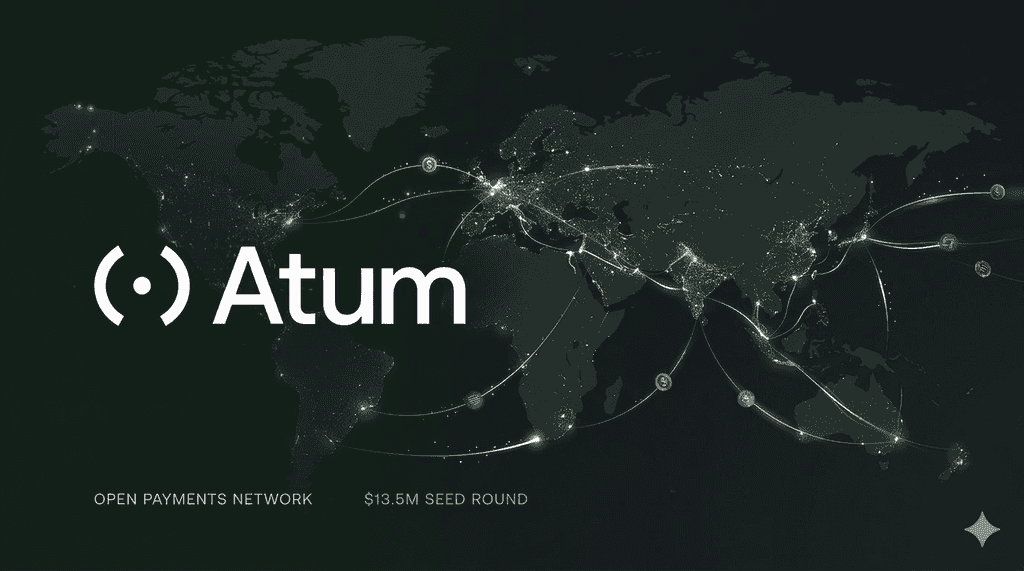
Stablecoin infrastructure continues to mature as companies seek solutions that reduce fragmentation across blockchains, currencies, and payment rails. On September 22, 2026, Atum emerged from stealth mode after raising $13.5 million in seed funding to introduce what it describes as the first open payments network designed specifically for global money movement using stablecoins. The platform functions as a single coordination layer that links payment companies, developers, and enterprises without issuing its own currency, operating a blockchain, favoring any particular rail, or taking custody of customer funds.
Settlement providers compete in a marketplace to fulfill payment requests across supported chains and stablecoins, enabling senders to specify assets while receivers obtain exactly what they request. Native authorization, reversible payments, and identity features form part of the core design. Atum’s neutral coordination model addresses persistent interoperability challenges in stablecoin payments by aligning incentives around transaction volume and supporting both traditional and agentic use cases, positioning it as infrastructure that can scale alongside rising real-economy stablecoin activity.
Funding Round Details and Investor Backing Strengthen Atum’s Position
Atum raised $13.5 million in seed funding led by Variant, with participation from PayPal Ventures, Abstract Ventures, Road Capital, Mirana Ventures, First Commit, Credibly Neutral, and strategic advisor Charlie Songhurst. The funding accompanies Atum’s exit from stealth and supports development of its payment coordination layer for authorization, routing, and transaction confirmation. The investor group brings experience spanning crypto infrastructure, traditional payments, and financial technology. PayPal Ventures’ participation is notable given PayPal’s existing stablecoin initiatives and payments expertise, while Variant’s leadership shows interest in Atum’s neutral marketplace model. The platform allows settlement providers to compete on pricing, speed, and risk terms without relying on exclusive partnerships. Atum plans to expand supported chains, stablecoins, financial institution integrations, and stablecoin card issuers while maintaining its non-custodial, non-issuer structure.
Atum’s investor base combines crypto-native and traditional finance perspectives, reflecting its hybrid approach to payments. Charlie Songhurst’s advisory role adds experience from technology and investment circles, while early builder access allows developers to integrate payment requests as the network processes transactions from humans and AI agents. Settlement providers compete by submitting quotes for each request, creating a market-driven system for moving assets across different rails. This approach differs from closed payment networks that rely on proprietary chains or single-provider liquidity. Funding from the round will support reversible payments and identity features designed to strengthen trust among enterprises and institutions. Atum also states that it does not hold customer funds, with source assets locked in smart contracts until delivery confirmation. The model emphasizes open, modular infrastructure rather than vertical integration.
Pete Cooling’s Visa Background Informs Network Design Choices
Founder and CEO Pete Cooling previously led Visa’s crypto product team and represented the company on the Linux OpenWallet Foundation. His decade-long experience researching and building blockchain payment systems has shaped Atum’s approach to global money movement. Cooling has said he recognized blockchains as payment networks in 2014 and believes onchain accounts could become the future of banking infrastructure. During his time at Visa, he contributed to standards involving identity, financial accounts, payment cards, and stablecoins through the OpenWallet Foundation. That background influenced Atum’s decision to operate as a coordination layer rather than issue a currency or run a blockchain. The company emphasizes native authorization and reversible payments, combining traditional payment safeguards with stablecoin settlement speeds. Builders can access the platform through Atum’s website, supporting its broader interoperability strategy.
His previous role at Visa involved stablecoin settlement products that experienced significant growth in transaction volumes. Cooling has said on-chain settlement can offer advantages measured in orders of magnitude compared with legacy payment processes. Atum builds on this approach through a marketplace where independent settlement providers compete to complete transfers under market-based terms. His involvement with open standards bodies also supports Atum’s focus on neutrality. Identity and policy checks operate at the gateway level, allowing participants to maintain control over customer relationships and keys. Atum handles authorization and orchestration, while settlement providers manage liquidity and delivery, with final settlement occurring through existing rails. This structure aims to reduce infrastructure lock-in while addressing regulatory and technical requirements for multi-rail payments. Cooling’s experience across stablecoins, payments, and standards gives Atum relevant expertise.
Coordination Layer Architecture Separates Concerns Effectively
Atum operates as a multi-sided network connecting payment initiators, settlement providers, and payment rails through a single coordination layer for tokenized currency payments. Users submit payment requests, which Atum authorizes against credentials and policies before soliciting competing quotes from settlement providers. The network then coordinates transfers across multiple rails and returns settlement receipts with delivery proof. Its architecture separates four functions: initiators trigger payments, Atum manages trust and execution, settlement providers move value, and payment rails finalize transactions. This structure reduces lock-in while allowing integrators to retain control of wallets, custody, balances, fiat on- and off-ramps, and merchant interfaces. Atum does not issue currency, operate a blockchain, fulfill payments, or hold customer funds. The same API supports traditional applications and AI agents.
Quote selection operates as an auction in which independent providers compete on price, speed, and risk. After a provider is selected, it executes the transfer while Atum coordinates confirmation between the sending and receiving sides. Receipts record the recipient, price, and transaction confirmation, giving participants a transparent view of payment outcomes without relying on opaque correspondent networks. The architecture can expand by adding settlement providers and supported payment rails rather than building a proprietary infrastructure stack. Any qualified provider can submit quotes without being tied to exclusive routes. For enterprises, this creates competitive options for treasury transfers and payouts without requiring separate infrastructure for each corridor. Developers integrate once and access the broader marketplace, while the system supports payments initiated by both humans and agents.
Marketplace Competition Among Settlement Providers Drives Efficiency
Settlement providers on the network compete to fulfill each payment request across supported chains and stablecoins. Providers hold liquidity, set their own pricing, timing, and risk terms, and complete eligible transfers. Atum selects among competing quotes and coordinates delivery. This market structure incentivizes efficiency because the network earns only from volume. Senders specify the asset and amount they will send; receivers obtain the asset and destination they request. The open-loop design supports card issuers, acquirers, payment service providers, card networks, stablecoin orchestrators, wallets, fintechs, and enterprises. Independent operators can earn rewards by completing transfers with balances they already hold. Official descriptions confirm that both human and agent-driven payments move through the system today. Competition replaces exclusive partnerships with dynamic matching, potentially lowering costs and improving speed for cross-rail movements.
Providers maintain control over their risk parameters and pricing strategies, allowing specialized operators to serve specific corridors or asset pairs. The marketplace structure encourages better quote quality as providers compete to fulfill payment requests. Atum’s role is limited to authorization, quote selection, orchestration, and confirmation, reducing conflicts that can emerge when a platform also provides liquidity. Funds remain under participant control until delivery is confirmed, according to the company’s documentation. The model supports both micropayments and larger treasury transfers, while enterprises can access competitive rates without establishing separate correspondent relationships for every payment rail. Atum’s volume-based incentives also tie its success to overall network activity rather than individual provider preferences. As participation expands, greater competition could support improvements in pricing, execution quality, and payment reliability across traditional and agentic workflows.
Support for Agentic Payments Through Established Protocols
Atum accommodates both non-agentic stablecoin payments and agentic payments via protocols including x402 and MPP. AI agents can initiate payments under defined instructions, permissions, and limits using the same integration path as traditional applications. The network already processes agent-driven transactions alongside human ones. Agentic workflows benefit from structured settlement receipts that confirm origin, destination, and delivery without requiring agents to manage rail infrastructure directly. Software can trigger payments while Atum handles authorization checks, quote selection, and confirmation. This capability addresses emerging demand for autonomous systems that need reliable money movement. Official statements confirm current activity from both categories of users. Support for these protocols positions the network for growth in automated commerce and machine-to-machine transfers.
Identity and policy controls at the gateway level allow organizations to define boundaries for agent activity, while credentials and rules remain attached to each payment request. Settlement providers can then process agent-initiated transactions through the same competitive marketplace used for human payments. Atum’s unified API also reduces development complexity for teams building agentic applications, while structured receipts provide a clear audit trail for agents and their operators. As agent-based payment protocols develop, the neutral coordination layer gives agents access to liquidity without requiring separate settlement relationships with individual providers. Its current operational infrastructure supports practical deployment rather than relying solely on future plans. Financial institutions and stablecoin card issuers can also extend existing payment programs to agentic transactions, expanding applications from conventional transfers to programmable and autonomous payment use cases.
Cross-Chain and Multi-Stablecoin Functionality Addresses Fragmentation
Payments can originate on one supported network and settle on another, with senders choosing the source asset and receivers specifying the destination asset. Atum coordinates the multi-rail transfer so participants avoid managing correspondent relationships or liquidity pools themselves. Supported stablecoins and chains allow users to send, for example, one stablecoin and receive another without intermediate conversions managed by the initiator. Official documentation describes this as core to the open payments approach. Fragmentation across blockchains has historically forced complexity onto users and developers; the coordination layer absorbs that complexity. Native authorization and reversible payment features apply across rails. The design supports treasury tooling that moves liquidity competitively rather than through traditional correspondent banks.
Receivers obtain precisely the asset and destination they request, eliminating mismatches that occur when rails lack interoperability. Settlement providers compete to bridge the specific source-destination pair, creating market pricing for each combination. Confirmation receipts document both ends of the transfer, providing proof that delivery occurred as specified. This capability proves useful for multi-rail wallet applications, payout products, and merchant acceptance scenarios where buyers and sellers operate on different networks. Enterprises can accept payments from any supported rail while settling into preferred assets. The absence of a preferred-partner network means any qualified provider can quote on eligible routes. Operational payments already demonstrate cross-rail functionality in practice. By treating chains and stablecoins as interchangeable rails under a common coordination layer, Atum reduces the friction that has limited broader stablecoin adoption for real-economy transfers.
Target Participants Span Traditional Finance and Crypto Infrastructure
The network serves card issuers and acquirers, payment service providers, card networks, stablecoin orchestrators, wallets, fintechs, enterprises, and developers building on top. Financial institutions and stablecoin card issuers receive explicit support for both standard and agentic flows. Integrators submit payment requests through a consistent interface regardless of their category. Settlement providers join as independent operators that complete transfers and earn fees. Developers access documentation and APIs at the company site to embed sending or accepting capabilities without standing up separate infrastructure for each route. The open design allows participants to keep customer relationships, keys, and policies while Atum handles coordination. This breadth of potential users reflects the goal of becoming shared infrastructure rather than a closed ecosystem.
Enterprises gain tools for treasury movements, remittances, and B2B transfers that leverage competitive pricing. Wallets and fintechs can offer multi-rail experiences to end users. Card-related participants can extend programs into stablecoin settlement. Stablecoin orchestrators find a marketplace for liquidity deployment. The volume incentive encourages broad participation because network success depends on overall activity. Current openness to builders facilitates early integrations across these segments. Official materials list these categories explicitly, confirming the intended multi-sided nature of the platform. By serving both traditional payments players and crypto-native entities under the same coordination rules, Atum creates potential network effects as more liquidity and request volume enter the marketplace. The non-custodial stance lowers barriers for regulated institutions concerned about holding client assets on new platforms.
Stablecoin Market Context Highlights Demand for Interoperability Solutions
Latest data show stablecoin supply near $303 billion as of August 2026, with payment activity rising. Adjusted estimates place real-economy stablecoin payments in the hundreds of billions annually, with cross-border volumes growing faster than conventional fiat rails in several analyses. One report notes stablecoin payments reached between $401 billion and $527 billion in the first eight months of 2026, up substantially year-over-year, while supply grew more modestly. Cross-border stablecoin activity has expanded multiple times faster than traditional corridors in tracked periods. Businesses account for a majority of genuine payment flows in some datasets. These figures underscore the need for infrastructure that can route across the fragmented set of chains and issuers efficiently. Atum’s coordination layer targets precisely this interoperability gap without adding new issuance or custody layers.
Market concentration remains high, with major dollar-pegged stablecoins dominating supply. Growth in genuine payments, as distinct from trading and internal transfers, points to increasing utility for settlement, remittances, and commercial use. Institutions continue pilots and live deployments, yet many report infrastructure readiness without full-scale production use. Solutions that reduce multi-rail complexity therefore address a documented friction point. Atum’s marketplace model for settlement can improve pricing and reliability as volume scales. The timing of the launch coincides with measured expansion in real payment activity rather than purely speculative flows. Verified industry reports from September 2026 provide the statistical backdrop against which the new network operates. By focusing on coordination rather than competing in issuance or custody, Atum positions itself to benefit from this growth without depending on any single stablecoin or chain.
Reversible Payments and Identity Features Enhance Practical Utility
Native reversible payments and identity capabilities form part of the core offering. Authorization validates requests against credentials and policy before quotes are solicited. Identity features support controlled participation by institutions and enterprises. Reversibility addresses a practical requirement in commercial payments where disputes or errors can arise. These elements draw from traditional payment reliability while operating in a multi-rail stablecoin environment. Documentation confirms that policy checks and credentials remain under participant control, with Atum performing gateway-level validation. Settlement receipts provide verifiable proof that supports audit and reconciliation processes. The combination reduces operational risk for businesses moving money at scale.
Enterprises can attach their own compliance requirements to payment requests. Agents operate under defined limits and permissions enforced at authorization. Reversibility options give counterparties tools familiar from card networks and bank transfers. Identity integration helps meet expectations of regulated entities entering the stablecoin space. These features operate uniformly across supported rails and assets. Practical examples include merchant acceptance where buyers pay from preferred networks and sellers receive preferred assets with confirmation and potential reversibility. Treasury teams gain audit trails that document competitive quotes and delivery. The design prioritizes functional completeness for real-world commercial use rather than minimal viable transfers. Official materials list these capabilities alongside the competitive marketplace, indicating they form an integrated part of the coordination service.
Liquidity Provision Opportunities for Independent Operators
Qualified settlement providers can earn rewards by completing eligible transfers using balances they hold at prices they set. The marketplace format allows operators to specialize in particular corridors, assets, or risk profiles. Atum selects among competing quotes without favoring exclusive partners. Providers control their own terms while benefiting from network request volume. This model attracts liquidity from entities already holding stablecoin balances rather than requiring new capital formation solely for the platform. Documentation invites potential providers to evaluate qualifications. The open structure lowers barriers relative to closed liquidity networks that demand preferential access agreements. Operators retain flexibility to adjust pricing and capacity based on market conditions. Successful completion generates fees while the coordination layer handles authorization and confirmation.
The volume incentive at the network level encourages growth that benefits all providers. Independent participation supports resilience because liquidity does not concentrate in a single entity. Early operational status shows that the mechanism already matches requests with providers for both human and agent payments. Institutions or specialized desks can deploy existing inventory into the marketplace. This approach aligns with modular infrastructure trends where coordination and liquidity remain distinct functions. Potential providers gain a route to monetize balances without building full payment gateways themselves. The design therefore expands participation options for liquidity holders while serving requestors with competitive options.
Current Operational Status and Builder Access
Atum is open to builders today through its website and documentation. Both humans and AI agents complete payments on the network. Sandbox tools and CLI examples allow rapid testing of payment flows. Integrators can submit requests and receive settlement receipts without managing underlying rail relationships. The company provides API references and worked examples. Official announcements confirm that the platform has moved beyond stealth into live operation for eligible participants. Access focuses on developers, payment companies, and enterprises ready to integrate the coordination layer. This readiness differentiates the launch from purely conceptual infrastructure projects.
Documentation covers end-to-end flows from request to receipt, including idempotency for safe retries. Builders retain control of customer interfaces and custody while relying on Atum for multi-rail orchestration. Settlement providers can begin quoting on eligible transfers. The combination of live payments and open access accelerates potential network effects. Early participants gain experience with the competitive quote process and confirmation mechanisms. Company materials emphasize that the same integration path serves traditional applications and agentic systems. Operational status as of the September 22, 2026, announcement provides a concrete foundation for further expansion of supported assets and rails. Builders evaluating the platform can examine public documentation and contact channels for access.
Conclusion
The emergence of a neutral coordination layer reflects a shift toward modular designs in stablecoin payments. By separating authorization and orchestration from liquidity provision and final settlement, Atum offers an alternative to vertically integrated platforms. Growing real-economy stablecoin volumes create demand for reliable multi-rail routing. Competitive marketplaces for settlement can improve efficiency as more providers and requestors join. Support for agentic protocols anticipates increased autonomous payment activity. Neutrality regarding issuance, custody, and preferred rails reduces conflicts of interest that can slow adoption by institutions. The model provides a practical path for existing financial players to extend services into tokenized currency without rebuilding core infrastructure.
Measured expansion of genuine payment activity, distinct from trading flows, supplies a favorable environment for coordination services. Institutions already exploring stablecoin settlement gain an additional option for cross-rail transfers. Developers can embed multi-network capabilities without maintaining separate liquidity or correspondent arrangements. The volume-based incentive structure encourages broad rather than exclusive participation. As more chains and stablecoins enter production use, the value of a common coordination layer increases. Atum’s design choices, non-issuance, non-custody, and competitive settlement, align with requirements often cited by regulated entities. Continued growth in cross-border and commercial stablecoin use will test and potentially validate this approach.
🔥 Beyond the Headlines: What KuCoin 5.0 Means for You
Market news moves fast — but where you act on it matters just as much. This October, KuCoin launches KuCoin 5.0, transforming KuCoin into a rebuilt platform. Here's what actually changes for you:
-
One account for everything. Older platforms split your money across separate "spot," "margin," and "futures" accounts and expected you to understand why. KuCoin 5.0's unified account removes that entirely — deposit once, and everything is simply there (only available to VIPs for now).
-
Stocks, indices, and commodities. KuCoin 5.0 expands beyond crypto into global markets. When crypto chops sideways and equities rally (or the reverse), you rotate in minutes instead of opening a brokerage account and waiting days for fiat rails.
-
Real-world assets (RWA). Tokenized exposure to traditional assets like commodities, right inside your crypto account. One of the fastest-growing segments in global finance is no longer reserved for institutions — you access it from the same balance you trade with.
-
Earn while you learn. Not ready to trade? KCUSD lets your stablecoins earn daily, auto-compounding interest. The lowest-stress way to put your idle deposit to work for 4% yield.
-
An AI assistant in plain language. Ask questions, get market context, understand what you're looking at — built into the platform, no jargon required.
-
An app that doesn't overwhelm. Faster, cleaner, and consistent — intuitive from the first tap, not after a tutorial.
-
Safety you can check, not just trust. A MiCAR-licensed EU entity, Proof of Reserves you can verify yourself, and internationally certified security (SOC 2 Type II, ISO 27001:2022).
Create your account in minutes — and start on the platform built for where crypto is going, not where it's been.
FAQs
What specific problem does Atum aim to solve in the current stablecoin landscape?
Payments remain fragmented across currencies, chains, applications, and local rails that lack seamless interoperability. Each handoff introduces cost, delay, and complexity. Stablecoins provide fast and low-cost rails yet exist across many blockchains, shifting that complexity onto users and developers. Atum functions as the coordination layer that accepts payment requests, authorizes them, solicits competitive quotes from settlement providers, orchestrates multi-rail delivery, and returns confirmed receipts.
How does the competitive settlement process actually work for a typical payment?
An initiator submits a payment request specifying source and destination details. Atum validates the request against credentials and policy. Settlement providers then submit competing price quotes to fulfill the transfer. The system selects one quote based on the marketplace criteria. The chosen provider executes the movement of value on the appropriate rails while source assets remain locked until delivery confirmation.
What role do reversible payments play in the system?
Native reversibility provides a mechanism familiar from traditional payment networks for handling disputes, errors, or specific commercial conditions. Combined with identity and policy features, it supports enterprise and institutional requirements for controlled money movement. Authorization and confirmation processes incorporate these capabilities across supported rails. The feature operates within the same competitive marketplace framework used for standard transfers.
How does Atum’s model relate to broader trends in stablecoin payments volume?
Industry reports from 2026 document rising genuine payment activity alongside more modest supply growth. Cross-border stablecoin volumes have expanded faster than traditional fiat corridors in tracked data. Businesses represent a substantial share of real-economy flows. Fragmentation across chains and assets remains a practical barrier. A neutral coordination layer that matches requests with competitive settlement providers addresses that barrier directly. The model benefits from volume growth without depending on any single issuer or chain.
Disclaimer
The information provided on this page may originate from third-party sources and does not necessarily represent the views or opinions of KuCoin. This content is intended solely for general informational purposes and should not be considered financial, investment, or professional advice. KuCoin does not guarantee the accuracy, completeness, or reliability of the information, and is not responsible for any errors, omissions, or outcomes resulting from its use. Investing in digital assets carries inherent risks. Please carefully evaluate your risk tolerance and financial situation before making any investment decisions. For further details, please consult KuCoin’s Terms of Use and Risk Disclosure.