

Shiba Inu Burn: A Complete Guide to How the Shiba Inu (SHIB) Burn Work
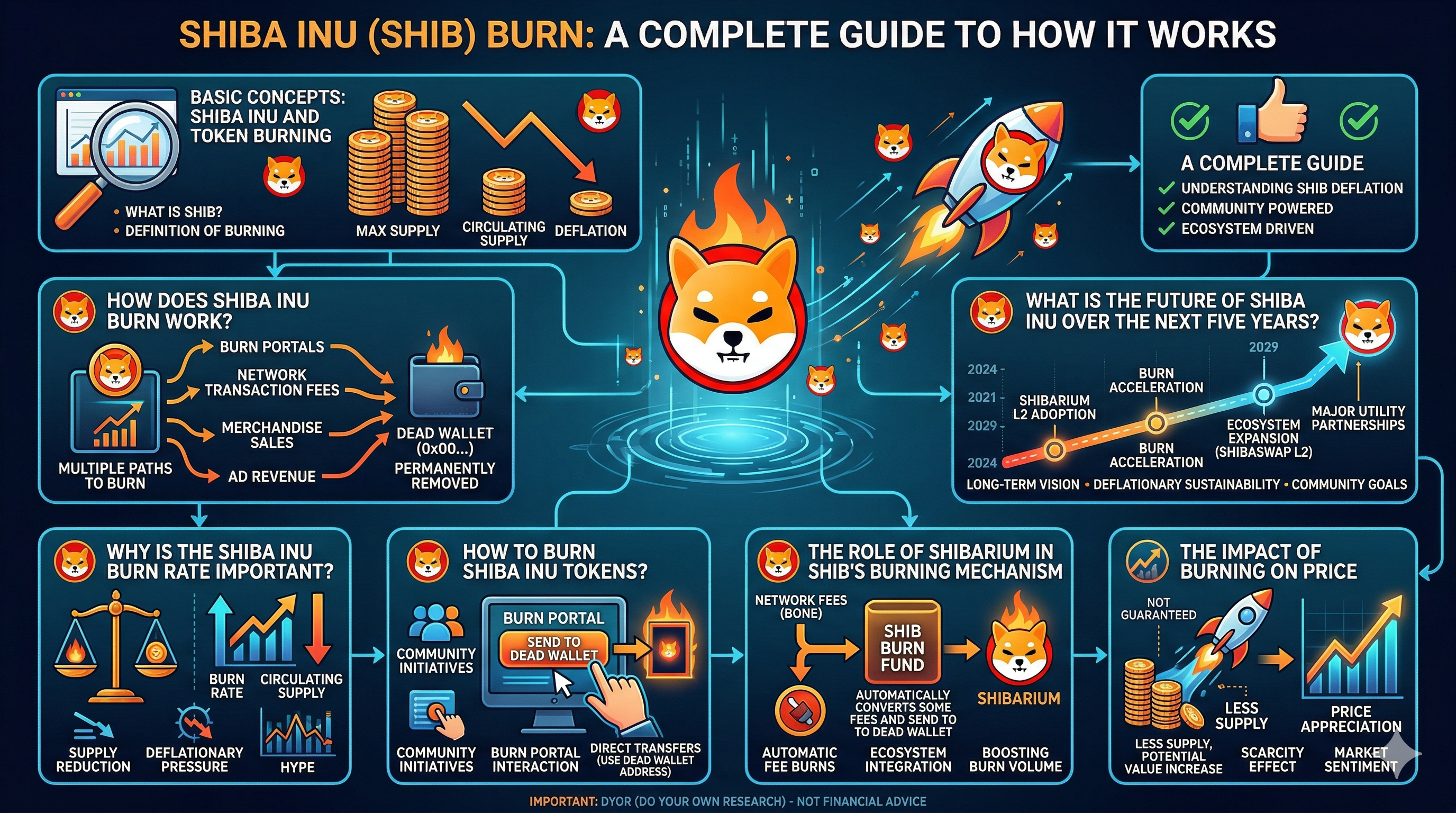
Shiba Inu started out as a meme coin, but that’s old news now—the ecosystem’s way bigger, and the buzz these days is all about token burning. Investors, traders, and those who just never let go of their SHIB keep hearing about how burning tokens cuts supply, makes SHIB a bit more rare, and maybe boosts confidence in the whole project. The community’s grown a lot with Shibarium and other tools, and burns are now a big piece of what people talk about. For starters, official Shibarium docs talk about a burn process linked to activity on the network, and plenty of market watchers are tracking how these burns actually change the supply over time.
So here's what you need to know. This is a guide on what Shiba Inu burning is and how the burn rate is implemented in practice, as well as how you can join. It also discusses the place of Shibarium in the scenario and why it is significant, then looks into the future of the project of seeing what token burning might have in store of SHIB in price and overall project direction within the next five years.
Key Takeaways
-
Shiba Inu burning is the act of permanently removing SHIB into circulation, usually by transmitting tokens to in usable wallet addresses, also known as dead wallets.
-
The Shiba Inu burn rate measures how quickly SHIB is being removed from supply, but short-term spikes do not automatically create a lasting price increase.
-
Shibarium has made burning more systemized by linking network activity and fees to the burn process through the official burn mechanism.
-
Any person who happens to think of burning SHIB must realize that this is not a transfer, but it is a significant action in the ecosystem and therefore cannot be undone.
-
Burning can improve scarcity over time, but SHIB’s still-massive supply means the scale required to dramatically affect price remains very large.
-
Over the next five years, SHIB’s future will likely depend on utility, adoption, and ecosystem development just as much as on token burns.
Basic Concepts: Shiba Inu and Token Burning
Shiba Inu started out as an Ethereum-based meme culture-driven token, but that did not last long. At present, it has grown into a wider ecosystem that incorporates such platforms as ShibaSwap, the Shibarium network, and other tokens. All these tokens tie into the same framework. The project’s official messaging now leans heavily on utility, positioning SHIB as part of a functioning system rather than a standalone novelty. That shift helps explain why the community has become increasingly focused on token management, especially efforts to reduce the overall supply and shape its long-term value.
So, token burning is basically when you send some crypto to an address that nobody can ever get to. When those tokens get there, they're basically taken out of use for good. A few explainer articles, like the ones from Calibraint and MEXC, mention that when SHIB coins are burned, they usually get sent to wallets that are pretty much useless or can't be gotten into.
This matters because it comes down to basic supply and demand. When fewer units are available while demand stays the same or grows, scarcity starts to build. That does not guarantee an immediate price increase, but it does affect the overall supply in circulation. For SHIB, that point is especially important because the token’s supply remains enormous. CoinMarketCap still lists it in the hundreds of trillions, which means even large burn events barely dent the total. In practical terms, most burns are still small relative to the scale of SHIB’s existing supply.
This is why when people talk about burning Shiba Inu coins, it often makes some people really excited and others really confused. People who are really into this are looking at the long-term scarcity. Some people who are doubtful say that even if we burn millions or billions of tokens, it might still just be a small part of all the tokens out there. Both sides have a point. It's important that we burn tokens, but it's really important when we do it regularly, can do it on a large scale, and link it to actual use within the ecosystem, instead of just during special community events.
In addition to this, there is a distinction between a burn event and the burn rate that is of essential importance. By burning the tokens what we mean is simply that they are not brought into circulation any more. Burn rate informs us of the rate at which damage is occurring such as in a day or a week-long period. That is why you see headlines in SHIB that tend to be things like "burn rate jumps" and not necessarily the actual number of tokens burned. The burn rate indicates acceleration/deceleration of things, and this is normally regarded by traders as a community activity.
How Does Shiba Inu Burn Work?
Shiba Inu burning works in a way that SHIB tokens get moved from regular circulation into some special wallets where they can't be used anymore. Once you spread the tokens, you will be able to never get them back, spend them, or trade them again. That is the point of any SHIB burn, whether it is burned by an individual or through other means such as Shibarium.
Before, it was mostly the community that handled the SHIB burns. People, projects, or campaigns would buy or hold SHIB and then intentionally send some of it to burn addresses. That model really stood out and had a big emotional impact, because every single burn felt like it was directly making things more scarce. Some older explanations say that doing manual burns was one of the first and clearest things the community tried to do to lessen the supply.
As the ecosystem grew, the discussion about burning tokens became more organized." The Shibarium burn page says that when people use Shibarium, it helps burn SHIB. This works by moving BONE from Shibarium to Ethereum, which then helps lower the total amount of SHIB. People are also saying that ShibTorch V2 will have a burn portal right in the official ecosystem, so holders can join a more official system.
So, SHIB burning isn't just something people do to make a statement anymore. More and more, it's connected to things like buying and selling, being part of different communities, and the basic systems that make things work. In the long run, we want to do more than just burn tokens every now and then; we want to make sure that as the tokens are used, it helps reduce their total supply. That approach is more important than you might think at first. One-time campaigns may look great but it tends to fade quickly. So, if a network's main activity keeps growing, it can keep the pressure on.
We should keep in mind that burning doesn't just magically create value, and it won't turn SHIB into Bitcoin overnight. Burning gradually moves the token system in a way that supporters think will make its value stronger over time. When an ecosystem grows larger, a planned way of burning things off becomes more useful. But how well it works really depends on how big it is, how often it happens, and if people actually use it, not just if there's a button to begin with.
Why Is the Shiba Inu Burn Rate Important?
The Shiba Inu burn rate is important because it shows investors and other people involved how fast the supply is getting smaller. How fast you cut down on something that's easy to find can really change how people feel about it.When the burn rate increases, people typically feel good about it because it generally means more people are participating or things are busier in that area.That's usually why you hear news about SHIB's burn rate again when people start looking at it.
So, Calibraint is saying that the burn rate shows how fast SHIB tokens are taken out of circulation. Then, CoinDCX, back in December 2025, pointed out that even when the number of tokens burned isn't huge compared to all the tokens out there, big jumps in the burn rate percentage can still get people's attention in the market. That matters a lot. How much SHIB is burned can go up a lot percentage-wise, but that doesn't mean the total amount of SHIB out there changes overnight in a big way.
So, you can look at burn rate as both a way to measure how the token works and how people feel about it. People who trade often see it as a sign that things are picking up or that confidence is coming back. Long-term holders might see this as proof that the project is still sticking to its idea of reducing its total supply over time. But neither of them should be too simple. If the ecosystem isn't very active and fires only happen once in a while, a sudden increase might get more attention in the news than it really deserves. When an ecosystem is lively and there's a steady pressure to burn tokens, then the burn rate actually starts to mean a lot more when you're looking at the bigger picture of how supply is managed.
The burn rate is also a big deal because there's still a huge amount of SHIB out there. CoinMarketCap's current numbers for SHIB tell us how many coins are still out there. Since the starting point is so big, investors need a way to figure out if the burning is just a little bit, a fair amount, or actually making things scarcer over time.
To actually get the picture of what is happening with the burning of SHIB, you are most likely to compare it to a few other items. The network in itself is another area to monitor, such as the number of users of Shibarium, the volume of SHIB being transmitted around, the overall ecosystem maturing, and the level of activity among users. The speed at which money is spent by a company is also significant, but it is just a single component of the equation, and it does not imply that the prices should inevitably increase.
How to Burn Shiba Inu Tokens?
Burning SHIB is conceptually simple, but it should be approached carefully because it is permanent. Once tokens are burned, they are gone. That means the process is less like moving funds between wallets and more like intentionally destroying a digital asset to support the ecosystem’s deflationary model. Guides discussing SHIB burns consistently stress that there is no undo button.
Step 1: Understand why you want to burn SHIB
Before doing anything technical, decide why you are burning tokens. Some users burn SHIB to support the ecosystem. Others participate because they believe stronger scarcity could help long-term price dynamics. Either way, the reason should be deliberate. Burning is not trading, and it is not staking. It is a permanent reduction in your own holdings.
Step 2: Use an official or trusted burn route
The safest path is to use recognized ecosystem tools or well-documented burn methods. Official Shibarium materials point users toward the burn process through Shibarium-related mechanisms, and MEXC’s explainer also references community burn portals on shib.io or related tools. That is far safer than relying on random wallet addresses shared on social media.
Step 3: Verify the destination and process
Just make sure you double-check the burn address or portal information before you send any SHIB. As you might know, there are these burn scams in crypto, and a fake burn address? It can just turn into someone else's wallet. This is one of those times where taking things slow is really better than rushing into action. We should look at where the ecosystem comes from, make sure we understand how it works, and if we're not sure, try it out with just a little bit first.
Step 4: Execute the burn transaction
After verification, connect the relevant wallet or submit the transaction through the chosen route. Depending on the method, the transaction may involve direct SHIB transfer to a dead wallet or ecosystem-linked actions that contribute to the burn process indirectly. In both cases, you should confirm that the transaction has been processed on-chain before assuming the burn is complete.
Step 5: Track and record the burn
Once the burn is completed, record the transaction details for your own records. Many community members also use burn trackers to follow aggregate supply changes over time. Shibburn is one such tracker, and it describes its monitoring system around special burn-related address.
The most important practical reminder is simple: burn only what you are fully prepared to lose forever. Burning is not a yield strategy. It is not an investment shortcut. It is a supply-reduction action that may support the ecosystem but comes at the direct expense of the tokens you send away.
The Role of Shibarium in SHIB's Burning Mechanism
Shibarium has become central to the modern SHIB burn story because it ties ecosystem activity to the supply-reduction narrative in a more sustainable way. The official Shibarium burn page explains that users can participate in a mechanism that helps decrease SHIB supply through transactions involving BONE moving from Shibarium to Ethereum. This creates a bridge between network usage and burn activity.
That matters because sustainable burns usually require sustained activity. If burning depends only on voluntary campaigns, it tends to be irregular and emotionally driven. But if it is linked to real usage, then every increase in transactions, apps, and ecosystem participation can contribute to a more consistent burn model. That is the stronger long-term thesis behind Shibarium’s role.
According to the news about ShibTorch V2 and other remarks about Shibarium, the project is apparently attempting to bring the process of Shiba Inu burning into a better view of people and more into its overall system usage. This is significant as it keeps people interested and also demonstrates that SHIB burns are not a show only but an aspect of the ecological functioning.
Still, Shibarium’s importance should not be exaggerated. Its presence improves the structure of the burn mechanism, but the final impact depends on adoption. If Shibarium sees meaningful usage growth, the burn process can become more relevant over time. If activity remains limited, the mechanism may be technologically sound but economically underpowered. That is why the future value of the burn model depends on the future value of the network itself.
The Impact of Burning on Price
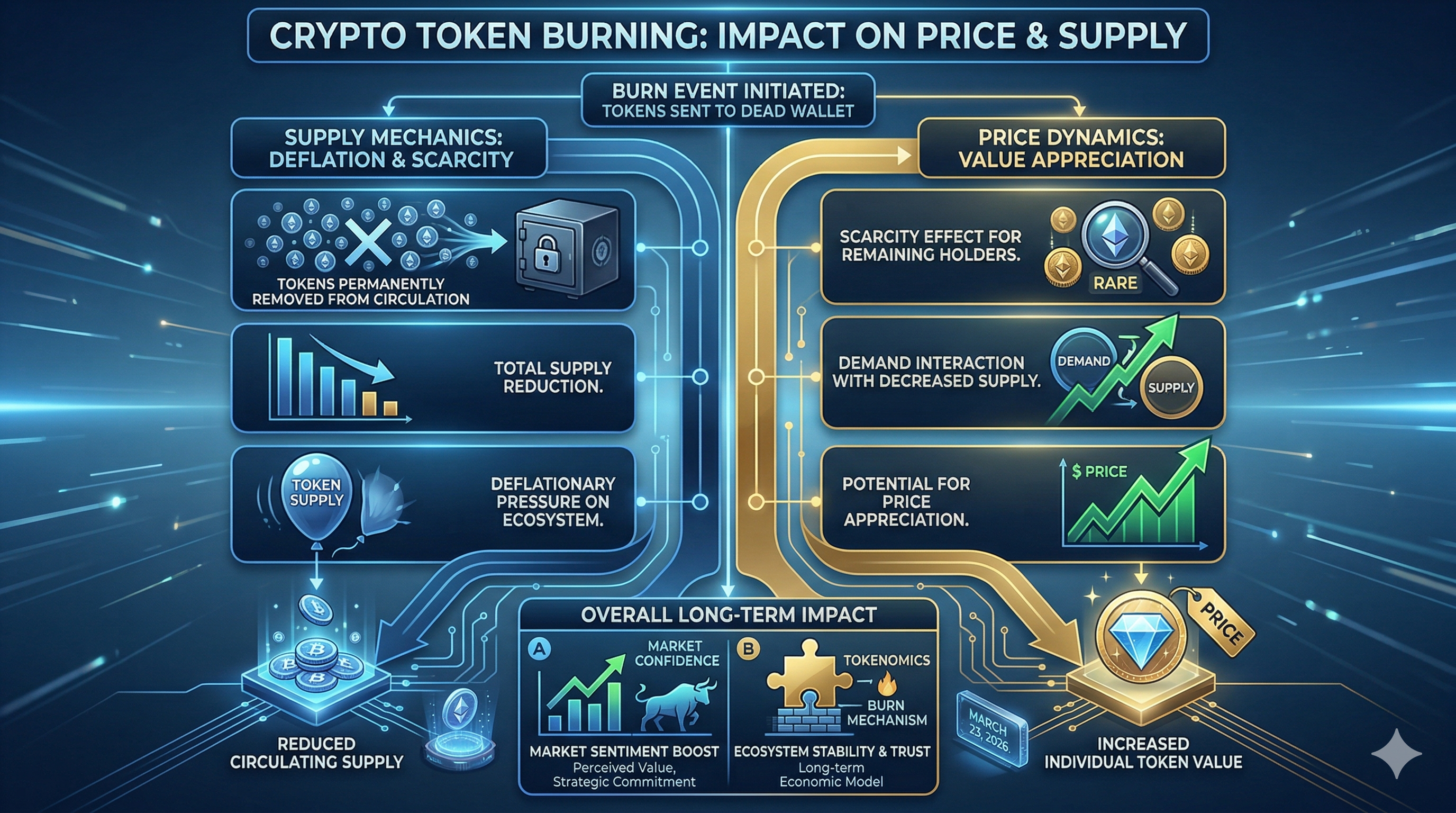
Burning can support price in theory because reducing supply increases scarcity. If demand stays stable or grows while available supply gradually falls, the price environment can improve. That is the basic economic argument behind the SHIB burn narrative, and it is why so many investors watch burn data closely.
In practice, however, the impact is more complicated. CoinDCX’s report on a 1,567% burn-rate jump is a good example. Despite the dramatic increase, the article noted that SHIB price remained weak. That illustrates one of the biggest lessons in tokenomics: burns can influence sentiment, but they do not overpower the broader market on their own.
The scale issue is the biggest reason. CoinMarketCap’s current supply data shows that SHIB still has hundreds of trillions of tokens in circulation. Against that backdrop, even millions or billions of burned tokens can have limited short-term price impact. This does not make burns pointless. It simply means the market effect is usually gradual unless the burn pace becomes massive and sustained over a long period.
Price also depends on demand. A token with a shrinking supply but fading interest may still struggle. A token with strong demand, growing utility, and an improving burn profile stands a better chance of long-term appreciation. That is why the strongest SHIB bull case is not “burns alone will make the price explode.” The stronger case is “burns combined with utility, adoption, and ecosystem growth can improve the project’s long-term valuation profile.”
So the honest conclusion is that burning can help price, but it is not a guaranteed or immediate catalyst. It is a supportive force, not a magic trigger. Investors who understand that tend to read SHIB burn data more intelligently than those expecting every burn-rate spike to produce an instant rally.
What Is the Future of Shiba Inu Over the Next Five Years?
Over the next five years, SHIB’s future will likely depend on whether it continues evolving from a community-driven meme asset into a durable utility ecosystem. The official Shib site emphasizes ecosystem expansion across DeFi, identity, DAO, metaverse, and developer tools, which suggests the project is trying to build a broader foundation than memcoins typically manage.
If Shibarium adoption grows, the burn mechanism could become more economically meaningful. That is probably the most important five-year variable in the burn discussion. A structured burn system only becomes powerful when people actually use the network in enough volume for that system to matter. In that sense, the future of SHIB burns is tightly connected to the future of SHIB utility.
At the same time, investors should remain realistic. SHIB’s supply challenge does not disappear quickly, and even steady burns may take years to materially reshape tokenomics. That means expectations for the next five years should be measured. It is reasonable to expect continued burn experimentation, stronger integration with ecosystem tools, and periods of renewed community excitement. It is less reasonable to assume that burns alone will solve every valuation challenge.
A balanced five-year outlook would say this: SHIB has a better chance of remaining relevant than many meme-origin tokens because it has expanded its ecosystem and formalized parts of its burn infrastructure. But relevance and explosive price appreciation are not the same thing. The long-term winners in crypto usually combine community strength with sustained utility, and SHIB still has to prove that it can do that at scale.
Conclusion
Shiba Inu burn is a real and increasingly structured part of the SHIB ecosystem, but it works best when understood through supply, utility, and scale rather than hype alone. Burning SHIB means permanently removing tokens from circulation, and the Shiba Inu burn rate shows how quickly that is happening. Shibarium has made the process more systematic, which strengthens the long-term narrative, yet the effect on price remains gradual because SHIB still has a very large supply. Over the next five years, the success of the burn model will likely depend less on dramatic one-day spikes and more on whether the ecosystem keeps growing, users keep participating, and network activity keeps turning into meaningful supply reduction.
FAQs
What is Shiba Inu burn?
Shiba Inu burn is the process of permanently removing SHIB tokens from circulation, usually by sending them to inaccessible wallet addresses. The goal is to reduce supply over time and support scarcity within the SHIB ecosystem.
Does burning SHIB increase the price?
It can support price over time by reducing supply, but the effect is not automatic. Price still depends on demand, market sentiment, and overall ecosystem growth, so burns should be seen as supportive rather than guaranteed catalysts.
How does the Shiba Inu burn rate work?
The burn rate measures how quickly SHIB is being removed from circulation over a set period. A rising burn rate means tokens are being destroyed faster, but percentage spikes can look dramatic even when the absolute burn amount is still relatively small.
Can anyone burn Shiba Inu tokens?
Yes, users can participate in SHIB burns, but they should use trusted or official methods. Since burns are irreversible, it is important to verify the process carefully before sending any tokens.
What role does Shibarium play in SHIB burns?
Shibarium helps connect network activity to the burn mechanism. Official materials describe a process where activity involving BONE and transfers between Shibarium and Ethereum contributes to reducing SHIB supply.
Will SHIB burns make Shiba Inu scarce in the next few years?
Burns can improve scarcity gradually, but SHIB’s supply is still extremely large. The long-term impact will depend on how much adoption and activity Shibarium and the wider SHIB ecosystem generate over time.