

Katana (KAT): The DeFi Layer‑2 Built for Liquidity, Rewards, and Real Yield
Theory
Katana (KAT) rises as a new DeFi‑focused Layer‑2 blockchain designed specifically to solve liquidity fragmentation and bring sustainable real yield to decentralized finance. With a unique token model that aligns incentives between users, liquidity providers, and the network, and with listings happening across major exchanges including KuCoin, KAT represents a novel utility token that could shape how capital efficiency and rewards are distributed in DeFi.
Introduction to Katana Network (KAT)
Katana Network is a decentralized finance‑oriented Layer‑2 blockchain built to unify liquidity and maximize real yield across DeFi applications. Unlike many networks that simply provide fast transactions, Katana takes a purpose‑built approach by concentrating liquidity into core DeFi building blocks such as integrated lending and decentralized exchange protocols, often named as Morpho and Sushi within its ecosystem.
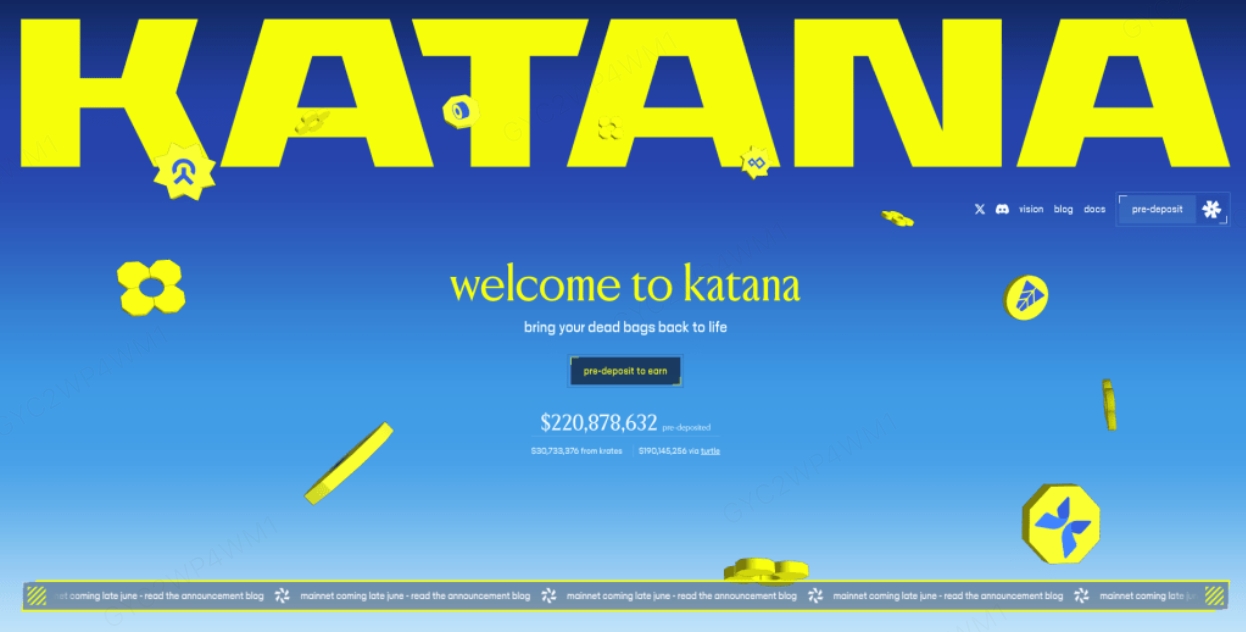
Its fundamental idea is that when liquidity is scattered across too many platforms, capital becomes less efficient: slippage increases, lending yields become thin, and users constantly jump protocols in search of better returns. Katana seeks to stop this fragmentation by gathering liquidity into centralized flywheel systems that can recycle fees and yield back to participants.
This design aims to make capital work harder and more predictably for users. Importantly, Katana is incubated by well‑known entities in crypto such as Polygon Labs and GSR, giving it credibility among developers building on Polygon’s AggLayer and CDK OP Stack frameworks. As a result, Katana’s growth narrative centers on yield, coordination, and a more user‑aligned DeFi experience, rather than pure token price speculation.
The Vision and Goals of the Katana Network
Logically, the vision of the Katana Network is to solve the persistent problems of traditional DeFi: liquidity fragmentation and unsustainable incentives. In the typical DeFi landscape, capital is spread thinly across many isolated protocols with separate liquidity pools, which leads to higher costs, lower yields, and inefficient use of capital. Katana’s architecture focuses on coordinating this activity into a smaller set of high‑impact apps so that liquidity becomes deeper and more efficient.
This helps users benefit from tighter price spreads, better borrowing and lending rates, and more predictable yield structures. To drive this ecosystem, Katana introduces revenue sources such as sequencer fees (generated by transaction processing on the network) and fee sharing from integrated applications that together create a flywheel of productive capital.
Rather than relying solely on token emission inflation, Katana aims to return real revenue to users and liquidity participants, a model often referred to as “real yield”. This “real yield” approach makes rewards more sustainable than many DeFi token emission schemes that dilute value over time. The foundational idea is that when users contribute liquidity or participate in governance mechanisms, they earn rewards generated from actual network activity, not just newly minted tokens, aligning incentives between users, applications, and the network itself.
KAT Tokenomics Explained
The KAT token is the native utility token of the Katana Network. Its design is fundamentally different from typical crypto tokens that are meant primarily for price speculation or simple governance. Instead, KAT acts as a coordination tool, a lever that directs how yield and economic incentives flow through the network. A total of 10 billion KAT tokens were initially minted, and the supply was distributed with the aim of supporting community participation, ecosystem growth, and future sustainability. Importantly, there was no venture capital pre‑sale, meaning early users rather than institutional backers received primary allocations.
During an initial non‑transferable period, KAT cannot be traded; instead, users receive KAT rewards by contributing to ecosystem activities and liquidity commitments. Once the transferability unlocks (targeted around early 2026), holders will be able to lock their KAT into the vKAT system, a governance‑style model inspired by the “ve(3,3)” mechanism popularized in other DeFi protocols.
When you stake (lock) your KAT to receive vKAT, you can currently earn an attractive APY of up to 28.7%, alongside voting power to direct emissions and reward flows across the network’s core apps. Under this model, vKAT (a non-transferable voting token) gives holders the ability to guide how emissions and incentives are allocated, while also allowing them to earn a share of fees from the liquidity pools they support. This reinforces active participation in the network instead of passive holding.
Technical Architecture of Katana
Katana stands out in its technical design by leveraging Layer‑2 scaling technologies and deep integrations that make it a purpose‑built DeFi environment rather than a general‑purpose chain. Built with Polygon’s AggLayer and CDK OP Stack, it benefits from the security and tooling of Ethereum while offering higher transaction throughput, lower fees, and greater composability. Katana’s core components include a VaultBridge primitive that routes bridged assets from Ethereum or other chains into productive yield strategies on the network.
This means that users can bridge their assets into Katana and start earning immediately through strategic integrations instead of waiting for slow or unproductive bridging. Another architectural focus is Chain‑Owned Liquidity (CoL), where a portion of sequencer fees and protocol revenues are reinvested into liquidity pools to deepen market depth and reduce slippage. This approach grows liquidity within the network organically, creating a stronger foundation for lending, swaps, and derivatives markets. Katana also uses zero‑knowledge proof capabilities to enhance privacy and performance without sacrificing decentralization. By building on robust technical frameworks and focusing on deep integrations with top DeFi primitives, Katana aims to offer a streamlined, economically efficient environment for decentralized finance activity.
How Katana Solves DeFi Liquidity Problems
One of the biggest challenges in decentralized finance has always been liquidity fragmentation, where capital is scattered across many protocols and chains, diluting depth and making trading or borrowing expensive. Katana’s approach is to unify liquidity into a set of core applications rather than allowing it to spread thinly across many isolated pools. For example, by integrating deeply with tools like Morpho for lending and Sushi for trading, Katana directs liquidity into the DeFi primitives that matter most. This makes order books deeper, spreads tighter, and yields more attractive to liquidity providers.
Once liquidity achieves critical mass in core pools, other applications can leverage that depth without needing to build their own isolated markets. The chain also reinvests portions of sequencer fees and protocol revenues into liquidity, creating what developers call a “productive flywheel,” where fees generated from real network usage feed back into economic activity.
By doing this, Katana aligns real ecosystem activity with rewards, counteracting issues many DeFi users face when they must constantly shift capital in search of higher yield. This deeper, more unified capital structure is intended to reduce slippage, improve execution, and encourage sustainable yield rather than simple token emissions that erode value over time.
Recent Launch and Market Context of KAT
Katana’s token launch and initial trading activity are happening in early 2026, with KAT becoming tradable across major exchanges like KuCoin as part of broader listing campaigns. Several exchanges have conducted zero‑fee trading events and reward promotions to encourage liquidity and participation in the early market phase, highlighting exchange confidence in the project’s long‑term potential. These listing events often include trading competitions and bonus programs that can provide additional incentives for early adopters.
Like many newly listed tokens, KAT’s trading volume and liquidity vary significantly in the first weeks, with patterns of high price volatility typical of initial token ecosystems. According to price tracking sites, KAT’s live price has fluctuated in the low cents range with relatively low 24‑hour volume, indicating early market discovery and thin liquidity at the moment. As liquidity grows and more holders enter the ecosystem, price stability and depth are likely to improve.
Early community reports also show that traders are engaging with the token on multiple fronts, including spot trading and participation in ecosystem rewards through exchanges. These developments reflect a market still in its earliest growth phase but gaining traction and community interest through multiple avenues of adoption.
Potential Growth and Use Cases
The potential of the Katana Network lies in its ambition to become a hub for coordinated DeFi liquidity and sustainable yield across decentralized applications. As the ecosystem matures, potential use cases could include deeper borrowing and lending markets powered by concentrated liquidity, more efficient spot and derivatives trading with tighter spreads, and yield opportunities that come from real protocol fees instead of inflationary token rewards. The introduction of vKAT governance mechanics allows users to guide how emissions are directed, which can help align incentives and grow areas of high demand within the network.
Additionally, features like native perpetual markets (e.g., Katana Perps) expand the scope of financial products available directly within the Katana ecosystem, increasing its utility and attractiveness to sophisticated traders. Since the network reinvests a portion of fees into liquidity, participants could benefit not just from occasional token incentives but from ongoing yield streams derived from actual economic activity on the chain. If these mechanisms scale as intended, Katana could become a model for future DeFi projects seeking real, sustainable value creation rather than speculative hype.
How to Buy KAT on KuCoin
Ready to buy KAT on KuCoin? Here’s a straightforward guide:
1. Create or Sign In to KuCoin – Open an account on KuCoin and complete any required identity verification.
2. Deposit Funds – Transfer USDT or another supported stablecoin/crypto into your KuCoin wallet.
3. Visit KuCoin Markets – Use the KuCoin search to find the KAT/USDT trading pair (Live Price)
4. Choose Order Type – Select a Market Order for an instant purchase at current price, or Limit Order to buy at a price you set.
5. Enter Amount and Confirm – Input the amount of USDT you want to spend and confirm your buy order.
6. Check Wallet – Once filled, your newly acquired KAT tokens will appear in your KuCoin spot wallet.
Keep in mind early tokens can be volatile; consider risk management strategies like setting stop-losses or only allocating what you can afford to lose.
Comparing KAT to Other DeFi Tokens
Katana’s utility token stands out by emphasizing sustainable yield and coordinated liquidity rather than purely speculative trading or governance alone. Many DeFi tokens focus on single‑protocol incentives (e.g., DEX governance, single‑chain staking), but KAT’s cross‑protocol integration aims to use yield generated from multiple sources, sequencer fees, trading fees, and revenue from lending markets, to reward participants. This positions KAT as more than a native token for a single protocol; it acts as an economic coordination layer that drives capital into productive use across a full DeFi stack.
While the concept shares similarities with other “vote‑escrowed tokenomics” approaches (like veCRV or veBAL), Katana aims to extend these mechanics across an entire Layer‑2 ecosystem instead of within a single application. This broad scope could make KAT more resilient if the underlying ecosystem grows, but it also requires more complex execution and community coordination. Compared to simple governance tokens, KAT’s reward model has the potential to provide ongoing yield if the network’s economic flywheel functions as intended. However, this also means its success relies heavily on adoption, ecosystem participation, and actual fee generation, factors that not all DeFi projects achieve in early stages.
FAQ Section
1.What is the KAT token used for?
KAT is a utility token that directs yield emissions and incentives across the Katana ecosystem; it can be locked for vKAT, giving holders voting power and fee‑sharing rights.
2. Is KAT already tradable?
Yes, KAT is now listed and tradable on exchanges including KuCoin with active trading pairs such as KAT/USDT.
3. Can I earn rewards from holding KAT?
If you lock KAT for vKAT once transferability opens, you may receive fees and reward allocations from core apps you support.
4. Does Katana generate real yield?
Yes, yields are generated from actual fees and economic activity on the Katana network rather than solely token inflation.
5. What tech does Katana use?
Katana leverages Polygon’s AggLayer and CDK OP Stack for its Layer‑2 infrastructure, providing scalability, composability, and EVM compatibility.