

Russia Currency Demand Surge and Stablecoin Hedging: 1.5 Trillion Ruble Shift and USDT Dynamics
Introduction
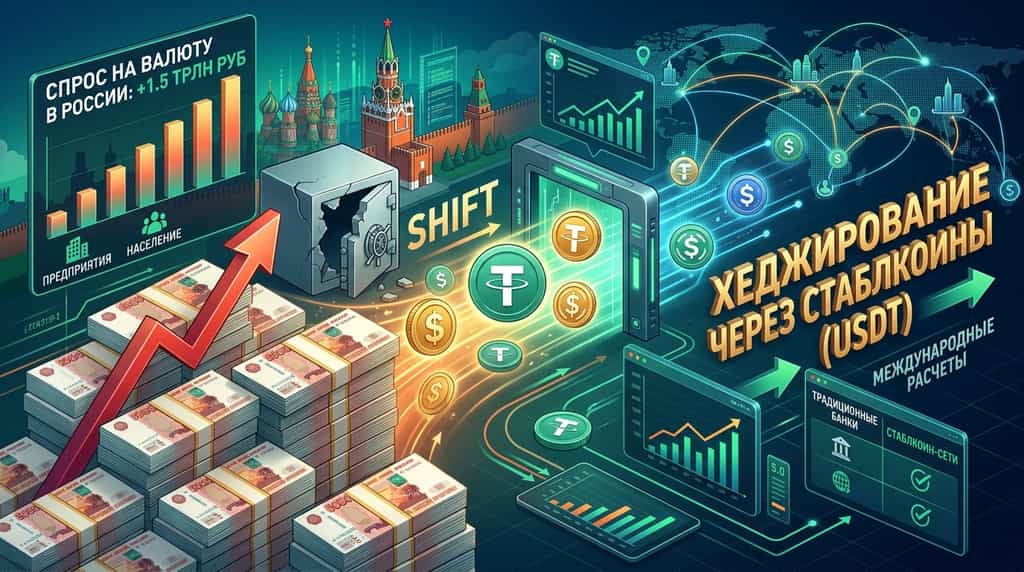
In a striking shift driven by shifting international trade routes and mounting structural pressures, net foreign currency purchases by Russian non-financial enterprises and retail residents skyrocketed to 1.5 trillion rubles, marking the highest level since December 2025 according to Bank of Russia data released via TKS.ru in October 2026. This massive liquidity reallocation underlines an intensifying scramble for foreign capital. At the same time, corporations and individuals are increasingly turning to stablecoins like USDT for cross-border hedging and trade settlement to bypass traditional banking bottlenecks.
Why Did Russian Non-Financial Enterprises Surge Foreign Currency Purchases to 1.5 Trillion Rubles?
Net foreign currency purchases by Russian non-financial companies surged by 37.7% in September 2026 to reach 1.5 trillion rubles, according to the Bank of Russia’s "Financial Market Risks Review." This jump represents the highest monthly volume since December 2025, significantly outpacing the 2026 monthly average of roughly 1.1 trillion rubles.
The primary driver behind this sharp acceleration is the expanding need for external financing and settlement liquidity among non-exporter businesses. While major commodity exporters continue to sell foreign currency at multi-year lows—falling to $2.1 billion in September 2026 according to Finmarket reports—broader domestic enterprises face surging costs for foreign equipment. Market analysts note that heavy capital expenditures, such as specialized machinery imports for domestic oil refinery (NPZ) maintenance and industrial infrastructure restoration, require substantial foreign exchange that export revenues alone no longer fully cover.
How Are Retail Citizens Responding to Macroeconomic Volatility?
Retail individuals increased their net foreign currency purchases to 91.5 billion rubles in September 2026, up from 74.6 billion rubles in August, remaining close to the 12-month average of 86.7 billion rubles. Although this retail demand is below peak summer levels—such as July 2026, when citizens bought 97.1 billion rubles—it confirms a persistent public preference for hard-currency cushions.
Total retail foreign currency acquisitions for the first nine months of 2026 reached 689 billion rubles, demonstrating a slight moderation compared to 759 billion rubles in the same period of 2025 and 1.1 trillion rubles in 2024. This retail caution reflects a stabilized domestic banking framework, yet the persistent monthly accumulation highlights ongoing hedging behavior against local currency depreciation risks.
What Role Do Stablecoins Like USDT Play in Cross-Border Risk Mitigation?
Stablecoins—led by Tether (USDT)—have become indispensable financial instruments for Russian enterprises seeking rapid cross-border settlement alternatives outside traditional SWIFT channels. Given that major exporter currency sales have dwindled to multi-year lows and official banking channels face strict compliance hurdles, decentralized crypto rails offer immediate liquidity execution.
Based on insights from decentralized finance tracking and market adoption reports, businesses utilize USDT to settle international trade invoices with Asian and Middle Eastern partners without the settlement delays typical of sanctioned correspondent banking networks. This digital dollarization allows importers to bypass multi-layer intermediary banks, mitigating counterparty freeze risks and ensuring continuous supply chain financing.
| Feature / Metric | Traditional Fiat Banking Channels | USDT Stablecoin Networks |
| Settlement Speed | 3 to 7 business days | Seconds to minutes |
| Intermediary Exposure | High (Multiple correspondent banks) | Minimal (Peer-to-peer blockchain transfer) |
| Regulatory Visibility | Fully exposed to western compliance filters | Pseudonymous / On-chain transparency |
| Volatility Risk | Low (Subject to currency controls) | Low (Pegged 1:1 to US Dollar reserves) |
What Are the Key Drivers Behind Exporter Currency Sales and Trade Deficits?
Major Russian exporters reduced their net foreign currency sales to a multi-year low of $2.1 billion in September 2026, down from $2.4 billion in August. Concurrently, overall non-financial corporate foreign currency sales rose 26.1% to $23.7 billion, exceeding the 12-month average of $19.7 billion, driven by firmer global oil prices.
The widening gap between declining exporter sales and surging corporate import demand explains why the broader non-financial sector remains a net buyer of foreign exchange. With export earnings constrained by geopolitical factors and compliance bottlenecks, companies must actively source foreign currency to fund essential imports, driving them toward both traditional foreign exchange markets and alternative digital asset solutions.
Beyond the Headlines: What KuCoin 5.0 Means for You
Market news moves fast — but where you act on it matters just as much. This October, KuCoin launches KuCoin 5.0, transforming KuCoin into a rebuilt platform. Here's what actually changes for you:
-
One account for everything. Older platforms split your money across separate "spot," "margin," and "futures" accounts and expected you to understand why. KuCoin 5.0's unified account removes that entirely — deposit once, and everything is simply there (only available to VIPs for now).
-
Stocks, indices, and commodities. KuCoin 5.0 expands beyond crypto into global markets. When crypto chops sideways and equities rally (or the reverse), you rotate in minutes instead of opening a brokerage account and waiting days for fiat rails.
-
Real-world assets (RWA). Tokenized exposure to traditional assets like commodities, right inside your crypto account. One of the fastest-growing segments in global finance is no longer reserved for institutions — you access it from the same balance you trade with.
-
Earn while you learn. Not ready to trade? KCUSD lets your stablecoins earn daily, auto-compounding interest. The lowest-stress way to put your idle deposit to work for 4% yield.
-
An AI assistant in plain language. Ask questions, get market context, understand what you're looking at — built into the platform, no jargon required.
-
An app that doesn't overwhelm. Faster, cleaner, and consistent — intuitive from the first tap, not after a tutorial.
-
Safety you can check, not just trust. A MiCAR-licensed EU entity, Proof of Reserves you can verify yourself, and internationally certified security (SOC 2 Type II, ISO 27001:2022).
Create your account in minutes — and start on the platform built for where crypto is going, not where it's been.
Conclusion
The sharp rise in net foreign currency purchases to 1.5 trillion rubles by Russian businesses and residents in September 2026 underscores an urgent, ongoing quest for foreign liquidity amidst tightening export revenues and complex import logistics. As traditional banking channels encounter mounting cross-border friction, the structural demand for decentralized alternatives like USDT has reached unprecedented heights. This parallel adoption of stablecoins highlights a permanent evolution in how global trade participants manage liquidity, hedge currency devaluation, and maintain operational continuity across fragmented financial jurisdictions.
Frequently Asked Questions
Why did Russian corporate foreign currency purchases reach 1.5 trillion rubles in September 2026?
The surge was driven by non-exporter businesses needing foreign exchange for overseas equipment purchases, industrial infrastructure repairs, and international trade settlements amid declining major exporter currency sales.
How do stablecoins like USDT assist in cross-border trade?
USDT enables instantaneous, borderless peer-to-peer settlements that bypass traditional SWIFT banking bottlenecks, mitigating transaction delays and reducing intermediary counterparty risks.
What was the volume of foreign currency purchased by retail citizens in 2026?
Retail individuals acquired 91.5 billion rubles in foreign currency in September 2026, bringing total net purchases for the first nine months of the year to 689 billion rubles.
Why are major Russian exporters reducing their foreign currency sales?
Major exporters reduced net sales to a multi-year low of $2.1 billion in September 2026 due to shifting trade settlement structures, localized retention, and geopolitical constraints affecting export proceeds.
Does the surge in foreign currency demand dictate the ruble exchange rate?
Not entirely. While high corporate and retail demand reflects strong foreign exchange appetite, the overall ruble exchange rate is simultaneously influenced by export revenues, broader import volumes, and capital controls.
Disclaimer
This article is for informational purposes only and does not constitute financial, legal, or investment advice. Always conduct your own research before interacting with digital assets