

AI Data Center Overcapacity by 2028? What SemiAnalysis Says About GPU Supply and Power Constraints
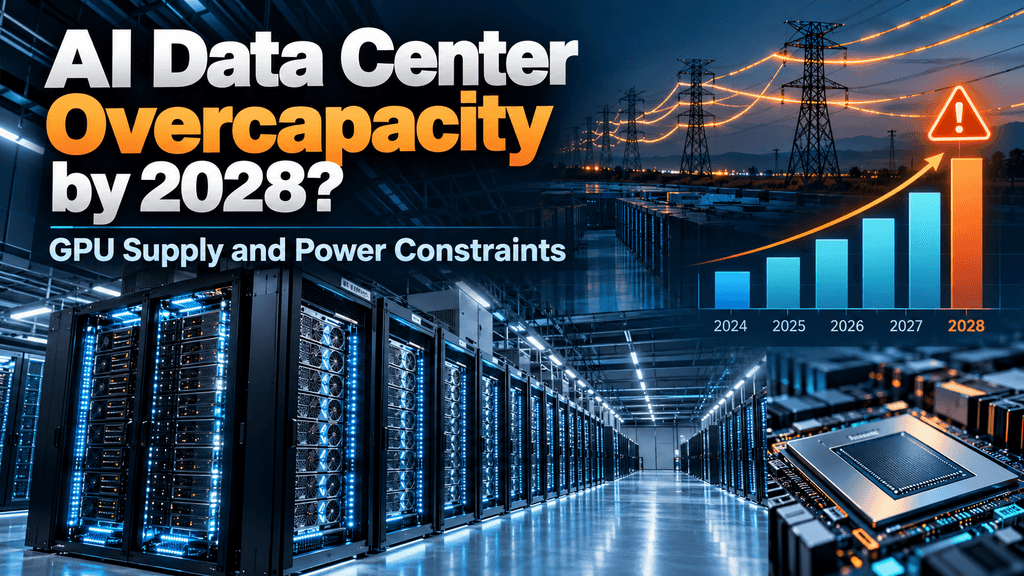
AI data center overcapacity could become a significant concern by 2028 as rapid infrastructure expansion creates uncertainty around GPU supply, electricity availability, and computing demand. In its October 19, 2026 research, SemiAnalysis projected more than 50 gigawatts (GW) of additional global data center capacity in 2027, raising questions about whether semiconductor production can keep pace with construction. The potential imbalance could affect Nvidia, major cloud providers, and investors financing AI infrastructure development. However, current electricity shortages and strong demand for artificial intelligence services complicate the outlook. Understanding the relationship between data center capacity, advanced chip availability, and future computing requirements is essential to evaluating the industry's financial risks and growth opportunities.
SemiAnalysis Warns of Potential AI Data Center Overcapacity by 2028
Semiconductor research firm SemiAnalysis has warned that AI data centers could face overcapacity by 2028 as infrastructure construction accelerates and semiconductor supply constraints evolve. In its October 19, 2026 report, the firm forecast more than 50 gigawatts (GW) of additional global data center capacity in 2027. Research lead Jeremie Eliahou Ontiveros subsequently highlighted the possibility that data center development could eventually outpace the availability of advanced computing hardware. The warning concerns a potential imbalance between infrastructure capacity and chip supply, rather than a confirmed decline in artificial intelligence demand.
SemiAnalysis Forecasts More Than 50 GW of Data Center Capacity in 2027
In its October 19 report, Datacenters 2027: The Year of Acceleration, SemiAnalysis raised its 2027 capacity expansion forecast from approximately 43 GW to more than 50 GW. The research identified over 24 GW of data center capacity in advanced construction across 40 major campuses, with most of that capacity expected to be delivered during 2027. Many of these facilities were already more than halfway through construction, with electrical and cooling equipment installed. The findings support expectations of substantial AI infrastructure expansion, although projected construction activity does not guarantee that every facility will become operational on schedule.
SemiAnalysis based its projections on building-level construction tracking, hyperscaler development activity, leasing commitments, and equipment deployment indicators. Major technology companies, including Microsoft, Amazon, Google, Meta, and Oracle, have contributed to rising demand for large-scale computing facilities. Developers are also adopting modular construction and prefabricated electrical systems to shorten project timelines and reduce labor requirements. These improvements could accelerate capacity additions, but financing conditions, electricity connections, and equipment availability remain important factors influencing actual completion dates.
AI Data Center Oversupply Risk Depends on Chip Supply and Infrastructure Expansion
During an October 20, 2026 discussion, SemiAnalysis researcher Jeremie Eliahou Ontiveros highlighted the changing relationship between GPU availability and data center electricity supply. In some markets, obtaining GPUs has become easier than securing sufficient power to operate them, leaving electricity infrastructure as a major deployment constraint. However, as developers expand facilities and introduce onsite power generation, the industry could experience a different bottleneck. Advanced logic chips, high-bandwidth memory, and semiconductor manufacturing capacity may become increasingly important in determining how quickly new data centers can be equipped with operational AI systems.
The potential AI data center overcapacity risk in 2028 would emerge if completed facilities exceed the available supply of suitable computing equipment. Operators could consequently face underused electrical, cooling, and building infrastructure while awaiting GPU installations or supporting components. Such a mismatch could delay revenue generation and increase financial pressure on capital-intensive projects, even if demand for AI computing services continues growing. Whether this scenario materializes will depend on semiconductor production, facility commissioning, electricity availability, and customer computing requirements. SemiAnalysis's warning remains a conditional outlook rather than confirmation that global AI infrastructure has entered an oversupply cycle.
GPU Supply and Power Constraints Create New AI Infrastructure Bottlenecks
The rapid expansion of artificial intelligence is placing growing pressure on electricity grids, semiconductor manufacturing, and advanced computing infrastructure. Although companies are investing heavily in AI accelerators and new facilities, GPU availability alone does not determine how much computing capacity can become operational. Data centers require reliable electricity, high-density cooling, networking equipment, and specialized memory to support modern AI workloads. These interconnected requirements create infrastructure bottlenecks that can delay deployment even when individual components are available. Understanding these constraints helps explain why strong demand for AI computing may coexist with unfinished or underused capacity. A related approach, decentralized physical infrastructure networks, coordinates computing resources across independently operated hardware that still requires reliable power and connectivity.
Electricity Shortages and Rising GPU Power Requirements Delay Data Center Deployment
Electricity availability remains one of the most significant constraints on AI data center development, particularly in regions where grid expansion cannot keep pace with new projects. According to the International Energy Agency's April 16, 2026 report, Key Questions on Energy and AI, the power density of AI servers increased elevenfold between 2020 and 2025, with a further fourfold increase projected by 2027. These increasingly powerful systems require substantial electricity, advanced cooling, and specialized power distribution equipment. Grid connection delays, transformer shortages, and local generation limitations can prevent operators from activating installed computing hardware. Research firm IDC reported on October 22, 2026, that almost 7 GW of planned US data center capacity for 2026 had been delayed or canceled because of insufficient power availability, illustrating how electricity constraints can disrupt infrastructure development.
To address these limitations, technology companies and data center operators are exploring onsite power generation, battery storage, and alternative electricity supply arrangements. Some developers are installing natural gas generators or fuel cells to reduce their dependence on lengthy grid connection processes, while others are investing in electrical infrastructure designed for high-density AI computing. However, onsite generation introduces additional challenges involving equipment procurement, fuel availability, operating costs, and system reliability. The IEA estimates that reliable onsite gas-fired generation may require 30%–70% more installed generating capacity than the critical data center load to accommodate operational requirements. Consequently, access to a power source does not automatically guarantee that a facility can support full GPU deployment without further infrastructure investment.
High-Bandwidth Memory and Advanced Packaging Restrict AI GPU Supply
Beyond electricity, high-bandwidth memory (HBM) and advanced semiconductor packaging are becoming increasingly important constraints on AI computing capacity. Modern accelerators from Nvidia, AMD, and other chip designers rely on HBM to provide the data-transfer speeds required for large AI models, while advanced packaging technologies integrate processors and memory into high-performance computing systems. In its October 22, 2026 analysis, IDC projected that HBM4 production would not fully meet demand until around mid-2027. The firm also estimated that advanced wafer-level packaging capacity could increase by approximately 80% in 2027, while demand could nearly double over the same period. These constraints can limit the number of complete AI accelerators available for installation, even when demand for computing services remains strong. Additional shortages involving optical networking components, liquid-cooling equipment, and power electronics can further delay deployment. As a result, effective AI computing supply depends on complete, operational systems rather than GPU production alone, making coordination across semiconductor manufacturing, electrical infrastructure, and data center commissioning essential.
AI Data Center Expansion Could Exceed Chip Supply by 10 GW in 2028
The global AI infrastructure market could face a significant capacity imbalance by 2028 as data center development accelerates faster than the supply of advanced computing hardware. Research from SemiAnalysis identifies a potential surplus of approximately 10 gigawatts (GW) of data center capacity relative to available AI chips by the end of 2028. This scenario reflects a possible mismatch between completed facilities and the semiconductor systems needed to operate them, rather than excess computing services available to customers. The outcome remains uncertain because construction schedules, chip production, and enterprise AI demand are evolving simultaneously.
Data Center Construction and Semiconductor Deliveries Shape the 2028 Supply Outlook
The next phase of AI infrastructure expansion will depend on whether newly developed facilities can be equipped with suitable processors as quickly as they become operational. SemiAnalysis's October 19, 2026 research identified strong construction activity supported by long-term leasing arrangements and rising investment from major cloud providers. The firm reported that Oracle had secured approximately 4.5 GW of data center IT capacity across three sites between August and October 2025, helping establish a broader market for large-scale infrastructure commitments. Such agreements support future construction, but contracted capacity does not necessarily translate into immediately available computing power. Operators must still coordinate equipment purchases, installation schedules, testing, and commissioning before facilities can generate revenue from AI workloads.
The potential 2028 imbalance also depends on how quickly semiconductor manufacturers expand production relative to infrastructure developers. Companies such as Nvidia, AMD, and TSMC are central to the supply of advanced AI processing systems, while cloud operators require complete server configurations rather than individual chips. Differences between hardware delivery schedules and facility completion dates could leave some data center capacity temporarily unused, particularly where operators require specific accelerator generations or networking architectures. However, slower construction, increased semiconductor output, or greater flexibility in hardware deployment could reduce the projected mismatch. The approximately 10 GW surplus remains a research scenario, and the complete assumptions behind SemiAnalysis's subscription-based model have not been independently verified.
Rising AI Infrastructure Investment Creates New Market Risks and Opportunities
Investment forecasts indicate that AI data center development could continue expanding substantially through 2028. According to an October 23, 2026 Reuters report, BofA Global Research expects global data center spending to increase from approximately $1 trillion in 2026 to $2.1 trillion by 2028. The firm estimated average development costs of around $49 million per megawatt, with IT-related equipment representing approximately 78% of total spending. These figures highlight the industry's dependence on costly computing systems as well as physical infrastructure. For developers and specialized cloud providers, delays between facility completion and productive GPU deployment could increase financing expenses and postpone expected revenue. At the same time, sustained construction activity may support demand for electrical equipment, cooling systems, and industrial infrastructure suppliers.
The longer-term outlook also depends on whether AI computing demand grows quickly enough to absorb additional operational capacity. In research published on October 22, 2026, IDC argued that infrastructure shortages remain more significant than insufficient customer demand, citing continued enterprise adoption and constraints across the technology supply chain. Its findings offer an alternative perspective to concerns about future overcapacity, particularly because unused facilities in one location can coexist with insufficient computing resources elsewhere. Decentralized GPU services such as Render Network provide another way to make distributed processing capacity available for supported computing workloads. During 2027 and 2028, investors and infrastructure operators will need to monitor GPU delivery schedules, data center utilization, cloud computing rental prices, capital expenditure guidance, and customer commitments. Falling rental prices accompanied by weaker utilization would provide stronger evidence of excess computing supply, while sustained demand and delayed installations would suggest that infrastructure constraints remain the dominant challenge. Neither outcome can be established from construction forecasts alone.
Data Center Overcapacity Risks for Nvidia, Technology Stocks and Future Investment
Potential AI data center overcapacity by 2028 could affect semiconductor manufacturers, cloud computing providers, and technology investors differently. While continued artificial intelligence adoption supports demand for advanced computing infrastructure, future profitability will depend on how efficiently companies convert capital investment into revenue. Changes in hardware purchasing patterns, infrastructure financing, and customer spending could influence technology stock valuations even if the broader AI market continues expanding.
Nvidia Faces GPU Demand and Inventory Management Risks
Nvidia (NVDA) remains a major beneficiary of AI infrastructure investment, reporting $89 billion in data center revenue for its second quarter of fiscal 2027, ended July 26, 2026, representing 117% year-over-year growth. However, rapid expansion also increases the importance of matching semiconductor production with customer purchasing schedules. In its August 2026 regulatory filing, Nvidia disclosed that supply and capacity commitments had increased to $279 billion, compared with $119 billion in the preceding quarter. The company warned that inaccurate demand forecasts, delayed customer purchases, and infrastructure limitations could create inventory and revenue volatility. A future data center capacity imbalance would not automatically reduce Nvidia's sales, but weaker hardware orders or slower adoption of newer GPU architectures could affect revenue growth and profit margins. The company's exposure ultimately depends on customer demand, product competitiveness, and its ability to adjust manufacturing commitments.
Cloud Providers Face Rising Financing and Profitability Pressures
Major technology companies, including Microsoft, Amazon, Alphabet, Meta, and Oracle, are committing substantial capital to AI infrastructure, while specialized cloud providers such as CoreWeave depend heavily on computing capacity utilization and long-term customer contracts. These investments create financial obligations that may continue even when expected revenue is delayed. On October 19, 2026, Reuters reported that S&P Global had raised concerns about AI-related borrowing and interconnected financing arrangements involving major technology companies and infrastructure developers. Such arrangements can increase financial exposure when projects depend on future customer spending to justify construction and equipment costs. Higher interest expenses, depreciation, and slower revenue growth could pressure free cash flow and investment returns, particularly among heavily indebted operators. However, diversified cloud providers may have greater flexibility to absorb these costs through established businesses and recurring service revenue. The Akash Network cloud marketplace illustrates a separate approach to matching available computing resources with users through distributed infrastructure providers.
Semiconductor Suppliers and Technology Investors Face Uneven Market Exposure
The financial consequences of AI infrastructure overcapacity would likely vary across the technology supply chain. In an October 5, 2026 analysis reported by Reuters, Morgan Stanley suggested that Nvidia and Broadcom were relatively insulated from near-term data center power constraints because of their visibility into customer deployments and semiconductor demand. Manufacturers supplying memory, optical components, power-management chips, and other supporting technologies could face greater inventory disruption if equipment installations are postponed. Meanwhile, companies providing electrical equipment, cooling systems, and infrastructure maintenance may continue benefiting from construction and operating requirements, although project cancellations could weaken future orders. For technology investors, the distinction between revenue growth and sustainable investment returns will become increasingly important through 2027 and 2028. Company earnings, capital commitments, profit margins, and customer contract quality will provide more meaningful evidence of financial resilience than broad predictions about an AI infrastructure surplus.
Conclusion
The possibility of AI data center overcapacity by 2028 highlights the growing challenge of coordinating infrastructure construction, GPU manufacturing, electricity availability, and customer demand. SemiAnalysis's forecast of more than 50 GW of additional capacity in 2027 suggests that development could accelerate considerably, while its potential 10 GW surplus scenario raises questions about whether semiconductor supply can support the expansion. However, continued power shortages and strong enterprise AI adoption indicate that infrastructure constraints may remain significant even as new facilities are completed.
For Nvidia, major cloud providers, and technology investors, the financial consequences will depend on hardware demand, capital spending efficiency, and the utilization of operational computing capacity. Monitoring semiconductor production, electricity infrastructure, cloud pricing, and company earnings throughout 2027 and 2028 will provide a clearer picture of whether the industry is approaching excess capacity or continuing to face supply shortages. The outlook remains uncertain, making verified operational data more useful than assuming that rapid construction will inevitably lead to oversupply.
FAQs
How Is AI Data Center Capacity Measured in Gigawatts?
AI data center capacity is commonly measured in gigawatts (GW) or megawatts (MW), representing the electrical power a facility can support. One gigawatt equals 1,000 megawatts. However, reported capacity may refer to IT equipment power rather than total facility consumption. Electricity use is measured separately in kilowatt-hours or terawatt-hours, making it important to distinguish installed power capacity from actual energy consumption.
Can Existing Data Centers Be Converted Into AI Computing Facilities?
Existing data centers can sometimes be upgraded for AI workloads, but conversion depends on available electricity, cooling infrastructure, and building design. Modern GPU clusters often require higher rack power density and liquid-cooling systems that older facilities cannot easily accommodate. Retrofitting may involve replacing electrical distribution equipment, upgrading networking connections, and modifying cooling systems. These requirements can make conversion expensive or technically impractical.
Why Could Some Regions Have Excess Data Center Capacity While Others Face Shortages?
Data center supply and demand are influenced by regional electricity availability, network connectivity, customer locations, and infrastructure regulations. A facility with unused capacity in one region cannot necessarily serve customers elsewhere at the same cost or performance level. Network latency, data residency requirements, and transmission limitations may restrict relocation options. Consequently, local oversupply can coexist with computing shortages in other markets.
Could More Efficient AI Models Reduce Future Data Center Demand?
More efficient AI models can reduce the computing power required for individual tasks, potentially lowering infrastructure costs per request. However, cheaper and faster AI services may encourage wider adoption, creating additional computing demand. The overall effect depends on how quickly businesses expand AI applications relative to improvements in model efficiency. Greater efficiency therefore does not automatically translate into lower total data center investment.
Does a Long-Term Data Center Lease Guarantee Full Capacity Utilization?
A long-term lease provides contractual revenue commitments, but it does not guarantee that every available server rack will be occupied or operating at full capacity. Some agreements reserve infrastructure before equipment installation, while others require customers to make payments regardless of actual usage. Investors should distinguish contracted capacity, occupied capacity, and productive computing utilization when assessing the financial performance of AI infrastructure projects.
Could AI Data Center Overcapacity Affect Electricity Prices for Consumers?
AI data center expansion can influence electricity prices through grid upgrades, generation investment, and changes in local power demand. Even if some facilities remain underused, utilities may still need to recover infrastructure development costs. The impact on household electricity bills depends on local regulation, electricity pricing structures, and how costs are allocated among customers. Excess data center capacity would not necessarily result in cheaper electricity.
Disclaimer: This general market information, possibly from third-party, commercial, or sponsored sources, is provided for reference and educational purposes only and does not constitute financial or investment advice, an offer, solicitation, or guarantee. We disclaim liability for its accuracy, completeness, reliability, and any resulting losses. Investments/trading are risky; past performance doesn’t guarantee future results. Users should research, judge prudently, and take full responsibility. For further details, please consult KuCoin’s Terms of Use and Risk Disclosure.