

Oil Prices Unlikely to Return to $70 Soon After US-Iran Deal: Strategist Warns of Months-Long Supply Uncertainty
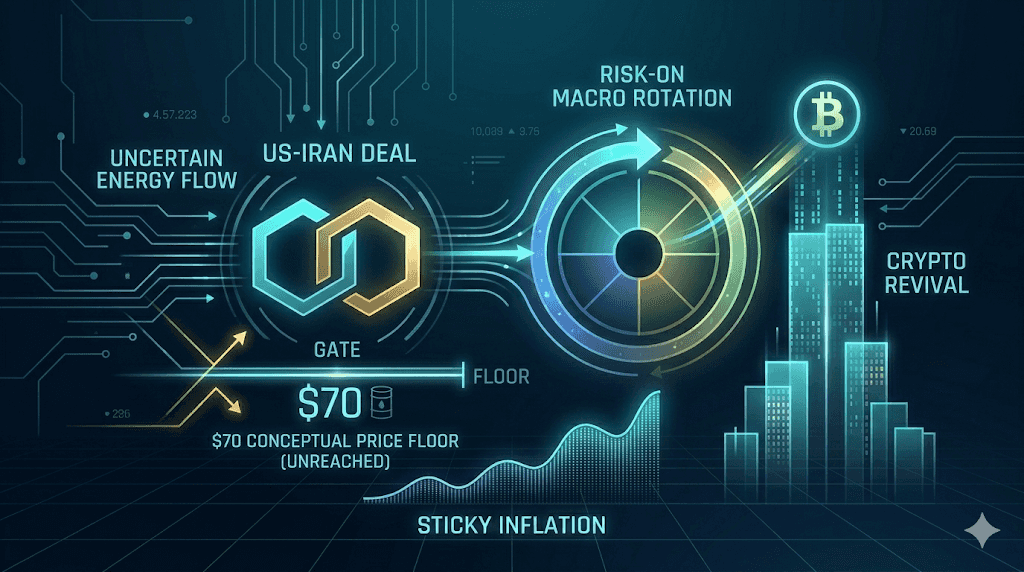
The recent US-Iran deal brings diplomatic relief, but global oil prices will not immediately return to the $70 per barrel threshold due to lingering structural supply chain damage. While this logistical friction ensures that near-term energy markets remain volatile, keeping core inflation somewhat sticky—the removal of the geopolitical tail risk has significantly boosted investor confidence.
Consequently, instead of suppressing high-risk asset classes, this long-awaited clarity has catalyzed a powerful "Risk-On" market rotation, triggering a major revival in the cryptocurrency sector.
The Delayed Normalization of Global Oil Supply
Oil prices will remain supported because the physical logistical networks required to transport crude oil require a transitional phase to resume normal operations. Despite the diplomatic resolution between the United States and Iran, clearing the extensive maritime backlog and managing high insurance barriers will take time. This prolonged disruption to global transit routes has adjusted short-term delivery schedules and delayed immediate volume recovery.
According to the U.S. Energy Information Administration (EIA) June 2026 Short-Term Energy Outlook, Brent crude spot prices are projected to average $105 per barrel throughout June and July. This specific projection confirms that the diplomatic deal will not trigger an instantaneous supply influx or price collapse. The logistical reality of re-routing massive crude oil shipments fundamentally prevents a rapid drop back to the $70 baseline.
Energy market analysts correctly emphasize that the global supply chain experienced prolonged structural strain during the initial months of the geopolitical conflict. Reestablishing secure shipping lanes and coordinating tanker fleets requires a phased orchestration by major energy conglomerates. Consequently, the market expects these logistical bottlenecks to sustain firm commodity pricing well into the fall.
Production Shut-Ins and Inventory Drawdowns
Global oil production shut-ins reached historic levels, temporarily restricting the volume of crude oil available for immediate export. As the Strait of Hormuz remained closed, major Middle Eastern producers encountered physical storage constraints, which led to significant operational rollbacks and temporary well closures.
The EIA reported in June 2026 that these forced production shut-ins averaged 11.3 million barrels per day during May. Restarting these dormant oil wells and downstream facilities involves a complex, multi-week engineering process. This substantial physical production deficit indicates that global crude oil supplies are expected to remain relatively tight in the near term despite the new diplomatic agreement.
Furthermore, global oil inventories have drawn down to multi-year lows to offset the supply gap. Based on June 2026 EIA forecasts, total liquid fuels inventories in the OECD are projected to fall to just under 2.3 billion barrels by December 2026. This metric represents the lowest level of available oil storage recorded since 2003, underscoring the tight fundamental backdrop as the market begins its recovery phase.
Macro Liquidity and Its Impact on Cryptocurrencies
The persistence of elevated oil prices dampens available fiat liquidity within the global cryptocurrency market. When energy prices remain sticky, rising operational costs compress profit margins for retail consumers and enterprise corporations alike. This redistribution of capital reduces the excess discretionary income typically channeled into speculative digital asset investments.
Digital assets historically benefit from abundant fiat currency to sustain broad retail participation and extended market expansions. While high oil prices during the height of the geopolitical conflict capped excess cash reserves, the recent US-Iran peace deal has dissolved a major geopolitical tail risk. This breakthrough has significantly revived market sentiment, driving a notable capital rotation back into risk assets.
Historically, high crude oil prices exert upward pressure on global headline inflation, prompting central banks to maintain restrictive monetary policies for longer periods. Elevated energy costs increase input expenses across manufacturing, agriculture, and global logistics. As these compounded costs are progressively passed onto consumers, they create temporary inflationary friction within the broader global economy, delaying aggressive monetary easing despite recent diplomatic progress.
The Stabilization of Capital Flows in Digital Assets
The recent diplomatic resolution between the United States and Iran has significantly altered institutional capital flows, stabilizing professional risk appetite across alternative asset classes. While the prolonged oil shock previously caused fund managers to exercise caution regarding speculative decentralized networks, the reduction in macroeconomic uncertainty has allowed managers to re-evaluate their exposure to high-growth digital tokens.
This pivotal market shift has effectively decelerated the previous net outflows observed in major spot cryptocurrency investment products. As traditional finance funds reduce defensive cash-hoarding behaviors, the intense selling pressure that temporarily capped the spot market has moderated. Instead, renewed accumulation and tactical short-covering have supported broad digital asset valuations.
Although central banks are expected to hold policy rates at restrictive levels to manage lingering, energy-driven supply chain inflation, the relative premium of sovereign bonds has begun to balance out . Global capital is no longer exclusively seeking risk-free, yield-bearing government instruments. Anticipating a broader peak in macro inflationary pressures, selective institutional capital injections are returning to the cryptocurrency sector, providing the foundational liquidity required to stabilize the broader market.
The Impact of Yield Curves on Digital Valuations
When central banks adjust interest rates to manage sticky oil prices, sovereign bond yield curves can invert, reflecting broader macroeconomic re-alignments. This financial signaling prompts traditional institutional investors to adopt defensive postures, often moderating their exposure to emerging technology sectors. Digital asset valuations generally experience compression when these macro indicators suggest broader economic deceleration.
Cryptocurrency ecosystems typically benefit from an expanding macroeconomic outlook to maintain strong venture capital inflows for protocol development. When inverted yield curves suggest potential recessionary risks, venture capital firms tend to tighten due diligence and slow their funding distributions. This deceleration in private funding requires digital asset projects to prioritize capital efficiency and long-term sustainability rather than reliant on speculative growth.
Because decentralized networks thrive on consistent developer activity, a more disciplined funding environment can impact the pace of technological progress. When development cycles lengthen, the market temporarily re-prices the near-term utility proposition of the underlying tokens. While prolonged macro uncertainty can lead to tactical position adjustments by long-term holders, the recent U.S.-Iran diplomatic resolution has stabilized broader market sentiment, providing a more predictable backdrop for digital asset valuations.
The Mechanics of Inflation and Fiat Devaluation
Prolonged energy shocks contribute to the long-term devaluation of global fiat currencies by occasionally necessitating increased government fiscal support. Governments sometimes attempt to alleviate high consumer energy costs through targeted subsidies and sovereign debt issuance. This prolonged fiscal expansion can gradually dilute the purchasing power of global fiat currencies over an extended economic cycle.
While such expansionary conditions historically favor fixed-supply assets like Bitcoin, near-term liquidity requirements can temporarily disrupt this long-term dynamic. In periods of broad market adjustments, the immediate demand for operational cash may prompt investors to realign their digital asset allocations, balancing long-term inflation hedges against short-term portfolio stability.
Enterprise corporations are also adopting a more measured approach toward strategic investments in decentralized blockchain infrastructure due to elevated, energy-driven operational costs. When baseline logistics and utility expenses rise, companies often optimize funding for experimental technology initiatives. Rather than a total capital freeze, this macro-driven discipline encourages the digital asset industry to focus on delivering high-efficiency and commercially viable enterprise solutions.
Shift in Retail Participation and Market Sentiment
Elevated energy costs can temporarily moderate retail participation within the cryptocurrency market as consumers adjust to shifting living expenses. High oil prices historically place pressure on disposable income by increasing the direct costs of gasoline, utilities, and basic commodities. Consequently, the average retail participant typically adopts a more cautious approach when allocating discretionary capital toward volatile digital tokens.
While prior economic sentiment reports highlighted the strain that inflationary pressures placed on household budgets, the broader market impact remains dynamic. Fluctuations in disposable retail income can influence the consistency of buying support within the digital asset sector. However, the recent U.S.-Iran diplomatic resolution has significantly stabilized consumer expectations, encouraging a notable return of retail interest alongside institutional capital.
A temporary deceleration in retail inflows can naturally lead to adjustments in market depth across both centralized and decentralized exchanges. During periods of lower volume, order books may reflect wider spreads, requiring less capital to impact price movement. Nevertheless, today's market reality points toward a robust sentiment recovery.
The Role of Algorithmic Trading Bots
Modern financial markets are significantly influenced by automated algorithmic trading systems that respond efficiently to shifting macroeconomic data. When energy prices remain elevated and inflation indicators diverge from institutional forecasts, these quantitative algorithms often initiate pre-programmed sell orders to manage risk. Digital assets can experience rapid price adjustments during these automated flows due to their continuous, round-the-clock global trading infrastructure.
Because cryptocurrencies often exhibit strong correlations with high-beta technology equities, institutional trading strategies frequently align Bitcoin with traditional tech stock movements. This quantitative correlation can temporarily overshadow the underlying technological developments or long-term utility of decentralized blockchain networks, treating digital tokens primarily as high-volatility risk assets to optimize short-term capital preservation.
These rapid algorithmic adjustments can influence leverage dynamics within cryptocurrency derivative markets. When automated spot selling approaches key technical support levels, it can trigger localized futures liquidations, amplifying short-term price volatility.
How Institutional Capital is Reacting
Institutional investors have relied closely on traditional commodities and defensive financial instruments to balance portfolios during the recent oil-driven macroeconomic volatility. While professional asset managers selectively reduced exposure to high-beta technology equities and cryptocurrencies during the height of the crisis, capital preservation strategy focused heavily on assets with verified physical demand.
Prior macroeconomic market conditions temporarily favored traditional assets with established safe-haven characteristics and fundamental utility. During periods of energy-driven headline inflation, physical commodities historically showcase stronger near-term performance relative to speculative digital tokens. Financial participants frequently analyze these institutional capital trends to assess shifting global market cycles.
Stablecoins as a Defensive Digital Strategy
Fiat-backed stablecoins function as prominent defensive instruments within the broader cryptocurrency ecosystem. Market participants frequently convert volatile altcoins into stable assets to preserve their core trading capital during periods of heightened market tension. This strategic realignment allows investors to manage portfolio volatility without necessarily triggering immediate taxable fiat withdrawals.
According to June 2026 on-chain data, stablecoin exchange balances increased notably over the past few months as traders prioritized capital preservation. Holding stablecoins allows digital asset investors to mitigate downside volatility and maintain liquidity. This defensive positioning provides the tactical flexibility needed to re-allocate capital efficiently as market conditions begin to stabilize.
Major hedge funds routinely perform portfolio rebalancing that utilizes these stablecoin instruments during macro downturns. These institutions systematically adjust their cryptocurrency holdings to manage risk profiles and meet operational capital requirements. Preserving core liquidity through stable assets represents a foundational risk management practice during periods of macro uncertainty.
Trading on KuCoin During Macro Volatility
Navigating shifts in global macroeconomic data requires structured trading approaches on a liquid cryptocurrency exchange. KuCoin offers a suite of risk management tools designed to help traders manage portfolio exposure effectively during periods of broader market adjustments. Utilizing these advanced trading features can assist in safeguarding digital asset values.
Traders can utilize KuCoin’s advanced spot trading interface to selectively transition from highly volatile altcoins into established large-cap cryptocurrencies or fiat-pegged stablecoins. Deploying trailing stop orders can assist in automatically locking in gains while mitigating downside risks as prices fluctuate. Incorporating advanced order types can provide greater execution control compared to basic market orders when global capital flows exhibit higher unpredictability.
Furthermore, the KuCoin Earn platform provides options to generate consistent passive yield on idle stablecoin balances. This practical strategy offers a way to navigate inflationary macroeconomic pressures while waiting for broader cryptocurrency market trends to establish clearer directions. Generating passive rewards represents a measured, low-risk approach to asset management during periods of extended market uncertainty.
Conclusion
The recent diplomatic resolution between the United States and Iran will not immediately force global oil prices back to $70 per barrel threshold due to lingering structural lag. Prolonged physical disruptions in maritime shipping lanes and past production shut-ins indicate that energy markets will experience a transitional phase of supply normalization. According to the June 2026 EIA Short-Term Energy Outlook, Brent crude is expected to remain highly elevated through the summer, sustaining immense inflationary pressure worldwide.
While sticky near-term energy costs prompt central banks to maintain relatively restrictive monetary policies, the elimination of catastrophic geopolitical tail risks has significantly stabilized broader financial markets. Anticipating that global inflation pressures have effectively peaked, market sentiment has shifted toward a robust "Risk-On" footing. To successfully navigate this evolving economic landscape, digital asset investors are moving away from panicked capital preservation, choosing instead to utilize advanced risk management tools and strategic stablecoin allocations on liquid platforms to capitalize on widening market recovery.
FAQs
Why won't the US-Iran deal immediately lower global oil prices to $70?
The diplomatic breakthrough cannot instantly clear the logistical backlog created by the prolonged physical closure of critical maritime shipping lanes. Restarting dormant oil wells and managing delayed tanker schedules involves a gradual engineering and operational process, meaning near-term physical crude oil supplies will adjust incrementally rather than shift overnight.
How do high crude oil prices influence cryptocurrency markets?
Elevated oil prices place upward pressure on global headline inflation, increasing everyday living and corporate operating expenses. When individuals and enterprise corporations allocate more capital toward basic operational needs, it temporarily reduces the excess discretionary fiat currency typically channeled into higher-volatility assets like cryptocurrencies.
Why does energy inflation prompt central banks to keep interest rates elevated?
Central banks maintain restrictive monetary policies to moderate economic demand and prevent structural inflation from becoming embedded. Because elevated oil prices increase input expenses across manufacturing, agriculture, and global logistics, central banks often sustain higher borrowing costs to manage these broad pricing pressures.
Why has Bitcoin's correlation with inflation hedges shifted recently?
Institutional algorithmic trading models frequently align Bitcoin with high-beta technology equities rather than traditional safe-havens like physical gold. During periods of tight fiat liquidity driven by energy costs, quantitative funds often adjust their risk exposure by reducing volatile digital assets.
What is a measured strategy for retail traders managing macro volatility?
Retail traders often prioritize risk management by converting highly volatile altcoins into fiat-pegged stablecoins. Utilizing stablecoins on a secure exchange helps mitigate sudden downside exposure while maintaining the necessary liquidity to re-allocate capital efficiently as broader macroeconomic conditions stabilize.
Disclaimer
The information provided on this page may originate from third-party sources and does not necessarily represent the views or opinions of KuCoin. This content is intended solely for general informational purposes and should not be considered financial, investment, or professional advice. KuCoin does not guarantee the accuracy, completeness, or reliability of the information, and is not responsible for any errors, omissions, or outcomes resulting from its use. Investing in digital assets carries inherent risks. Please carefully evaluate your risk tolerance and financial situation before making any investment decisions. For further details, please consult KuCoin’s Terms of Use and Risk Disclosure.