



SUI Gains Institutional Attention: Complete Guide to Sui Blockchain in 2026
2026/04/20 10:30:03
Introduction
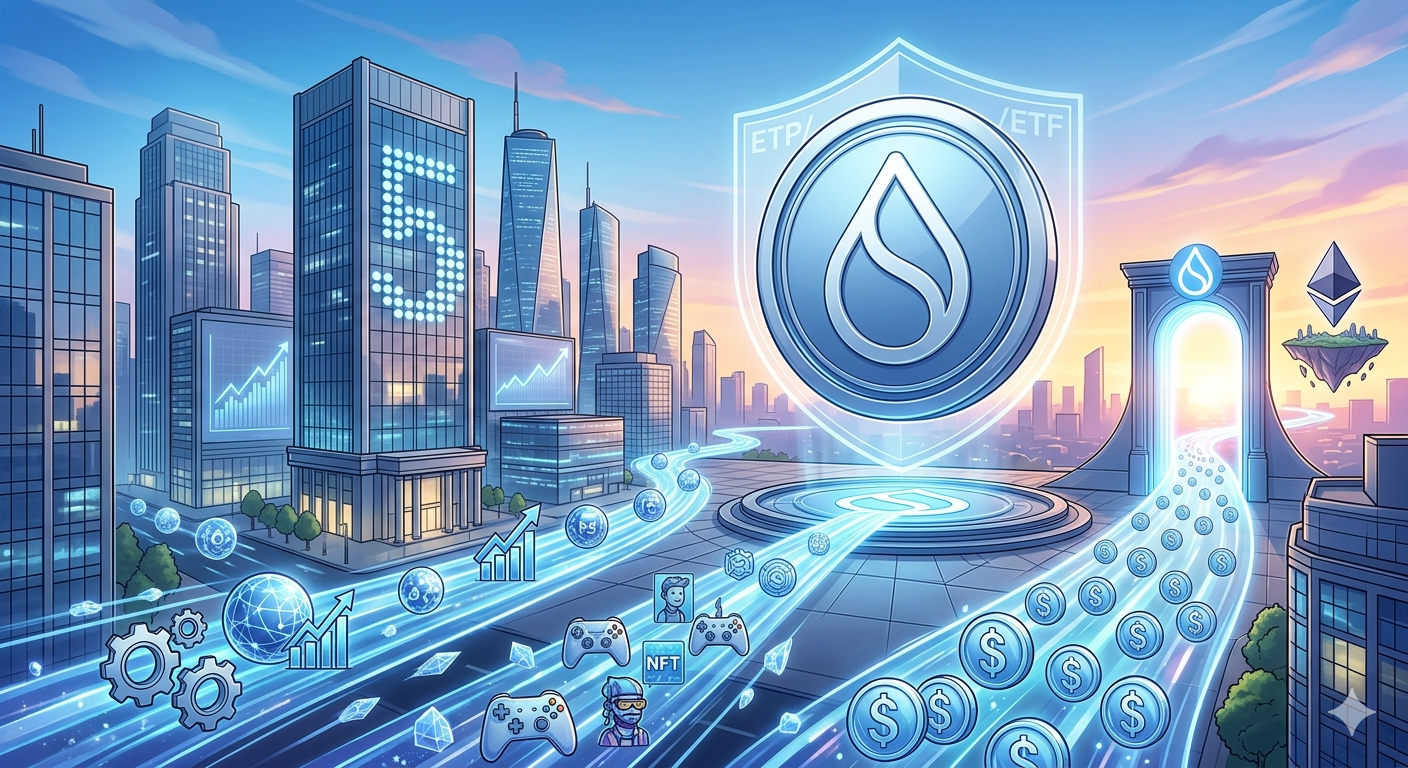
The cryptocurrency landscape is shifting beneath our feet. In February 2026, Sui became the fifth spot exchange-traded product (ETP) crypto asset-and institutional investors took notice. This wasn’t just another listing. It marked a fundamental change in how the market views Sui, a blockchain that handled more than $2.6 billion in total value locked (TVL) by late 2025. For crypto enthusiasts and investors watching from the sidelines, this raises a critical question: Is Sui the institutional-grade blockchain you’ve been waiting for?
What is Sui Blockchain? Understanding the Object-Centric Revolution
Sui is a high-performance Layer 1 blockchain that takes a fundamentally different approach to data organization. Unlike traditional blockchains that organize transactions in linear chains, Sui uses an object-centric model-treating every digital asset as a distinct object that can be processed in parallel. This architectural choice sounds technical, but its impact is straightforward: faster transactions, lower fees, and a network that doesn’t grind to a halt when everyone tries to use it simultaneously.
The blockchain emerged from Mysten Labs, a team with deep roots in Meta’s Diem project (formerly known as Libra). This heritage shows in Sui’s engineering. The network achieved 10x TVL expansion from $250 million in early 2024 to $2.6 billion by October 2025-a growth trajectory that caught the attention of both retail traders and institutional asset managers. By Q3 2025, Sui reported 19.9% quarter-over-quarter growth, even as the broader DeFi sector faced persistent challenges.
For newcomers to the crypto space, understanding Sui means recognizing three core advantages: speed, scalability, and developer-friendly architecture. Transactions on Sui complete in seconds rather than minutes, and the network handles thousands of transactions per second without the congestion that plagues older blockchains. These aren’t theoretical promises-they’re measurable performance metrics that matter when you’re trying to move money quickly or build applications that users actually want to use.
SUI April 2026 Upgrades: Technical Improvements Driving Real Adoption
April 2026 marks a pivotal moment for Sui as the network rolls out its most significant technical upgrades since launch. The Mysticeti upgrade-the name draws from the Greek word for “whale”-represents Sui’s commitment to institutional-grade infrastructure. This upgrade isn’t just marketing fluff; it directly addresses the demands that institutional players place on blockchain networks: reliability, predictably, and compliance-ready architecture.
The Q1 2026 upgrades built four layers of financial infrastructure simultaneously:
td {white-space:nowrap;border:0.5pt solid #dee0e3;font-size:10pt;font-style:normal;font-weight:normal;vertical-align:middle;word-break:normal;word-wrap:normal;}
| Layer | Feature | Impact |
| ETF Infrastructure | Spot ETP support | Enables traditional finance exposure to SUI |
| Stablecoin Integration | USDsui with gasless transfers | Reduces friction for everyday transactions |
| Margin Trading | Leveraged positions | Attracts sophisticated traders |
| Native Bridge | Ethereum interoperability | Connects Sui to the largest DeFi ecosystem |
The USDsui stablecoin deserves special attention. Gasless transfers mean users don’t need to hold SUI tokens just to pay transaction fees-a barrier that confuses newcomers and frustrates experienced users. When you want to send USDsui to a friend, you send USDsui, not a mix of stablecoins and network tokens. This simplicity sounds minor but represents a massive usability improvement that aligns with how normal people expect money to work.
The native Ethereum bridge further expands Sui’s reach. Ethereum remains the largest smart contract platform by total value locked, and Sui’s bridge allows assets to flow between networks without requiring users to navigate complex wrapping and unwrapping processes. For institutions managing multi-chain portfolios, this directly reduces operational complexity and the associated costs.
Institutional Interest in SUI: Who’s Buying and Why
The composition of Sui’s investor base fundamentally shifted in early 2026-and this shift speaks louder than any price chart. February 2026 marked a turning point when Sui became the fifth spot ETP crypto asset available for trading. This isn’t merely a listing; it represents admission to the institutional trading ecosystem, where pension funds, hedge funds, and wealth managers allocate capital through regulated vehicles.
Grayscale launched a Sui-focused trust product, giving accredited investors exposure to SUI without direct token ownership. Bitwise added SUI to its ETF consideration list, signaling potential future products that would bring Sui to brokerage accounts serving everyday investors. These aren’t speculative positions-they represent billions of dollars in potential future allocation that requires proper custody, reporting, and regulatory compliance.
The institutional case for Sui rests on four pillars: performance differentiation, predictable fee structure, fresh technology stack, and absence of legacy baggage. Sui’s transaction speeds and throughput exceed many competitors, and its fee structure-a flat rate without the price volatility seen on networks like Ethereum during congestion-makes financial planning more predictable. Unlike blockchains that emerged in 2015-2017 and carry years of accumulated technical debt, Sui started fresh with modern knowledge of what works and what fails at scale.
Sui’s network has also avoided the outages that plague some competitors. For institutions who cannot afford downtime-whether during market volatility or regular trading hours-reliability matters as much as performance. The combination of speed, reliability, and institutional infrastructure has shifted Sui’s appeal from primarily retail to increasingly institutional audiences.
SUI Ecosystem: DeFi, NFTs, and Real-World Applications
Beyond institutional products and technical upgrades, Sui’s ecosystem continues expanding across DeFi, NFTs, and gaming applications. Understanding these use cases helps evaluate whether Sui’s adoption story extends beyond price speculation into genuine utility.
Decentralized Finance on Sui
Sui’s DeFi ecosystem has grown substantially, with protocols offering lending, borrowing, decentralized exchanges, and yield optimization. Total Value Locked (TVL) in Sui’s DeFi protocols reached $2.6 billion by late 2025, representing 10x growth from early 2024. This growth occurred during a challenging period for DeFi globally-an achievement worth recognizing.
Notable developments include:
td {white-space:nowrap;border:0.5pt solid #dee0e3;font-size:10pt;font-style:normal;font-weight:normal;vertical-align:middle;word-break:normal;word-wrap:normal;}
| Category | Examples | TVL Impact |
| Lending | Navi, Scallop | Enables undercollateralized loans |
| DEXs | Cetus, BlueMove | Concentrated liquidity pools |
| Liquid Staking | LiquidStake | Staked SUI yields |
| Derivatives | Toro, Typix | Leverage and structured products |
The lending protocols deserve particular attention. Unlike Ethereum-based lending which typically requires significant over-collateralization (you deposit $100 to borrow $50), Sui’s architecture supports more capital-efficient models. This doesn’t mean no risk-it means users have more flexibility in managing their capital allocation.
NFTs and Gaming on Sui
Sui’s object-centric architecture makes it particularly well-suited for NFT and gaming applications. Every NFT becomes a distinct object that can be programmed with unique behaviors-imagine an NFT character that evolves as you use it, rather than a static image. This technical foundation has attracted gaming studios and NFT creators seeking more sophisticated functionality.
Several gaming projects have launched or migrated to Sui, attracted by the network’s ability to handle high-frequency transactions-a requirement for gaming where delays destroy user experience. The combination of low fees (gasless transfers) and high throughput creates an environment where gaming economies can function without the friction that plagues other blockchains.
This gaming and NFT activity contributes to SUI’s utility demand-each game transaction, NFT mint, and asset transfer requires SUI tokens, creating organic demand that separates Sui from tokens existing solely as speculative assets.
Should I Invest in SUI on KuCoin in 2026?
The question isn’t whether Sui is “good” or “bad”-it’s whether SUI aligns with your investment goals, risk tolerance, and portfolio strategy. Here’s what to consider:
Reasons to Consider SUI Investment
-
Institutional validation: Grayscale trusts and ETF considerations signal professional money is evaluating Sui seriously
-
Technical differentiation: The object-centric architecture offers genuine improvements over older blockchains
-
Growing ecosystem: $2.6 billion in TVL and active DeFi/gaming communities indicate real-world usage
-
April 2026 upgrades: Mysticeti and USDsui directly address user experience pain points
-
Mid-cap opportunity: Unlike established tokens with limited growth or micro-caps with extreme risk, Sui occupies a growth-oriented position with institutional access
Reasons for Caution
-
Price volatility: SUI dropped 82% from all-time highs-a decline that can repeat
-
Token unlock schedules: Ongoing token releases create dilution pressure
-
Competition: Solana, Aptos, and other high-performance blockchains compete for similar users
-
Regulatory uncertainty: Crypto regulation changes could impact any blockchain
-
No guaranteed outcomes: Superior technology doesn’t guarantee commercial success
Practical Investment Considerations
For those deciding to invest on KuCoin, consider these approaches:
-
Dollar-cost averaging (DCA): Rather than lump sums, spread purchases over time to reduce timing risk
-
Position sizing: Given SUI’s volatility, consider limiting exposure to 1-3% of your total portfolio
-
Time horizon: Sui’s institutional adoption story unfolds over years, not weeks-plan accordingly
-
Stop-loss discipline: Set automatic sell triggers if price drops 20-30% from your entry to preserve capital
KuCoin offers SUI/USDT trading with competitive fees and reliable withdrawals. If you already have a KuCoin account, buying SUI takes moments. If you’re new to the platform, account creation and verification typically complete within 15 minutes.
The decision ultimately rests on your personal circumstances. This article provides information, not investment advice-and every reader’s financial situation differs. What works for one investor may be inappropriate for another.
The market capitalization of Sui fluctuates between $2 billion and $4 billion depending on price movements, ranking it among the top 30-50 cryptocurrencies by market cap. This positions Sui as a mid-cap asset with significant growth potential but also notable volatility. Trading volume typically ranges from $200 million to $500 million daily, indicating active market participation and reasonable liquidity for most investment sizes.
Technical analysis as of April 2026 presents a mixed picture. The Relative Strength Index (RSI) at approximately 40-50 suggests the token is neither strongly overbought nor oversold-a neutral position that could precede either direction. Price targets from major analysts range from $1.04 resistance levels to $1.20 projections, with some analysts pointing toward longer-term $2-$3 targets if institutional adoption accelerates. The key resistance level to watch sits around $1.05-$1.20, while support exists near the $0.85-$0.90 range.
The broader crypto market context matters too. Bitcoin’s performance, Federal Reserve interest rate decisions, and macroeconomic conditions affect all cryptocurrencies, including Sui. Viewing Sui in isolation risks missing the forest for the trees; understanding Sui’s relative performance within the broader market provides more useful context than chasing any single price target.
Conclusion
Sui’s journey from a retail-focused DeFi platform to an institution-adjacent blockchain represents one of the most significant narratives in the 2026 crypto market. The April 2026 upgrades-particularly Mysticeti, USDsui stablecoin, and native Ethereum bridge-demonstrate Sui isn’t waiting for permission to compete.
The institutional angle matters most. Grayscale trusts, Bitwise ETF considerations, and SUI’s spot ETP status signal traditional finance is taking Sui seriously. Whether this translates into sustained price appreciation depends on actual user growth, TVL expansion, and converting technical advantages into measurable adoption.
For readers evaluating SUI, the path forward requires patience and realistic expectations. The 82% decline from all-time highs includes recovery potential-but also ongoing dilution risks common to token-based networks. Approach SUI like any investment: understand what you own, know why you own it, and allocate only what you’re willing to hold through volatility.
FAQs
Q: Is SUI a good investment in 2026?
A: SUI presents both opportunities and risks. Its institutional adoption progress and technical upgrades are genuine positives, but price volatility, token unlock concerns, and broader market uncertainty create risks. Whether SUI is “good” depends on your financial situation, risk tolerance, and investment timeline. Always conduct your own research before investing.
Q: What’s the difference between Sui and Solana?
A: Both aim for high-performance blockchain, but their architectures differ. Solana uses a proof-of-history mechanism with a single leader architecture, while Sui uses an object-centric model with parallel processing. Technically, Sui handles transactions in parallel rather than sequentially, which some argue offers different scalability characteristics. The debate continues among technical experts.
Q: Does Sui have token unlocks?
A: Yes. Like many cryptocurrency networks, SUI has unlock schedules that gradually release tokens to team members, investors, and foundation reserves. These unlocks can create selling pressure. Research the specific unlock timeline before investing-the SUI tokenomics page provides detailed schedules.
Q: How does Sui’s Mysticeti upgrade affect holders?
A: The Mysticeti upgrade focuses on network infrastructure improvements-faster finality, improved consensus, and enhanced reliability. For everyday holders, these upgrades should translate into smoother transactions and fewer failed transfers. You don’t need to do anything manually; the upgrade occurs at the protocol level.
Q: Can I earn yields on SUI?
A: Yes. Several DeFi protocols on Sui offer yield-farming opportunities, staking rewards, and liquidity provision incentives. Yields typically exceed traditional finance rates but come with smart contract risk, impermanent loss for liquidity providers, and platform risk. Understand the risks before providing liquidity.