

Roaring Kitty Account Hack Explored: The Truth Behind $RKC 150x Surge and Collapse
2026/05/16 13:18:23
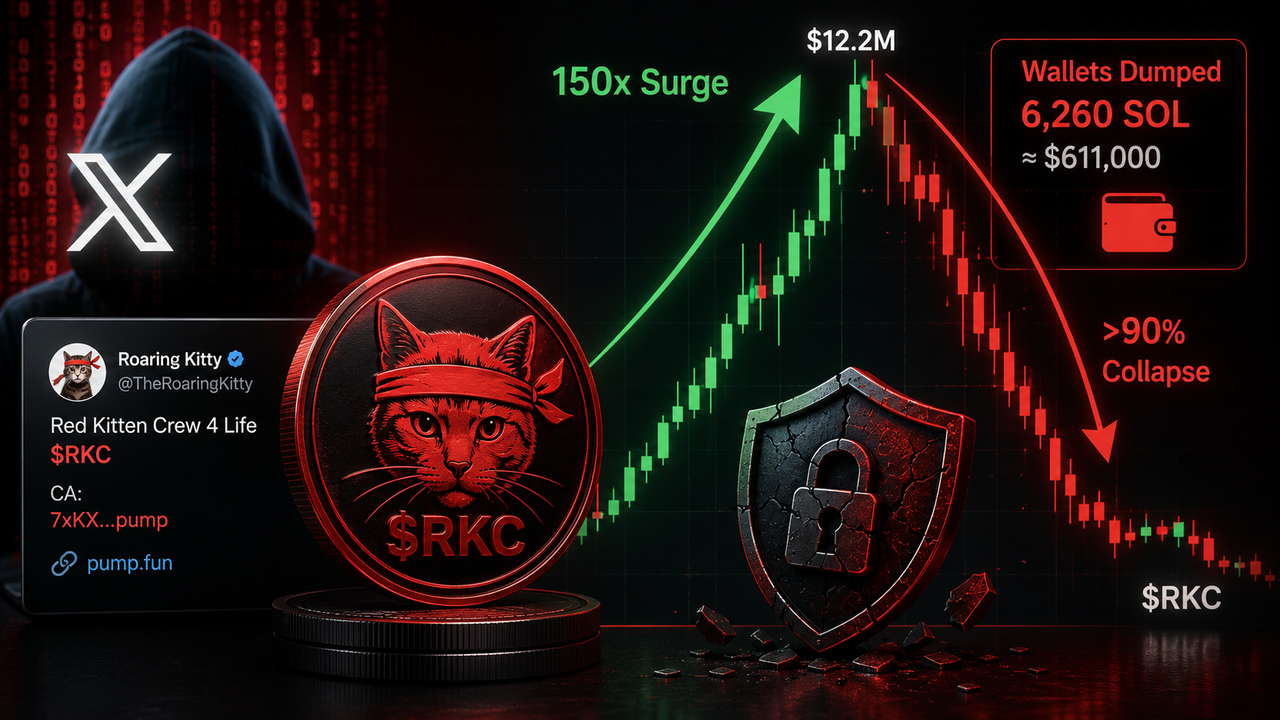
In May 2026, the digital asset market witnessed a chaotic event as the verified X account of Keith Gill, famously known as Roaring Kitty, was compromised to promote a fraudulent Solana-based meme coin. This breach triggered a massive speculative frenzy, resulting in a dramatic price action that investors now refer to as the $RKC 150x Surge and Collapse.
This comprehensive analysis delves into the mechanics of the exploit, the on-chain data behind the suspicious profits, and the critical lessons learned from the volatile $RKC 150x Surge and Collapse incident.
Key Takeaways:
On the evening of May 11, 2026, millions of retail traders received a notification that changed the market's trajectory for the night. Keith Gill’s X account, which had been relatively quiet regarding direct crypto endorsements, suddenly posted a contract address for a token called Red Kitten Crew ($RKC).
-
The Compromise: Experts believe the account was hijacked via a sophisticated session-token theft or a SIM swap, as the posts bypassed standard two-factor authentication (2FA).
-
The Content: The tweets featured a blend of Gill's iconic "red headband" imagery and a direct link to the Solana-based launchpad, Pump.fun.
-
The Duration: The fraudulent posts remained live for approximately 40 minutes before being scrubbed, but by then, the damage to retail portfolios was already done.
-
The Impact: The event served as a stark reminder that even the most influential "Diamond Hands" figures are susceptible to cybersecurity failures, turning a trusted voice into a tool for financial predation.
The $RKC Phenomenon: Breaking Down the 150x Surge and Collapse
The market movement surrounding the $RKC 150x Surge and Collapse was nothing short of cinematic. Because Keith Gill is synonymous with the "retail rebellion" that fueled the 2021 GameStop short squeeze, his perceived entry into the Solana meme coin ecosystem acted like gasoline on a fire.
From Zero to $12M: Anatomy of the 30-Minute Pump on Pump.fun
The $RKC token launched on Pump.fun, a platform designed for instant token creation. Within seconds of the X post, trading bots and "degens" flooded the liquidity pool. The market capitalization moved from $0 to $1 million in under five minutes, eventually peaking at a staggering $12.2 million. This rapid vertical climb represented the "150x" multiplier from the initial stealth-launch price, creating a localized bubble of euphoria.
The Viral Trigger: How Roaring Kitty’s Brand Ignited $RKC FOMO
The psychology behind the surge was rooted in the "Kitty" brand. For many investors, Roaring Kitty represents a champion of the underdog. The fraudulent post used specific coded language—"Red Bandit Crew 4 Life"—which resonated with the anti-establishment sentiment of the GME community. This emotional connection bypassed the critical thinking of many traders, who ignored the obvious red flags of a random Solana contract address in favor of "getting in early" on what they thought was the next multi-billion dollar meme.
Spillover Effect: Why GameStop ($GME) Stock Spiked 13% Amid the Chaos
The chaos wasn't confined to the blockchain. As news of the "Kitty Return" spread, traditional equity markets reacted. GameStop ($GME) shares spiked by 13% in after-hours and pre-market trading. This cross-market correlation highlights the systemic risk posed by social media hacks; a single compromised account can influence billions of dollars in market cap across both decentralized and centralized financial systems simultaneously.
Behind the Curtain: Who Profited from the $RKC "Rug Pull"?
While retail traders were buying the top, the architects of the scam were already executing their exit strategy. The $RKC 150x Surge and Collapse was not a market accident; it was a mathematically precise heist executed by entities who understood the timing of the hack perfectly.
The Developer’s Playbook: How 10 Wallets Controlled 40% of Supply
Investigation into the Solana ledger reveals a highly coordinated effort. Minutes before the "Roaring Kitty" account went live with the contract address, a group of 10 fresh wallets—all funded from the same source—purchased a combined 395.18 million $RKC tokens. This accounted for nearly 40% of the total supply. By controlling such a massive portion of the tokens for a mere 20 SOL (approx. $1,950), the "developer" ensured they had total control over the price ceiling and the eventual collapse.
On-chain Forensics: Tracking the $611,000 Profit in Solana (SOL)
According to data provided by Lookonchain, the execution of the "dump" was as efficient as the "pump."
-
Token Dumping: As $RKC hit the $12M market cap, the 10 linked wallets began offloading their holdings in staggered increments to avoid tripping automated sell-walls.
-
Conversion to SOL: The developers swapped the inflated $RKC back into 5,071 SOL.
-
Fee Collection: On top of the trading profit, the developer earned an additional 1,209 SOL in "creator fees" generated by the massive trading volume.
-
Final Tally: The total illicit profit reached approximately 6,260 SOL, valued at roughly $611,000 at the time of the incident.
Analyzing the Security Breach: Was Roaring Kitty Really Hacked?
Despite the initial confusion, the evidence pointing toward a hack is overwhelming. Keith Gill’s historical investment thesis has always been value-driven and focused on long-term equity positions, which stands in direct opposition to the "rug-pull" mechanics of a Solana meme coin.
Red Flags: Comparing $RKC to Previous Celebrity Crypto Scam Patterns
The $RKC incident follows a "template" that has been used to target other high-profile accounts like those of Vitalik Buterin and several NBA stars.
-
The "Silent" Return: The account becomes active after a period of silence with a "surprise" link.
-
Urgency: The posts often emphasize that the token is a "limited opportunity" or a "community gift."
-
Immediate Deletion: Once the liquidity is drained and the developers have cashed out, the posts are deleted to minimize the time for X's security team to trace the IP login.
-
Solana Preference: Hackers prefer Solana for these scams due to its high speed and low fees, which allow them to move thousands of transactions per minute during the peak of the FOMO.
Market Implications: Protecting Your Portfolio from Social Media Manipulation
The $RKC 150x Surge and Collapse serves as a cautionary tale for the "meme coin era" of 2026. As an exchange, we urge our users to implement a "Verify, Then Trust" framework. When a major influencer suddenly pivots to a new asset class or promotes a specific contract address:
-
Check the Source: Look for secondary confirmation on other platforms like Discord, YouTube, or the person's official website.
-
Analyze the Contract: Use tools like RugCheck or Bubblemaps to see if the supply is concentrated in a few wallets.
-
Liquidity Lock: Check if the liquidity for the token is locked. In the case of $RKC, it was not, allowing the developers to pull the rug instantly.
-
Avoid Market Orders: During a 150x surge, slippage is incredibly high. Traders often end up buying at a price far higher than displayed, exacerbating their losses when the collapse occurs.
Conclusion
The $RKC 150x Surge and Collapse is a textbook example of how social media influence can be weaponized in the decentralized finance space. By hijacking the trusted voice of Keith Gill, bad actors were able to fabricate a $12 million market cap out of thin air, only to vanish with over $600,000 in profits, leaving retail investors with worthless tokens. As the crypto market continues to evolve in 2026, the intersection of cybersecurity and market speculation remains the most dangerous frontier for traders. Always prioritize security over FOMO to ensure your portfolio survives the next "viral" event.
FAQ
Q1: Was the $RKC token an official project by Roaring Kitty?
No, the $RKC token was a fraudulent meme coin created by scammers who hacked Roaring Kitty's X account. The $RKC 150x Surge and Collapse was a "rug pull" designed to steal funds from retail investors.
Q2: How much did the $RKC developers make from the scam?
On-chain data confirms that the developers made a total profit of over 6,260 SOL, which was worth approximately $611,000. They achieved this by buying 40% of the supply before the hack and dumping it during the peak of the surge.
Q3: Why did GameStop ($GME) stock price increase during the hack?
The stock price increased because traditional investors mistakenly believed Roaring Kitty’s return to social media was an official signal for a new GME rally. This confusion briefly linked the $RKC 150x Surge and Collapse to the equity markets.
Q4: How can I identify a meme coin scam in the future?
Look for "red flags" such as high token concentration in a few wallets, a lack of locked liquidity, and sudden endorsements from hacked accounts. Always verify contract addresses on independent blockchain explorers before trading.
Q5: What happened to the $RKC token price after the tweets were deleted?
The price crashed by more than 90% within minutes. Once the fraudulent posts were removed, the hype vanished, and the lack of remaining liquidity caused the $RKC 150x Surge and Collapse to conclude with massive losses for late buyers.