

Is XRP a Stablecoin? Everything You Need to Know Differences Between XRP and Stablecoins
2026/03/12 18:21:02
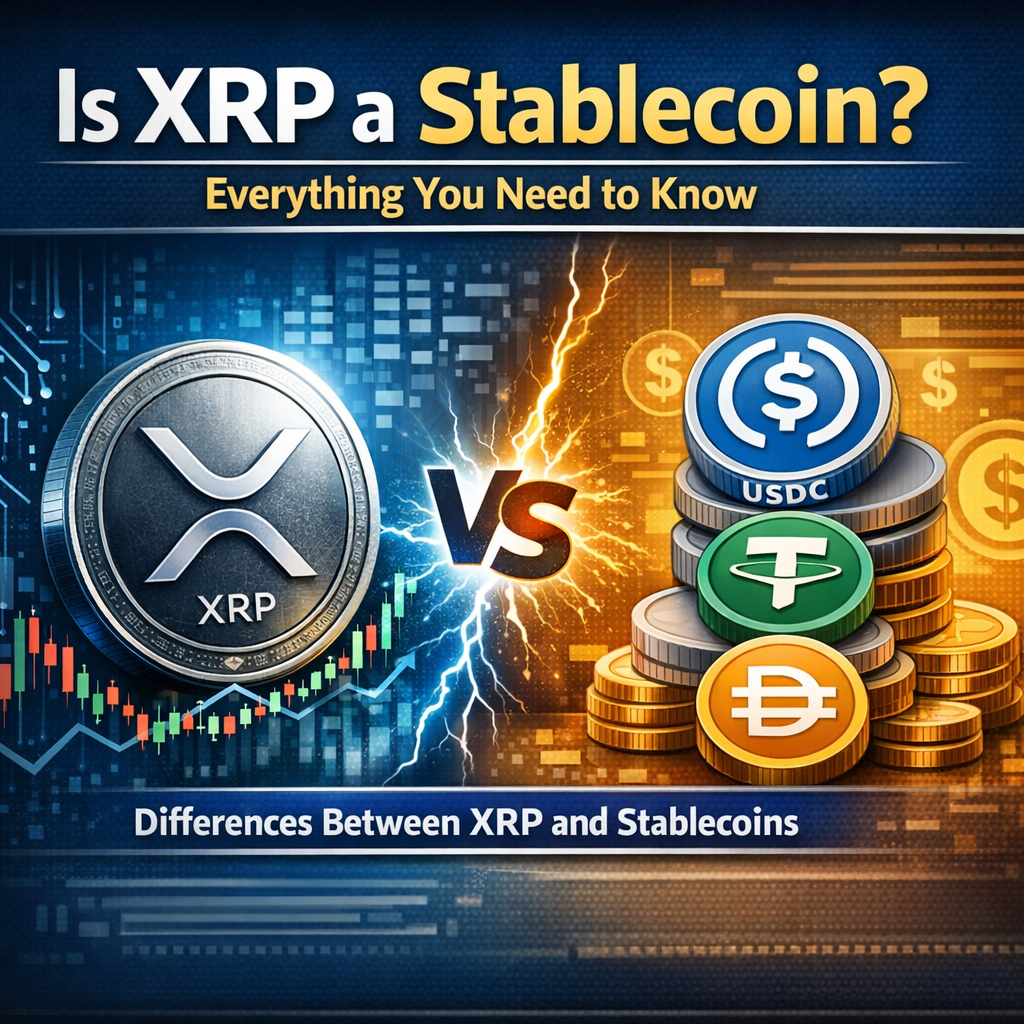
If you are looking to invest in cryptocurrencies, you might come across XRP and wonder whether it is a stablecoin or not. The short answer is no. As XRP's price is not pegged to any asset and can rise or fall based on market demand, XRP is not a stablecoin in crypto niche.
The confusion usually comes from the role XRP plays in the blockchain ecosystem. XRP was designed to help move value quickly between different currencies on the XRP Ledger, particularly in cross-border payments. Stablecoins, by contrast, are created to keep a stable price, typically by being tied to fiat currencies such as the US dollar.
Understanding this difference helps explain what XRP is actually used for and why it is often discussed alongside stablecoins, even though the two serve very different purposes.
Key Takeaways
-
XRP is not a stablecoin because its price fluctuates based on market supply and demand.
-
Stablecoins are designed to maintain a stable value, typically by being tied to fiat currencies such as the US dollar.
-
XRP and stablecoins serve different purposes. Stablecoins provide price stability, while XRP is used for liquidity and cross-border payments.
-
Confusion often comes from Ripple’s payment ecosystem, where XRP is used alongside other digital assets.
-
Ripple has launched a USD-pegged stablecoin called RLUSD, which is designed to maintain a value close to $1.
What Is XRP and How Does It Work?
XRP is a cryptocurrency that runs on the XRP Ledger (XRPL), a decentralized blockchain built to support fast and low-cost digital payments. The asset was designed to move value between different currencies efficiently, especially in cross-border transactions where traditional banking systems can be slow and expensive.
Unlike many cryptocurrencies that rely on energy-intensive mining, the XRP Ledger uses a consensus mechanism to validate transactions. Payments on the network typically settle in a few seconds, and the transaction cost is extremely small, often only a fraction of a cent. This makes the XRPL well suited for high-volume payment activity.
XRP as a Bridge Asset
One of XRP’s primary functions is to serve as a bridge asset. In international payments, financial institutions often need to exchange one currency for another. XRP can act as an intermediate asset that provides liquidity between those currencies, helping transfers move more quickly and with fewer intermediaries.
XRP is often associated with Ripple, the fintech company that develops payment technology using blockchain infrastructure. However, the two are not the same thing. Ripple helps build products that use the XRP Ledger, but XRP itself is the native digital asset of the network and can be traded independently on cryptocurrency markets.
Because XRP trades freely on exchanges, its price fluctuates based on supply and demand. This market-driven pricing is one of the key reasons XRP is not considered a stablecoin.
What Is a Stablecoin?
A stablecoin is a type of cryptocurrency designed to maintain a stable value. Unlike most digital assets, whose prices can rise or fall dramatically, stablecoins are typically tied to another asset such as a national currency. In most cases, that means the value of one stablecoin is intended to stay close to one US dollar.
The main goal of stablecoins is to reduce the price volatility that is common in the cryptocurrency market. Traders often use them as a way to move funds between exchanges or to hold value without converting back into traditional money. Stablecoins have also become an important part of decentralized finance (DeFi), where they are used for lending, borrowing, and payments.
Types of Stablecoins
Not all stablecoins work in the same way. Most fall into a few common categories depending on how they maintain their value.
Fiat-backed stablecoins are the most widely used. These tokens are backed by reserves such as US dollars or government bonds held by an issuing company. Examples include USDT (Tether) and USDC.
Crypto-backed stablecoins use other cryptocurrencies as collateral. Because crypto assets can be volatile, these systems usually require more collateral than the value of the stablecoins being issued. DAI is a well-known example.
Algorithmic stablecoins attempt to maintain price stability through automated supply adjustments rather than direct reserves. This model has proven riskier and has experienced several high-profile failures in the past.
Because stablecoins are designed specifically to keep their value stable, they function very differently from cryptocurrencies like XRP, whose prices fluctuate freely in the market.
Is XRP a Stablecoin?
No, XRP is not a stablecoin. While both XRP and stablecoins are part of the broader cryptocurrency ecosystem, they are designed for very different purposes.
Stablecoins are created specifically to maintain a stable price. Most are pegged to a fiat currency such as the US dollar and aim to stay close to that value at all times. This stability allows them to function more like digital cash, which is why they are commonly used for trading, payments, and decentralized finance applications.
XRP works differently. Its price is not tied to any external asset or currency. Instead, it trades freely on cryptocurrency exchanges, meaning its value changes constantly based on supply, demand, and overall market conditions. Like many other cryptocurrencies, XRP can experience significant price swings over time.
The two assets also serve different roles in the ecosystem. Stablecoins are mainly designed to preserve value, while XRP was created to help move money quickly between different currencies on the XRP Ledger. In that role, XRP can act as a bridge asset during international payments.
Because XRP’s value is determined by market activity rather than a fixed peg, it does not meet the definition of a stablecoin.
XRP vs Stablecoins: Key Differences
Although XRP and stablecoins are both part of the cryptocurrency ecosystem, they are designed with very different goals in mind. Stablecoins focus on maintaining a predictable value, while XRP operates as a market-traded digital asset used for liquidity and payments. Looking at how they behave in practice makes the differences clearer.
Price Stability
The most obvious difference is price behavior. Stablecoins are built to maintain a consistent value, usually by being pegged to a fiat currency such as the US dollar. A dollar-backed stablecoin aims to stay close to $1 at all times, which makes it useful for storing value or moving funds without worrying about sudden price swings.
XRP does not have this kind of price stability mechanism. Its value changes continuously based on trading activity in the market. Like many other cryptocurrencies, XRP can rise or fall significantly depending on demand, market sentiment, and broader crypto trends.
Purpose and Function
Stablecoins are primarily designed to act as a stable medium of exchange. Traders often use them to move money between exchanges, protect funds during volatile market periods, or participate in decentralized finance applications.
XRP was created for a different purpose. On the XRP Ledger, it can serve as a bridge asset that helps transfer value between different currencies. This role is particularly useful in cross-border payments, where liquidity between currencies can sometimes be limited.
Supply Model
Another key difference lies in how supply works. Many stablecoins adjust their supply based on demand. New tokens are issued when users deposit collateral or fiat currency, and tokens are removed from circulation when they are redeemed.
XRP’s supply works differently. The total supply was set at 100 billion tokens when the XRP Ledger launched. While some of those tokens are released over time from escrow accounts, the overall supply is fixed and cannot be expanded like many stablecoins.
Real-World Use Cases
Because of their stable value, stablecoins are widely used for trading, payments, and decentralized finance. They provide a digital asset that behaves similarly to traditional money while still operating on blockchain networks.
XRP is more commonly associated with payment infrastructure. It is used for transaction fees on the XRP Ledger and can facilitate fast currency conversions in international transfers. In this context, XRP acts as a liquidity tool rather than a store of stable value.
Why Do Some Investors Think XRP Is a Stablecoin?
Although XRP is not a stablecoin, the two are sometimes mentioned in the same discussions about digital payments and blockchain-based finance. This overlap can make it easy for newcomers to assume they serve the same purpose. In reality, the confusion usually comes from how XRP is used within the broader payment ecosystem.
Its Role in Cross-Border Payments
XRP is frequently described as a tool for moving money across borders quickly and cheaply. Because stablecoins are also widely used for payments, people sometimes assume the two assets function in the same way. However, stablecoins aim to keep a fixed value, while XRP’s role is to provide liquidity during currency transfers.
The Ripple Connection
Another source of confusion is the relationship between XRP and Ripple. Ripple is a company that develops payment technology using the XRP Ledger, and many of its solutions focus on improving international transfers. When people hear that banks or payment providers may use XRP in these systems, it can create the impression that XRP behaves like a stable digital currency.
Stablecoins on the XRP Ledger
The XRP Ledger itself can support tokens that behave like stablecoins. Developers and companies can issue assets on the network that are pegged to fiat currencies or other reserves. Because these tokens run on the same blockchain as XRP, some users mistakenly assume that XRP itself is designed to maintain a stable value.
Ripple’s Stablecoin Initiatives
Ripple has also explored launching its own dollar-backed stablecoin within the XRP ecosystem. News about these initiatives sometimes leads people to associate XRP directly with stablecoins, even though the two are separate assets with different roles.
Does Ripple Have a Stablecoin? (RLUSD Explained)
Although XRP itself is not a stablecoin, Ripple has introduced a separate stablecoin called RLUSD (Ripple USD). The asset is designed to maintain a stable value by being pegged to the US dollar.
RLUSD is backed by reserves that include cash and short-term US government securities, similar to other fiat-backed stablecoins in the crypto market. Its goal is to provide a reliable digital currency that can be used for payments, trading, and financial applications where price stability is important.
Ripple launched RLUSD after receiving regulatory approval from the New York Department of Financial Services, and the stablecoin is expected to operate on the XRP Ledger as well as other blockchain networks. This multi-chain approach allows RLUSD to move across different ecosystems while maintaining its dollar peg.
The existence of RLUSD sometimes adds to the confusion around XRP. However, the two assets serve very different roles within the Ripple ecosystem.
-
XRP is the native asset of the XRP Ledger. Its price fluctuates based on market demand and it is primarily used for liquidity and payment settlement.
-
RLUSD is a dollar-pegged stablecoin designed to maintain a stable value close to $1.
In practice, the two assets can complement each other. RLUSD can function as a stable digital currency, while XRP can act as a bridge asset that helps transfer value between currencies on the XRP Ledger.
What the Differences Mean for Investors?
Understanding that XRP is not a stablecoin can help set more realistic expectations for investors and traders. While both assets exist in the same crypto ecosystem, they behave very differently in terms of price and risk.
If you buy XRP, you are investing in a cryptocurrency whose value can rise or fall based on market demand. Like other digital assets, XRP can experience significant price swings over short periods. Some investors are attracted to this volatility because it creates the potential for long-term growth, but it also comes with higher risk.
Stablecoins work differently. Assets such as USDC or RLUSD are designed to maintain a stable value, typically close to one US dollar. Instead of seeking price appreciation, investors often use stablecoins to store value, move funds between exchanges, or reduce exposure during periods of market volatility.
For many crypto users, the two assets serve different roles in a portfolio. Stablecoins can provide stability and liquidity, while XRP may be used for payments, transfers, or speculative investment based on the future adoption of the XRP Ledger.
Conclusion
XRP is not a stablecoin, even though it is sometimes mentioned alongside stable digital assets in discussions about crypto payments. Stablecoins are designed to maintain a fixed value, usually by being tied to a fiat currency like the US dollar. XRP, on the other hand, trades freely in the market and its price can rise or fall depending on supply and demand.
The confusion often comes from the broader Ripple ecosystem, where XRP is used for liquidity and cross-border transfers while assets like RLUSD are designed to provide price stability. In practice, the two serve different purposes. Stablecoins offer predictable value, while XRP functions as a utility asset within the XRP Ledger’s payment infrastructure.
Understanding this distinction helps investors and users better evaluate how each asset fits into the broader cryptocurrency landscape.
FAQs
Is XRP backed by anything?
XRP is not backed by physical assets or fiat reserves. Its value comes from market demand and its utility within the XRP Ledger ecosystem. Like most cryptocurrencies, XRP trades freely on exchanges, and its price is determined by supply, demand, and overall sentiment in the crypto market.
Why is XRP not considered a stablecoin?
XRP is not considered a stablecoin because its price is not pegged to another asset. Stablecoins are specifically designed to maintain a fixed value, usually tied to currencies such as the US dollar. XRP, by contrast, fluctuates in price based on market activity.
Does Ripple control XRP?
Ripple does not control the XRP Ledger in the same way a central authority controls a traditional payment network. The ledger operates as a decentralized blockchain maintained by independent validators. However, Ripple does hold a large amount of XRP that was allocated when the network was created.
What stablecoin is used in the XRP ecosystem?
Ripple introduced a stablecoin called RLUSD (Ripple USD), which is designed to maintain a value close to one US dollar. RLUSD is backed by reserves such as cash and short-term US government securities and can operate on the XRP Ledger as well as other blockchain networks.
Can XRP be used for payments?
Yes, XRP is designed to facilitate fast and low-cost payments on the XRP Ledger. Transactions typically settle within a few seconds and require very small fees. Because of this efficiency, XRP is often discussed as a tool for cross-border transfers and liquidity in payment networks.