

Digital Ruble Adoption: Can Cashback and Loyalty Rewards Drive CBDC Demand?
Introduction
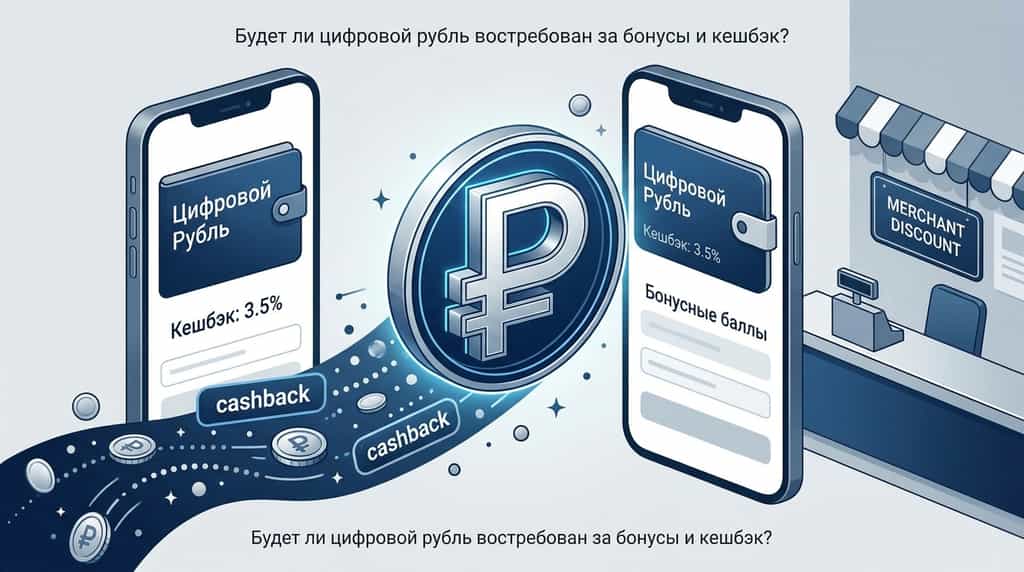
Can monetary incentives bridge the gap between central bank design and consumer mass adoption for sovereign digital currencies? Cashback programs, loyalty reward points, and targeted financial incentives will serve as the primary growth catalyst for driving retail adoption of Russia’s digital ruble (CBDC), according to industry insights from crypto service Bitbanker. While central bank digital currencies (CBDCs) offer unprecedented settlement speed and structural security, retail users rarely adopt new payment rails without clear, immediate monetary benefits. By aligning bank loyalty initiatives with state-backed digital currency infrastructure, commercial institutions can unlock mass user participation across consumer payment channels.
Why Is Cashback Essential for the Adoption of Russia's Digital Ruble?
Consumer preference in modern digital banking is driven predominantly by immediate transactional rewards rather than back-end technological infrastructure. Traditional payment methods, such as debit cards, credit cards, and instant payment networks, offer competitive cashback rates ranging from 1% to 5%, alongside merchant discount bonuses and air miles. If the digital ruble operates strictly as a transactional mechanism without financial rewards, retail users will lack a compelling reason to migrate away from existing commercial bank accounts. Integrating yield, cashback programs, and merchant loyalty points into digital ruble wallets directly addresses user inertia and converts passive observers into active participants.
Financial institutions and merchants stand to benefit significantly from lower transaction fee structures provided by central bank infrastructure. Under standard card payment networks, merchant discount rates (MDR) range from 1.5% to 2.5% per transaction. The Bank of Russia's digital ruble platform caps merchant transaction fees at 0.3%, creating substantial cost savings for businesses. Merchants can pass a portion of these operational savings back to retail consumers in the form of elevated cashback or reward points, establishing a self-sustaining incentive cycle that drives long-term usage.
How Does the Digital Ruble Differ From Commercial Bank Deposits and Cash?
The digital ruble represents the third official form of Russian national currency, operating alongside physical banknotes and electronic commercial bank deposits. Issued directly by the Bank of Russia, the digital ruble functions as a direct liability of the central bank rather than a liability of private commercial banking institutions. This structural distinction provides complete sovereign backing, eliminating commercial bank credit risk and counterparty insolvency concerns for account holders.
Unlike commercial bank accounts, digital ruble accounts do not accrue interest on balances, nor do they support traditional bank lending facilities. According to central bank operational guidelines, all digital ruble transactions occur on a unified platform managed directly by the Bank of Russia, accessed via existing commercial banking mobile applications. To highlight these core structural distinctions, the table below compares cash, commercial bank deposits, and the digital ruble across critical operational parameters:
| Feature | Physical Cash | Commercial Bank Deposit | Digital Ruble (CBDC) |
| Issuer | Bank of Russia | Commercial Banks | Bank of Russia |
| Credit Risk | Zero (Sovereign) | Commercial Bank Risk | Zero (Sovereign) |
| Interest Accrual | 0% | Variable Deposit Rates | 0% (Mandated by Law) |
| Merchant Transaction Fee | Cash Handling Costs | 1.5% - 2.5% | Capped at 0.3% |
| Reward Systems | None | Bank Cashback & Points | Merchant & Loyalty Rewards |
What Financial Incentives Can Businesses Use to Drive CBDC Payments?
Businesses can leverage merchant cost savings to fund targeted promotional campaigns that reward customers for selecting digital ruble settlement. Because merchant processing fees drop to 0.3% on the digital ruble platform, merchants retain up to 2.2% more revenue per transaction compared to traditional credit or debit card processing. Redirecting half of these savings into direct consumer incentives allows merchants to offer exclusive discounts, immediate purchase rebates, and specialized reward tokens without eroding operating margins.
Loyalty program integration enables merchants to build programmable reward schedules powered by smart contract capabilities on the central bank platform. Retailers can deploy automated cashback distributions, dynamic discount tiers for frequent shoppers, and co-branded promotional points redeemable across partner ecosystems. This programmable flexibility transforms simple payment processing into a powerful marketing tool, motivating consumers to utilize digital ruble wallets for daily retail expenditures.
What Challenges Limit Mass Adoption of the Digital Ruble?
Absence of interest income on digital ruble balances represents a significant hurdle to large-scale consumer deposit migration. Russian retail depositors frequently utilize high-yield savings accounts and term deposits to offset inflationary pressures. Because the central bank framework explicitly prohibits interest payments on digital ruble accounts, rational consumers will treat digital ruble wallets primarily as transactional conduits rather than long-term store-of-value instruments.
Commercial bank disintermediation risks create resistance from traditional financial institutions that rely on payment processing revenue and deposit bases. If retail liquidity shifts rapidly from commercial banks to central bank digital wallets, private banks risk losing low-cost funding required for commercial and mortgage lending operations. Consequently, commercial banks may feel disincentivized to actively market digital ruble features unless they can successfully bundle their own proprietary credit products, wealth management tools, and loyalty rewards around the CBDC infrastructure.
How Does the Digital Ruble Compare to Cryptocurrencies and Stablecoins?
The digital ruble operates as a fully centralized sovereign currency, standing in direct contrast to decentralized cryptocurrencies like Bitcoin and permissionless stablecoins. While cryptocurrencies rely on distributed consensus mechanisms and permissionless peer-to-peer networks, the digital ruble relies entirely on the central bank's proprietary ledger infrastructure. This centralized architecture grants state authorities complete visibility over transactional flows, enforcing strict Anti-Money Laundering (AML) and Know-Your-Customer (KYC) compliance at every node.
Unlike algorithmic or asset-backed stablecoins, the digital ruble maintains mandatory legal tender status within national jurisdiction. Stablecoins carry issuer credit risk, collateral audit transparency issues, and potential de-pegging vulnerabilities. In contrast, the digital ruble guarantees 1:1 parity with physical and electronic rubles by law, eliminating valuation volatility while providing direct sovereign settlement finality.
Beyond the Headlines: What KuCoin 5.0 Means for You
Market news moves fast — but where you act on it matters just as much. This October, KuCoin launches KuCoin 5.0, transforming KuCoin into a rebuilt platform. Here's what actually changes for you:
-
One account for everything. Older platforms split your money across separate "spot," "margin," and "futures" accounts and expected you to understand why. KuCoin 5.0's unified account removes that entirely — deposit once, and everything is simply there (only available to VIPs for now).
-
Stocks, indices, and commodities. KuCoin 5.0 expands beyond crypto into global markets. When crypto chops sideways and equities rally (or the reverse), you rotate in minutes instead of opening a brokerage account and waiting days for fiat rails.
-
Real-world assets (RWA). Tokenized exposure to traditional assets like commodities, right inside your crypto account. One of the fastest-growing segments in global finance is no longer reserved for institutions — you access it from the same balance you trade with.
-
Earn while you learn. Not ready to trade? KCUSD lets your stablecoins earn daily, auto-compounding interest. The lowest-stress way to put your idle deposit to work for 4% yield.
-
An AI assistant in plain language. Ask questions, get market context, understand what you're looking at — built into the platform, no jargon required.
-
An app that doesn't overwhelm. Faster, cleaner, and consistent — intuitive from the first tap, not after a tutorial.
-
Safety you can check, not just trust. A MiCAR-licensed EU entity, Proof of Reserves you can verify yourself, and internationally certified security (SOC 2 Type II, ISO 27001:2022).
Create your account in minutes — and start on the platform built for where crypto is going, not where it's been.
Conclusion
Commercial incentives—specifically cashback offers, merchant discount rebates, and integrated loyalty rewards—represent the most viable mechanism for stimulating retail demand for Russia's digital ruble. While the central bank platform guarantees complete sovereign security and lower transaction fees for merchants, consumers require direct, tangible financial benefits to modify established banking habits. By bridging the gap between merchant fee savings and consumer reward programs, financial institutions and retailers can build an attractive value proposition around CBDC transactions.
As the global landscape of digital money evolves, understanding the operational boundaries between sovereign digital currencies, commercial bank deposits, and permissionless crypto assets becomes increasingly essential. Sovereign CBDCs like the digital ruble will continue to streamline domestic retail payments and administrative disbursements, while global digital asset platforms will remain the venue of choice for capital appreciation, cross-border liquidity, and decentralized financial innovation.
Frequently Asked Questions (FAQs)
What is the digital ruble?
The digital ruble is a central bank digital currency (CBDC) issued and backed directly by the Bank of Russia, functioning as a digital form of the national currency alongside physical cash and commercial bank deposits.
Can you earn interest on digital ruble wallet balances?
No, Russian law prohibits the accrual of interest on digital ruble account balances, making the currency a dedicated payment tool rather than a yield-bearing savings vehicle.
How do merchant fees for the digital ruble compare to traditional credit cards?
Merchant transaction fees for the digital ruble are capped at 0.3%, which is significantly lower than standard commercial bank card processing fees that typically range between 1.5% and 2.5%.
Is the digital ruble built on a public blockchain?
No, the digital ruble operates on a centralized digital platform developed, maintained, and fully controlled by the Bank of Russia, rather than a public, permissionless blockchain network.
How can consumers access their digital ruble wallets?
Consumers access their digital ruble wallets through the existing mobile banking applications of participating commercial banks, which interface directly with the central bank’s underlying platform.
Disclaimer
This article is for informational purposes only and does not constitute financial, legal, or investment advice. Always conduct your own research before interacting with digital assets.