

Securing Systems Against CVE-2026-111497: Understanding the Brotli Vulnerability in Node.js and Python
Introduction
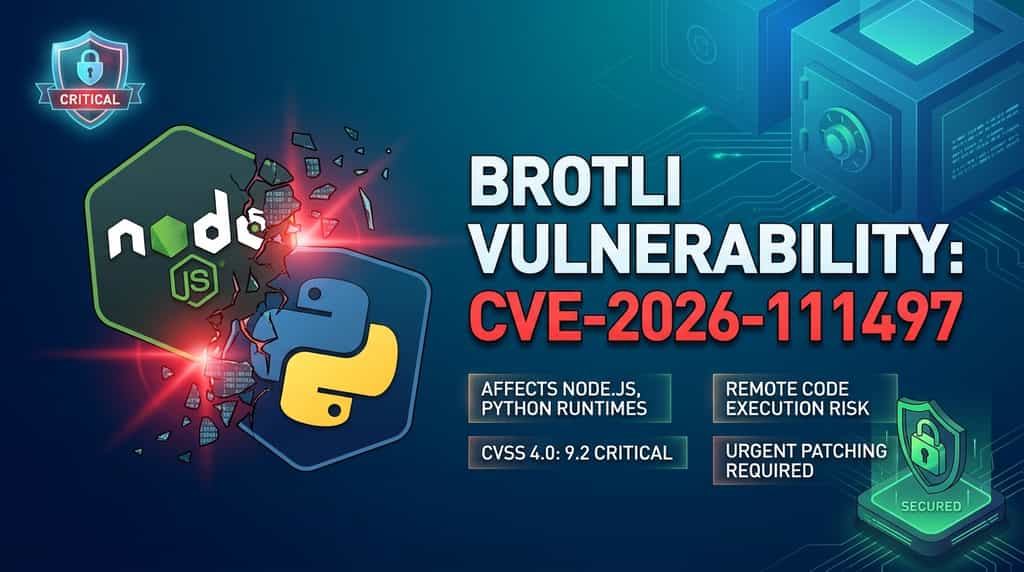
Security researchers disclosed a critical memory-corruption flaw tracked as CVE-2026-111497, widely dubbed "Node2Shell", which impacts Google's Brotli compression decoder. According to threat intelligence disclosures by Qualys and Imperva teams in October 2026, this out-of-bounds write vulnerability affects major software ecosystems, including Node.js, Bun, Python Brotli packages, and Envoy proxies. With a CVSS 4.0 critical severity score of 9.2, the flaw exposes backend services to remote code execution (RCE) if they unpack untrusted compressed data streams.
What Is CVE-2026-111497 and How Does the Brotli Flaw Work?
CVE-2026-111497 is an out-of-bounds write vulnerability rooted in Google's C-based Brotli decompression library. According to technical write-ups published by software security analysts, the vulnerability stems from an unchecked return value in the decoding loop, allowing a specially crafted compressed data stream to overwrite memory past the end of an allocated heap buffer.
Because runtime environments like Node.js and various Python packages statically vendor or compile their own independent copies of the Brotli decoder code, a flaw in the core C library propagates downstream into any application layer reusing it. When an application processes malicious input—such as an HTTP response or an uploaded file payload compressed with the Brotli format—the decoding process triggers memory corruption. According to Imperva security researchers, this memory corruption can lead to application crashes, memory leaks, or full remote code execution under the privileges of the running process.
Which Software Runtimes and Ecosystems Are Affected?
The vulnerability impacts any software product or runtime environment that bundles or links against unpatched versions of Google's Brotli library (versions 1.0.3 through 1.0.9, 1.1.0, and 1.2). According to vulnerability tracking alerts published by IT security firms, affected ecosystems span multiple languages and infrastructure tools:
-
Node.js: The core runtime embeds its own copy of the Brotli decoder under deps/brotli. Supported release lines 22.x, 24.x, and 26.x were exposed prior to emergency patching.
-
Python Packages: Standard Python wrapper packages including brotli and brotlicffi inherit the exact underlying C-code flaw.
-
Alternative Runtimes & Proxies: High-performance runtimes like Bun, service meshes, and API gateways like Envoy and Istio that handle incoming compressed traffic are similarly vulnerable.
Because the vulnerability lives inside the core runtime binaries rather than high-level package dependencies, standard application dependency scanners often fail to surface the exposure automatically.
What Are the Real-World Risks for Node.js and Python Applications?
Unpatched services processing external network traffic face immediate risks ranging from denial-of-service (DoS) conditions to complete system compromise. According to incident analyses by cloud security providers, the primary attack vectors include:
-
Server-Side Ingestion: Backend APIs accepting compressed file uploads or HTTP client modules executing native fetch functions that unpack malicious server responses.
-
Client-Side Exposure: Web applications or microservices acting as proxies that fetch data from untrusted external endpoints and automatically decompress incoming Brotli payloads.
If exploited successfully, attackers can achieve unauthenticated remote code execution on cloud workloads or containerized instances, enabling lateral movement across internal service meshes and data exfiltration.
How Can Developers Patch and Mitigate CVE-2026-111497?
Upgrading the affected software runtimes to their respective patched versions is the only complete and permanent remediation, as official configuration workarounds are unavailable. According to official security advisories released on October 21, 2026, developers and system administrators should take the following immediate steps:
-
Update Node.js Runtimes: Upgrade Node.js installations to the patched security releases: version 22.23.4, 24.22.1, or 26.12.1. Ensure that end-of-life (EOL) versions (such as Node.js 20.x or unpatched custom lines) are upgraded immediately, as they will receive no official backported patches.
-
Upgrade Python Packages: Update all Python dependencies related to Brotli compression to their latest secure versions via package managers.
-
Scan Infrastructure Assets: Deploy runtime scanning tools (such as Qualys InstaScan) to audit container images, virtual machines, and cloud workloads for hidden binary copies of vulnerable Brotli decoders outside standard paths.
Conclusion
The discovery of CVE-2026-111497 ("Node2Shell") underscores the systemic risks posed by deeply embedded utility libraries in modern cloud architecture. Because Google's Brotli decompression algorithm is statically compiled into numerous language runtimes and proxies, a single memory-corruption flaw can create widespread exposure across Node.js, Python, and alternative web infrastructure. Security teams must move beyond simple dependency management by actively auditing core binary versions, tracking runtime updates, and immediately patching vulnerable environments to prevent potential remote code execution attacks. Proactive asset visibility and swift patch deployment remain the most effective defenses against evolving supply-chain threats.
Frequently Asked Questions
What does CVE-2026-111497 stand for?
CVE-2026-111497 is an official common vulnerabilities and exposures identifier assigned to a critical out-of-bounds write vulnerability located in Google's Brotli decompression C library.
Why is the vulnerability nicknamed "Node2Shell"?
Security researchers from Imperva dubbed the vulnerability "Node2Shell" because their initial successful proof-of-concept exploits demonstrated remote code execution against unpatched Node.js runtime environments.
Do standard npm package audits detect this flaw?
No, standard npm dependency checkers do not detect CVE-2026-111497 because the vulnerability resides inside the core Node.js binary binary code compiled into deps/brotli, rather than an external user-land package.
Are all versions of Node.js vulnerable to CVE-2026-111497?
No, only specific release lines were impacted, and fixes are exclusively available for supported versions. Node.js patched the flaw in versions 22.23.4, 24.22.1, and 26.12.1, leaving older end-of-life versions permanently exposed unless upgraded.
What is the CVSS severity score of the Brotli vulnerability?
Google and major vulnerability management platforms assigned CVE-2026-111497 a critical CVSS 4.0 score of 9.2 out of 10.0 due to its potential for unauthenticated remote code execution.
Disclaimer
This general market information, possibly from third-party, commercial, or sponsored sources, is provided for reference and educational purposes only and does not constitute financial or investment advice, an offer, solicitation, or guarantee. We disclaim liability for its accuracy, completeness, reliability, and any resulting losses. Investments/trading are risky; past performance doesn’t guarantee future results. Users should research, judge prudently, and take full responsibility. For further details, please consult KuCoin’s Terms of Use and Risk Disclosure.