

Saturn Partners with Ondo to Bring Institutional Tokenized Assets into STRC Structured Products
2026/08/22 10:11:00
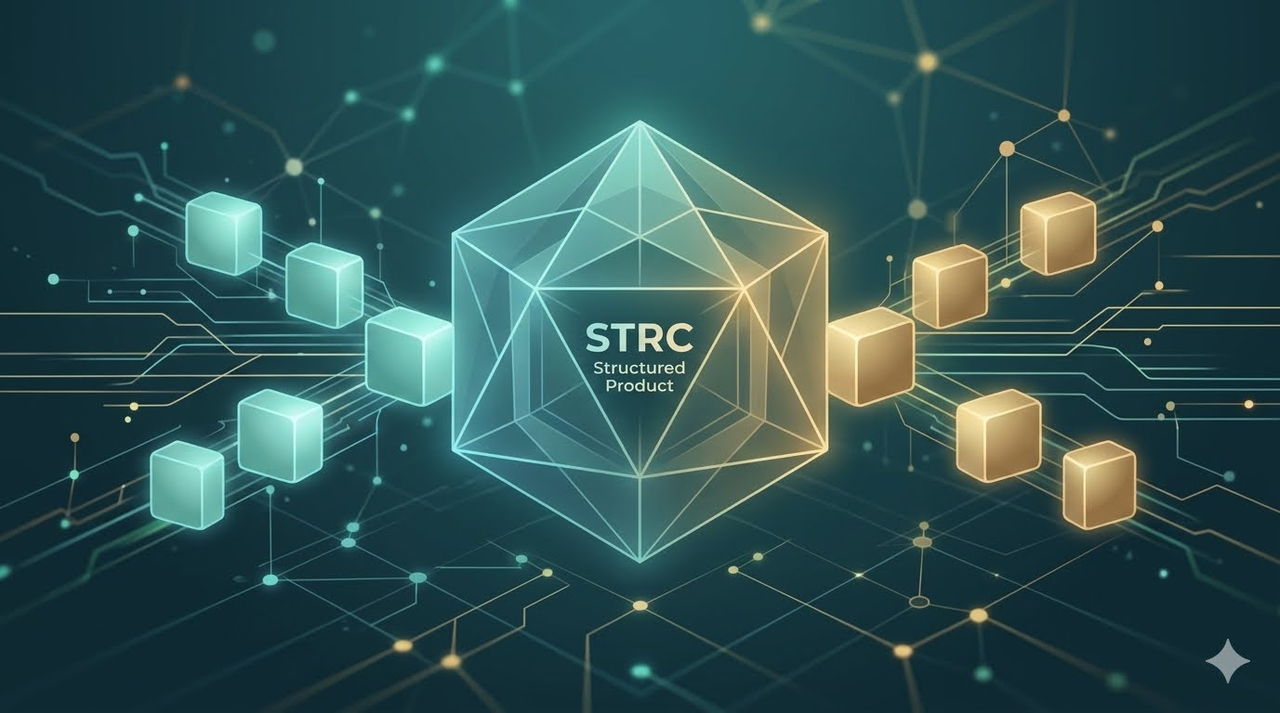
Saturn Foundation and Ondo Finance officially announced an important partnership, aimed at incorporating institutional-grade tokenized assets into Saturn’s innovative structured digital credit products. These products are centered around Strategy’s Variable Rate Series A Perpetual Stretch Preferred Stock, which is widely recognized by its Nasdaq ticker symbol STRC. The collaboration marks an exciting beginning with the integration of STRCon, which is Ondo’s tokenized version of STRC, into Saturn’s sUSDat product. At the same time, Ondo has completed a strategic investment in Saturn under undisclosed terms, further solidifying their commitment to this partnership. This strategic move effectively connects Ondo’s advanced tokenized equities infrastructure, which currently holds more than $1 billion in various stocks and ETFs, with Saturn’s dual-token system.
This system includes USDat, a stablecoin that is backed by tokenized U.S. Treasuries, and sUSDat, which is the yield-bearing token that is currently linked to exposure to STRC. The partnership strategically positions tokenized preferred equity as a core input for onchain structured credit, thereby expanding distribution channels for Bitcoin-backed digital credit instruments. This expansion goes beyond traditional brokerage access, while simultaneously relying on compliant, institutional-grade backing mechanisms that have already been established by both firms. This collaboration not only enhances the offerings of both companies but also represents a significant step forward in the evolution of digital finance, paving the way for more innovative financial products in the future.
How the Saturn-Ondo Integration Targets STRCon for sUSDat Exposure
Saturn will introduce STRCon into its sUSDat product as the first concrete step of the partnership. STRCon functions as Ondo’s blockchain-based representation of Strategy’s STRC preferred stock, delivering economic exposure to price movements and reinvested dividends without conferring direct ownership rights or shareholder privileges associated with the Nasdaq-listed security. According to the joint announcements, full technical mechanics, allocation percentages within the sUSDat reserve, custody arrangements, and dividend handling will appear in a forthcoming Saturn protocol upgrade. Products remain restricted to eligible participants outside the United States and the European Economic Area. Saturn’s existing model already channels STRC performance into sUSDat value appreciation as dividends accrue, rather than distributing fixed cash payments, so the addition of the tokenized form creates a parallel on-chain pathway to the same underlying instrument. Official statements emphasize that the integration leverages Ondo’s institutional-grade infrastructure while Saturn continues its role in onchain structuring and distribution. Details on whether STRCon will complement or partially replace directly held STRC positions have not been released.
This initial focus on a single asset allows both platforms to test operational alignment between tokenized equity settlement and credit-product vaults. Saturn previously reported deposits exceeding $220 million across USDat and sUSDat within six weeks of earlier launches, illustrating demand for on-chain access to the STRC yield profile. The partnership therefore builds on demonstrated user interest while adding a verified tokenized layer that Ondo supports through U.S.-registered broker-dealer custody and independent verification agents. Implementation timing remains unspecified, leaving market participants to monitor the promised upgrade announcement for precise parameters on risk parameters, redemption windows, and portfolio weighting. The structure preserves the separation between dollar liquidity via USDat and yield exposure via sUSDat, ensuring the core dual-token architecture continues without immediate redesign.
Ondo’s Strategic Investment Signals Confidence in Digital Credit Infrastructure
Alongside the product integration, Ondo Finance completed a strategic investment in Saturn. Neither party disclosed the capital amount, valuation, instrument type, or equity stake involved. The investment is presented as evidence of shared commitment to expanding digital credit markets that rely on compliant, institutional-grade building blocks. Saturn positions itself as an onchain structuring and distribution platform for Bitcoin-backed credit, while Ondo supplies the tokenized asset layer. Public statements from both organizations frame the capital commitment as alignment around the broader opportunity to convert tokenized equities into usable credit inputs rather than standalone yield vehicles. The absence of financial terms is consistent with many early-stage strategic placements in the sector, where parties prioritize operational collaboration over immediate valuation signaling.
The investment arrives as Ondo Stocks reports approximately $1.02 billion in value held across more than 440 tokenized stocks and ETFs on Ethereum, BNB Chain, and Solana as of mid-August 2026. Each token is backed by the corresponding security or cash held with U.S.-registered broker-dealers, with independent verification and security-interest arrangements in place. By committing capital to Saturn, Ondo gains exposure to a protocol that converts those tokenized assets into structured credit products, potentially deepening secondary demand for its inventory. Saturn, in turn, receives both capital and a ready supply of institutional-grade collateral that can be integrated without building its own tokenization stack. The arrangement therefore creates a feedback loop in which tokenized equity supply supports credit-product growth, and credit-product adoption may increase utilization of the underlying tokens.
STRC’s Growth to Multi-Billion Scale Creates the Foundation for On-Chain Structuring
Strategy’s STRC preferred stock has expanded rapidly since its July 2025 launch. The instrument carries a $100 stated amount, pays a variable annualized dividend currently set at 12 percent on a semi-monthly schedule, and is designed to trade near par through rate adjustments and capital-management tools. As of mid-August 2026 data, notional outstanding exceeds $9.8 billion to $10.3 billion depending on the precise share count and market price near $95. Daily trading volume has frequently surpassed $100 million, establishing STRC as the most actively traded instrument in the emerging digital-credit category. Dividends are cumulative when declared, and the rate has risen stepwise from the initial 9 percent to the present 12 percent level, with Strategy retaining discretion to adjust based on trading price, Bitcoin volatility, credit spreads, and internal liquidity metrics.
Saturn’s dual-token system was purpose-built to distribute this instrument on-chain. USDat provides a stablecoin layer fully backed by tokenized Treasuries for liquidity and composability, while sUSDat channels the STRC dividend stream into price appreciation of the staked token. Early deposit figures exceeding $220 million demonstrated that global participants seek access without requiring a U.S. brokerage account. The Ondo partnership extends that model by introducing a second, independently tokenized representation of the same preferred stock, thereby diversifying the pathways through which STRC economics reach DeFi vaults. Market observers note that STRC’s scale and liquidity now support more sophisticated structuring, including the potential for tranched products and collateral use in lending markets already emerging on other platforms.
Ondo Stocks Platform Scale Supports Broader Tokenized Equity Integration Potential
Ondo Stocks has grown into the leading tokenized equities platform by assets under management. Reports from August 2026 place value held near $1.02 billion to $1.04 billion across more than 440 U.S. stocks and ETFs, with cumulative trading volume measured in the tens of billions since the September 2025 launch. Tokens trade on Ethereum, BNB Chain, and Solana, with additional bridging capability. Each position is fully backed by the corresponding security held at licensed U.S. custodial broker-dealers, and holders receive economic exposure that incorporates reinvested dividends after applicable withholding. Minting and redemption windows generally operate 24 hours per day during the U.S. business week, while onchain transfers remain available continuously subject to platform and jurisdictional constraints.
The partnership begins with STRCon yet explicitly references the potential for additional Ondo-issued assets to enter Saturn’s digital credit products over time. This optionality is material because Ondo’s catalogue already spans large-capitalization equities and major ETFs. Integrating further names would allow Saturn to construct more diversified collateral baskets inside sUSDat or successor products, reducing single-instrument concentration risk while still drawing yield from traditional equity and preferred markets. Legal disclosures from Ondo make clear that the tokens themselves are not the underlying securities and do not confer voting or direct ownership rights, a distinction that aligns with Saturn’s geographic restrictions and its focus on economic exposure rather than traditional equity ownership. The combination therefore supplies Saturn with a scalable, multi-asset inventory that has already achieved institutional-grade operational maturity.
Saturn’s Dual-Token Architecture Separates Liquidity from Yield Exposure
Saturn’s product design deliberately isolates dollar liquidity from digital-credit yield. USDat functions as a stablecoin collateralized 100 percent by tokenized U.S. Treasury bills, enabling permissionless and instant access within DeFi environments. Users may stake USDat to receive sUSDat, whose reserve is currently composed of STRC-linked exposure. As dividends on the preferred shares accrue, the exchange value of sUSDat increases rather than distributing periodic cash payments. Returns remain variable and are not guaranteed. This separation allows participants to hold pure liquidity in USDat or to elect yield exposure through sUSDat, matching different risk and liquidity preferences within a single protocol. The introduction of STRCon fits directly into the yield-bearing leg. Because STRCon tracks the economic performance of STRC, it can serve as an additional or alternative reserve asset inside the sUSDat vault without altering the fundamental dual-token logic.
Prior infrastructure decisions, including the adoption of Chainlink’s Cross-Chain Interoperability Protocol for multi-chain distribution and custody support from Anchorage Digital, already position the protocol for broader deployment. The Ondo integration therefore extends an established architecture rather than requiring a redesign, preserving the transparency of asset composition that Saturn emphasizes for institutional users. Market participants can monitor the forthcoming upgrade for precise reserve allocation rules that will govern how much of the sUSDat portfolio may shift toward the tokenized form.
Geographic and Eligibility Constraints Shape Product Accessibility
Both Saturn and Ondo impose clear jurisdictional limits. Saturn’s products are available only to eligible participants outside the United States and the European Economic Area. Ondo’s STRCon and related tokenized securities are issued by Ondo Global Markets BVI Limited and have not been registered under the U.S. Securities Act of 1933; they cannot be offered or sold to U.S. persons without registration or an applicable exemption. Eligible non-U.S. holders receive economic exposure rather than the full shareholder rights attached to direct STRC ownership. Withholding taxes may reduce the dividends that are reinvested into the token’s total return.
These restrictions are consistent with the regulatory posture of both platforms and reflect the current legal framework governing tokenized securities. Direct STRC shares remain accessible through traditional U.S. brokerage accounts for investors who prefer the Nasdaq-listed instrument and its cumulative preferred claims. The onchain versions therefore expand the addressable audience globally while remaining unavailable in the two largest regulated markets. The partnership does not alter these constraints; it operates entirely within them. Future expansion of eligible jurisdictions would require additional regulatory clearances by both firms, a process neither has announced in connection with the current collaboration.
Bitcoin Treasury Linkage Underpins STRC Credit Characteristics
Strategy maintains one of the largest corporate Bitcoin treasuries, and STRC is explicitly positioned as Bitcoin-backed digital credit. The preferred stock ranks above common equity in the capital structure and carries a claim on dividends and liquidation proceeds that is senior to common shareholders yet junior to debt. Dividend policy is influenced by Bitcoin price action, volatility, the company’s dollar reserves, and overall capital structure. Rate adjustments and share repurchases are employed to support trading near the $100 stated amount. Recent data show the instrument trading in the mid-$90s, producing an effective yield modestly above the 12 percent stated rate.
Saturn’s sUSDat product channels this Bitcoin-linked credit profile onto the blockchain. By integrating STRCon, the protocol gains an additional, independently verified representation of the same economic exposure. The structure tests whether traditional preferred-stock risk models translate cleanly into onchain vaults, a point highlighted by market commentators observing that the direction of travel, from credit products into equity collateral rather than the reverse, offers a useful stress test of onchain risk management. Custody arrangements with regulated partners and the use of independent verification agents for tokenized positions further align the onchain products with institutional operational standards already applied to the underlying Nasdaq security.
Protocol Upgrade Will Determine Technical Implementation Details
Saturn has stated that full implementation details will be released in a forthcoming protocol upgrade announcement. The current public information identifies only the high-level intention to integrate STRCon into sUSDat and to expand the relationship through the strategic investment. Missing elements include the precise percentage of the sUSDat reserve that may be allocated to STRCon, the custody and settlement rails that will be used, the treatment of dividends within the vault accounting, any changes to redemption or cooldown parameters, and the timeline for live deployment.
Until that announcement appears, market participants must rely on the existing dual-token documentation and prior infrastructure disclosures. Earlier decisions, such as the adoption of Chainlink CCIP for cross-chain transfers and Anchorage Digital custody support, demonstrate a pattern of selecting regulated or widely audited infrastructure. The upgrade is therefore expected to follow a similar institutional orientation. The absence of a firm rollout date is typical for protocol-level changes that require security reviews, oracle integrations, and vault parameter adjustments. Observers will watch for the upgrade documentation to assess whether the integration introduces new smart-contract risk surfaces or remains largely within existing vault logic.
Tokenized Equity as Collateral Expands Structured Product Design Space
The partnership illustrates a shift in how tokenized real-world assets can be utilized. Rather than packaging equities solely as standalone yield products, the collaboration treats tokenized preferred stock as an input for structured credit. sUSDat already functions as a vehicle that converts STRC dividends into on-chain price appreciation. Adding STRCon creates the possibility of more granular portfolio construction inside the vault, potentially allowing dynamic allocation between directly held and tokenized forms of the same instrument or, later, diversification across other Ondo-issued equities. This approach aligns with broader industry observations that the larger opportunity for tokenized assets lies in their use as collateral, pricing references, and redeemable inputs within credit and structured-finance applications.
Saturn’s focus on Bitcoin-backed digital credit provides a concrete use case, while Ondo’s inventory of more than 440 names supplies the raw material for future expansion. The combination may encourage other protocols to explore similar constructions, increasing secondary demand for tokenized equities and tightening the linkage between traditional preferred-stock markets and onchain credit markets. Practical realization depends on the forthcoming technical specifications and on sustained liquidity in both STRC and its tokenized counterparts.
Market Context of Rising Tokenized RWA Scale Supports the Collaboration
The broader tokenized real-world asset market has expanded significantly in 2026. Aggregate distributed value across platforms has been reported in the $36 billion to $38 billion range in recent months, with tokenized Treasuries alone exceeding $14 billion at earlier checkpoints. Ondo ranks among the largest pure-play platforms, with total platform assets under management reported near $3.4 billion to $3.8 billion depending on the inclusion of specific products and chains. Its USDY Treasury product alone accounts for more than $2 billion, while the stocks segment has surpassed the $1 billion threshold.
Within this environment, the Saturn-Ondo partnership represents a targeted application of tokenized equities inside a specialized credit protocol. It does not attempt to reinvent the underlying asset class; instead, it routes an existing, liquid preferred-stock instrument through an additional distribution and structuring layer. The strategic investment further signals that tokenization platforms are prepared to allocate capital toward protocols that convert their assets into usable credit products. As STRC itself has scaled past $10 billion in notional outstanding, the onchain infrastructure capable of distributing its economics has become a natural extension of the traditional market rather than a speculative experiment.
Risk Considerations and Variable Nature of Yields
Both platforms emphasize that yields are variable and not guaranteed. STRC dividends remain subject to declaration by Strategy’s board and can be adjusted under the terms of the prospectus. sUSDat incorporates those dividends into its exchange rate rather than distributing them as cash, so holders experience changes in token value rather than periodic payments. Geographic restrictions, tax withholding on reinvested dividends, and the absence of direct ownership rights for token holders introduce additional layers of complexity relative to holding the Nasdaq-listed security itself.
Smart-contract, custody, and oracle risks inherent to any on-chain product also apply. Saturn’s prior selection of audited infrastructure and regulated custody partners mitigates some of these exposures, yet the forthcoming upgrade will introduce new technical components whose security must be independently verified. Investors evaluating the products must therefore weigh the economic exposure to a Bitcoin-linked preferred instrument against the operational and jurisdictional constraints of the tokenized wrappers. The partnership does not eliminate these considerations; it operates within them.
Conclusion
The announcement leaves open the possibility that additional Ondo-issued assets will enter Saturn’s digital credit products after the initial STRCon integration. Ondo’s catalogue already includes a wide range of large-capitalization equities and ETFs, providing a ready inventory for potential diversification. Saturn’s stated mission of building structured finance on top of digital credit instruments suggests that successful deployment of STRCon could lead to more sophisticated products, including tranched exposures or multi-asset collateral baskets.
Cross-chain distribution via previously adopted interoperability protocols further supports the prospect of broader geographic and chain-level reach among eligible non-U.S., non-EEA participants. The strategic investment creates a capital and operational alignment that may accelerate such expansion once the first integration is live and operational metrics are available. Market participants will monitor both the protocol upgrade and subsequent product announcements for evidence that the collaboration moves beyond a single-asset pilot into a sustained multi-asset structured-credit platform.
FAQs
What is the primary asset being integrated under the Saturn-Ondo partnership?
The partnership centers on STRCon, Ondo’s tokenized representation of Strategy’s STRC preferred stock. Saturn plans to introduce this token into its sUSDat product so that the yield-bearing vault can draw economic exposure from the tokenized form of the preferred shares in addition to, or alongside, any existing direct STRC holdings. Full allocation rules and technical mechanics will be detailed in a future protocol upgrade.
Has the size of Ondo’s strategic investment in Saturn been disclosed?
Both parties confirmed that Ondo completed a strategic investment but provided no information on the capital amount, valuation, form of the instrument, or resulting ownership stake. The investment is described only as reflecting a shared commitment to institutional-grade digital credit infrastructure.
Are Saturn’s products available to U.S. or EEA residents?
No. Saturn states that its digital credit products are available solely to eligible participants outside the United States and the European Economic Area. Ondo’s tokenized securities carry similar restrictions and are not registered for offer or sale to U.S. persons.
How does sUSDat generate returns?
sUSDat is the staked form of USDat. Its reserve currently references STRC exposure, and the token’s exchange value rises as dividends on the preferred shares accrue. Returns are variable, depend on the underlying dividend declarations and any price movements in the reserve assets, and are not guaranteed.
KuCoin Offers A More Stable Option in A Volatile Market
If you worry about the frequent ups and downs in the market, and pursue a more stable option to earn money passively, KuCoin is the right place to come:
Simple Earn: Deposit and withdraw tokens anytime, earning stable returns.
Kucoin Earn: Earn stable profits with professional asset management.
Hold to Earn: Earn rewards by holding assets in Funding, Trading, Margin, Futures, Mining, and Unified Accounts.
Staking: Unlock the earning potential of on-chain assets.
Advanced Investments: Advanced Investments offer a variety of structured products to help your money grow in any market.
Shark Fin: Principal Protection and Guaranteed Gains
Dual Investment: Buy low and sell high with transparent return calculations.
Snowball: High yields, with price protection.
Discount Buy: Buy crypto at discount prices.
KCS Loyalty: Level up to enjoy exclusive perks by staking ≥ 1 KCS.
KuCoin Wealth: Discover future value and begin your smart investing journey.
KCS Benefits: Hold and stake KCS to access benefits across the platform.
KCS Staking 2.0: Participate in KCS on-chain governance to earn yield.
Disclaimer
The information provided on this page may originate from third-party sources and does not necessarily represent the views or opinions of KuCoin. This content is intended solely for general informational purposes and should not be considered financial, investment, or professional advice. KuCoin does not guarantee the accuracy, completeness, or reliability of the information, and is not responsible for any errors, omissions, or outcomes resulting from its use. Investing in digital assets carries inherent risks. Please carefully evaluate your risk tolerance and financial situation before making any investment decisions. For further details, please consult KuCoin’s Terms of Use and Risk Disclosure.