

KuCoin Ventures Weekly Report:Macro Storms and Compliance Breakthroughs: Trump Pressures the Fed, Reshaping Crypto Assets Under Institutional Yield ETFs and Regulatory Synergy
2026/03/17 11:48:02
 1. Weekly Market Highlights
U.S. Crypto Compliance Framework Continues to Advance: Deeper SEC-CFTC Coordination and a Yield-Bearing ETH ETF Open a New Window for Institutional Allocation
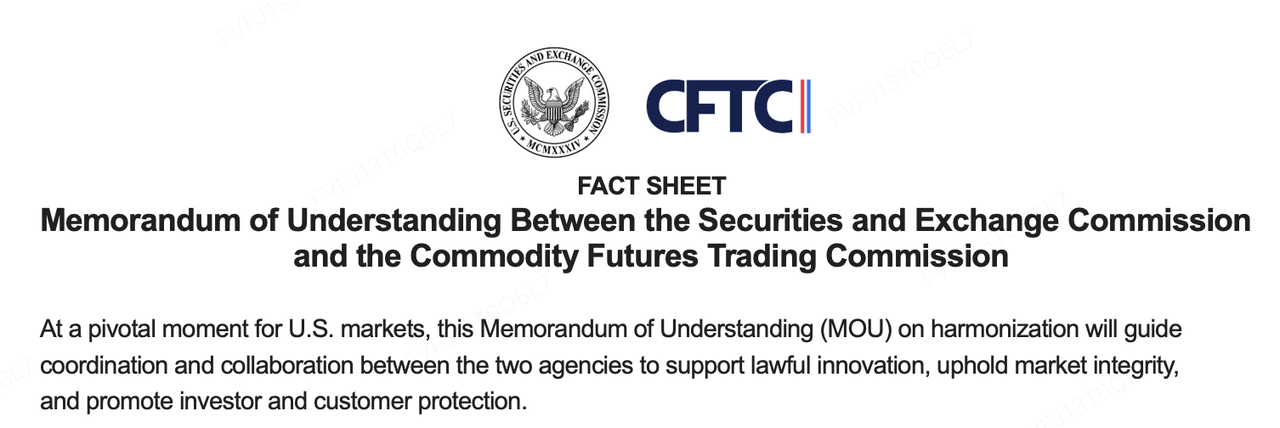
Over the past week, the most notable development in the U.S. crypto market was not a single policy move or a single product launch in isolation, but the increasingly clear interaction between regulatory coordination and product innovation. On the one hand, the SEC and the CFTC formally signed a Memorandum of Understanding (MOU) on March 11, bringing crypto asset classification, rule coordination, cross-market surveillance, and enforcement cooperation into a more institutionalized framework. On the other hand, BlackRock launched the iShares Staked Ethereum Trust ETF (ETHB) on March 12, integrating spot ETH exposure and staking income within a single product structure. Taken together, these two developments point to a more important trend: the focus of U.S. crypto regulation is gradually shifting from “whether to allow” toward “how to allocate responsibilities, how to disclose, and how to support implementation.”
From the perspective of the MOU itself, its core significance does not lie in redrawing the statutory boundaries between the SEC and the CFTC, but in formally institutionalizing the long-standing need for inter-agency coordination. According to the SEC’s press release, fact sheet, and the text of the MOU, future cooperation between the two agencies will focus on six main areas: first, improving clarity around product definitions through joint interpretation and joint rulemaking; second, modernizing frameworks for clearing, margin, and collateral; third, reducing regulatory friction for dually registered exchanges, trading venues, and intermediaries; fourth, developing a more fit-for-purpose regulatory framework for crypto assets; fifth, streamlining regulatory reporting for transaction data, funds, and intermediaries; and sixth, coordinating cross-market examinations, economic analysis, risk monitoring, surveillance, and enforcement. The document also emphasizes timely processing, fair notice, and avoiding regulation by enforcement, underscoring a shift in regulatory thinking away from boundary disputes and enforcement-led oversight toward a more procedural and rules-based model of coordination.
Data Source: https://www.sec.gov/files/mou-sec-cftc-2026-fact-sheet.pdf
That said, the MOU remains a coordination framework rather than a final legislative settlement. The memorandum explicitly states that it does not amend, replace, or repeal any existing laws or regulations, nor does it create any legally binding obligations. At the same time, it does not alter the SEC’s or the CFTC’s independent statutory authority or enforcement responsibilities. In other words, the MOU is better understood as a step forward in regulatory coordination, information-sharing, and implementation pathways before a full market structure framework is ultimately finalized. It addresses inter-agency friction and execution efficiency, rather than resolving all legal classification disputes in one move.
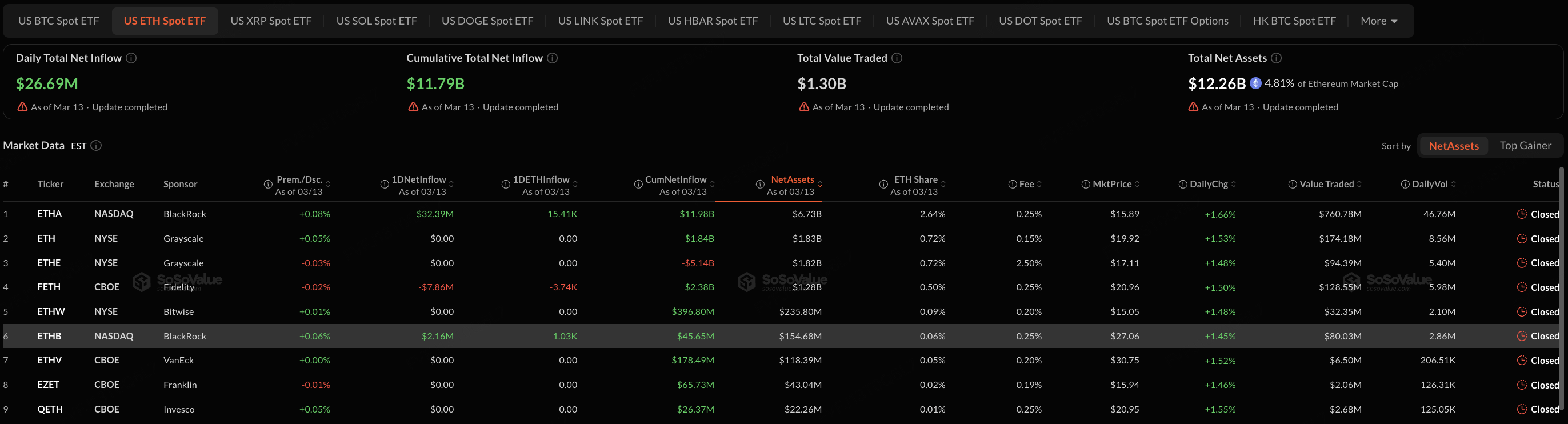
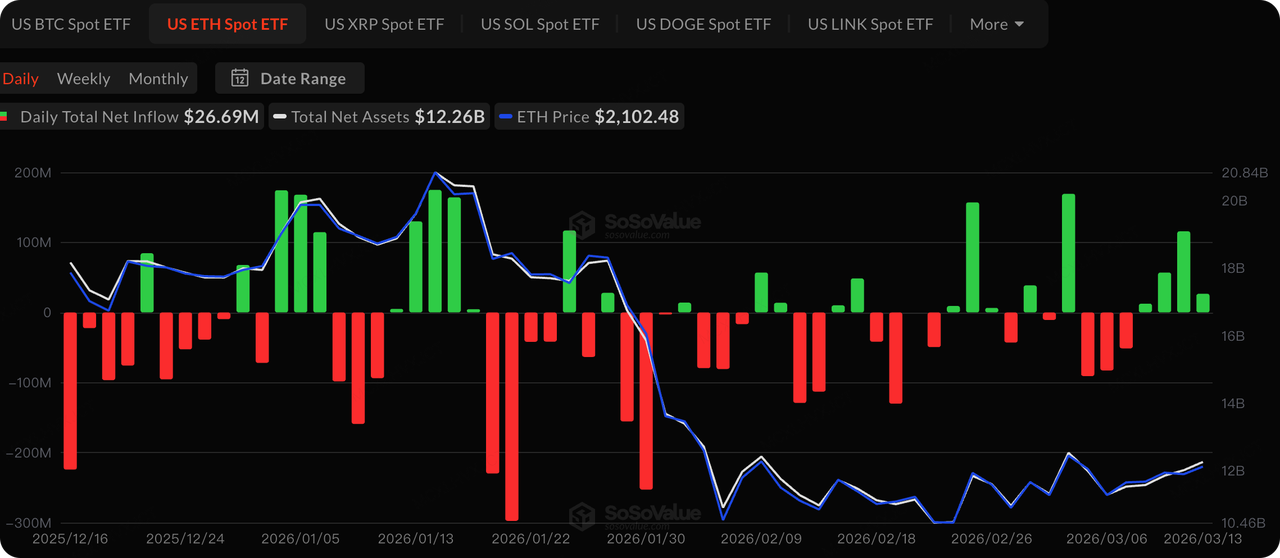
Against this backdrop, the launch of ETHB represents a product format that is both allocatable and distributable. BlackRock’s ETHB offers investors a channel for exposure to spot ETH price performance, while also generating additional income through staking a portion of its holdings. Fund materials show that ETHB charges a 0.25% sponsor fee, with a reduced fee of 0.12% on the first $2.5 billion in assets during the first 12 months. This means BlackRock is not simply launching another ETH product; rather, within the traditional ETF framework, it is extending Ethereum’s role beyond that of a purely tradable asset into a digital asset instrument that combines portfolio allocation characteristics with native yield generation.
Data Source: https://sosovalue.com/assets/etf/us-eth-spot
Looking more closely at its structure, ETHB is particularly notable from a product design perspective. According to the prospectus, under normal market conditions the fund plans to stake approximately 70%–95% of its ETH holdings, while retaining 5%–30% as a liquidity buffer to meet redemption and operational needs. In terms of staking income allocation, the Sponsor, the Prime Execution Agent, and related parties together receive 18% of gross staking rewards, with the fund retaining the remainder. This indicates that ETHB does not treat staking as a simple add-on feature, but rather incorporates a full product design around yield generation, liquidity management, and redemption mechanics. For traditional institutions, this structure more closely resembles the familiar framework of “core asset exposure plus yield enhancement”; for the crypto industry, it means that native on-chain yield is beginning to be incorporated into the traditional capital markets distribution system in a more standardized way. The launch of ETHB may not immediately weaken ETHA’s core position, but it is likely to push institutional demand for ETH allocation beyond simple price exposure toward a more segmented product landscape of “price exposure + native yield enhancement.”
The path toward “compliant assetization” in the U.S. crypto market is therefore becoming more executable. The MOU reduces friction arising from unclear regulatory division of responsibilities, duplicated reporting, and multi-agency engagement, while ETHB further demonstrates that once the regulatory framework becomes more capable of supporting implementation, institutions will move to package on-chain yield characteristics into products that traditional capital markets can understand and distribute. The first areas likely to benefit from this shift will still be those most easily embedded into existing compliance structures, including BTC, ETH, payment stablecoins, custody and execution services, as well as clearing, data, and tokenization infrastructure serving institutional capital, rather than a broad-based expansion across all high-beta crypto assets.
Of course, this does not mean that U.S. crypto legislation has entered a fully clear phase. Reuters reported in early March that Senate negotiations around the CLARITY Act still face significant disagreements over yield-bearing products, deposit migration, anti-money laundering requirements, and ethics provisions, leaving the bill constrained by both timing and political realities. That is precisely why the combination of the SEC-CFTC MOU and ETHB matters: it suggests that even before the legislative process is fully complete, administrative coordination and institutional product innovation are already beginning to build the foundations of a new market infrastructure. For the industry, this is more meaningful than policy rhetoric alone.
2. Weekly Selected Market Signals
Crypto Resilience Test Amid Oil-Driven Stagflation Alarms: Trump Pressures the Fed as Institutional Capital Reshapes the Market Landscape
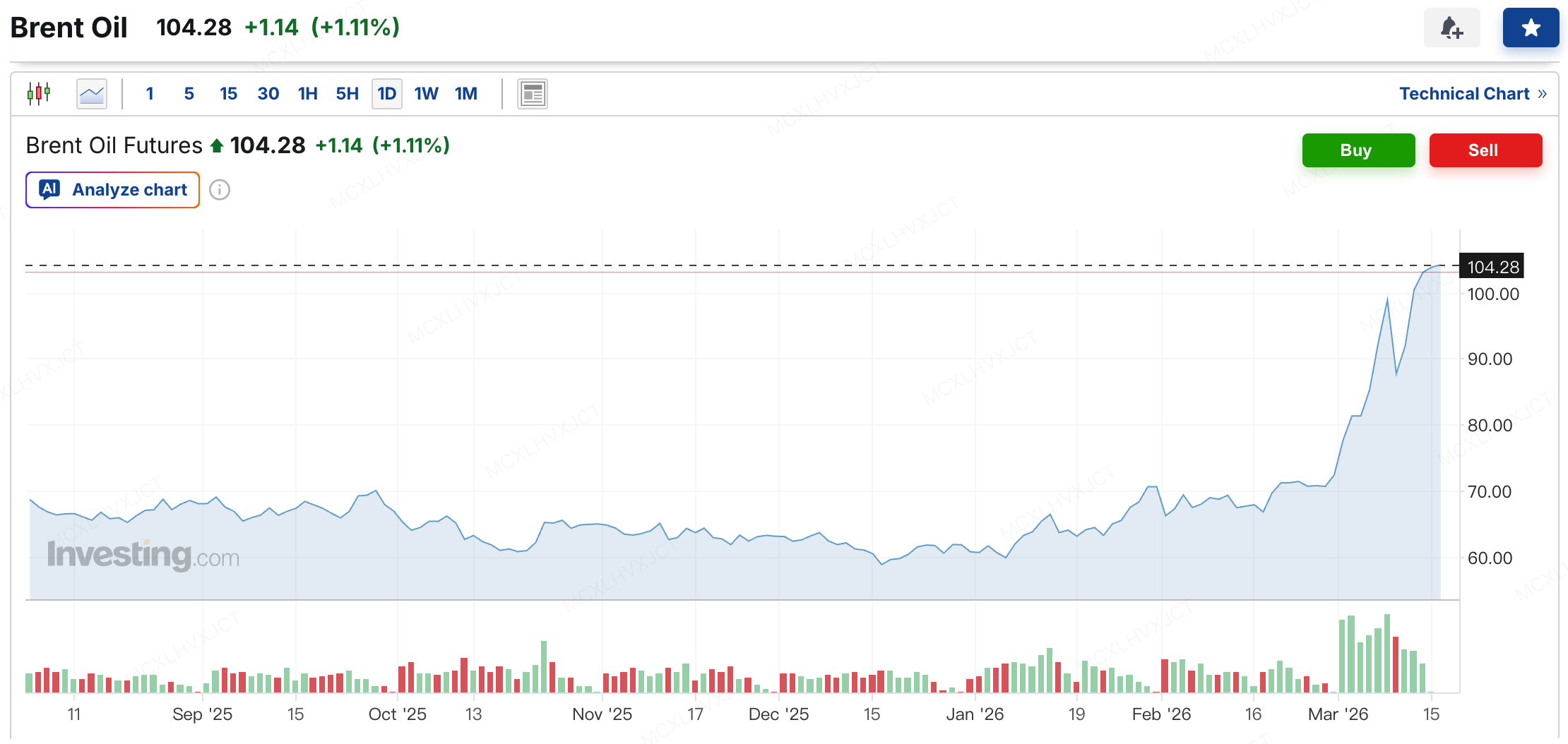
Last week, global traditional financial markets were hit by a significant risk-off sentiment. Geopolitically, the situation in Iran is highly tense, bordering on conflict, causing a sharp rise in market concerns over global supply chain disruptions and an energy crisis. Brent crude oil prices have strongly broken through and stabilized above the $100/barrel mark, showing a continued upward trend. The surge in energy prices has directly awakened the market's deep fear of a resurgence in inflation.
Data Source: investing.com
Dragged down by this, US stocks showed weakness by opening high and closing low last Friday, with the Dow Jones Industrial Average falling for four consecutive trading days. More critically, the core indicator of US stocks—the Magnificent Seven (MAG7) tech giants—experienced a board-wide correction. As high inflation expectations return, the market's tolerance for high-valuation growth stocks is rapidly collapsing. Meanwhile, South Korean and Japanese stock markets experienced severe volatility under the dual pressure of external geopolitical risks and internal monetary policy expectations.
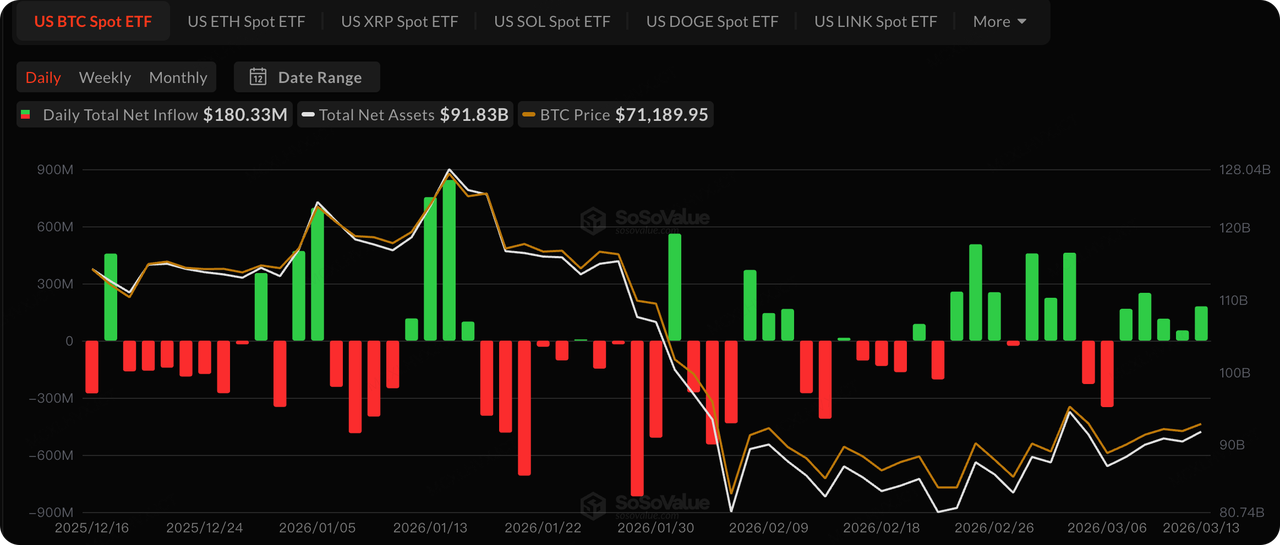
While traditional markets fell into panic and US tech stocks pulled back, the crypto market staged an impressive counter-trend rally over the weekend. The most notable development this week was the price decoupling of Bitcoin from US tech stocks. After testing the low of $65.9k early in the week, BTC stabilized mid-week and accelerated its sprint over the weekend, eventually closing near $72.7k, achieving a weekly gain of 6-9%. Potentially catalyzed by the open-sourcing of Nvidia NemoClaw and the narrative that "AI Agents need crypto wallets for bankless autonomy," the AI+Crypto sector experienced an explosive surge over the weekend.
Regarding public chains, Solana has recently shown relatively strong data performance. Its network revenue in February surpassed that of ETH, remaining a retail trading public chain platform that cannot be ignored in the current market. Looking ahead, Solana's technical upgrades warrant attention. Undoubtedly, Alpenglow will be the most massive base-layer restructuring in Solana's history. Provided by the independent spin-off core development team Anza, this technical solution adopts an extremely radical approach to break existing physical limits: completely abandoning its signature Proof-of-History (PoH) and TowerBFT consensus. If successfully launched, it will drastically reduce Solana's transaction finality from the current 12.8 seconds to 100-150 milliseconds. Such transaction speeds will directly rival the settlement speeds of traditional finance (like Visa), providing the infrastructure for a "Decentralized Nasdaq."
Data Source: SoSoValue
The recent rise in BTC and ETH is also a true reflection of institutional allocation. US spot BTC ETFs recorded a record-breaking 5 consecutive days of gains, with weekly net inflows reaching $767 million (with BlackRock's IBIT contributing significantly). While traditional capital seeks safe havens, institutions are instead using BTC as an allocation tool to hedge against extreme uncertainty. Of course, this rebound is not without hidden concerns. Behind the brief tactical rebound, the risk of a global liquidity cliff in Q2 is gradually approaching.
Data Source: https://truthsocial.com/@realDonaldTrump/posts/116217763545289031
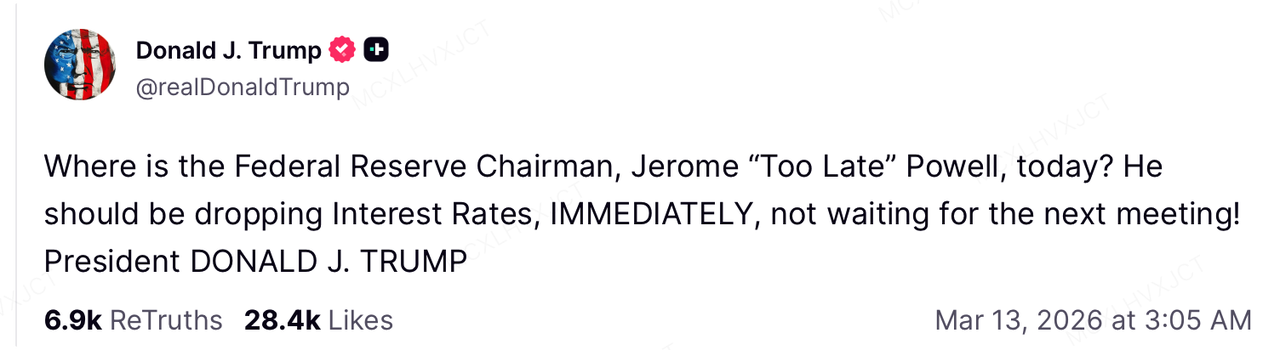
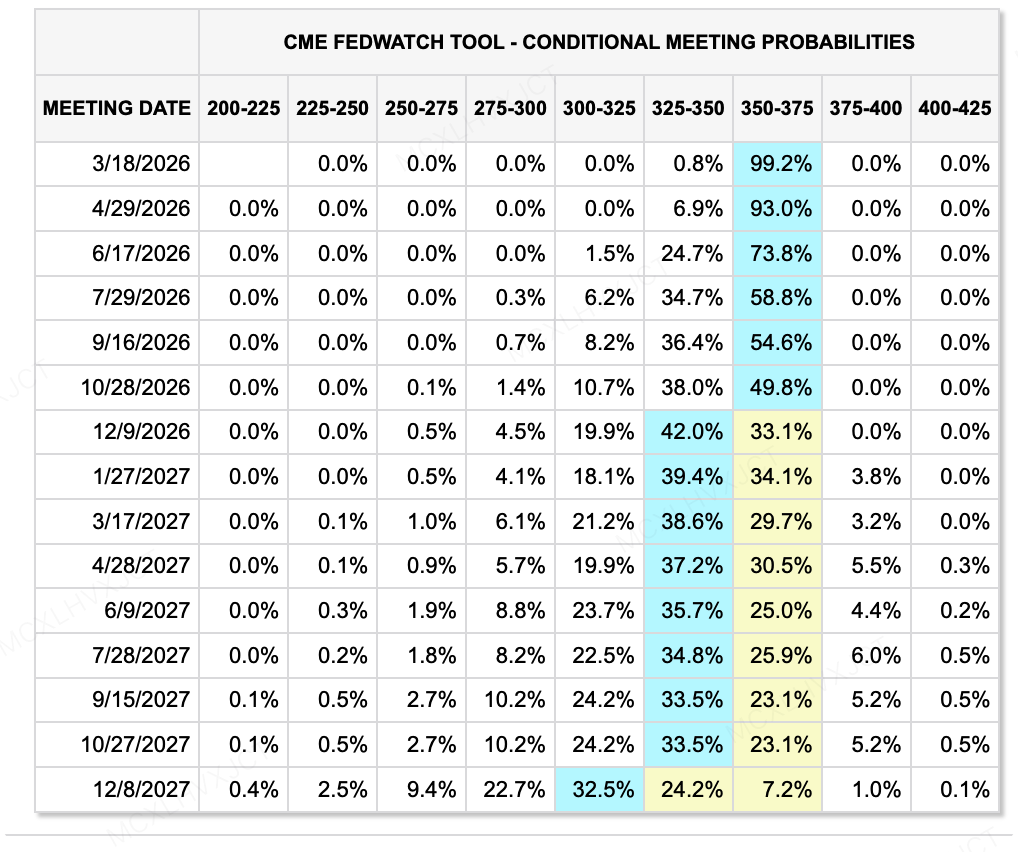
Beyond the stagflation concerns triggered by rapidly climbing oil prices, the Federal Reserve is facing unprecedented political intervention pressure, turning the future rate cut path into a highly complex multi-party tug-of-war. On March 13, US President Trump publicly posted on the social media platform Truth Social, demanding in extremely tough terms that the Fed "drop Interest Rates, IMMEDIATELY, not waiting for the next meeting!" The CME FedWatch Tool shows that market probability bets for a June rate cut have plummeted to below 25%.
Data Source: CME FedWatch Tool
The risk of crude oil supply disruptions caused by the geopolitical conflict in Iran is bringing the shadow of a "resurgence of inflation" back. Under traditional economic logic, facing rising inflation, the Fed should maintain or even strengthen its tightening stance; however, to prepare for the upcoming 2026 midterm elections, the White House urgently needs loose dollar liquidity to prop up US stocks and macroeconomic data. Therefore, the market will pay very close attention to the Fed meeting window from March 18-20. Powell's response to the "emergency rate cut pressure" during the press conference will directly determine the flow direction of global capital in the next phase.
Key Events to Watch This Week:
This week, approximately 20 central banks worldwide will hold monetary policy meetings, covering economies that account for roughly two-thirds of the global GDP. The speeches and statements of key figures will set the tone for near-term global liquidity. In the industry, the global AI and high-performance computing sectors will welcome two major tech conferences this week—Nvidia's GPU Technology Conference (GTC) and the Optical Fiber Communication Conference and Exhibition (OFC), which will be held concurrently in San Jose and Los Angeles, USA.
-
March 16: Release of China's real estate, retail sales, and fixed-asset investment data; Nvidia GTC opens.
-
March 19: Central banks from the US, EU, Japan, UK, and other regions/countries will announce interest rate decisions.
Primary Market Funding Observations:
Data Source: CryptoRank
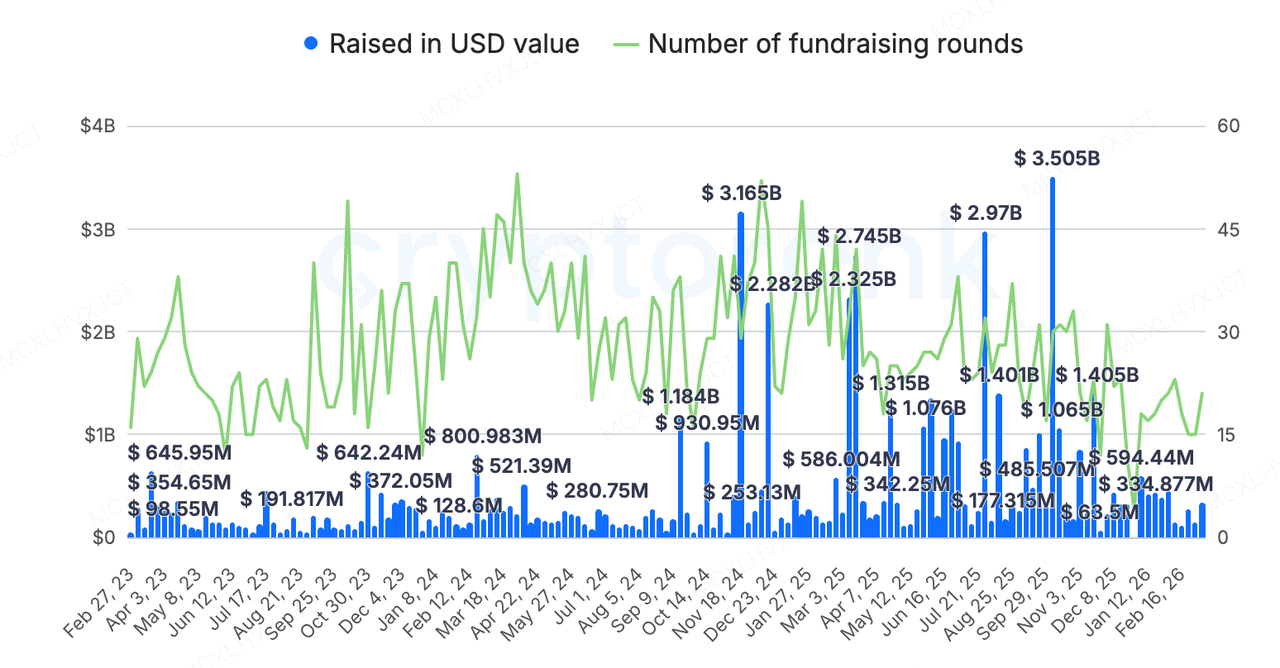
In the primary market, according to CryptoRank statistics, the total disclosed funding amount this week was $334 million across 21 funding events. Capital flows continue to show structural changes: funds are persistently concentrating on late-stage rounds and infrastructure projects with actual orders/market demand, while early-stage, purely narrative-driven seed round financing has shrunk significantly. Investing in utility-type and compliance-oriented projects that "can withstand liquidity tightening" has become the current consensus among VCs.
-
Eightco Holdings Strategic Transformation ($125 million funding): The largest funding round this week came from the Nasdaq-listed company Eightco Holdings. The company received new funding commitments from Bitmine ($75 million), ARK Invest, and Payward ($25 million each). Eightco is fully transitioning from a packaging and logistics company to an AI and blockchain investment firm, having already injected $75 million into OpenAI and companies under MrBeast. Its balance sheet is extremely robust, holding approximately 277 million WLD tokens, 11,000 ETH, and $82 million in cash reserves.
-
Cryptio Completes Series B ($45 million funding): As the most solid compliance infrastructure project this week, the crypto accounting and reconciliation platform Cryptio was co-led by BlackFin Capital Partners and Sentinel Global. The project's cumulative funding has reached $71.2 million. Currently, Cryptio serves over 450 institutional clients, including Circle and the blockchain subsidiary of Societe Generale, providing full-stack tax compliance tools. It directly benefits from policy tailwinds such as the FASB fair value accounting rules, indicating that institutional clients are shifting from "exploratory testing" to "large-scale procurement."
-
VeryAI Seed Round ($10 million funding): Led by Polychain Capital, the identity verification system VeryAI aims to solve the "Proof-of-Humanity" pain point in the era of AI agents. Its core product is based on a "smartphone camera + random gesture" palm print verification, which is anti-forgery and highly non-invasive. Against the backdrop of bans on Worldcoin-style iris scanning in multiple countries, VeryAI's palm print solution may have a stronger implementation advantage in terms of compliance, and it has currently entered the enterprise pilot phase.
About KuCoin Ventures
KuCoin Ventures, is the leading investment arm of KuCoin Exchange, which is a leading global crypto platform built on trust, serving over 40 million users across 200+ countries and regions. Aiming to invest in the most disruptive crypto and blockchain projects of the Web 3.0 era, KuCoin Ventures supports crypto and Web 3.0 builders both financially and strategically with deep insights and global resources.
As a community-friendly and research-driven investor, KuCoin Ventures works closely with portfolio projects throughout the entire life cycle, with a focus on Web3.0 infrastructures, AI, Consumer App, DeFi and PayFi.
Disclaimer This general market information, possibly from third-party, commercial, or sponsored sources, is not financial or investment advice, an offer, solicitation, or guarantee. We disclaim liability for its accuracy, completeness, reliability, and any resulting losses. Investments/trading are risky; past performance doesn’t guarantee future results. Users should research, judge prudently, and take full responsibility.