

Introduction to the Crypto Wallet MetaMask
2026/03/31 17:06:02
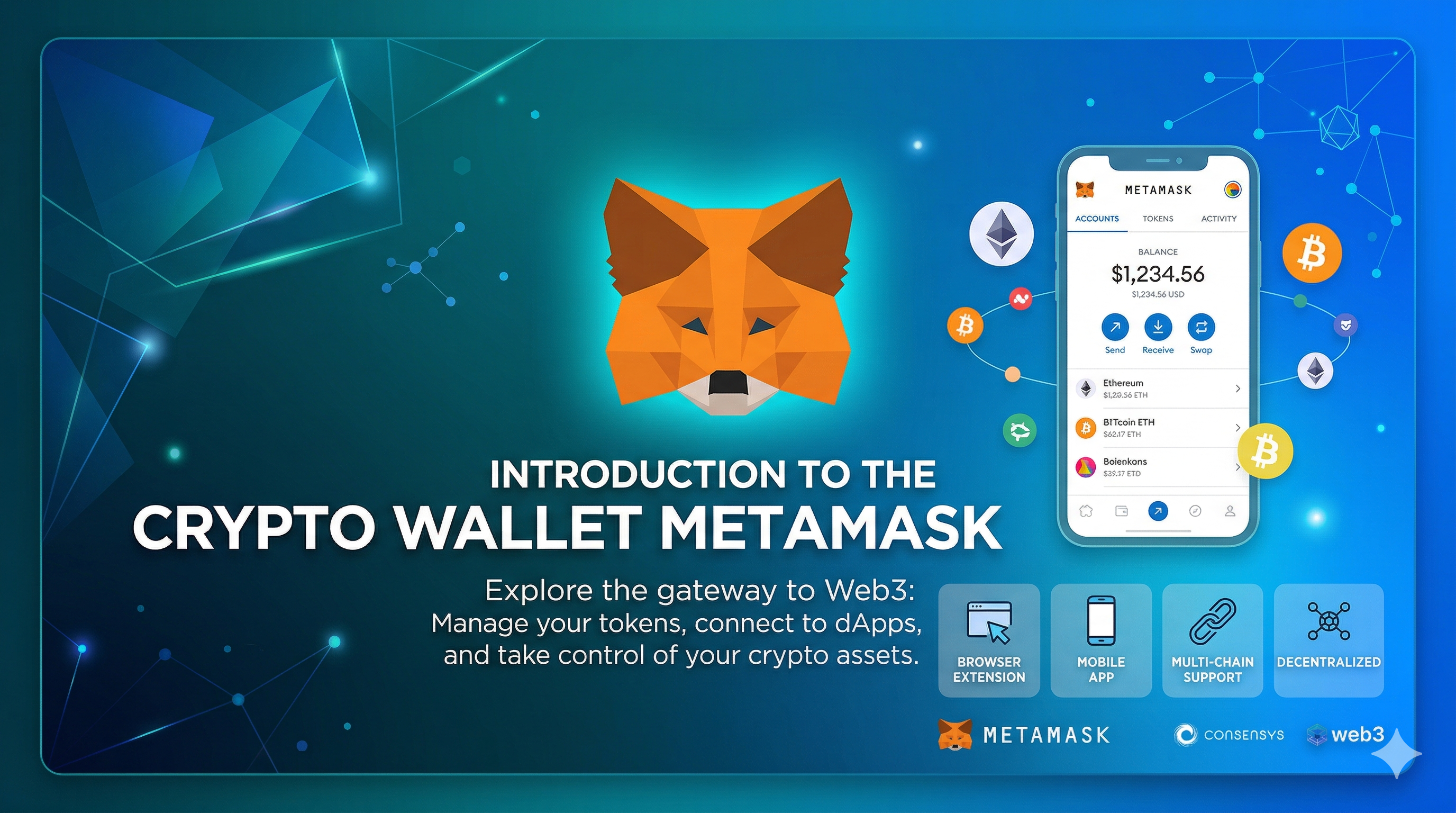
MetaMask has become one of the most important tools in the cryptocurrency ecosystem by acting as a bridge between everyday users and the decentralized internet. Its rise reflects a broader shift toward self-custody, financial independence, and direct interaction with blockchain applications, making it more than just a wallet, it is an entry point into Web3.
The Moment Crypto Became Personal: Why Wallets Matter
Cryptocurrency changed how people think about money, but crypto wallets changed how people actually experience it. Before wallets like MetaMask became widely used, most users kept their digital assets on centralized exchanges. That meant trusting a third party to hold funds, similar to a bank. The shift toward personal wallets marked a turning point. It gave users full control over their assets, including the responsibility that comes with it.
A crypto wallet is not a place where coins are physically stored. Instead, it manages private keys, cryptographic credentials that prove ownership of assets on a blockchain. Whoever controls these keys controls the funds. This idea is central to the philosophy of decentralized finance, where individuals manage their own money without intermediaries.
MetaMask entered this space at a time when Ethereum was expanding beyond simple transactions into smart contracts and decentralized applications. It provided a simple way for users to interact with this new digital environment directly from their browsers. As Web3 grew, MetaMask became one of the first tools many users installed, often without realizing how essential it would become in their daily crypto activity.
What MetaMask Actually Is: Beyond the Hype
MetaMask is often described as a crypto wallet, but that description only tells part of the story. It is more accurately a gateway to the decentralized web. Built by ConsenSys and launched in 2016, MetaMask allows users to store, send, and receive Ethereum-based assets while also connecting directly to decentralized applications, commonly known as dApps.
The wallet exists in two main forms: a browser extension and a mobile app. This dual approach allows users to access their funds and interact with blockchain services whether they are on desktop or mobile. The browser extension is particularly important because it enables seamless integration with websites. When a user visits a decentralized exchange or NFT marketplace, MetaMask can connect instantly, allowing transactions to be approved in seconds.
One of the most defining features of MetaMask is that it is non-custodial. This means the platform does not hold user funds or private keys. Instead, users are fully responsible for securing their recovery phrases and managing access. This design aligns with the core principles of blockchain technology, ownership without reliance on centralized institutions.
How MetaMask Became the Default Wallet for Web3
The rise of MetaMask is closely tied to the growth of Ethereum and the broader Web3 ecosystem. When decentralized finance platforms and NFT marketplaces started gaining traction, users needed a simple way to connect to them. MetaMask filled that gap at exactly the right time.
Ease of use played a major role. Setting up MetaMask requires only a few steps: install the extension, create a wallet, and store a recovery phrase. Compared to earlier crypto tools, this process felt intuitive. For many users, it was their first direct interaction with blockchain technology.
Adoption grew very fast. Reports suggest MetaMask has attracted tens of millions of users globally, driven by demand for decentralized finance and NFT trading. The wallet became a standard integration for thousands of dApps, making it almost unavoidable for anyone exploring Web3.
Its popularity also reinforced itself. As more platforms supported MetaMask, more users adopted it. This network effect turned it into a default option, similar to how certain browsers or apps dominate their categories. Today, MetaMask is not just a wallet people use, it is often the wallet people start with.
A Simple Explanation of How MetaMask Works
MetaMask functions as a key manager. When a user creates a wallet, the software generates a unique set of cryptographic keys. These keys allow the user to sign transactions, proving ownership of assets on the blockchain.
When sending cryptocurrency, MetaMask does not move funds in the traditional sense. Instead, it signs a transaction and broadcasts it to the network. The blockchain then updates ownership records. This process happens within seconds or minutes, depending on network conditions.
MetaMask also acts as a bridge between users and decentralized applications. When visiting a dApp, users can connect their wallet, allowing the application to read certain information and request transaction approvals. Every action, whether swapping tokens or minting an NFT, requires user confirmation.
This design ensures that users remain in control at all times. No transaction can occur without explicit approval. It also means that understanding what you are signing becomes critical, as mistakes can lead to permanent loss of funds.
The Role of MetaMask in DeFi and NFTs
MetaMask became essential during the explosion of decentralized finance. Platforms offering lending, borrowing, and trading services needed a wallet that could connect easily. MetaMask provided that connection layer, making it possible for users to interact with financial tools without leaving their browsers.
The same applies to NFTs. Marketplaces such as OpenSea rely on wallets like MetaMask to handle transactions. Users can mint, buy, and sell digital assets directly through their wallets. This integration simplified what would otherwise be a complex process.
MetaMask also introduced features like token swaps, allowing users to exchange cryptocurrencies within the wallet itself. This reduced the need to rely on external platforms and streamline the user experience.
What stands out is how MetaMask unified these experiences. Instead of using separate tools for storage, trading, and interaction, users could manage everything in one place. This convenience played a significant role in its widespread adoption.
Security, Responsibility, and the Reality of Self-Custody
MetaMask gives users full control over their assets, but that control comes with responsibility. The wallet relies on a recovery phrase, often called a seed phrase, which acts as the master key. Losing this phrase means losing access to funds permanently.
The non-custodial model eliminates reliance on third parties but also removes safety nets. There is no customer support that can recover lost keys. This makes security practices essential, including offline storage of recovery phrases and cautious interaction with unknown websites.
Because MetaMask is a “hot wallet,” it remains connected to the internet. This makes it convenient but also exposes users to risks such as phishing attacks and malicious smart contracts. Many experienced users limit the amount of funds stored in MetaMask and use hardware wallets for long-term storage.
The balance between convenience and security defines the MetaMask experience. It empowers users while requiring them to take an active role in protecting their assets.
MetaMask in 2026: Features and Ongoing Evolution
MetaMask continues to grow as the crypto industry matures. New features focus on improving usability and expanding functionality. These include in-app swaps, cross-chain support, and reward systems designed to increase engagement.
The wallet now supports multiple Ethereum-compatible networks, allowing users to interact with ecosystems beyond Ethereum itself. This includes networks like Polygon and Arbitrum, which offer faster and cheaper transactions.
Recent developments also highlight the competitive nature of the wallet space. Alternatives continue to emerge, pushing MetaMask to innovate. At the same time, the platform remains a central tool for accessing Web3 services. Its evolution reflects broader trends in crypto: increasing accessibility, growing complexity, and the constant push toward mainstream adoption.
Why MetaMask Still Dominates the Wallet Space
MetaMask’s dominance comes from a combination of timing, usability, and integration. It entered the market early, built strong connections with developers, and maintained a focus on simplicity.
The wallet’s integration with thousands of dApps makes it difficult to replace. For many platforms, MetaMask is the default connection option. This creates a cycle where users continue to rely on it because it works everywhere. Brand recognition also plays a role. In a space filled with technical tools, MetaMask managed to create a recognizable identity. This helped build trust and familiarity among users.
Its continued relevance shows that success in crypto is not only about technology. It also depends on user experience, accessibility, and the ability to adapt to changing trends.
Conclusion
MetaMask represents a major shift in how people interact with money and the internet. It simplifies complex blockchain processes while giving users direct control over their assets. Its growth mirrors the expansion of Web3 itself, where users are no longer passive participants but active owners.
The wallet’s importance goes beyond convenience. It has helped define how millions of people experience decentralized technology. By lowering barriers and improving usability, MetaMask has played a key role in bringing crypto into the mainstream.
As the industry continues to evolve, tools like MetaMask will remain central to that transformation. They are not just wallets, they are the infrastructure of a new digital economy.
FAQs
1. What is MetaMask in simple terms?
MetaMask is a crypto wallet that lets you store digital assets and connect to blockchain apps.
2. Is MetaMask free to use?
Yes, but you pay network fees for transactions.
3. Can MetaMask hold Bitcoin?
Not directly. It mainly supports Ethereum and similar networks.
4. Is MetaMask safe?
It is secure if used correctly, but users must protect their recovery phrase.
5. Do I need MetaMask for Web3?
It is one of the most common tools, but alternatives exist.
Disclaimer
This content is for informational purposes only and does not constitute investment advice. Cryptocurrency investments carry risk. Please do your own research (DYOR).