

SEC Announces Roundtable on 24-Hour Trading for US Stocks: What Investors Need to Know About Overnight Markets
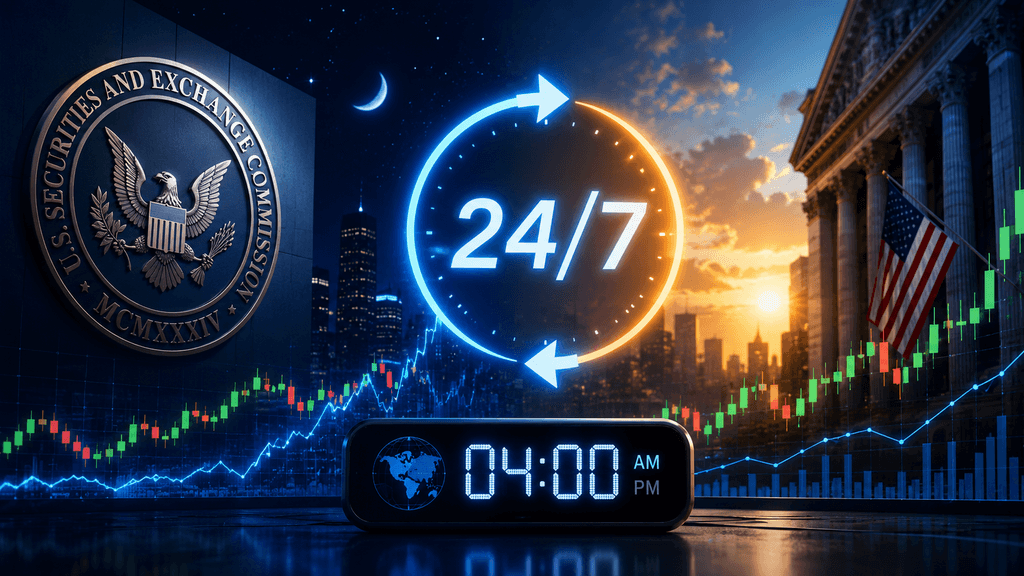
The SEC will hold a September 17 roundtable on 24-hour U.S. stock trading. Explore Nasdaq’s proposed 23/5 schedule, overnight liquidity risks and investor protections.The U.S. stock market is moving closer to nearly continuous weekday trading as regulators, exchanges, brokers and clearing organizations prepare for longer operating hours. On July 23, 2026, the Securities and Exchange Commission announced a public roundtable to examine how U.S. equity markets should prepare for overnight trading, including the infrastructure, market-resilience standards and investor protections required to support a longer trading day. The event does not mean that every U.S. stock will immediately become available around the clock. Instead, it represents another step toward a market structure in which selected stocks and exchange-traded funds could trade for as many as 23 hours per weekday.
The transition could give investors outside North America easier access to U.S. equities, allow market participants to react more quickly to earnings announcements and reduce the long gap between the closing and reopening of American markets. However, overnight trading may not provide the same liquidity, market depth or execution quality available during regular hours. The development is also taking place alongside the growing tokenization of stocks and other real-world assets, although blockchain-based tokenized securities rely on different legal, custody and settlement structures from shares traded on national stock exchanges.
SEC’s September 17 Roundtable on 24-Hour US Stock Trading
The U.S. Securities and Exchange Commission will hold a public roundtable on preparations for 24-hour trading on September 17, 2026, to examine how U.S. equity markets should prepare for longer trading hours. Scheduled from 10:00 a.m. to 4:00 p.m. ET at the SEC’s headquarters in Washington, D.C., the event will be open to the public, livestreamed and recorded. The discussion is expected to focus on overnight-trading infrastructure, operational resilience, market transparency and the investor protections needed as exchanges move toward near-continuous weekday trading. The SEC has not yet published the final agenda or speaker list, but members of the public can submit comments under File Number 4-913.
The roundtable does not mean the SEC has approved universal 24-hour trading for every U.S. stock. Instead, it reflects the regulator’s effort to coordinate exchanges, brokers, clearing organizations, market-data providers and investor representatives as several trading venues prepare to introduce longer sessions. Key issues are likely to include liquidity during overnight hours, wider bid-ask spreads, trade reporting, consolidated market data, market halts, cybersecurity and the processing of dividends, stock splits and other corporate actions. The outcome could influence how quickly 23-hour, five-day trading expands across U.S. equity markets and what safeguards investors will receive before overnight trading becomes widely available.
How 23/5 Overnight Stock Trading Could Work Across Nasdaq and US Equity Markets
Nasdaq’s Proposed 23/5 Trading Schedule and Overnight Market Hours
Nasdaq’s proposed expansion of U.S. stock-market hours would create a 23-hour trading day, five days per week, giving investors almost continuous access to U.S.-listed stocks and exchange-traded funds during the working week. Under the planned structure, Nasdaq’s daytime trading session would continue from 4:00 a.m. to 8:00 p.m. ET, followed by a one-hour technical pause from 8:00 p.m. to 9:00 p.m. ET. A new overnight trading session would then operate from 9:00 p.m. to 4:00 a.m. ET, with the weekly cycle beginning on Sunday evening and ending on Friday night. Although the model is often described as 24-hour stock trading, 23/5 trading is the more accurate term because the market would still close briefly each day for maintenance, data processing, trade reconciliation and system resets. Most weekend hours would also remain closed, meaning the structure would not operate like fully continuous global cryptocurrency markets.
The extended schedule could significantly improve access to U.S. equities for investors outside North America. Traders in Singapore, Hong Kong, Tokyo, Seoul and other Asian financial centers could buy and sell U.S. stocks during local daytime hours instead of waiting for the traditional New York session to begin late at night. European investors would also have more flexibility to react to U.S. corporate news, economic reports and geopolitical developments without waiting for the regular market opening. However, the traditional session from 9:30 a.m. to 4:00 p.m. ET would likely remain the most important period for price discovery because it attracts the largest number of institutional investors, market makers and retail traders. Overnight trading may offer greater convenience, but trading volume and liquidity could remain concentrated during normal U.S. market hours, especially during the early stages of implementation.
How Overnight Stock Orders, Trade Dates and Settlement Could Work
Overnight stock trading would likely operate under stricter order-handling rules than the regular market because lower trading volume can increase the risk of sudden price movements and poor executions. Nasdaq’s planned overnight session would restrict several order types, including unpriced market orders and orders connected to opening or closing auctions. Many brokerage platforms may also permit only limit orders, which allow investors to set the maximum price they are willing to pay when buying a stock or the minimum price they are willing to accept when selling. This protection can reduce the risk of an order being completed at an unexpectedly unfavorable price, but it does not guarantee execution. A limit order may remain unfilled if there are not enough buyers or sellers available at the selected price, which could become a common issue during thin overnight markets.
Trade-date treatment would add another layer of complexity to 23/5 stock trading. Transactions completed during the late-evening period may be assigned the following calendar day’s trade date, while trades executed after midnight would generally be recorded using the current date. This distinction could affect settlement schedules, brokerage statements, tax records, dividend eligibility and the processing of stock splits, mergers or other corporate actions. Investors would also need to understand whether unexecuted overnight orders remain active during pre-market trading or are automatically cancelled at the end of the night session. These rules may differ between exchanges and brokerage firms, meaning a stock order entered at 11:00 p.m. could be handled differently depending on the platform being used. Before participating in overnight U.S. stock trading, investors would need to review order-duration policies, trade-date rules, settlement procedures and the availability of related products such as stock options.
How Nasdaq, Brokers and US Market Infrastructure Would Support 23/5 Trading
The transition to 23/5 U.S. stock trading would require much more than extending the operating hours of Nasdaq or another national exchange. The entire market infrastructure including broker-dealers, market makers, clearing organizations, trade-reporting facilities, consolidated market-data systems and regulatory surveillance platforms would need to operate across the longer schedule. Investors must be able to see reliable quotations, brokers must route orders to suitable venues, and completed transactions must move efficiently through clearing and settlement. Market operators would also need systems capable of managing trading halts, technical outages, cybersecurity incidents and corporate actions during hours that were previously reserved for maintenance and overnight processing. Without coordinated infrastructure, investors could face inconsistent pricing, delayed trade reports or disruptions when moving positions between overnight and daytime sessions.
Brokerage access may also remain uneven even after exchanges introduce longer market hours. Some platforms could allow customers to trade only selected large-cap stocks and ETFs, while others may restrict overnight trading by account type, location or order size. Liquidity could also become fragmented across national exchanges and alternative trading systems, creating situations in which the price shown by one brokerage differs from prices available elsewhere. Wider bid-ask spreads and lower market depth may increase trading costs even when commissions remain low or zero. The long-term success of overnight U.S. stock markets will therefore depend on whether exchanges can attract enough market makers, institutional investors and retail activity to support stable pricing throughout the night. If participation remains limited, 23/5 trading may expand market access without providing the same execution quality and liquidity investors typically receive during regular trading hours. Nasdaq’s official global trading hours information states that its new session is expected to run from 9:00 p.m. to 4:00 a.m. ET, subject to infrastructure readiness and applicable regulatory changes.
Benefits, Liquidity Risks and Investor Protections in Overnight Stock Markets
-
Greater Access to US Stocks and Faster Reactions to Global News
One of the main benefits of overnight stock trading is that it could provide investors with nearly continuous weekday access to U.S.-listed stocks and exchange-traded funds. Investors in Asia, Europe and other international markets would be able to trade American equities during their local business hours instead of waiting for the traditional U.S. stock-market session to open. Longer trading hours could also help investors respond more quickly to earnings reports, regulatory filings, economic data, central-bank decisions and geopolitical developments released after the regular closing bell. This additional flexibility may be particularly valuable for global institutions, retail traders with limited daytime availability and portfolio managers operating across multiple time zones. However, faster access does not necessarily produce better execution, because prices formed during low-volume overnight sessions may change sharply when deeper regular-session liquidity returns.
-
Lower Liquidity Could Increase Overnight Stock Trading Risks:
Lower liquidity is likely to be one of the biggest risks in overnight stock markets because fewer institutional investors, market makers and retail traders may participate between the evening and early-morning sessions. With fewer active buyers and sellers, investors may find it more difficult to complete large orders at the displayed price, and some orders may be only partially executed or remain unfilled. Even large-cap U.S. stocks and popular ETFs could experience weaker market depth overnight, while smaller or less actively traded securities may have very limited activity. Reduced liquidity can also make prices more sensitive to relatively small orders, increasing the possibility of sudden and exaggerated movements that may not accurately reflect broader investor demand.
-
Wider Bid-Ask Spreads Could Raise Overnight Trading Costs:
Overnight stock trading may involve wider bid-ask spreads, which represent the difference between the highest price a buyer is willing to pay and the lowest price a seller is prepared to accept. During regular U.S. market hours, strong competition among traders and market makers usually helps keep spreads relatively narrow. Overnight, lower participation and weaker liquidity could cause those spreads to widen, increasing the real cost of entering or exiting a position. A brokerage may offer commission-free overnight trading, but investors could still receive a less favorable execution price because of the wider spread. This risk may become especially significant during earnings announcements, regulatory developments or major global news events, when investors attempt to trade quickly before sufficient liquidity enters the market.
-
Higher Volatility and Price Differences Across Overnight Trading Venues:
Overnight stock prices may be more volatile because major news can arrive when trading activity is limited and fewer orders are available to absorb sudden demand. An earnings report, merger announcement, economic release or geopolitical event could cause a stock to rise or fall sharply on relatively low volume, only for that movement to reverse once the regular market opens. Prices may also differ across national exchanges, alternative trading systems and brokerage-operated overnight platforms if liquidity remains fragmented. As a result, a quote displayed by one broker may not reflect the best available price elsewhere. Reliable consolidated market data, transparent order routing and effective price-discovery mechanisms will therefore be critical to protecting investors as 23/5 U.S. stock trading expands.
-
Limit Orders and Market Safeguards Could Improve Investor Protection:
Investor protections will play a central role in determining whether overnight U.S. stock markets can operate safely and efficiently. Many brokerage platforms are expected to allow only limit orders that specify an acceptable execution price during overnight sessions, enabling investors to set the maximum price they are willing to pay when buying or the minimum price they will accept when selling. Limit orders can reduce the risk of an unexpectedly poor execution in a thin market, although they do not guarantee that a trade will be completed. Additional protections may include trading halts, static price bands, market-surveillance systems, cybersecurity controls and stricter procedures for processing dividends, stock splits, mergers and other corporate actions. Brokers offering extended-hours access must also provide clear risk disclosures covering lower liquidity, wider spreads, higher volatility and fragmented pricing.
-
Investors Must Balance Overnight Access With Execution Quality:
The expansion of 23/5 trading could make U.S. equities more accessible, but investors should not assume that every trading hour will provide the same liquidity, transparency or execution quality. The regular session from 9:30 a.m. to 4:00 p.m. ET is still likely to offer the deepest liquidity, narrowest bid-ask spreads and highest institutional participation. Before placing an overnight stock order, investors should confirm which stocks and ETFs are eligible, which order types are supported, where the order will be routed and when an unfilled order will expire. They should also review the available volume, market depth, bid-ask spread and trade-date rules. Overnight trading may be useful for responding to important news, but the benefit of immediate access should always be weighed against the risks of higher costs, incomplete executions and unstable prices. FINRA’s official guidance on extended-hours stock trading risks highlights lower liquidity, higher volatility, unlinked markets and broker-specific restrictions as key considerations.
Conclusion
The SEC’s September 17 roundtable represents an important stage in the movement toward near-continuous trading across U.S. equity markets. Nasdaq’s planned structure could create a 23-hour weekday trading cycle, giving domestic and international investors more opportunities to trade U.S. stocks outside the traditional session. The model could improve access to American equities and allow faster reactions to earnings announcements, economic reports and global developments. However, more trading hours do not automatically create better market conditions. Overnight investors may face lower liquidity, wider bid-ask spreads, fragmented prices and increased volatility, particularly when major news is released during thin trading periods. The success of 23/5 U.S. stock trading will depend on whether exchanges, brokers, market makers, data providers and clearing organizations can support longer hours without weakening transparency, execution quality or investor protection.
🔥 Join KuCoin 9th Anniversary Trading CampaignKuCoin is celebrating its 9th anniversary with a special platform campaign filled with exclusive rewards, trading activities, and limited-time offers. Don’t miss the chance to participate and enjoy the benefits as the exchange marks nine years of growth and innovation. Visit the official campaign page now:
|
Frequently Asked Questions
Will Overnight Stock Trades Affect Taxes Differently?
Overnight trades are generally taxed under the same rules as transactions completed during regular market hours. However, the assigned trade date can affect year-end reporting, holding periods and wash-sale calculations. Investors should check the execution date shown on their brokerage confirmation rather than relying only on the time the order was submitted.
Can Investors Use Margin During Overnight Trading?
Some brokerage firms may allow margin accounts to participate in overnight markets, but they can apply stricter buying-power limits or maintenance requirements. Sharp price movements and lower liquidity could also increase the risk of a margin call, particularly when an investor cannot close a position at the expected price.
Will Fractional Shares Be Available Overnight?
Fractional-share availability will depend on the brokerage platform rather than the exchange alone. Some brokers may restrict overnight trading to whole shares because fractional orders are frequently processed through internal systems instead of being routed directly to a national securities exchange.
How Could Overnight Trading Affect Stop-Loss Orders?
Stop-loss orders may not be accepted or activated during overnight sessions, depending on the broker and trading venue. Even when available, a triggered stop order may execute at a significantly different price if market liquidity is limited. Investors should confirm whether the order converts into a market order or limit order after its trigger price is reached.
What Happens if a Stock Is Halted During an Overnight Session?
A stock may be halted because of pending corporate news, unusual volatility, a regulatory concern or a technical problem. Existing orders may remain pending, be rejected or be cancelled depending on the exchange and brokerage rules. Trading may not resume until the next eligible market session.
Disclaimer: This article is for informational purposes only and does not constitute financial, investment or legal advice. Overnight trading can involve lower liquidity, wider spreads, greater volatility and execution risks. Investors should review their brokerage’s rules and risk disclosures before trading outside regular market hours.