

Adam Back Makes Case for Simpler Security as Blockstream Launches Bitcoin Custody System
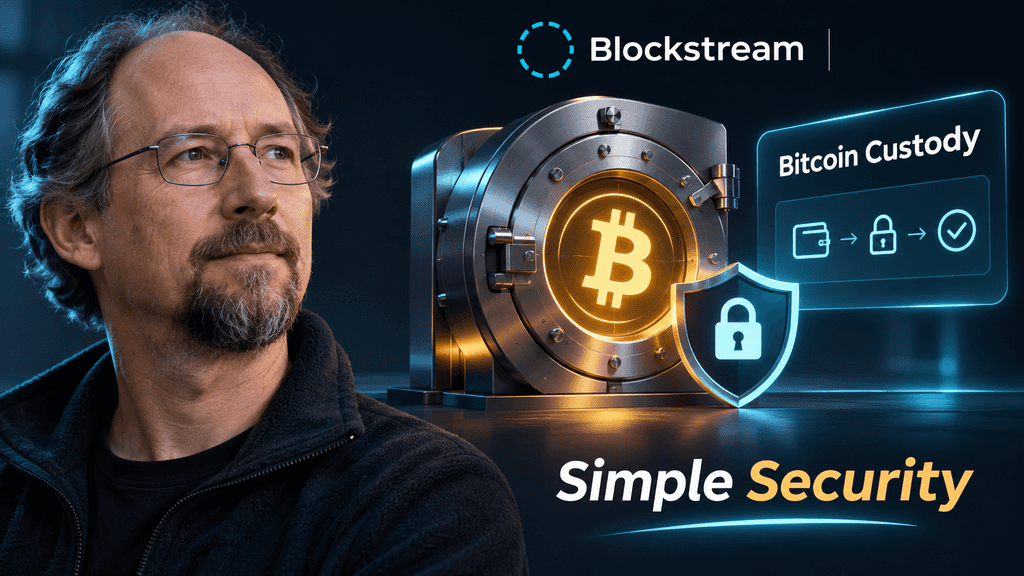
Why Blockstream and Thales Built a Hardware-Isolated Bitcoin Custody System
Blockstream, the Bitcoin infrastructure firm co-founded by cryptographer Adam Back, has released an institutional digital asset custody solution developed with French technology and cybersecurity group Thales. Announced on November 13, 2026, the offering integrates Thales hardware security modules with Blockstream’s Secure Multi-Party Computation technology so that the entire transaction signing protocol executes inside the protected HSM environment.
The launch arrives weeks after the record $6.3 billion Binance hack and coincides with Back’s public argument that complexity itself undermines security. He maintains that simpler, offline cold-storage designs offer stronger protection against sophisticated remote attacks, including those assisted by artificial intelligence. The thesis is clear: institutions managing Bitcoin at scale should prioritize hardware-isolated keys and minimal online exposure over highly interactive cryptographic protocols.
Key Takeaways
-
Blockstream and Thales launched an enterprise custody system on November 13, 2026, that runs full Secure-MPC signing inside HSMs.
-
The architecture keeps private key material and signing operations within dedicated hardware throughout the transaction lifecycle.
-
Adam Back argues conventional MPC protocols are too interactive and complex for practical cold storage.
-
He cited the October 2026 Binance $6.3 billion hack as evidence of risks in internet-connected signing infrastructure.
-
The solution incorporates FROST threshold signatures and is delivered through the Blockstream Enterprise platform.
-
Back warns that AI may help attackers discover subtle flaws in complex implementations, reinforcing the case for offline designs.
What Is the New Blockstream Thales Bitcoin Custody Solution
Blockstream’s new enterprise custody offering combines Thales hardware security modules with its own Secure-MPC technology. The integration is delivered through the Blockstream Enterprise platform, which is designed to support institutional deployment, management, and scaling of Bitcoin-based financial infrastructure.
According to the company, the system allows institutions to authorize transactions while ensuring sensitive cryptographic operations remain inside the protected environment of the Thales HSMs. This approach differs from many conventional MPC designs in which portions of the signing process can occur outside dedicated security hardware. By confining the full protocol to the HSM, Blockstream states that key material stays protected even during signing.
The product builds on a two-year collaboration between the firms. Michael Minkevich, President and Chief Operating Officer of Blockstream, described the partnership as combining advanced hardware security with the company’s Bitcoin engineering expertise to meet institutional requirements for secure, reliable infrastructure.
How Does Secure-MPC Work Inside Thales HSMs
Secure Multi-Party Computation splits signing authority across multiple parties so that no single share is sufficient to move funds. In Blockstream’s implementation, branded Secure-MPC, the entire signing protocol executes within the Thales HSM’s secure environment.
Private keys and key shares therefore never leave the hardware boundary during the signing process. Jeff Boortz, Blockstream’s Chief Product Officer, stated that moving MPC execution inside the HSM addresses critical security risks while preserving practical signing capabilities that institutions value.
This hardware-secured approach aims to reduce the attack surface associated with general-purpose computing environments that may be more vulnerable to remote compromise.
Why Does Adam Back Argue Complexity Is the Enemy of Security
Adam Back has long emphasized foundational security principles. In comments to Cointelegraph following the launch, he stated that many MPC protocols are “very esoteric and complicated” and “very interactive,” making them difficult to secure and impractical for fully offline cold storage.
“Complexity is the enemy of security. And going back to basics is the answer, you know, just cold-store it,” Back said. He argued that connecting equipment to the internet, even behind firewalls, introduces risk of unauthorized access through compromised credentials or network intrusion.
His preference is for designs that minimize moving parts and live connections, thereby reducing the number of potential entry points available to attackers.
How Did the Binance $6.3 Billion Hack Influence the Custody Debate
On October 29, 2026, attackers drained approximately $6.3 billion from Binance hot wallets across multiple blockchains in what became the largest cryptocurrency theft on record. U.S. authorities and blockchain analytics firms attributed the attack to the North Korea-linked group TraderTraitor.
Investigations indicated that compromised employee devices and credentials provided access to the exchange’s wallet-signing infrastructure. Binance subsequently set aside more than $6.34 billion in company funds to cover customer losses and worked with partners to freeze a substantial portion of the stolen assets.
Back pointed to this incident as a concrete illustration of the dangers inherent in internet-connected signing systems. Keeping signing devices offline, he argued, can help prevent the kind of unauthorized access that enabled the large-scale outflow.
What Role Does FROST Play in the New Custody Architecture
The solution incorporates FROST (Flexible Round-Optimized Schnorr Threshold Signatures), a threshold signing protocol that allows multiple authorized parties to jointly produce a signature without reconstructing the underlying private key.
FROST produces a single ordinary Schnorr signature that is indistinguishable from a standard Bitcoin signature on-chain. Combined with hardware-backed protection, this capability supports distributed control while avoiding the need to assemble a complete private key in any single location.
Boortz noted that Blockstream has invested heavily in such advanced cryptographic technologies specifically to meet institutional custody requirements.
How Is the System Designed for Institutional Users
The custody solution targets custodial banks, prime brokers, and other institutions integrating Bitcoin into their operations. It is offered through Blockstream Enterprise and includes hardware-backed key protection along with distributed transaction signing.
Features support policy controls, segregated accounts, and cryptographic audit trails. The architecture is intended to integrate with existing financial systems while elevating the security baseline for digital asset operations.
Blockstream positions the offering as part of its broader effort to supply institutional-grade Bitcoin infrastructure spanning custody, settlement, payments, and related services.
What Are the Practical Advantages of Offline Cold Storage for Bitcoin
Cold storage keeps private keys isolated from internet-connected systems. In the context of the new solution, the emphasis is on executing sensitive operations inside dedicated hardware that can remain air-gapped or strictly controlled.
Back maintains that this approach removes entire categories of remote attack vectors. Even sophisticated firewalls and access controls cannot fully eliminate the risk that online systems will eventually be reached by determined adversaries.
Institutions that move the majority of holdings into true cold storage reduce exposure during periods when assets are not actively being transacted. The new HSM-based system aims to preserve operational practicality for necessary approvals without sacrificing that isolation.
How Might AI Change the Risk Landscape for Complex Custody Systems
Back specifically highlighted artificial intelligence as a factor that could amplify existing challenges. He noted that AI tools can assist attackers in identifying small implementation errors or subtle flaws in complex protocols that might otherwise remain obscure.
In highly interactive MPC systems with many communication steps and interdependent components, the surface for such discovery expands. Simpler designs with fewer moving parts leave fewer opportunities for automated analysis to uncover exploitable weaknesses.
This perspective frames the shift toward hardware-isolated, offline-oriented custody as an adaptation to an evolving threat environment rather than a rejection of cryptographic progress.
How Does the Blockstream Thales Collaboration Build on Prior Work
The companies describe a two-year relationship that preceded the formal product launch. Thales brings established hardware security module technology widely used in traditional finance and critical infrastructure. Blockstream contributes Bitcoin-specific engineering, including its Secure-MPC implementation and long-term work on threshold signature schemes such as FROST.
The resulting system places the distributed protection of multi-party computation inside the physical security boundary of certified HSMs. This combination is presented as establishing a higher standard for institutional digital asset custody by keeping key material protected throughout the full transaction lifecycle.
What Does the Launch Mean for Institutional Bitcoin Adoption
As more regulated entities and traditional financial institutions allocate to Bitcoin, the demand for custody infrastructure that meets both operational and security requirements continues to grow. Solutions that allow controlled transaction authorization while minimizing online exposure address a practical tension between usability and risk reduction.
The Blockstream Enterprise platform is designed to simplify deployment and scaling of such infrastructure. By embedding Thales hardware security into the offering, the company seeks to give institutions a path that aligns with established security practices in conventional finance while remaining native to Bitcoin’s cryptographic model.
Readers tracking Bitcoin market activity can monitor current BTC price performance for broader context on institutional interest and market conditions.
How Does Hardware-Secured MPC Compare with Traditional Multisignature Approaches
Traditional multisignature schemes require multiple independent keys and produce multi-signature scripts on-chain. Threshold schemes such as FROST, by contrast, produce a single standard signature from distributed shares.
When the entire computation occurs inside HSMs, the practical difference is that key shares never leave the protected hardware during signing. This reduces the window in which intermediate values could be intercepted or reconstructed outside a controlled environment.
Both approaches distribute control. The hardware-confined MPC design prioritizes isolation of the cryptographic operations themselves.
What Security Principles Underpin the Case for Simpler Bitcoin Custody
The core principle reiterated by Back is that fewer components and fewer external interfaces create fewer opportunities for failure or compromise. Internet connectivity introduces network-based attack surfaces even when layered defenses are present.
Complex interactive protocols multiply the number of states, messages, and implementation details that must be correctly handled. Each additional layer can introduce subtle errors that become discoverable under sustained analysis.
By returning to cold storage fundamentals and confining remaining online interactions to tightly controlled hardware, institutions can shrink the set of assumptions they must continuously validate.
How Can Institutions Evaluate Custody Solutions in Practice
Institutions typically assess custody offerings on criteria that include key generation and storage methods, signing architecture, auditability, operational resilience, and regulatory alignment. Hardware security modules that keep sensitive material inside certified boundaries score highly on isolation metrics.
Distributed signing that avoids reconstructing a full private key adds further protection against single-point compromise. Transparent cryptographic audit trails support internal controls and external oversight.
Prospective users will examine independent security assessments, operational track records, and the specific threat models each design is intended to address. The Blockstream-Thales system emphasizes the combination of distributed authority and hardware isolation as its primary differentiator.
What Broader Industry Trends Does This Launch Reflect
Custody remains one of the foundational layers of digital asset markets. Control of private keys equates to control of the assets. Large-scale losses tied to compromised signing infrastructure continue to drive demand for architectures that limit remote reachability.
Hardware security modules have long been standard in traditional finance. Their application to Bitcoin custody, combined with modern threshold signature schemes, represents a convergence of established security engineering with blockchain-native cryptography.
At the same time, the emphasis on simplicity and offline operation shows a recurring lesson from high-profile incidents: systems that remain continuously connected carry residual risk that cannot be engineered away entirely.
FAQs
What is Secure-MPC in the context of Blockstream’s new custody system?
Secure-MPC refers to Blockstream’s implementation of multi-party computation in which signing authority is distributed across multiple parties and the full signing protocol executes inside Thales hardware security modules. No single share is sufficient to authorize a transaction, and key material remains within the HSM boundary during the process. This design aims to combine the distributed control of MPC with the physical isolation of dedicated security hardware.
Why does Adam Back prefer cold storage over more complex online systems?
Back argues that complexity introduces additional attack surfaces and that highly interactive protocols are difficult to secure for true offline use. He maintains that keeping signing devices offline removes categories of remote risk associated with network connectivity and credential compromise. In his view, returning to simpler cold-storage fundamentals provides a more robust foundation against sophisticated cyber threats, including those amplified by artificial intelligence.
How is the Blockstream Thales custody solution different from conventional MPC implementations?
Many conventional MPC systems perform portions of the signing process on general-purpose computers outside dedicated security hardware. Blockstream’s architecture executes the entire signing protocol within the protected environment of Thales HSMs. As a result, private keys and key shares do not cross the hardware boundary during signing, reducing exposure to environments that may be more susceptible to compromise.
What was the scale and impact of the Binance hack referenced by Adam Back?
On October 29, 2026, attackers stole approximately $6.3 billion from Binance hot wallets across multiple blockchains in the largest cryptocurrency heist recorded to date. The FBI and analytics firms attributed the attack to a North Korea-linked group. Binance allocated more than $6.34 billion in company resources to cover losses and worked with partners to freeze a significant portion of the stolen assets. The incident highlighted risks in internet-connected wallet-signing infrastructure.
Does the new system support threshold signatures without reconstructing private keys?
Yes. The solution incorporates FROST, a Flexible Round-Optimized Schnorr Threshold Signatures protocol. Multiple authorized parties can jointly produce a valid signature without ever reconstructing the full private key. The resulting signature appears as a standard Schnorr signature on the Bitcoin network, supporting distributed control while maintaining on-chain compatibility.
Disclaimer: This general market information, possibly from third-party, commercial, or sponsored sources, is provided for reference and educational purposes only and does not constitute financial or investment advice, an offer, solicitation, or guarantee. We disclaim liability for its accuracy, completeness, reliability, and any resulting losses. Investments/trading are risky; past performance doesn’t guarantee future results. Users should research, judge prudently, and take full responsibility. For further details, please consult KuCoin’s Terms of Use and Risk Disclosure.