

Who Controls Bitcoin? How Large Holders Shape Price and Market Structure

Introduction
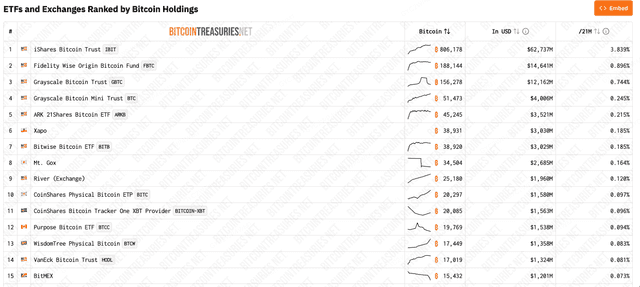
As of April 2026, fewer than 100 entities control a combined total of approximately 4.2 million Bitcoin, representing roughly 20% of the entire 21 million BTC supply that will ever exist. MicroStrategy alone holds 815,000 BTC, nearly 3.9% of total supply. BlackRock’s IBIT ETF holds 806,000 BTC. The pseudonymous creator Satoshi Nakamoto’s wallets still hold approximately 1.1 million Bitcoin, untouched since the network’s earliest days.
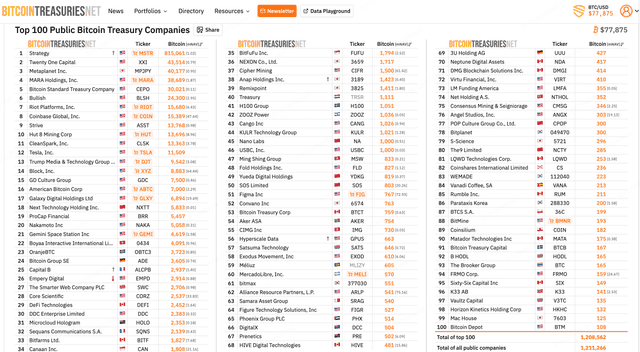
This concentration of ownership raises critical questions for every Bitcoin investor: What happens when the largest holders sell? Do whales manipulate prices? Has institutional adoption fundamentally changed the market structure?
The answers matter because understanding who controls Bitcoin helps predict price movements, assess market risks, and make informed allocation decisions.
Understanding Bitcoin’s Whale Hierarchy
Who Qualifies as a Bitcoin Whale
The term “whale” describes entities holding sufficient Bitcoin to move markets through their trading activity. Market participants generally classify whale tiers by holding size:
-
Tier 1 whales: 10,000+ BTC holdings, representing approximately $1 billion at peak prices. This tier includes MicroStrategy, the US government seizure wallets, and a small number of early miners
-
Tier 2 whales: 1,000 to 10,000 BTC holdings, representing $100 million to $1 billion. Major ETF vehicles, family offices, and institutional funds dominate this tier
-
Tier 3 whales: 100 to 1,000 BTC holdings, representing $10 million to $100 million. High-net-worth individuals and mid-sized investment funds occupy this tier
The threshold of 1,000 BTC, representing approximately $80 million at current prices, defines “whale status” for most analytical purposes. At this scale, a single transaction can represent significant market volume and influence exchange order books.
| Whale Tier | BTC Holdings | Typical Holders |
| Tier 1 | 10,000+ | MicroStrategy, government seizures, early miners |
| Tier 2 | 1,000-10,000 | ETF vehicles, family offices, institutional funds |
| Tier 3 | 100-1,000 | High-net-worth individuals, mid-sized funds |
The Changing Composition of Whale Ownership
Bitcoin’s whale population has transformed dramatically since 2020. Early Bitcoin ownership concentrated among retail miners and Cypherpunks who accumulated during the network’s first decade. The cohort of long-term holders, sometimes called “diamond hands,” represents a locked supply that rarely moves.
Institutional whales entered the market through spot Bitcoin ETFs approved in January 2024. BlackRock’s IBIT, Fidelity’s FBTC, and ARK 21Shares’ ARKB are among the largest, with the entire U.S. spot Bitcoin ETF sector collectively holding over 1.3 million BTC (about 6.2% of total supply) as of April 2026. The ETF structure transformed how institutional capital accesses Bitcoin, replacing individual wallet custody with regulated fund vehicles.
This concentration has created a paradox. Bitcoin’s narrative emphasizes decentralization and resistance to central control, yet ownership statistics reveal increasingly concentrated hands. When aggregating exchange hot/cold wallets and institutional entities, the largest holders control a significant portion of supply, highlighting the tension between ideology and market reality.
How Large Holders Influence Bitcoin Price
Supply Squeeze Dynamics
Large Bitcoin accumulators remove coins from liquid supply, creating upward price pressure through basic economics. When MicroStrategy commits $3 billion to purchase 34,164 BTC within a single week, those coins exit liquid markets and enter cold storage. The exchange-side selling pressure that would normally accompany such volume is absorbed by the company’s systematic accumulation approach.
This dynamic has intensified as institutional participation expanded. ETF custodians hold Bitcoin in cold storage with minimal trading activity. MicroStrategy’s treasury strategy treats Bitcoin as a long-term reserve asset that is never sold. These structural holdings remove significant supply from markets without creating corresponding selling pressure.
The remaining liquid supply faces amplified demand sensitivity. Retail trading volume, derivatives positioning, and algorithmic trading all compete for a shrinking pool of available coins. When positive catalysts emerge, limited liquid supply accelerates price appreciation. The mechanism resembles a commodity market experiencing production disruption, where futures supply tightens and spot prices spike.
Whale Trading and Market Impact
Whale activity creates measurable market effects that retail traders can observe through blockchain analytics. Exchange wallet inflows historically signal selling intention, as whales transfer Bitcoin to exchanges before executing large sells. Conversely, whales withdrawing Bitcoin from exchanges signals accumulation and reduced selling pressure.
Analysis from CryptoQuant and Glassnode consistently shows that periods of elevated exchange inflows correlate with short-term price declines. When whales deposit coins to Binance, Coinbase, KuCoin or other major exchanges, the implied selling intention creates downward pressure on order books.
Large holders also influence price through options and derivatives markets. Entities holding substantial Bitcoin can hedge positions through short futures or put options while maintaining spot exposure. The resulting market-making activity creates liquidity that other traders can exploit or follow.
The Accumulation Advantage
Large holders possess structural advantages that compound over time. Access to OTC (over-the-counter) markets allows whales to execute large trades with minimal market impact, bypassing exchange order books entirely. Institutional relationships with prime brokers provide price improvements and liquidity unavailable to retail participants.
The information advantage is equally significant. Corporate treasury managers at MicroStrategy, Bitwise analysts monitoring ETF flows, and family offices tracking on-chain metrics all receive information before it reaches retail markets. This asymmetry does not constitute manipulation but rather reflects legitimate access to premium data sources.
Institutional Concentration and Market Structure
ETF Dominance and Systemic Risk
Bitcoin ETF concentration has introduced systemic considerations that the market has not fully priced. As of April 2026, U.S. spot Bitcoin ETFs collectively hold approximately 1.31 million BTC, worth about $100 billion at current prices. BlackRock’s IBIT alone controls roughly 50% of the U.S. spot Bitcoin ETF market.
This concentration creates new market structure dynamics. When ETF share prices trade at significant premiums or discounts to underlying NAV, authorized participants arb the gap through creation and redemption processes. The mechanism works smoothly during normal markets but could face stress during rapid price moves or liquidity crises.
Market analysts have flagged specific concentration risks:
-
Simultaneous large redemptions across multiple ETFs could create selling pressure on underlying Bitcoin
-
Custodian concentration at Coinbase creates single-point-of-failure risk if operational issues emerge
-
Correlated trading behavior among ETF vehicles amplifies directional moves
Institutional investors appear to recognize these risks while continuing allocations. Seventy-three percent of institutional investors surveyed by Coinbase in March 2026 indicated plans to increase digital asset holdings, suggesting that the concentration risk is weighed against expected returns.
The Retail versus Institutional Bifurcation
Bitcoin markets have effectively bifurcated between retail and institutional participants. Retail traders focus on exchange-based activity, meme coin speculation, and short-term price signals. Institutional participants access Bitcoin through ETF wrappers, OTC desks, and custody solutions that never touch retail exchange infrastructure.
This bifurcation has measurable consequences for price discovery. Retail trading volume concentrated on Binance and Coinbase drives short-term volatility visible on hourly and daily charts. Institutional ETF flows explain longer-term price trends and sustained directional moves.
The interaction between retail and institutional market participants creates fractal patterns. Institutional accumulation during 2024-2026 created the foundation for the 2025 bull run. Retail FOMO followed institutional positions higher. The subsequent correction saw retail selling precede institutional accumulation, with ETFs absorbing coins that retail holders distributed.
Understanding which participant cohort drives current market activity helps predict likely price movements. Whale watching tools and ETF flow data provide signals about institutional positioning, while social media sentiment and exchange deposit rates gauge retail sentiment.
Satoshi’s Unmoved Coins
One unique factor in Bitcoin’s ownership structure defies conventional market analysis: Satoshi Nakamoto’s holdings. Estimates suggest Satoshi’s wallets contain approximately 1.096 million BTC, accumulated during the network’s first two years and never moved since 2010. These coins represent roughly 5.2% of current supply.
The theoretical risk of Satoshi’s coins entering markets has faded over time. Most analysts now consider these coins permanently lost, as the private keys either no longer exist or would require hardware from an era when Bitcoin had minimal value. The psychological impact of these coins diminishes with each passing year of inactivity.
However, the existence of these coins creates supply assumptions that investors must hold. Current supply calculations treat Satoshi’s coins as permanently removed from circulation, leaving approximately 19.8 million BTC available. If a significant portion of these coins were suddenly accessible, the supply shock would dwarf any individual whale’s selling.
Conclusion
Bitcoin’s whale landscape has fundamentally reshaped market structure since the institutional era began in 2024. MicroStrategy’s treasury accumulation, BlackRock’s ETF dominance, and shifting retail participation have created a bifurcated market where large holders influence price through supply removal, trading activity, and structural ownership advantages.
The data tells a clear story: approximately 4.2 million BTC — roughly 20% of the total supply — is held by a relatively small number of large entities and whales. MicroStrategy alone controls nearly 3.9% of the total supply through its systematic accumulation strategy. Spot Bitcoin ETF vehicles collectively account for about 6.3% of all Bitcoin. This level of concentration creates supply dynamics that can amplify both upward and downward price movements.
For retail investors, understanding whale behavior provides context for market movements rather than reliable trading signals. Large holder activity explains long-term price trends while retail trading adds short-term noise. Building positions through systematic accumulation, monitoring ETF flows for institutional sentiment, and recognizing whale-driven volatility cycles helps navigate markets shaped by entities with vastly superior capital and information advantages.
The whale-dominated Bitcoin market rewards patience over prediction. Understanding who controls Bitcoin matters more for risk assessment than for trading timing.
FAQs
Q: Does whale ownership mean Bitcoin is manipulated?
A: Concentration creates influence but does not automatically constitute manipulation. Large holders face the same market dynamics as smaller participants: selling too quickly depresses their own entry prices. However, large trades can create temporary price dislocations that sophisticated traders exploit. The distinction between influence and manipulation often depends on intent, which external observers cannot determine with certainty.
Q: What happens to Bitcoin’s price if MicroStrategy starts selling?
A: MicroStrategy has explicitly stated it does not intend to sell Bitcoin. The company’s strategy treats BTC as a treasury reserve asset. However, if the company were to distribute significant holdings, the large supply would create substantial market impact. The concentrated selling would likely depress prices temporarily before other buyers absorb the volume.
Q: Should retail investors be concerned about institutional concentration in ETFs?
A: ETF concentration introduces systemic considerations but also provides benefits. The structure brings institutional-grade custody, regulatory oversight, and liquidity to Bitcoin markets. Concentration risk is partially offset by professional fund management and SEC oversight. Most analysts consider the institutional access benefits outweigh concentration risks for mainstream investors.
Q: Can Bitcoin’s whale concentration decrease over time?
A: As Bitcoin approaches its supply cap, mining rewards decline and new supply decreases. This dynamic naturally concentrates ownership as existing holders accumulate rather than sell. ETF inflows drive concentration while the halving mechanism reduces new coin generation. Over time, Bitcoin ownership will likely concentrate further among long-term holders, with liquid supply becoming an increasingly small portion of total coins.