

Can Tokenized Gold Replace Traditional Bullion? How Tether Gold’s $3.44B Reserves Reflect the Institutional RWA Shift
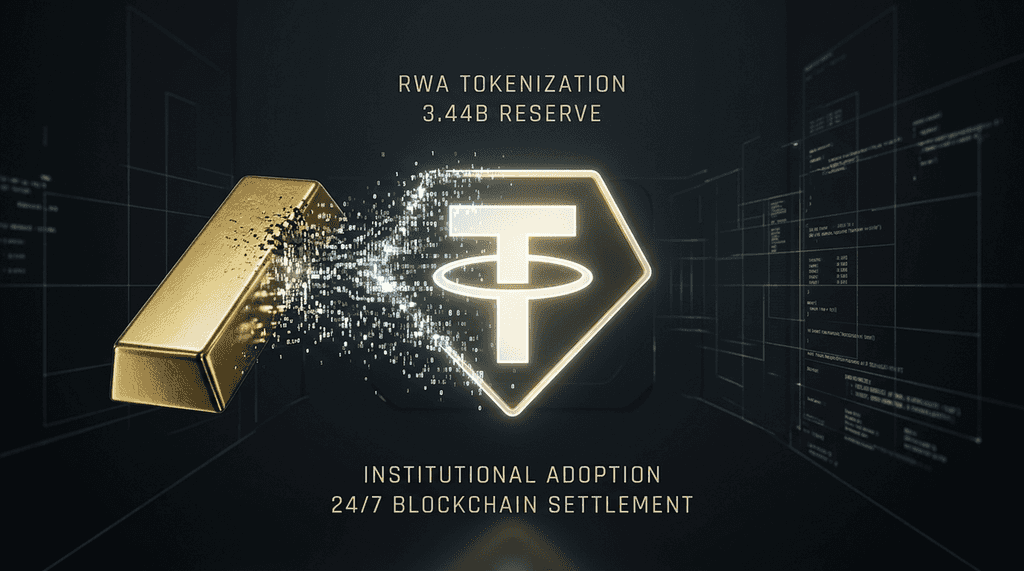
On November 4, 2026, TG Commodities S.A. de C.V. released its third-quarter 2026 reserve attestation for Tether Gold (XAU₮), confirming that the physical bullion backing the token reached 25.74 metric tonnes. Valued at $3,439,914,329 based on an end-of-quarter benchmark gold price of $4,157.41 per ounce, the physical reserve expanded by 59.1% in ounce terms compared to the close of 2025. This growth underscores accelerating institutional and retail inflows into tokenized real-world assets amid sustained macroeconomic demand for non-sovereign stores of value.
Key Takeaways
-
XAU₮’s physical gold backing rose from 520,089 ounces at year-end 2025 to 827,417.63 fine troy ounces in Q3 2026, reaching a total attested valuation of $3.44 billion.
-
The reserve consists of 2,057 London Good Delivery bars held in high-security Swiss vaults, with each bar's serial number mapped to on-chain token holders.
-
The 25.74 tonnes backing XAU₮ are segregated customer custodial assets managed by TG Commodities S.A. de C.V., completely separate from the 142.8 tonnes of gold held inside Tether’s corporate USDT reserve portfolio.
-
Tokenized gold settles continuously on public blockchains without annual management fees, enabling holders to pledge bullion as collateral in decentralized and institutional lending markets.
-
Direct physical redemption requires holding enough XAU₮ to cover a full London Good Delivery bar , making physical delivery primarily an institutional off-ramp.
Why Traditional Bullion and Gold ETFs Created Demand for Tokenized Gold
Tokenized gold bridges the divide between physical bullion and paper ETFs by combining direct ownership of allocated physical gold bars with 24/7 on-chain settlement, fractional divisibility, zero recurring management fees, and native compatibility with digital asset lending and trading rails.
Detailed Mechanism Breakdown
For institutional treasuries, family offices, and sovereign allocators, physical gold serves as a foundational hedge against fiat currency debasement and sovereign debt expansion. However, holding physical metal directly involves substantial logistical friction. Acquiring physical bars requires paying fabrication and dealer premiums, arranging armored transport, maintaining specialized insurance coverage, and contracting accredited commercial vault operators. Once locked inside a vault, physical gold becomes operationally static: transferring legal title or relocating bars across jurisdictions requires manual audits, assay verifications, and physical shipping that can take days or weeks to complete.
To remove these logistical hurdles, traditional financial markets introduced gold-backed exchange-traded funds, most notably SPDR Gold Shares (GLD), which package vaulted bullion into publicly traded equity shares. While ETFs simplified brokerage access, they introduced their own structural constraints. Traditional gold ETFs trade only during standard weekday stock exchange hours, clear through centralized brokerage intermediaries on a T+1 settlement cycle in the United States (or T+2 in select international jurisdictions), and restrict physical creation and redemption to large institutional Authorized Participants handling 100,000-share baskets.
Furthermore, standard ETF shareholders own fractional shares in a financial trust rather than holding direct legal title to individually assigned gold bars, and their holdings remain siloed inside traditional securities accounts that cannot interact natively with blockchain settlement rails.
Tokenized gold resolves these gaps by issuing cryptographic tokens on public blockchains that represent direct ownership of specific, allocated physical gold bars. Transactions settle peer-to-peer or across exchanges within minutes on a 24/7/365 basis, completely independent of banking holidays. Instead of charging a recurring annual management fee that slowly erodes the gold backing per share over time, XAU₮ charges zero annual storage fees and zero protocol-level on-chain transfer fees, monetizing solely through a one-time 25-basis-point (0.25%) fee on primary minting and redemption. Just as importantly, tokenized gold transforms dormant bullion into programmable collateral that can be deployed across both centralized crypto lending desks and decentralized finance (DeFi) protocols.
Empirical Market Context
Data from the World Gold Council (WGC) highlights the cumulative cost drag of traditional paper gold vehicles: major gold ETFs typically charge annual expense ratios ranging between 0.15% and 0.40%, which are paid by periodically selling small portions of the fund's underlying bullion and gradually reducing the ounces of gold represented by each share over multi-year holding horizons.
Against this backdrop, combined market capitalization across the tokenized gold sector surpassed $4.8 billion in late 2026 as spot gold climbed above $4,100 per ounce. With a $3.44 billion valuation at the close of the third quarter, Tether Gold accounts for more than 70% of the global tokenized gold market, followed by Paxos Gold (PAXG), reflecting strong market preference for liquid, allocated digital bullion.
How 25.74 Tonnes of Physical Gold Are Verified and Allocated
The credibility of any tokenized commodity rests on the legal, custodial, and cryptographic link between the digital token circulating on-chain and the physical metal resting in the vault.
Tether Gold operates on a fully allocated physical custody model in which each XAU₮ token represents one fine troy ounce of gold on a specific London Good Delivery bar stored in Switzerland, with bar serial numbers, purities, and weights verifiable by token holders through an online lookup tool.
From Swiss Vault Ingestion to On-Chain Allocation
Unlike unallocated gold accounts offered by many commercial bullion banks, where customers merely hold an unsecured contractual claim against the bank's general pool of metal, XAU₮ is structured around allocated physical ownership. While TG Commodities S.A. de C.V. (regulated under El Salvador's National Commission of Digital Assets framework) serves as the token issuer and administrative coordinator, the physical gold bars are held in dedicated, segregated vaults in Switzerland for the benefit of XAU₮ holders.
The lifecycle of an XAU₮ token follows a strict operational sequence from physical sourcing to blockchain minting. When institutional demand requires new token issuance, TG Commodities sources standard London Good Delivery bars through accredited bullion dealers and deposits them into high-security Swiss vaults. Vault operators verify that every bar satisfies London Bullion Market Association (LBMA) specifications: a minimum purity of 99.5% fine gold (995.0 parts per thousand), a fine gold weight between 350 and 430 troy ounces (nominally around 400 troy ounces, or roughly 12.5 kilograms), an approved refiner hallmark, the year of manufacture, and a unique stamped serial number.
Once verified and vaulted, the exact physical attributes of each bar, its gross weight, assay purity, and net fine troy ounces, are recorded in the issuer's allocation registry. The smart contract then mints XAU₮ tokens on supported blockchains (primarily as an ERC-20 token on Ethereum) matching the exact fine troy ounce weight of the vaulted bars on a 1:1 basis. Although physical London Good Delivery bars are large wholesale units, the XAU₮ smart contract allows each token to be divided down to six decimal places (0.000001 XAU₮), enabling seamless fractional trading on secondary markets.
To maintain transparency between the blockchain and the vault, Tether Gold provides a public verification portal (gold.tether.to). Any holder can enter the Ethereum wallet address where their XAU₮ is stored to view the unique serial numbers, gross weights, purity grades, and fine ounce allocations of the specific Swiss gold bars assigned to their address. Whenever XAU₮ tokens move from one on-chain address to another, the underlying registry dynamically updates the fractional bar assignments in real time.
Q3 2026 Inventory Growth
According to the third-quarter attestation published on November 4, 2026, XAU₮’s 827,417.63 fine troy ounces (25.74 metric tonnes) are held across 2,057 individual London Good Delivery bars. Over the first three quarters of 2026, TG Commodities added 766 net new bars to its Swiss vaults, a 59.1% increase from the 520,089 ounces held at the end of December 2025. Valued at the September 30 benchmark price of $4,157.41 per ounce, the $3,439,914,329 physical reserve matches the 827,417.63 circulating XAU₮ tokens on a 1:1 basis.
Separating XAU₮ Custodial Reserves from Tether’s Corporate Balance Sheet Gold
Because Tether Holdings has also become one of the world’s largest corporate buyers of gold for its dollar stablecoin reserves, market observers occasionally conflate the two gold stockpiles. In practice, they are completely separate pools of metal governed by different legal entities and serving distinct financial purposes.
The 25.74 metric tonnes ($3.44 billion) backing XAU₮ are segregated custodial assets held exclusively for XAU₮ token owners, whereas the 142.8 metric tonnes ($19.08 billion) reported in Tether’s BDO attestation are corporate reserve assets backing Tether’s stablecoin liabilities and its $7.95 billion excess equity cushion.
Legal and Accounting Separation
When evaluating Tether’s total footprint in the global bullion market, which now totals roughly 168.5 metric tonnes across both pools, analysts distinguish between custodial commodity backing and balance-sheet reserve collateral.
The 25.74 tonnes of gold backing XAU₮ are managed through TG Commodities S.A. de C.V. solely to guarantee the 1:1 physical backing of XAU₮ tokens. Because each XAU₮ token confers ownership rights over allocated fine ounces in Swiss vaults, these 2,057 gold bars are ring-fenced from Tether’s general corporate operations and cannot be pledged or used to cover liabilities of other Tether products.
By contrast, in Tether’s consolidated third-quarter financial assurance report signed by BDO Italia on October 30, 2026, the group reported $19.08 billion in physical gold, equivalent to approximately 4.59 million fine troy ounces, or 142.8 metric tonnes, inside its $191.45 billion stablecoin reserve portfolio. That 142.8-tonne stockpile was accumulated using retained earnings generated by Tether’s $132.4 billion U.S. Treasury portfolio and sits alongside cash equivalents to back circulating USDT liabilities ($183.50 billion) and support Tether’s $7.95 billion excess reserve buffer. None of the 25.74 tonnes backing XAU₮ is double-counted inside Tether’s BDO stablecoin reserve report.
Comparative Analysis: Tether Gold (XAU₮) vs. Traditional Bullion and Market Peers
To contextualize how XAU₮ compares against competing tokenized gold products, traditional ETFs, and direct vault ownership, the table below outlines their key structural differences as of late 2026:
| Architectural Metric | Tether Gold (XAU₮) | Paxos Gold (PAXG) | SPDR Gold Shares (GLD) | Direct Allocated Vault Bullion |
| Underlying Legal Interest | Direct ownership of allocated LBMA bar ounces | Direct ownership of allocated LBMA bar ounces | Fractional share in a statutory grantor trust | Direct legal title to specific physical bars |
| Vault Location | High-security vaults in Switzerland | LBMA vaults in London (e.g., Brink's) | HSBC & JPMorgan vaults in London | Investor-selected commercial vaults |
| Settlement Speed | 24/7/365 on-chain finality in minutes | 24/7/365 on-chain finality in minutes | T+1 exchange settlement (weekday hours) | Days to weeks (manual audit & armored transit) |
| Annual Storage / Mgmt Fee | 0.00% annual fee (0.25% mint/redeem fee; 0% on-chain transfer fee) | 0.00% annual storage fee (tiered mint/redeem + 0.02% on-chain fee) | 0.40% annual expense ratio deducted from NAV | Typically 0.12% to 0.50% per year plus insurance |
| Physical Redemption Minimum | 1 full LBMA bar (~350–430 oz; delivered in Switzerland) | 1 full LBMA bar (~350–430 oz via London vaults) | 100,000 shares (~9,200+ oz; Authorized Participants only) | 1 individual bar or coin (varies by vault contract) |
| Issuer & Regulatory Oversight | TG Commodities S.A. de C.V. (El Salvador CNAD) | Paxos Trust Company (NYDFS regulated) | World Gold Council / U.S. SEC registered | Local commercial warehousing laws |
Institutional Catalysts and Practical Constraints
The nearly 60% expansion in XAU₮’s physical gold reserves during 2026 reflects powerful macroeconomic tailwinds alongside growing demand for on-chain collateral, though investors must also understand the practical mechanics of physical redemption and regional regulation.
Macroeconomic Tailwinds and On-Chain Capital Efficiency
With spot gold trading above $4,150 per ounce in the third quarter of 2026 amid central bank buying and sovereign debt concerns, digital asset investors increasingly sought a way to hold gold exposure without exiting the crypto ecosystem into slow fiat banking rails.
For institutional trading desks, crypto treasuries, and high-net-worth investors, XAU₮ solves the historical capital inefficiency of gold. Instead of leaving bullion sitting idle in a vault, holders can transfer XAU₮ across exchanges in minutes to meet margin requirements or pledge XAU₮ in lending protocols to borrow USD stablecoins (such as USDT) for working capital—unlocking liquidity while retaining upside exposure to gold prices.
The ~400-Ounce Physical Delivery Threshold
Redeeming tokens directly for physical metal through TG Commodities is designed for wholesale and institutional capital. First, interacting directly with the primary issuer requires completing full KYC/AML verification and meeting a minimum primary purchase or sale threshold of 50 XAU₮.
Second, if a verified holder wishes to take physical delivery of a gold bar rather than requesting cash proceeds from TG Commodities selling the metal on the Swiss bullion market, they must redeem enough XAU₮ to cover a complete London Good Delivery bar. Because individual LBMA bars weigh up to 430 fine troy ounces, holders generally need to deposit roughly 430 XAU₮ (worth approximately $1.78 million at $4,157.41 per ounce, with excess tokens refunded once a specific bar of ~400 ounces is assigned) and pay applicable Swiss delivery and administrative charges. Consequently, retail investors holding smaller balances rely on secondary spot markets, such as the XAU₮/USDT order book, for instant liquidity rather than physical vault extraction.
Navigating the European MiCA Asset-Referenced Token Framework
Finally, cross-border regulation plays a growing role in how tokenized commodities are distributed. Under the European Union’s Markets in Crypto-Assets (MiCA) regulation, tokens backed by physical commodities like gold are classified as Asset-Referenced Tokens (ARTs) rather than Electronic Money Tokens (EMTs). MiCA imposes specific local authorization, reserve custody, and whitepaper disclosure rules on ART issuers marketing directly within the European Economic Area (EEA). As a result, while XAU₮ enjoys deep liquidity across global exchanges and emerging markets, institutional allocators in regulated Western jurisdictions weigh the regulatory profile of El Salvador-domiciled TG Commodities alongside NYDFS-regulated alternatives like PAXG when selecting custodial counterparties.
Conclusion
Tether Gold’s expansion by 59.1% in 2026 to 25.74 metric tonnes demonstrates that real-world asset tokenization is gaining substantial traction beyond U.S. Treasury bills. By combining the security of allocated London Good Delivery bars in Swiss vaults with 24/7 blockchain settlement and zero annual management fees, XAU₮ addresses both the logistical rigidity of physical vault bullion and the trading-hour and fee constraints of traditional gold ETFs. While direct physical bar redemptions remain the preserve of institutional treasuries capable of clearing the 400-ounce threshold, tokenized gold has established itself as a premier on-chain safe-haven and collateral asset across global digital markets.
FAQs
How much physical gold backs Tether Gold (XAU₮) as of Q3 2026?
According to the third-quarter attestation released by TG Commodities S.A. de C.V. on November 4, 2026, Tether Gold is backed by 827,417.63 fine troy ounces of physical gold across 2,057 London Good Delivery bars stored in Switzerland. At the quarter-end benchmark price of $4,157.41 per ounce, the reserve is valued at approximately $3.44 billion, representing a 59.1% increase in gold ounces since the end of 2025.
What is the difference between XAU₮ gold reserves and Tether’s $19.08 billion corporate gold?
The 25.74 tonnes backing XAU₮ are segregated customer assets held to back circulating XAU₮ tokens 1:1. Separately, Tether Holdings reported 142.8 tonnes of physical gold in its Q3 2026 BDO assurance report; that larger stockpile sits inside Tether’s corporate stablecoin reserve portfolio to back USDT liabilities and its $7.95 billion excess reserve cushion.
Can individual investors redeem XAU₮ for physical gold bars?
Direct physical bar redemption through TG Commodities requires passing institutional KYC verification and holding enough XAU₮ to cover a full London Good Delivery bar, with physical delivery available to addresses in Switzerland.
Does Tether Gold charge an annual storage or management fee?
No. Unlike traditional gold ETFs that deduct an annual management expense ratio of 0.15% to 0.40% from the underlying gold value, XAU₮ charges zero recurring annual storage fees and zero protocol fees on blockchain transfers. TG Commodities charges a one-time 0.25% fee only when tokens are minted or redeemed directly through its primary platform.
Disclaimer
This general market information, possibly from third-party, commercial, or sponsored sources, is provided for reference and educational purposes only and does not constitute financial or investment advice, an offer, solicitation, or guarantee. We disclaim liability for its accuracy, completeness, reliability, and any resulting losses. Investments/trading are risky; past performance doesn’t guarantee future results. Users should research, judge prudently, and take full responsibility. For further details, please consult KuCoin’s Terms of Use and Risk Disclosure.