

Bank of Russia Approves First 5 Digital Custodians and 4 Crypto Exchanges: A Turning Point for Institutional Digital Asset Regulation
Introduction
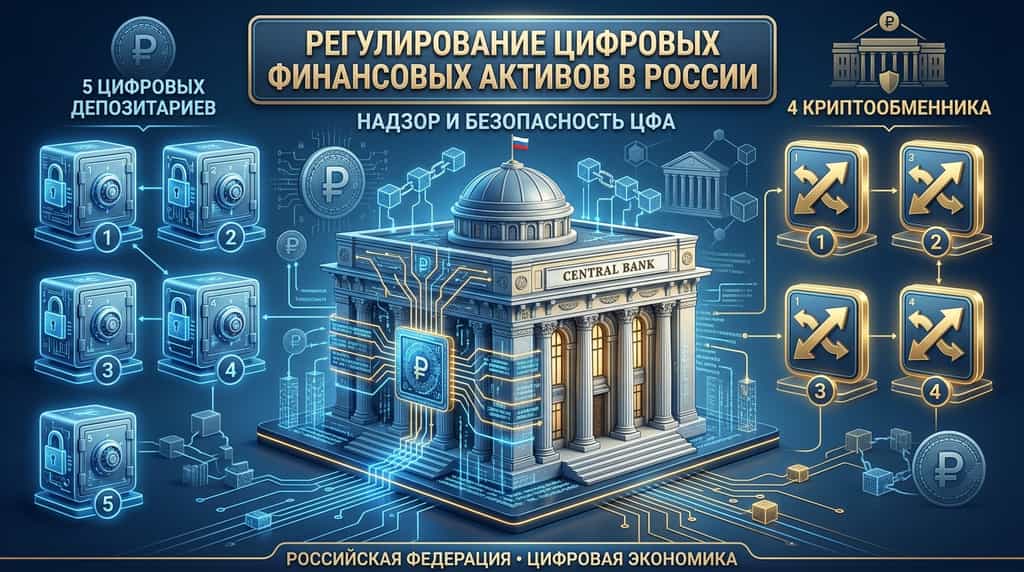
On October 6, 2026, the Bank of Russia officially granted market entry to its inaugural cohort of regulated digital asset entities, approving 5 digital custodians and 4 crypto exchange service providers into its state registries. This official regulatory move establishes Russia’s first licensed institutional framework for custody, conversion, and settlement of digital currencies and digital rights. Operating under the transitional provisions of the federal law "On Digital Currencies and Digital Rights" that went into effect on September 1, 2026, these 9 approved entities are now legally authorized to process transactions, manage address-linked customer balances, and facilitate off-exchange OTC crypto trading.
What Did the Bank of Russia Announce Regarding Digital Custodians and Crypto Exchanges?
According to an official press release published by the Bank of Russia on October 6, 2026, the central bank has formally entered the first 5 organizations into the registry of digital custodians and 4 organizations into the registry of digital currency exchange operators. The legal authorization for these 9 institutional entities stems directly from the transitional provisions of the flagship legislation "On Digital Currencies and Digital Rights," which took legal effect on September 1, 2026.
Based on data published by the central bank, this admission grants immediate legal authorization for these approved market participants to execute and record transactions involving digital currencies and digital financial assets (DFAs). From the exact date of their registry inclusion, these licensed organizations must strictly adhere to statutory transaction execution and accounting rules. Furthermore, the regulator established a grace period requiring all approved participants to bring their operational infrastructure, AML/KYC systems, and technical safeguards into full compliance with permanent digital asset legislation by September 1, 2027.
What Services Can Approved Digital Custodians Provide to Crypto Investors?
Digital custodians operating within Russia's regulated financial market are legally empowered to maintain accounting ledgers, manage rights transfers, and administer cryptographic address identifiers for digital assets. According to official definitions provided by the Bank of Russia, these licensed entities provide specialized custodial infrastructure that records the ownership, transfer, and custody of both digital currencies and digital rights.
Key operational capabilities of licensed digital custodians include:
-
Accounting and Transfer Ledger Maintenance: Ensuring immutable transaction records for corporate and retail transfers of digital assets.
-
Identifier-Address Provisioning: Granting clients secure, regulated access to unique blockchain address identifiers where underlying assets are programmatically tracked and held.
-
Institutional Safe-Keeping: Replacing unregulated third-party hot wallets with state-supervised vault storage and cryptographic custody solutions.
-
Auditability and Transparency: Aligning asset accounting methods with central bank auditing standards to mitigate counterparty and operational risks.
By creating a regulated class of digital depositories, the central bank addresses a primary structural obstacle facing domestic corporate balance sheets—the absence of legally recognized, audit-compliant custodial entities for digital holdings.
How Will the 4 Approved Crypto Exchanges Operate in Russia?
The 4 licensed crypto exchanges are legally authorized to purchase and sell digital currencies from their own balance sheets in off-exchange (OTC) transactions. Based on regulatory parameters established by the Bank of Russia, these exchange entities act as principal market makers outside organized stock exchange order books, buying and selling crypto assets directly with clients.
The core operational features of approved crypto exchanges encompass:
-
Proprietary Trading: Executing buys and sells directly as principals using their own balance sheet capital rather than running matching order books.
-
Off-Exchange (OTC) Execution: Conducting trades outside traditional equities exchanges to provide direct liquidity to institutional participants and high-net-worth investors.
-
Fiat-to-Crypto On/Off Ramps: Facilitating direct fiat settlements, including Russian Ruble conversions, through compliant banking channels.
-
Mandatory Reporting: Transmitting operational metrics, transaction logs, and customer identification details directly to regulatory oversight bodies.
This structured framework enables liquidity providers to service domestic demand for digital assets legally while suppressing shadow-market OTC desks that lack regulatory oversight.
What Is the Legislative Context Behind Russia's Digital Currency Regulation?
The legal foundation for the Bank of Russia’s action rests on federal legislation governing digital financial assets and digital currencies, which underwent major legal updates effective September 1, 2026. According to the Bank of Russia, the transitional framework enacted in this law created a clear administrative pathway for established financial institutions and fintech entities to obtain temporary licenses ahead of full regulatory implementation.
Under this dual-phased legal structure, admitted participants receive immediate operational clearance while being granted a 12-month window—ending September 1, 2027—to adjust their corporate governance, IT security protocols, and capital reserve models to meet permanent statutory benchmarks. The introduction of these registries represents an evolution from past restrictive bans toward a structured legal framework aimed at bringing cross-border crypto transactions, settlement networks, and domestic digital asset flows into a supervised financial architecture.
How Does Central Bank Approval Impact Domestic and Cross-Border Crypto Liquidity?
According to market data tracked by CoinMarketCap, global cryptocurrency adoption relies heavily on standardized fiat-to-crypto liquidity bridges, with major stablecoins like Tether (USDT) processing billions in daily volume globally. The establishment of legal custodians and OTC exchanges inside Russia provides an authorized infrastructure for domestic market participants to conduct cross-border settlements and asset transfers without relying on unvetted offshore platforms.
The key market impacts of this regulatory approval include:
-
Legal Settlement Pathways: Corporate entities can legally settle international trade transactions using digital currencies and digital rights through registered entities.
-
Mitigation of Counterparty Risk: Institutional investors gain access to licensed domestic custodians, minimizing exposure to unverified offshore crypto exchanges.
-
Ruble-to-Crypto Transparency: Regulated OTC desks offer predictable pricing and clear settlement mechanics for converting local currency into major digital assets.
-
Enhanced Systemic Oversight: Centralized monitoring of exchange flows allows financial regulators to trace capital movements and prevent illicit financing.
Licensed Digital Custodians vs. Regulated Crypto Exchanges
To clarify the structural differences between these two regulatory designations, the table below compares their core functions, business models, and regulatory obligations as defined by the Bank of Russia.
| Metric / Parameter | Digital Custodians | Crypto Exchanges |
| Approved Count | 5 Entities | 4 Entities |
| Primary Function | Asset accounting, rights registration, address management | Buying and selling digital currencies |
| Execution Model | Non-trading, custodial ledger tracking | Off-exchange (OTC) principal trading |
| Balance Sheet Risk | Low (holds client assets in custody) | High (trades using proprietary balance sheet) |
| Client Interaction | Provides secure vault access & token accounting | Directly quotes buy/sell prices to users |
| Compliance Period | Must meet full standards by Sept 1, 2027 | Must meet full standards by Sept 1, 2027 |
| Primary User Base | Institutions, token issuers, asset managers | Individual traders, corporate settlement users |
What Challenges Remain for Russia's Regulated Digital Asset Market?
Despite the creation of official registries, full market integration faces operational hurdles during the transitional period leading up to September 1, 2027. According to central bank directives, registered entities must undergo extensive technical, security, and administrative compliance audits over the next 12 months to retain their licensed status.
The main operational and regulatory challenges include:
-
Technical Infrastructure Integration: Building secure API connections between traditional banking networks and distributed ledger systems.
-
Evolving Compliance Obligations: Adapting risk management software to handle real-time sanctions filtering and transaction monitoring.
-
Liquidity Depth Constraints: Ensuring that the 4 approved OTC desks maintain sufficient capital reserves to process large-scale institutional buy and sell orders.
-
International Interoperability: Navigating foreign regulatory restrictions when processing cross-border settlements between domestic digital custodians and international crypto platforms.
Addressing these technical bottlenecks will be critical as the Bank of Russia evaluates whether to expand the registry to additional market applicants in future quarters.
Beyond the Headlines: What KuCoin 5.0 Means for You
Market news moves fast — but where you act on it matters just as much. This October, KuCoin launches KuCoin 5.0, transforming KuCoin into a rebuilt platform. Here's what actually changes for you:
-
One account for everything. Older platforms split your money across separate "spot," "margin," and "futures" accounts and expected you to understand why. KuCoin 5.0's unified account removes that entirely — deposit once, and everything is simply there (only available to VIPs for now).
-
Stocks, indices, and commodities. KuCoin 5.0 expands beyond crypto into global markets. When crypto chops sideways and equities rally (or the reverse), you rotate in minutes instead of opening a brokerage account and waiting days for fiat rails.
-
Real-world assets (RWA). Tokenized exposure to traditional assets like commodities, right inside your crypto account. One of the fastest-growing segments in global finance is no longer reserved for institutions — you access it from the same balance you trade with.
-
Earn while you learn. Not ready to trade? KCUSD lets your stablecoins earn daily, auto-compounding interest. The lowest-stress way to put your idle deposit to work for 4% yield.
-
An AI assistant in plain language. Ask questions, get market context, understand what you're looking at — built into the platform, no jargon required.
-
An app that doesn't overwhelm. Faster, cleaner, and consistent — intuitive from the first tap, not after a tutorial.
-
Safety you can check, not just trust. A MiCAR-licensed EU entity, Proof of Reserves you can verify yourself, and internationally certified security (SOC 2 Type II, ISO 27001:2022).
Create your account in minutes — and start on the platform built for where crypto is going, not where it's been.
Conclusion
The Bank of Russia's decision on October 6, 2026, to approve the first 5 digital custodians and 4 crypto exchanges marks an important milestone in constructing a regulated domestic digital asset framework. By leveraging the transitional provisions of the federal law "On Digital Currencies and Digital Rights" enacted on September 1, 2026, the central bank has established a legal environment where institutional custody and off-exchange trading can function under statutory oversight.
These 9 approved participants now carry the responsibility of maintaining rigorous accounting standards, managing customer address identifiers, and ensuring transparent OTC liquidity execution. Over the 12-month transitional period leading to September 1, 2027, these institutions must fully align their operations with permanent statutory requirements. This regulatory launch creates a legally protected architecture for digital rights accounting and cross-border commercial settlements within Russia. As regulatory frameworks mature worldwide, platforms like KuCoin remain central to connecting traders with transparent, secure, and liquid global crypto markets.
Frequently Asked Questions (FAQs)
What is the difference between a digital custodian and a crypto exchange under Russian law?
A digital custodian focuses strictly on accounting, ledger tracking, and managing blockchain address identifiers for digital assets without executing trades. A crypto exchange actively buys and sells digital currencies off-exchange using its own balance sheet as a principal market maker.
When do the approved entities need to comply fully with all permanent statutory requirements?
Approved entities must bring all technical, operational, and compliance procedures into full alignment with the law "On Digital Currencies and Digital Rights" by September 1, 2027.
Can individuals trade directly on organized stock exchanges under this new approval?
No, the 4 approved crypto exchange entities are authorized specifically for off-exchange (OTC) transactions rather than order-book trading on traditional public stock exchanges.
Does this approval legalize cryptocurrency as an official medium of payment for domestic goods in Russia?
No, the framework regulates custody, digital rights accounting, and OTC exchange operations, but it does not legalise digital currencies as a legal tender payment method for domestic retail purchases of goods and services.
How does this regulatory move affect cross-border commercial settlements?
The licensing of custodians and OTC desks gives Russian import and export businesses legally recognized domestic intermediaries to custody digital assets and execute crypto-to-fiat conversions for international trade settlements.
Disclaimer
This article is for informational purposes only and does not constitute financial, legal, or investment advice. Always conduct your own research before interacting with digital assets.