

ZetaChain Claude Opus 4.7 Integration 2026: Reshaping Web3 AI Agents
Introduction
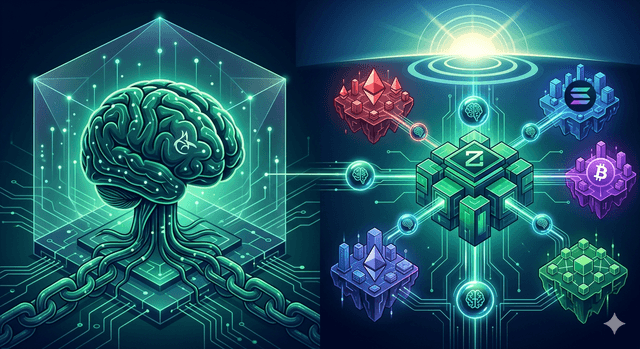
When ZetaChain integrated Claude Opus 4.7 just 24 hours after Anthropic released it on April 16, 2026, the Web3 world took notice. This is not just another blockchain partnership - it is the first time a Layer 1 blockchain has natively embedded one of the most advanced AI models for cross-chain agent reasoning. For developers building the next generation of omnichain dApps, this integration marks a pivotal shift in how AI agents can operate across multiple blockchains. The question is no longer whether AI and Web3 will converge - it is how fast ZetaChain’s approach will become the industry standard.
What Is ZetaChain? Understanding the Universal Layer
ZetaChain positions itself as the Universal Layer for AI and Web3, a blockchain architecture designed specifically for cross-chain interoperability without relying on traditional bridges or wrapped tokens. Unlike conventional Layer 1 blockchains that operate in isolation, ZetaChain enables developers to build applications that function seamlessly across Ethereum, Solana, Bitcoin, and other major chains from a single deployment.
The platform achieves this through its proprietary chain abstraction technology, which allows smart contracts to interact with external blockchain networks without requiring separate bridge infrastructure. This eliminates a critical vulnerability in the Web3 ecosystem - the bridge exploits that have dominated DeFi hacks in recent years. ZetaChain serves as the foundational layer where AI models and blockchain networks meet.
The platform launched its 2.0 upgrade in January 2026, introducing three core innovations: the Universal App Layer for seamless cross-chain deployment, a Private Memory Layer for AI agent state management, and comprehensive Developer SDKs that abstract away blockchain complexity. The Claude Opus 4.7 integration builds directly on this foundation, adding advanced AI reasoning to the platform’s cross-chain capabilities.
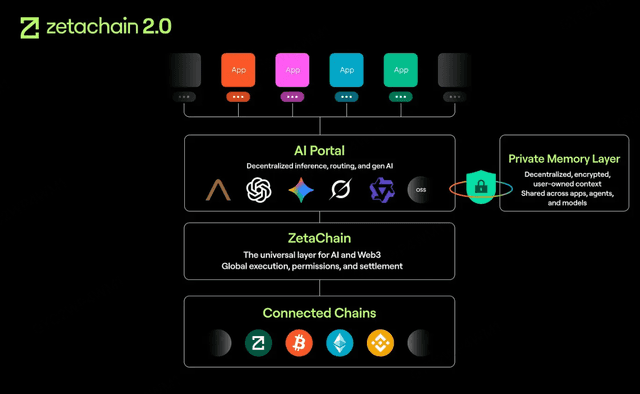
The significance of this timing should not be overlooked. AI-crypto convergence has been a recurring theme in blockchain development, but practical implementations have largely been limited to external AI services interfacing with blockchain networks. ZetaChain’s architectural decision to embed AI reasoning at the infrastructure level changes this dynamic fundamentally.
What Is Claude Opus 4.7? The AI Model Reshaping Development
Claude Opus 4.7 represents Anthropic’s latest advancement in large language model technology, released on April 16, 2026. This model brings three critical capabilities that make it particularly suitable for Web3 development:
First, Claude Opus 4.7 supports a 1 million token context window - the largest of any production AI model. This allows agents to maintain and process vast amounts of transaction data, market information, and chain states simultaneously without losing context. Second, the model demonstrates agent-style coding capabilities, meaning it can execute complex multi-step development tasks autonomously rather than requiring constant human intervention. Third, the model shows significantly improved long-term task stability, maintaining coherent reasoning across extended operations that previously caused AI models to drift off task.
The technical improvements are measurable. On SWE-bench Verified, a standard software engineering benchmark, Claude Opus 4.7 achieved 87.6% accuracy compared to Opus 4.6’s 80.8%. This 6.8 percentage point improvement represents meaningful progress in automated code generation - the exact capability needed for building and maintaining cross-chain smart contracts.
This performance leap matters for practical development. Cross-chain smart contracts require complex multi-chain logic that traditional code generation struggle to handle correctly. Claude Opus 4.7’s improved reasoning capabilities address this challenge directly, enabling more reliable automated contract generation and auditing.
Anthropic released Opus 4.7 with adaptive thinking and 128k maximum output tokens, making it capable of handling complex development workflows that exceed the capacity of previous models. The combination of extended context and improved agentic capabilities creates the foundation for truly autonomous Web3 development.
The 1M token context window represents a generational leap in AI capability for blockchain applications. Previous models struggled with memory limitations when processing complex multi-chain state, but Opus 4.7 can maintain comprehensive view of cross-chain positions, historical transactions, and market conditions simultaneously.
The ZetaChain Integration: How It Works
ZetaChain’s integration places Claude Opus 4.7 natively within its Anuma AI layer, enabling the model to interact directly with cross-chain infrastructure without external API calls. This architecture provides several advantages over alternative approaches.
When Anthropic announced Claude Opus 4.7 on April 16, ZetaChain completed integration within 24 hours - a remarkable speed that itself signals the platform’s commitment to AI-native blockchain infrastructure. This rapid integration demonstrates the architectural advantages of building AI capabilities directly into the blockchain layer rather than as external add-ons.
The integration enables several previously impossible workflows. AI agents can now read state from multiple blockchains simultaneously, execute smart contracts across chains in a single transaction, and maintain persistent memory of cross-chain interactions through ZetaChain’s Private Memory Layer. Developers building on ZetaChain can leverage these capabilities through simplified SDK calls without needing to understand the underlying cross-chain mechanics.
For practical purposes, this means a developer can instruct an AI agent to “execute a cross-chain swap from Ethereum to Solana” and the agent will handle all complexity - selecting optimal routes, managing gas across chains, and handling the multi-step transaction process. The AI handles the complexity so developers can focus on application logic rather than blockchain details.
This capability transforms how developers approach cross-chain development. Instead of building custom integration layers for each blockchain pair, developers describe desired outcomes and let the AI agent determine optimal execution paths.
Cross-Chain AI Agents: A New Paradigm
The ZetaChain-Claude integration creates a new category of autonomous agents that operate natively across multiple blockchains. These agents represent a fundamental shift from current DeFi automation tools.
Traditional DeFi bots operate on a single chain, but cross-chain Claude agents can coordinate actions across multiple blockchains simultaneously. Imagine an agent that can automatically move liquidity between Ethereum, Solana, and Bitcoin in response to market conditions, or an agent that detects and executes arbitrage opportunities across inter-chain pools without manual intervention.
The technical foundation enables several agent categories:
| Agent Type | Capability | Use Case |
| Portfolio Manager | Multi-chain asset management | Automated rebalancing across chains |
| Arbitrage Agent | Cross-chain price detection | Capitalizing on inter-DEX spreads |
| Yield Optimizer | Multi-pool yield seeking | Maximizing returns across protocols |
| Risk Manager | Cross-chain monitoring | Real-time exposure management |
| Liquidity Agent | Cross-chain market making | Providing liquidity across DEXs |
Each category represents billions in potential efficiency gains currently locked behind cross-chain complexity. ZetaChain’s integration lowers the barrier to entry for developing these agents, potentially accelerating innovation across the DeFi landscape.
Implications for Web3 Developers
For developers, the ZetaChain-Claude integration addresses several persistent challenges in cross-chain development. The traditional approach requires managing multiple RPC endpoints, handling different chain semantics, and building custom bridge infrastructure - each step introducing potential security vulnerabilities.
ZetaChain abstracts these complexities through its Universal App Layer. Developers write applications once, and the platform handles cross-chain execution. Adding Claude Opus 4.7 means these applications can now include sophisticated AI reasoning as a native capability rather than an add-on.
The platform has also announced a $5 million grants program specifically for omnichain dApp builders, with particular interest in AI-powered applications. Combined with the Google Cloud AI-powered Buildathon launched in January 2026, the ecosystem offers significant resources for developers exploring this new paradigm.
Developer onboarding is accelerated through ZetaChain’s SDKs, which provide pre-built modules for common cross-chain operations. Combined with Claude Opus 4.7’s agentic coding capabilities, even developers with limited blockchain experience can build sophisticated cross-chain applications by describing desired functionality in natural language.
The timing of this integration is notable. ZetaChain released its 2.0 upgrade in January 2026, positioning the platform for the AI-crypto convergence narrative that has accelerated throughout 2026. The Claude integration builds directly on this foundation, transforming theoretical cross-chain capabilities into practical agentic workflows.
Beyond individual applications, the integration signals a broader architectural shift in how blockchains approach AI capabilities. Rather than treating AI as an external service that interfaces with blockchain, ZetaChain’s model places AI reasoning on the same infrastructure layer as cross-chain execution. This architectural decision has implications for platform performance, latency, and reliability that may influence future blockchain design patterns.
The developer experience reflects this integration. Building a cross-chain AI agent previously required expertise in multiple areas: blockchain development, AI prompt engineering, cross-chain infrastructure management, and smart contract security. ZetaChain consolidates these requirements, enabling developers to focus on application logic while the platform handles underlying complexity.
Should I Invest in ZETA?
For traders considering ZetaChain’s native ZETA token, several factors warrant consideration following the Claude Opus 4.7 integration.
Bullish Factors
-
First-mover advantage: ZetaChain is the first Layer 1 to natively integrate a leading AI model, potentially establishing industry standards
-
Real utility: The integration enables actual cross-chain agent capabilities rather than theoretical use cases
-
Ecosystem growth: The grants program and Buildathon demonstrate genuine developer interest and investment
-
AI momentum: The 2026 AI-crypto convergence narrative continues driving attention to interoperable platforms
Cautious Factors
-
Competition: Other chains are pursuing similar AI integrations - this first-mover advantage may be temporary
-
Adoption metrics: Actual dApp deployment numbers and user growth remain early stage
-
Technical execution: Complex cross-chain AI agents face significant development challenges
-
Market timing: The crypto market continues experiencing volatility, affecting all sector narratives
Risk Assessment
ZETA represents a high-risk, high-reward sector play. The Claude integration provides meaningful differentiation, but blockchain-AI convergence remains an emerging narrative with significant execution risk. Position sizing should reflect the binary nature of early-stage technology adoption.
For traders choosing to engage, monitoring ecosystem metrics like dApp launches, active addresses, and developer activity provides better signal than token price alone. The integration is meaningful, but long-term value depends on actual utility adoption.
Current Market Context
As of mid-April 2026, ZETA trades with elevated volatility tied to AI integration announcements. The token experienced significant price movements following the Claude Opus 4.7 integration, reflecting the market’s sensitivity to AI-crypto narrative shifts. Trading volumes have increased, indicating growing interest from both retail and institutional participants.
The broader AI-crypto sector continues experiencing rapid narrative evolution. Multiple chains have announced AI integration plans, creating a competitive landscape that will likely consolidate around platforms demonstrating actual utility rather than announcements alone. ZetaChain’s first-mover position provides advantages, but sustained adoption determines long-term value.
How to Trade ZETA on KuCoin
For traders ready to execute positions in ZETA, KuCoin offers the ZETA/USDT trading pair with competitive liquidity.
Step 1: Create Your KuCoin Account
If you are ready to trade ZETA, the first step is creating your KuCoin account. New users can register at KuCoin and Get Up to 11,000 USDT in New User Rewards - a substantial bonus that can boost your initial trading capital.
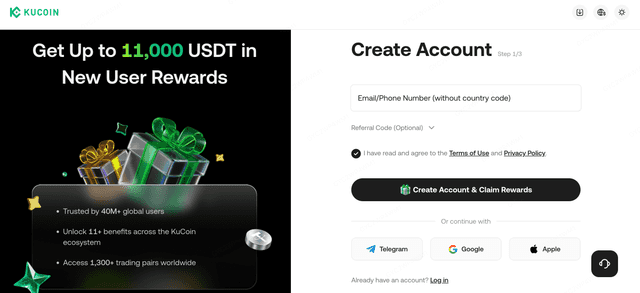
Simply visit the KuCoin website or download the app, complete the registration process with your email or phone number, and verify your identity to unlock these rewards. The registration process takes just a few minutes, and the welcome bonus provides an excellent starting point for exploring ZETA trading opportunities.
Step 2: Execute Your Trade
Search “ZETA/USDT” on KuCoin’s trading interface. The pair offers adequate liquidity for most retail position sizes. Consider limit orders during volatile periods to avoid slippage.
Step 3: Position Management
Given the emerging nature of this sector, establish clear profit targets and stop-loss levels before entry. The narrative can shift quickly, and holding through volatility requires predefined exit points.
Conclusion
ZetaChain’s integration of Claude Opus 4.7 represents a meaningful milestone in the convergence of AI and Web3. By embedding advanced AI reasoning directly into the blockchain layer, ZetaChain enables a new category of cross-chain autonomous agents that can operate across multiple blockchains without the traditional bridge vulnerabilities.
The integration matters because it transforms AI-crypto convergence from theoretical narrative to practical capability. Developers can now build agents that manage cross-chain portfolios, execute arbitrage strategies, and optimize yield across protocols using natural language instructions. Whether this becomes the industry standard or simply another experiment remains to be seen, but the technical foundation is now established.
For the Web3 ecosystem, the implications extend beyond ZetaChain. If cross-chain AI agents prove successful, expect rapid competition from other chains pursuing similar integrations. The next twelve months will likely determine whether 2026 becomes the year AI agents truly became cross-chain capable.
FAQs
Q: What makes ZetaChain different from other cross-chain solutions?
A: ZetaChain achieves cross-chain interoperability through native chain abstraction rather than bridging. This eliminates the bridge security vulnerabilities that have caused billions in DeFi exploits. The platform acts as a universal Layer 1 where applications can deploy once and operate across all connected chains.
Q: What can Claude Opus 4.7 do on ZetaChain that was not possible before?
A: Claude Opus 4.7 enables autonomous agentic reasoning directly within the ZetaChain ecosystem. AI agents can now read multi-chain state, execute smart contracts across chains, and maintain persistent memory through complex operations. This creates the foundation for cross-chain portfolio managers, arbitrage agents, and yield optimizers that operate without human intervention.
Q: When did the integration occur?
A: ZetaChain integrated Claude Opus 4.7 on April 17, 2026 - within 24 hours of Anthropic’s model release. This rapid integration demonstrated ZetaChain’s architectural commitment to AI-native blockchain infrastructure.
Q: What is ZETA token used for?
A: ZETA serves as the native token for ZetaChain’s blockchain, used for transaction fees, network governance, and staking. The token also provides economic security for the cross-chain message verification system.
Q: How can developers build on ZetaChain?
A: Developers can access ZetaChain through its Developer SDKs, which provide pre-built modules for cross-chain operations. Combined with Claude Opus 4.7’s agentic coding capabilities, developers can describe desired functionality in natural language and generate working cross-chain applications. The platform offers a $5 million grants program for qualifying projects.