

Navigating the Volatility: Why AI Hardware Stocks Are Facing Headwinds
2026/08/26 16:13:00
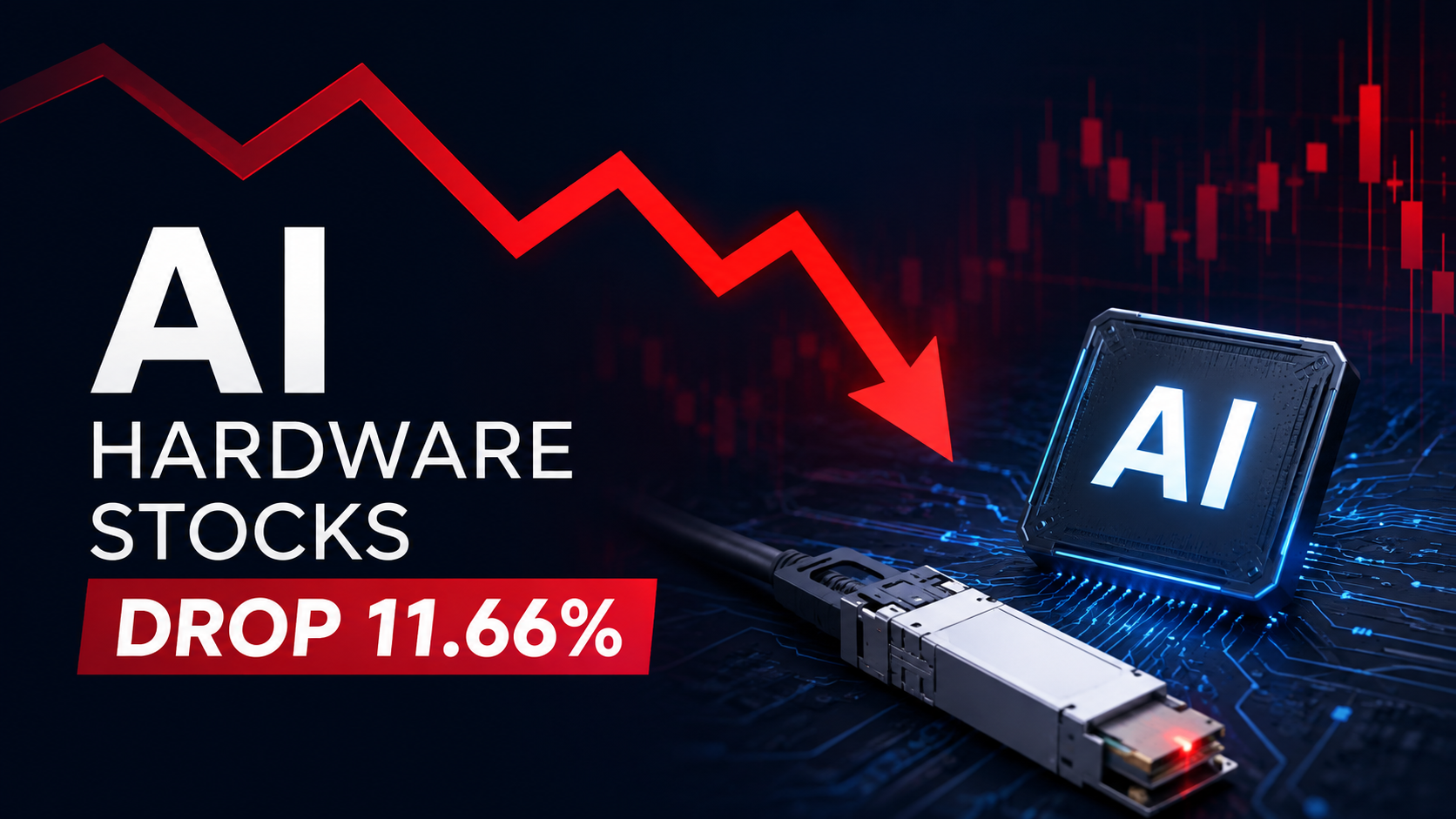
The artificial intelligence boom has minted incredible wealth for investors over the past few years, but the path forward is rarely a straight line. Recently, artificial intelligence hardware equities experienced a sharp pre-market contraction, led by an 11.66% drop in Applied Optoelectronics Inc. (AAOI). This sudden pullback sent ripples through the entire semiconductor and optical networking landscape.
While the fundamental demand for data center upgrades remains extraordinarily strong, market participants are increasingly sensitive to high valuations, corporate capital maneuvers, and broader macro conditions. Understanding the mechanics behind these sharp market moves is essential for anyone looking to navigate high-beta technology sectors.
The recent downward pressure across AI hardware equities stems from a mixture of profit-taking, upcoming macro catalysts, and specific corporate financing decisions. According to recent market summaries from financial analytics firms, institutional investors have begun rotating away from high-beta infrastructure plays to lock in profits ahead of major corporate earnings announcements.
This correction is not an isolated event but a coordinated sector-wide recalibration. High-growth infrastructure providers—particularly those supplying high-speed connectivity layers—fared worse than diversified chipmakers. As hyperscale cloud providers fine-tune their capital expenditure forecasts, the market has grown hyper-focused on efficiency, pushing traders to temporarily de-risk their portfolios.
Why Did Applied Optoelectronics (AAOI) Plunge 11.66%?
Applied Optoelectronics suffered a double-digit decline that outpaced its peers due to company-specific dilution concerns. According to recent financial updates from market observers, AAOI introduced a massive $600 million at-the-market (ATM) equity offering.
While this capital raise is designed to fund necessary manufacturing expansions for advanced 800G and 1.6T optical transceivers, the prospect of issuing new shares triggered immediate short-term selling pressure. Investors weighed this potential equity dilution against recent financial reports showing expanding top-line revenue alongside ongoing net losses. Consequently, the stock's sharp drop reflects a classic market clash: long-term operational growth versus near-term balance sheet dilution.
The broader hardware ecosystem mirrored AAOI’s downward trajectory in a clearly defined, tiered sell-off pattern:
-
Optical and Connectivity Leaders: High-beta optical networking firms took the hardest hit. Competitors like Lumentum, Coherent, and Astera Labs experienced parallel pullbacks ranging between 3.5% and 4.5%.
-
Memory and Storage Providers: Memory chip manufacturers and high-bandwidth component suppliers saw moderate declines. Names like Micron and SanDisk pulled back by roughly 3% to 4%, cushioned slightly by diverse end-market revenues.
-
Semiconductor Equipment Makers: Core equipment manufacturers experienced the mildest corrections. Diversified legacy players and design giants saw relatively modest single-digit dips as broader market sentiment weighed on them.
This tiered behavior demonstrates that modern investors systematically shed exposure based on asset beta. Companies tethered exclusively to pure-play data center spending experienced steeper drawdowns than diversified semiconductor conglomerates.
Macroeconomic shifts and interest rate expectations continue to dictate investor appetite for risk assets. As global central banks navigate economic transitions, technology stocks—particularly those trading at rich multiples—remain acutely vulnerable to shifts in borrowing costs and discount rates.
Furthermore, investors are closely monitoring capital expenditure discipline among major cloud providers. When market leaders hint at moderating their infrastructure spending timelines, the entire supply chain feels the shockwaves. Because many AI hardware stocks entered the period sitting on massive year-to-date gains, even minor macro jitters are enough to ignite aggressive profit-taking.
Navigating high-beta sector corrections requires disciplined risk management and access to global, round-the-clock markets. While traditional equities like AAOI trade on conventional stock exchanges, cryptocurrency enthusiasts and modern investors can also explore blockchain-based synthetic assets, tokenized technology equities, and web3 infrastructure tokens that track artificial intelligence innovations directly on KuCoin.
To get started with tracking and trading AI-adjacent digital assets and infrastructure tokens on KuCoin, follow these simple steps:
-
Create and Secure Your Account: Register on KuCoin using a verified email or phone number and complete the mandatory Know Your Customer (KYC) identity verification procedures.
-
Fund Your Portfolio: Deposit supported digital assets or fiat currency into your KuCoin account using secure funding options such as bank transfers, P2P markets, or credit cards.
-
Explore the Markets: Use the search bar to locate AI-related utility tokens, decentralized computing networks, or web3 infrastructure protocols within the spot or derivatives markets.
-
Execute Strategic Orders: Set your target order types—such as limit orders or dollar-cost averaging setups—to accumulate positions during broad market dips while maintaining strict risk controls.
The 11.66% slide in Applied Optoelectronics and the wider AI hardware sell-off underscore the inherent volatility of high-growth technology sectors. Although data center optical components and high-speed transceivers remain foundational to the artificial intelligence revolution, corporate dilution, high valuations, and macro-driven profit-taking can trigger sudden corrections. Investors must carefully balance the explosive long-term demand for advanced computing hardware against near-term market realities. By maintaining a disciplined approach to asset allocation and risk management, traders can successfully navigate the inevitable ups and downs of the AI hardware landscape.
Why did Applied Optoelectronics (AAOI) drop more severely than other optical stocks?
AAOI's steep decline was amplified by a newly announced $600 million at-the-market equity offering. While other optical peers dropped due to general sector rotation, AAOI faced immediate investor anxiety regarding potential share dilution from the upcoming stock issuance.
What characterizes a tiered sector sell-off in AI hardware?
A tiered sell-off describes how market corrections impact stocks based on their business exposure and beta. High-beta optical connectivity specialists typically fall the hardest, followed by memory providers, while diversified semiconductor equipment manufacturers experience the mildest pullbacks.
How do optical transceivers contribute to artificial intelligence infrastructure?
Optical transceivers utilize light signals instead of electrical currents to transmit massive volumes of data at incredible speeds. They are critical for linking thousands of graphics processing units (GPUs) together inside hyper-scale data centers to train complex AI models efficiently.
Are short-term pullbacks normal for high-performing technology stocks?
Yes, high-growth technology equities frequently experience sharp corrections following massive multi-month rallies. Even when fundamental long-term demand is secure, elevated valuations leave these stocks vulnerable to profit-taking and shifting market sentiment.
Where can I monitor and trade blockchain-based AI infrastructure tokens?
Investors can track and trade decentralized artificial intelligence tokens, computing power protocols, and web3 infrastructure assets directly through digital asset platforms like KuCoin, which offer dedicated trading pairs for the Web3 and AI sectors.

If you worry about the frequent ups and downs in the market, and pursue a more stable option to earn money passively, KuCoin is the right place to come:
Simple Earn: Deposit and withdraw tokens anytime, earning stable returns.
Kucoin Earn: Earn stable profits with professional asset management.
Hold to Earn: Earn rewards by holding assets in Funding, Trading, Margin, Futures, Mining, and Unified Accounts.
Staking: Unlock the earning potential of on-chain assets.
Advanced Investments: Advanced Investments offer a variety of structured products to help your money grow in any market.
Shark Fin: Principal Protection and Guaranteed Gains
Dual Investment: Buy low and sell high with transparent return calculations.
Snowball: High yields, with price protection.
Discount Buy: Buy crypto at discount prices.
KCS Loyalty: Level up to enjoy exclusive perks by staking ≥ 1 KCS.
KuCoin Wealth: Discover future value and begin your smart investing journey.
KCS Benefits: Hold and stake KCS to access benefits across the platform.
KCS Staking 2.0: Participate in KCS on-chain governance to earn yield.
Disclaimer: This content is for informational purposes only and does not constitute investment advice. Cryptocurrency investments carry risk. Please do your own research (DYOR).