

From Holding to Spending: How Crypto Is Moving Into Everyday Payments
2026/08/18 17:32:00
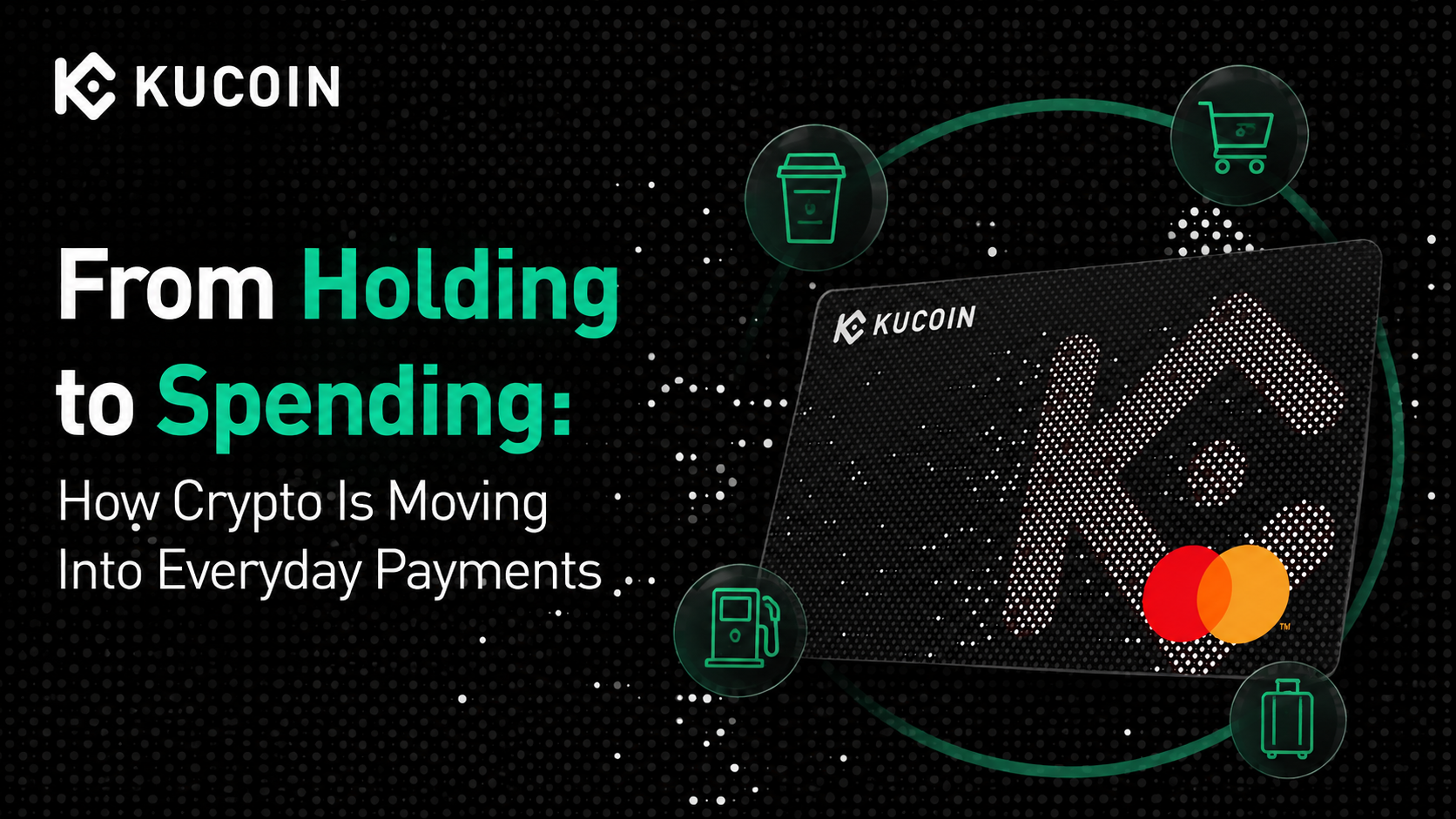
For much of crypto’s history, the dominant user journey has been easy to describe: buy, trade, hold and, eventually, sell. Bitcoin and other digital assets built their early appeal around investment, speculation and decentralized ownership rather than buying groceries or paying for a subscription. Yet as the market matures, a more practical question is becoming harder to ignore: What can people actually do with crypto once they own it?
That question is helping push the industry from holding toward spending. Stablecoins, simpler wallets, mobile payment integrations and crypto-linked cards are reducing some of the friction that once separated digital assets from everyday commerce. Instead of asking every merchant to accept crypto directly, newer payment models increasingly work behind the scenes, connecting crypto balances with familiar card and checkout infrastructure. One way this transition is taking shape is through crypto-linked payment infrastructure, which can connect digital asset balances with familiar card-based spending without requiring merchants to adopt crypto-specific checkout systems.
Crypto Is No Longer Just Something to Hold
Crypto ownership has traditionally revolved around an investment cycle: users acquire digital assets, store them in an exchange account or wallet, wait for their value to change, trade between assets and eventually convert some of their holdings back into fiat currency. That model remains important, but it captures only one possible form of crypto utility. If digital assets are to become part of a broader financial ecosystem, their usefulness cannot depend entirely on what happens when someone sells them.
The emerging alternative is less linear. Crypto may still be bought and held, but it can increasingly also be transferred, earned and used as a source of funds for purchases. That does not mean Bitcoin or stablecoins are replacing banknotes, debit cards or traditional bank accounts. Rather, the boundaries between holding an asset and using it are becoming less rigid. A crypto balance that previously sat apart from everyday financial life can now, in certain payment setups, become part of the same spending journey people already use for online shopping, dining, travel and other purchases.
This shift matters because mainstream payment adoption is ultimately about utility rather than novelty. Consumers do not necessarily need another way to think about money; they need a convenient way to use the value they already hold. The challenge has always been making that process simple enough to compete with the payment methods people already understand.
Why Paying With Crypto Has Been Hard
Price Volatility Makes Everyday Pricing Difficult
Many cryptocurrencies were never designed to behave like stable units of account. When the market value of an asset can move noticeably over a short period, both consumers and merchants face an awkward question: what is the purchase really worth? A trader may be comfortable with price fluctuations in an investment portfolio, but everyday payments tend to reward predictability. Consumers generally want to know what a coffee, hotel room or online order costs without also considering whether the asset used to pay for it could be worth materially more or less shortly afterward.
Most Merchants Still Think in Fiat
Direct crypto payments can also shift complexity onto merchants. A business that wants to accept digital assets directly may need suitable payment infrastructure, wallet support, accounting processes and a way to manage the crypto it receives. That creates a significant adoption hurdle. A consumer may be enthusiastic about paying with crypto, but a merchant selling everyday goods may have little reason to redesign its checkout system around blockchain transactions.
The result is a mismatch: consumers may want to spend crypto without requiring merchants to become crypto users themselves. Traditionally, solving that mismatch meant selling crypto, converting it into fiat, withdrawing the money and then spending it through a conventional bank account or debit card. The process works, but the extra steps reduce the convenience that digital payments are supposed to provide.
What Is Making Crypto Easier to Spend?
Stablecoins Bring More Predictable Value
Stablecoins have helped change the payment conversation because their value is designed to track a reference asset, typically a fiat currency such as the U.S. Dollar, and the Australian Dollar. For spending purposes, this creates a very different user experience from paying directly with a highly volatile token. A balance denominated in a dollar-linked stablecoin is easier to relate to the prices consumers already see in shops and online, although stablecoins still carry issuer, regulatory and other risks and should not be treated as identical to cash.
Their importance goes beyond price stability. Stablecoins can act as a bridge between blockchain-based value and payment systems that ultimately settle transactions in familiar monetary terms. Instead of viewing crypto only as an investment category, users can begin to treat some digital assets as part of a broader transaction layer.
Wallets Are Becoming Easier to Use
Crypto interfaces are changing too. Earlier blockchain payments often required users to think carefully about wallet addresses, networks, transaction fees and confirmations. Those concepts remain relevant under the hood, but consumer-facing payment products increasingly try to remove them from routine transactions. The more payment technology can hide technical complexity, the closer the experience comes to the tap, swipe or mobile checkout behavior people already understand.
Crypto Cards Connect Crypto With Existing Payment Networks
Crypto-linked cards take this simplification one step further. Rather than relying on every merchant to accept a specific digital asset, the card acts as a bridge between the user’s crypto funding source and an established payment network. The consumer can access value associated with crypto holdings, while the merchant can continue using the card infrastructure already integrated into its business. That does not eliminate conversion costs, eligibility requirements or other restrictions, but it addresses one of the most persistent barriers to crypto payments: merchant acceptance.
How Crypto Cards Turn Digital Assets Into Everyday Spending
What Happens When You Pay
The key distinction between a direct crypto payment and a crypto-linked card payment is what happens behind the checkout experience. In a direct blockchain transaction, digital assets move from one crypto address to another and the merchant needs infrastructure capable of receiving them. With a card-based model, crypto can instead function as the funding source. The necessary conversion takes place within the payment process, and the merchant interacts with the familiar card ecosystem rather than receiving the customer’s crypto directly.
The difference becomes clearer when the main payment routes are compared:
| Payment Method | What the User Does | What the Merchant Needs | Main Friction |
| Direct crypto payment | Sends crypto directly | Crypto-compatible checkout or wallet | Merchant acceptance and blockchain complexity |
| Sell crypto first | Converts crypto, withdraws fiat and pays conventionally | No new infrastructure | Multiple manual steps |
| Crypto-linked card | Pays through a card while supported crypto funds the transaction | Existing card acceptance | Conversion costs, card terms and supported assets |
Why Existing Payment Rails Matter
The significance of the third model is that crypto adoption does not necessarily require rebuilding the entire checkout experience. Consumers already understand card numbers, contactless payments, digital wallets and online checkouts. Merchants already have payment terminals, acquiring relationships and card acceptance systems. Connecting digital assets to that infrastructure can therefore be more practical than expecting an entirely new payment method to replace it overnight.
KuCard-AU provides one example of this approach. KuCoin describes it as a Mastercard debit card for eligible everyday transactions. Supported crypto assets can be used as a funding source and converted as required in connection with a transaction, while merchants receive payment through the card-payment process rather than receiving the underlying crypto asset.
KuCard Shows What “From Holding to Spending” Looks Like
From Crypto Balance to Everyday Payment
KuCard-AU is designed to connect eligible crypto balances with familiar spending environments. According to KuCoin AU, the card can be used for eligible in-store and online payments where Mastercard debit cards are accepted, and it can also be connected to Apple Pay and Google Pay, subject to the availability and terms of those services. Supported crypto assets may be converted during the transaction process, with conversion rates, fees and execution affected by applicable market conditions and card terms.
That makes the payment journey very different from sending coins directly to a merchant. A simplified version looks like this:
Hold supported crypto → Make a KuCard payment → Required conversion occurs → Purchase moves through existing card infrastructure
KuCoin AU also allows users to configure which supported funding assets are available and set a payment-priority order. Its current documentation explains that transactions can draw on the selected funding sources according to that priority, with supported crypto converted when required. The merchant is not receiving the user’s BTC, ETH or another supported crypto asset; the crypto is being used on the funding side of the transaction.
Spending Can Become Part of a Rewards Loop
The shift from holding to spending can also introduce another familiar element from traditional payments: loyalty rewards. KuCard’s current Rewards Points program allows eligible purchases to generate points. The reward structure considers both a user’s VIP level and monthly spending tier and automatically applies the higher applicable reward rate. Points can then be used within the available redemption system, bringing a traditional loyalty mechanism into a crypto-linked spending experience.
| KuCard Feature | Role in the Holding-to-Spending Journey |
| Supported crypto funding | Connects digital assets with purchases |
| Crypto conversion | Bridges crypto balances and payment settlement |
| Mastercard acceptance | Extends usage into familiar merchant environments |
| Apple Pay and Google Pay support | Fits existing mobile-payment habits |
| Rewards Points | Adds a loyalty layer to eligible spending |
The important point is not that rewards make crypto payments fundamentally different from card payments. In many ways, the opposite is true: points and loyalty incentives reflect how crypto payment products are adopting familiar features from traditional cards. KuCard is one example, combining eligible spending with a points-based rewards system whose earning and redemption mechanics are explained in the KuCard Rewards Points guide.
Where Everyday Crypto Payments Make the Most Sense
Everyday Retail and Online Shopping
Frequent, ordinary purchases are where payment utility becomes easiest to understand. Buying food, shopping online or paying at a retail store may seem less exciting than trading a new token, but that is precisely why these transactions matter. A payment technology becomes more useful when it fits into activities people would be doing anyway. Crypto-linked cards can reduce the behavioral gap between “owning crypto” and “using value” by bringing digital assets closer to routine purchasing patterns.
Travel and Cross-Border Spending
Travel presents another potentially useful setting because crypto holders may own assets that are not tied to the banking system of every country they visit. A card connected to digital assets can provide an additional funding route for eligible purchases abroad. That convenience should not be confused with cost-free international spending, however. Foreign-exchange charges, card transaction fees and conversion spreads may still apply. KuCoin AU’s current KuCard fee schedule, for example, lists transaction and foreign-exchange fees and notes that spreads or third-party charges may also apply depending on the transaction.
Digital Services and the Online Economy
Online commerce may be an especially natural fit because consumers already expect payment methods to operate invisibly in the background. Whether the funding ultimately comes from a bank account, card balance or supported digital asset matters less at checkout than whether the payment is fast, understandable and widely accepted. This is an important direction for crypto adoption: the goal may not be to make every transaction visibly “crypto-native,” but to make digital assets compatible with the purchasing experiences consumers already use.
What Should You Consider Before Spending Crypto?
Conversion Costs and Exchange Rates
Convenience does not automatically mean cost-free. When crypto is converted as part of a payment, the effective cost can depend on the exchange rate, spread, card transaction fee, foreign-exchange fee and other charges that apply to the particular service. KuCard-AU, for example, currently discloses a 0.5% transaction fee and a 1% foreign-exchange fee where applicable, while also noting that spreads and other fees may apply. These terms can change, so users should always check the current fee schedule rather than assuming that crypto-linked spending costs the same as an ordinary domestic debit-card purchase.
Which Assets Are You Spending?
There is also an economic difference between spending a stablecoin and spending an asset someone primarily holds as a long-term investment. Paying with crypto effectively means giving up some amount of that asset to fund today’s purchase. A consumer who expects an asset to appreciate may therefore view spending BTC very differently from spending a dollar-linked stablecoin. The technology may make both possible, but that does not mean both choices have the same financial implications.
Rewards Should Be Treated as a Bonus, Not the Whole Decision
Rewards can improve the value of eligible spending, but they should not be the only criterion for choosing a payment method. Reward programs have eligibility rules, caps, excluded transaction categories and terms that can change. KuCard’s documentation, for example, specifies that only eligible spending earns Rewards Points and excludes certain financial, cash-equivalent and restricted merchant categories. A strong payment decision therefore considers convenience, fees, asset choice and acceptance first, with rewards adding value only when the underlying transaction already makes sense.
Crypto Payments Are Becoming More Invisible
The future of crypto payments may look less “crypto” than many people expect. Early visions of adoption often imagined consumers scanning blockchain addresses, selecting networks and deliberately choosing crypto at every checkout. In practice, mainstream payment technology tends to succeed when complexity disappears. People tap a phone or card and expect the technical work to happen somewhere else.
That is where stablecoins, payment cards, wallets and established card networks can complement one another. The blockchain may remain important as infrastructure or as the source of the value being spent, while the consumer-facing experience becomes increasingly familiar. The biggest sign of progress may therefore be that users stop thinking about the underlying crypto infrastructure every time they make a purchase. When digital assets can fit into existing payment habits without demanding an entirely new checkout behavior, the distance between holding and spending becomes much smaller.
From Holding to Spending Is a Bigger Shift Than It Looks
Crypto’s next stage of adoption may not be defined simply by how many people own digital assets. A more meaningful question is how easily those assets can be used when owners actually want to do something with them. Moving from trading and storing crypto toward practical payments expands the role digital assets can play without assuming they will replace traditional money or banking infrastructure.
Crypto-linked cards illustrate one route toward that goal by connecting digital assets with payment systems consumers and merchants already recognize. KuCard is one example of that transition: supported crypto can become part of an eligible everyday spending journey while card networks and mobile wallets handle much of the familiar checkout experience.
The larger trend is therefore not simply “paying with crypto.” It is making crypto easier to use without forcing everyday payments to feel unfamiliar.
⚡️ Bring Crypto Into Everyday SpendingConnect crypto with everyday payments through KuCard and explore a simpler way to use your assets beyond the crypto wallet. >> Apply for KuCard
|
FAQs
Is Spending Crypto a Taxable Event?
It can be. Tax treatment varies significantly by jurisdiction, and converting or disposing of a crypto asset to fund a purchase may create a taxable event even when the transaction feels like an ordinary card payment. Users should keep appropriate transaction records and check the rules that apply in their country or seek qualified tax advice rather than assuming that small everyday purchases are automatically exempt.
Can I Choose Which Crypto KuCard Uses First?
KuCoin AU currently allows users to configure supported KuCard funding assets and set a payment-priority order. When a payment is made, the system works through the selected funding sources according to that order. Its documentation also notes that individual transactions have restrictions on how multiple crypto assets can be combined, so users should check the current funding and priority rules before relying on a particular balance.
Why Are My KuCard Rewards Points Still Pending?
Rewards Points are not necessarily available immediately after a card payment. KuCoin AU states that points are issued only after an eligible transaction has completed and settled. Under the current Rewards Points rules, they then go through a 15-business-day verification period before becoming available, which is intended to account for issues such as reversals and reward integrity checks.
Do KuCard Rewards Points Expire?
Yes. Under the current KuCard-AU Rewards Points rules, points remain valid for 90 days from the date they become available. Because loyalty-program terms can change, users should check their Rewards Center and the latest program rules instead of relying on an older expiry schedule.
What Happens to KuCard Rewards After a Purchase Is Refunded?
A refund can affect both reward calculations and tier qualification. KuCoin AU states that refunded or reversed transactions do not count toward qualifying thresholds, and rewards associated with those transactions can be reversed. This is one reason the system does not treat every newly completed purchase as immediately final for reward purposes.
Disclaimer: This content is for informational purposes only and does not constitute investment advice. Cryptocurrency investments carry risk. Please do your own research (DYOR).