

Bitcoin Miners Are Pivoting To AI Infrastructure, How Will This Impact Bitcoin Pirce?
2026/05/25 16:33:02
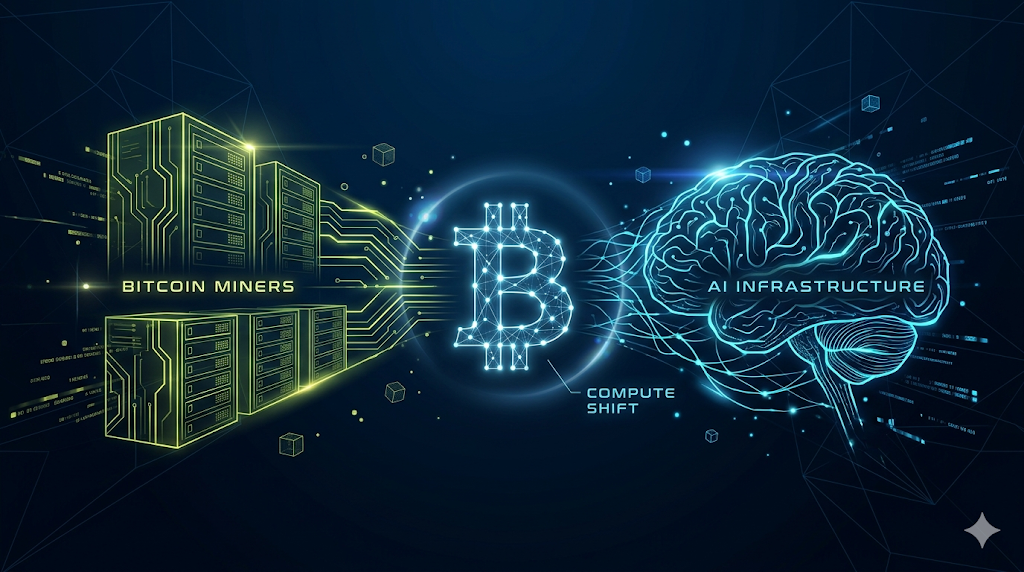
Did you know that by late 2026, artificial intelligence could account for up to seventy percent of total revenue for publicly listed Bitcoin mining companies? Bitcoin price faces significant near-term downward pressure as miners aggressively liquidate their digital asset treasuries to fund massive AI infrastructure buildouts, creating a temporary supply shock before ultimately stabilizing network economics. This dramatic pivot transforms single-purpose crypto operations into diversified high-performance data centers.
The Economics of the AI Pivot
Crushing Profit Margins in Bitcoin Mining
Bitcoin mining profitability reached a critical inflection point by early 2026. Hashprice fell to a record low of $27.58 per petahash per day in late February 2026, according to a recent market report from MLQ Agent. This severe margin compression definitively forces miners to seek alternative revenue streams. The combination of intense network difficulty and halving effects has rendered pure-play mining highly unsustainable for less efficient market operators.
The $58,032 level emerged as a significant technical zone for the full production cost of mining one Bitcoin. Faced with these crushing economic realities, mining firms must aggressively adapt. Listed Bitcoin miners currently lose approximately $19,000 for every single Bitcoin mined, based on a comprehensive March 2026 report by CoinShares.
High-Performance Computing Revenue Potential
Artificial intelligence hosting contracts offer highly predictable, dollar-denominated revenue streams that vastly outperform volatile crypto rewards. By the end of 2026, AI computing contracts could contribute up to seventy percent of total revenue generated by listed mining companies, according to CoinShares in March 2026. This monumental shift completely insulates these infrastructure companies from sudden downward swings in the digital asset market, providing crucial financial stability.
Over $70 billion in cumulative AI computing contracts have already been announced across the public mining sector. Based on CoinShares data from late March 2026, these extensive agreements provide massive benefits:
-
Contracts frequently last between twelve and fifteen years.
-
They firmly lock in decades of guaranteed corporate profitability.
-
They convert speculative crypto enterprises into traditional data center operators.
-
This structural shift permanently stabilizes the long-term financial viability of mining operations.
The Massive CapEx Cost Gap
Transitioning from standard ASIC mining into advanced artificial intelligence computing requires truly massive capital expenditures. The cost differential is staggering—with Bitcoin infrastructure costing roughly $1 million per megawatt, while AI infrastructure demands up to $15 million per megawatt. According to CoinShares analysis published in March 2026, this massive capital requirement radically alters the traditional financial profile of the entire listed cryptocurrency mining sector entirely.
To successfully fund these incredibly expensive AI hardware expansions, many miners are aggressively taking on massive institutional debt. For instance, Iris Energy currently carries $3.7 billion in convertible notes, while TeraWulf manages $5.7 billion in total debt. This heavy financial leverage fundamentally shifts the baseline risk profile of these publicly traded infrastructure companies. Operators must flawlessly execute their long-term strategies to avoid devastating corporate default scenarios.
Market Dynamics and the Hardware Transition
Repurposing Existing Energy Infrastructure
Bitcoin miners inherently possess the exact large-scale power infrastructure and specialized cooling systems that AI companies desperately need. The incremental cost of repurposing these existing heavy-duty mining facilities is substantially lower than building new data centers entirely from scratch. According to Binance Square market updates from May 2026, this massive physical head start provides legacy miners with a distinct competitive advantage over traditional technology startups.
Securing massive electrical grid interconnects traditionally takes multiple years of intense regulatory lobbying and physical construction. Legacy cryptocurrency miners have already fully completed this exhausting infrastructural groundwork during previous digital asset bull runs. They hold highly valuable, pre-approved power purchase agreements with major regional energy providers. This immediate access to high-density electricity allows them to rapidly deploy modern GPU clusters faster than competing hyperscalers.
Institutional Partnerships and Hyperscaler Deals
Hyperscalers and major technology conglomerates are aggressively partnering with former cryptocurrency miners to secure vital rack space. Companies like Amazon, Microsoft, and Google desperately require massive amounts of continuous energy to train advanced algorithmic models. Based on recent market data from May 2026, the tight supply of available AI infrastructure forces these tech giants into lucrative partnerships with decentralized mining companies to meet aggressive deadlines.
These institutional partnerships completely legitimize the ongoing transformation of the cryptocurrency mining sector. Wall Street actively recognizes these massive multi-billion-dollar deals as definitive proof of a permanent industry evolution. The rapid integration of legacy mining facilities into global cloud computing networks completely reshapes the macroeconomic digital landscape. Institutional capital continuously flows into these hybrid operators, driving their corporate equity valuations to unprecedented new market highs.
Debt Profiles and Capital Structure Changes
The aggregate leverage across the global cryptocurrency mining sector has fundamentally changed over the past twelve months. Massive debt accumulation completely redefines how these once debt-free speculative companies structurally operate. According to CoinShares reports from March 2026, this extreme corporate leverage forces companies to prioritize immediate fiat cash flow over long-term Bitcoin accumulation strategies. This heavily dictates how they structurally manage their digital asset treasuries permanently.
Interest expenses now meaningfully erode the baseline profitability of several highly leveraged mining operations. Companies carrying multi-billion-dollar debt loads must constantly liquidate their newly mined digital assets to service massive monthly interest payments. This structural obligation completely prevents them from securely holding Bitcoin during highly lucrative macroeconomic bull markets. Heavy leverage essentially forces hybrid operators into a permanent, highly defensive state of immediate spot asset liquidation.
Impact on Bitcoin Price and Network Security
Hashrate Reductions and Capitulation Pressure
Rising electricity costs combined with aggressive AI pivots actively force less efficient mining operators entirely offline. Higher energy prices fundamentally guarantee a structural decrease in the global network hashrate as older ASIC machines become entirely unprofitable. According to comprehensive industry analysis from May 2026, the global hashrate fell by 5.8% during the highly volatile second quarter of 2026.
This massive reduction in baseline network difficulty heavily signals intense capitulation among smaller, undercapitalized retail mining operations. As these struggling marginal operators completely shut down, they aggressively liquidate their remaining Bitcoin treasuries to satisfy pending bankruptcy proceedings. This sudden influx of desperate spot supply heavily suppresses global cryptocurrency market prices. Short-term network capitulation frequently precedes massive, multi-month macroeconomic price consolidations across the digital asset sector globally.
Supply Shock and Liquidations
Miners selling their massive digital treasuries directly adds tremendous spot supply exactly at highly critical market moments. During early 2026, this intense miner deleveraging amplified severe market liquidations, heavily contributing to a thirty percent monthly price plunge. According to MLQ Agent reports from February 2026, heavy whale exchange inflows matched this massive selling pressure perfectly. This intense structural supply shock forcefully drove spot prices crashing violently.
Funding massive high-performance computing expansions fundamentally requires continuous, heavy liquidation of mined cryptocurrency block rewards. Hybrid infrastructure providers absolutely cannot afford to romantically hoard their digital assets like traditional retail investors. They must ruthlessly sell every single mined token immediately to fund extremely expensive Nvidia GPU acquisitions. This permanent institutional selling pressure serves as a massive structural headwind against short-term price appreciation across trading pairs.
Potential for Long-Term Decentralization
Despite the heavy short-term selling pressure, this massive industry evolution ultimately strengthens the long-term resilience of the Bitcoin network. By successfully securing massive fiat revenue streams through AI hosting, large miners permanently stabilize their corporate balance sheets. This incredible financial stability completely ensures they will never unexpectedly go bankrupt during brutal cryptocurrency bear markets. A highly stable corporate mining sector essentially guarantees permanent global network processing.
Furthermore, artificial intelligence companies constantly competing for active server rack space will forcefully drive traditional miners toward cheaper, stranded energy. Over the long term, legacy miners will aggressively migrate toward highly remote locations offering heavily curtailed, intermittent renewable power. According to CoinShares analysis from March 2026, this geographical displacement successfully decentralizes the global hash rate away from highly populated urban power grids, improving ultimate network decentralization heavily.
Strategic Case Studies in the Mining Sector
Core Scientific and CoreWeave
Core Scientific flawlessly exemplifies the massive corporate transformation occurring heavily throughout the entire listed mining sector. Following a highly publicized bankruptcy restructuring, the company successfully pivoted directly into high-performance computing and advanced AI workloads. Based on data from late March 2026, Core Scientific aggressively expanded its massive partnership with CoreWeave into a $3.5 billion agreement. This historic twelve-year contract completely redefined its long-term financial trajectory.
By mid-2026, artificial intelligence hosting revenue accounted for a staggering thirty-nine percent of total revenue for Core Scientific. This incredible financial metric explicitly proves that hybrid operations can successfully generate massive, stable fiat cash flows. The company completely repositioned its legacy energy assets to directly attract highly lucrative, non-mining institutional clients. This aggressive strategic pivot perfectly highlights how highly adaptable infrastructure companies successfully survive crypto winters.
Hut 8 and TeraWulf Data Centers
Hut 8 aggressively pursued a highly identical strategic path by leveraging its extensive data center management experience entirely. The company successfully signed a massive artificial intelligence infrastructure leasing contract. According to Binance Square reports from March 2026, this massive agreement specifically targets their highly advanced River Bend facility. This incredible deal essentially guarantees immense, predictable cash flow for the next decade.
TeraWulf also explicitly transformed its corporate model by heavily integrating high-performance computing contracts into its core operations successfully. Artificial intelligence operations now actively account for roughly twenty-seven percent of TeraWulf’s total corporate revenue structure. These massive companies are rapidly becoming traditional data center operators mining digital assets simultaneously.
How to trade on KuCoin Bitcoin Miners and AI Tokens
By registering and verifying a trading account directly on KuCoin, you can seamlessly access these markets. As a premier global exchange, KuCoin provides robust liquidity pools for leading artificial intelligence tokens, spot Bitcoin (BTC), and related derivatives, enabling traders to efficiently deploy quantitative and spot trading strategies.
Platform users can actively utilize advanced KuCoin Grid Trading Bots (Spot, Futures, and Infinity Grid) to systematically capture intraday profits across highly volatile digital assets. These automated quantitative tools eliminate human emotional bias by executing precise buy-low and sell-high limit orders within strictly defined price corridors.
Holding the native KuCoin Token (KCS) provides traders with tiered discounts on standard trading fees, significantly minimizing baseline frictional costs during high-frequency programmatic operations.
As Bitcoin Pizza Day 2026 reignites global attention on cryptocurrency's journey from experimental internet money to mainstream financial infrastructure, major exchanges are using the occasion to celebrate how far the industry has evolved.
KuCoin is among the platforms marking the event with a series of Bitcoin Pizza Day campaigns, community activities, and trading initiatives designed to engage both longtime crypto holders and new market participants.
Users now can join KuCoin's Pizza Day Event to share 100,000 USDT prize pool. The period of event is: 05/20/2026 00:00:00 ~ 06/07/2026 23:59:59 (UTC)

Conclusion
The monumental shift of Bitcoin miners toward artificial intelligence infrastructure represents a highly rational financial response to a massive global energy squeeze. By actively repurposing legacy crypto facilities to directly support high-performance machine learning workloads, these companies successfully unlock billions in highly predictable fiat revenue. This aggressive corporate transformation permanently fundamentally alters the listed mining sector, turning highly speculative crypto operators into deeply diversified, institutional-grade data center powerhouses. However, this massive transition absolutely requires immense capital expenditure, heavily driving companies to take on significant debt and aggressively liquidate their digital treasuries.
This intense, continuous liquidation of mined block rewards absolutely creates a massive structural supply shock that heavily suppresses short-term Bitcoin spot prices. As less efficient miners completely capitulate due to crushing profit margins, the overall network hash rate actively drops, fundamentally shifting market dynamics. Ultimately, this massive operational pivot ensures the permanent long-term financial survival of major infrastructure operators, heavily strengthening global network resilience. Traders must carefully monitor these massive institutional supply liquidations to successfully navigate the highly volatile cryptocurrency markets throughout late 2026.
FAQs
Why are Bitcoin miners uniquely suited for artificial intelligence computing?
Bitcoin miners already fully own the highly specific large-scale power infrastructure, massive physical facility space, and advanced cooling systems required for machine learning. Securing these massive high-density electrical grid connections traditionally takes years of intense regulatory lobbying and physical construction. Legacy miners can immediately plug advanced GPU clusters directly into their existing, fully approved electrical substations much faster than hyperscalers can construct brand new physical data center buildings from scratch.
Does artificial intelligence computing use the exact same hardware as crypto mining?
No, artificial intelligence workloads strictly require highly advanced graphics processing units like the Nvidia H100 or H200 series to function. Bitcoin mining relies entirely on Application-Specific Integrated Circuits, which are highly specialized microchips built solely to execute one specific mathematical hashing algorithm. Miners absolutely must purchase entirely new, incredibly expensive server hardware to successfully host advanced machine learning workloads because their legacy cryptographic machines remain totally incompatible with modern AI tasks.
How does this AI pivot immediately affect the Bitcoin network hashrate?
As major legacy mining operations actively divert massive portions of their available energy capacity toward artificial intelligence, the global hashrate growth drastically slows. Furthermore, struggling miners entirely unable to fund this massive AI transition frequently go bankrupt due to high energy costs, forcing their ASIC machines permanently offline. This toxic combination frequently leads to a temporary, highly noticeable drop in overall global network computational difficulty during turbulent macroeconomic market phases.
Are miners permanently abandoning the cryptocurrency industry completely for artificial intelligence?
No, the vast majority of highly successful operators are adopting a hybrid infrastructure model rather than abandoning decentralized digital assets completely. They actively split their massive energy capacity between highly predictable AI hosting contracts and highly lucrative, speculative Bitcoin mining operations globally. This dual-use strategy perfectly balances steady monthly fiat income with the massive asymmetric upside potential of digital asset appreciation, creating highly resilient corporate financial structures across all environments.
What happens to Bitcoin prices when major miners go bankrupt unexpectedly?
When massive, heavily leveraged mining operations unexpectedly declare bankruptcy, they are legally forced to aggressively liquidate their entire digital asset treasury holdings completely. This sudden, massive influx of spot supply onto centralized exchanges violently suppresses global cryptocurrency prices, frequently causing severe intraday flash crashes. These highly aggressive capitulation events historically mark the absolute bottom of devastating macroeconomic digital asset bear markets, providing massive long-term accumulation opportunities for institutional wealth managers.
Disclaimer:This content is for informational purposes only and does not constitute investment advice. Cryptocurrency investments carry risk. Please do your own research (DYOR).