

Why BTC Miners are Pivoting to AI Data Centers in 2026
2026/05/12 14:03:02
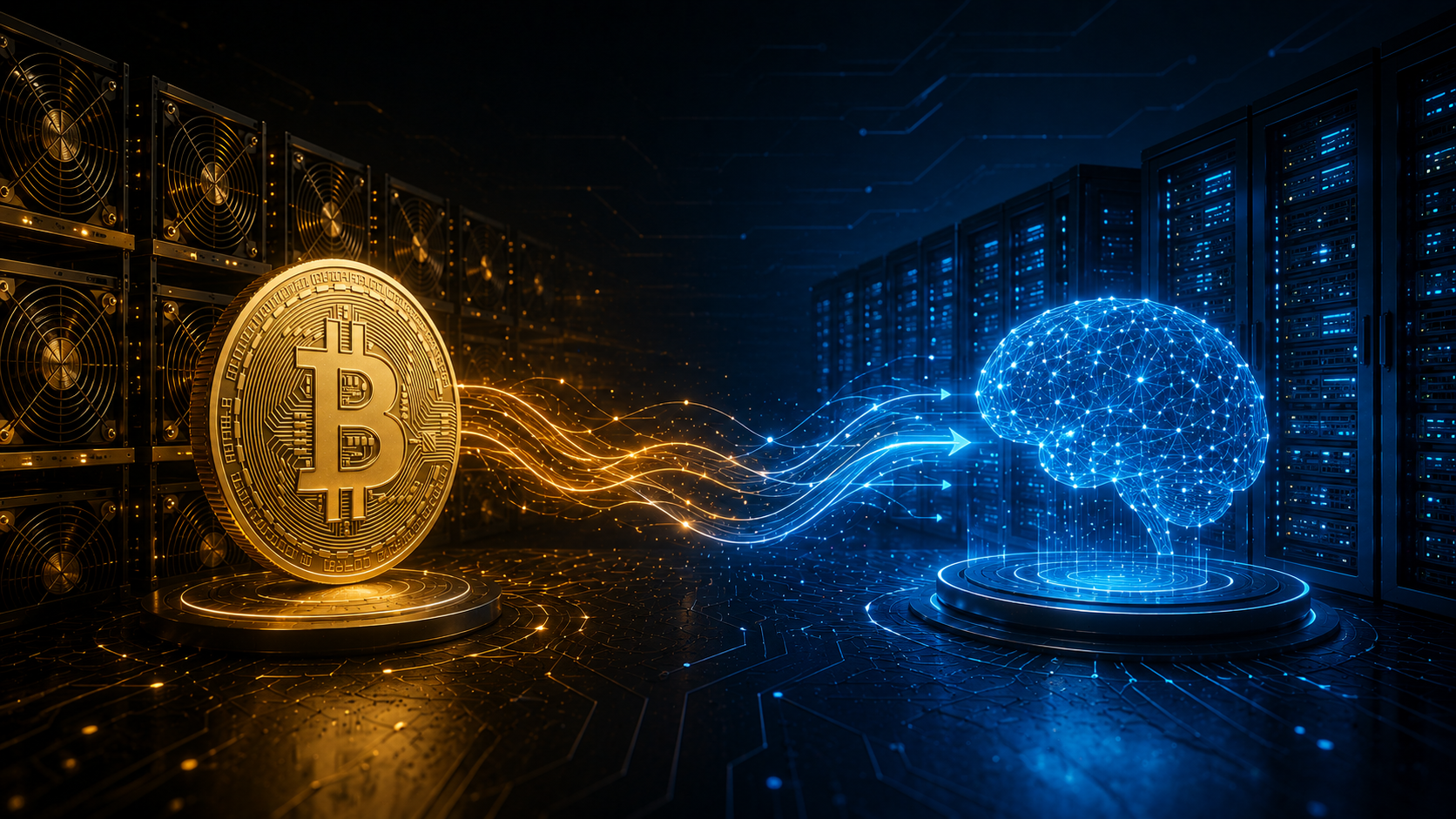
Traditional mining operations rely on cheap power to survive, but rising grid costs are forcing btc miners to pivot toward high-performance computing (HPC) and artificial intelligence (AI) data centers. This structural shift in the mining industry, how it works, what it changes, and where the risks lie—is the focus of the analysis below.
Key takeaways
-
Bitcoin's electricity cost per coin was $46,426 on March 22, 2026.
-
Global hashrate fell 5.8% to 1,004 EH/s in Q2 2026.
-
U.S. Wholesale electricity prices were projected to hit $51/MWh in 2026.
-
Energy demand from AI and crypto could exceed 1,000 TWh by late 2026.
-
Bitcoin full production costs averaged $74,300 in January 2026.
What is btc mining?
BTC miners defined: Entities that use specialized hardware to secure the Bitcoin network by solving cryptographic puzzles in exchange for block rewards.
BTC miners serve as the decentralized backbone of the Bitcoin network, validating transactions through a process called Proof of Work. In 2026, companies like Marathon Digital and Hive utilize thousands of Application-Specific Integrated Circuits (ASICs) to compete for rewards. This industry is essentially an energy arbitrage business where the goal is to convert the lowest possible electricity cost into high-value digital assets.
You can buy BTC on KuCoin to participate in the asset's price action as the mining sector undergoes this infrastructure transition. Think of a mining facility as a digital refinery: just as an aluminum plant requires vast amounts of electricity to process raw ore, miners require massive power to "refine" network security into new coins. When electricity prices rise, these facilities are increasingly being repurposed as AI data centers, which offer higher margins for the same electrical capacity.
History and market evolution
The relationship between mining profitability and energy prices has reached a critical inflection point in 2026 as global power demand from AI competitors surges.
-
January 2024: The IEA warned that combined electricity demand from data centers, AI, and crypto could double by 2026.
-
November 2025: The EIA projected an 8.5% rise in wholesale electricity prices, setting a difficult cost floor for miners.
-
January 2026: Capriole reporting showed the average electricity cost to mine one Bitcoin reached approximately $59,450.
► U.S. Wholesale Power Price Projection: $51/MWh — EIA, November 2025
► Combined AI and Crypto Energy Demand: >1,000 TWh — IEA, January 2024
Current analysis
Technical analysis
Bitcoin's market price in early 2026 has remained in a tight range relative to its underlying production costs, creating a high-stress environment for less efficient operations. On KuCoin's BTC/USDT chart, the $58,032 level has emerged as a significant technical zone, as it aligns with the full production cost reported on March 22, 2026. Based on KuCoin's trading data, periods where the spot price approaches these production costs often lead to decreased hashrate as older machines are turned off. You can monitor live BTC prices on KuCoin to identify when the market tests these miner-capitulation thresholds.
Macro and fundamental drivers
The primary macro driver for the 2026 mining pivot is the competition for power grid access between Bitcoin networks and AI firms.
► Electricity as % of Mining OPEX: 70–90% — Binance Square, March 2026
► Global Hashrate Decline in Q2 2026: 5.8% QoQ — Hashrate Index, April 2026
Fundamental data from the IEA suggests that the "30% electricity hike" scenario is driven by a massive expansion in data center capacity. This has created a "floor" for energy prices that makes sub-$0.06/kWh power the traditional threshold for profitable mining—harder to secure. Consequently, miners are moving toward AI hosting where the revenue per kilowatt-hour can be significantly higher than pure Bitcoin mining.
Comparison
Bitcoin mining is a high-risk, variable-reward business compared to AI data center hosting, which typically offers more stable, long-term contracts. While mining provides direct exposure to Bitcoin’s price appreciation, it leaves operators vulnerable to hashrate competition and halving events. AI hosting, conversely, utilizes the same cooling and power infrastructure but serves a different client base with more predictable cash flows.
Participants who prioritize high-risk, direct crypto rewards may find pure-play mining more suitable; those focused on steady infrastructure yields may prefer firms diversifying into AI data centers. KuCoin's analysis of mining profitability provides deeper insights into how these two business models compare in the current high-cost energy environment.
Future outlook
Bull case
By Q3 2026, if Bitcoin prices rally toward six figures while miners successfully integrate next-generation ASICs, profitability could rebound regardless of energy hikes. In this scenario, the diversification into AI would be seen as a "bonus" revenue stream that strengthens the balance sheets of major mining firms, making the Bitcoin network more resilient and decentralized.
Bear case
By October 2026, if electricity costs continue to rise while BTC remains below the $74,300 production cost seen in January, a mass exodus of miners is likely. This could lead to a significant drop in hashrate and increased sell pressure as struggling firms liquidate their BTC treasuries to cover rising operational expenses and debt obligations.
Conclusion
The 2026 shift of btc miners toward AI infrastructure is a rational response to a global energy squeeze. With electricity accounting for up to 90% of operating costs, the rise in wholesale prices has turned power efficiency into the primary competitive advantage. As firms like Marathon Digital and Hive adapt their facilities for high-performance computing, the mining sector is evolving from a single-purpose industry into a diversified data-infrastructure powerhouse. To stay updated on how these industry shifts impact the market, check KuCoin's latest platform announcements.
FAQ
Why are BTC miners moving to AI in 2026?
Miners are diversifying into AI because high-performance computing often offers higher revenue per kilowatt-hour than Bitcoin mining when electricity prices rise. AI data centers use similar power and cooling infrastructure, allowing mining firms to pivot their existing assets to more profitable or stable business models.
How much does it cost to mine one Bitcoin in 2026?
As of March 22, 2026, the electricity cost to mine one Bitcoin was approximately $46,426, while the full production cost, including hardware and overhead, was roughly $58,032. Earlier in January 2026, those costs were significantly higher, with total production expenditures reaching $74,300 per coin.
What is the profitable electricity rate for btc miners?
In the 2026 market environment, competitive miners typically need to secure electricity at rates below $0.06/kWh to remain profitable. When power costs approach or exceed $0.10/kWh, most standard mining operations become unprofitable unless the Bitcoin spot price is exceptionally high.
How does higher electricity impact the Bitcoin hashrate?
Higher electricity costs generally lead to a decrease in the global hashrate as less efficient miners are forced to shut down their machines. For example, in Q2 2026, the hashrate fell by 5.8% to 1,004 EH/s as rising power prices pushed marginal operators offline.
Will the move to AI make Bitcoin less secure?
While some mining capacity is shifting to AI, the overall security of the Bitcoin network remains high. The transition often involves the least efficient miners leaving the network, while the most efficient firms continue to upgrade their hardware, maintaining a robust, albeit more concentrated, hashrate.
Further reading
Disclaimer: The information on this page may have been obtained from third parties and does not necessarily reflect the views or opinions of KuCoin. This content is provided for general informational purposes only, without any representation or warranty of any kind, nor shall it be construed as financial or investment advice. KuCoin shall not be liable for any errors or omissions, or for any outcomes resulting from the use of this information. Investments in digital assets can be risky. Please carefully evaluate the risks of a product and your risk tolerance based on your own financial circumstances. For more information, please refer to our Terms of Use and Risk Disclosure.