

Ethereum Foundation Appoints Security Researcher Pascal Caversaccio to Board
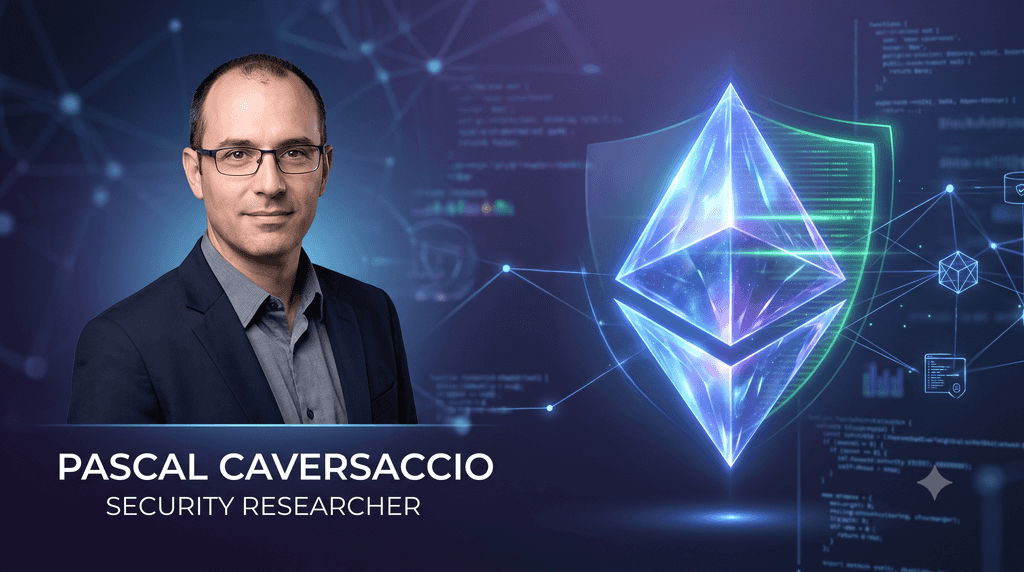
The Ethereum Foundation announced on July 29, 2026, that Pascal Caversaccio, known in the community as pcaversaccio or pc, has joined its board as the fourth member. He serves alongside President Aya Miyaguchi, co-founder Vitalik Buterin, and Swiss counsel Patrick Storchenegger. Caversaccio, a longtime Ethereum contributor, co-founder and lead of the SEAL 911 security response initiative, and author of the 2024 Ethereum Cypherpunk Manifesto, takes on a one-year voluntary term.
The appointment underscores the Foundation’s emphasis on sustaining principles of censorship resistance, open-source development, privacy, and security. Official details appear in the Foundation’s board update post. This leadership addition positions a recognized security researcher and cypherpunk advocate at the highest level of Foundation oversight, aligning board composition more closely with Ethereum’s foundational technical and philosophical priorities.
Caversaccio’s Background as Longtime Ethereum Contributor
Pascal Caversaccio has contributed to the Ethereum ecosystem for years through technical work, community advocacy, and security research. His involvement includes membership in the Ethereum Foundation’s Silviculture Society, an advisory group that provides informal counsel on preserving core values such as censorship resistance, open-source practices, privacy, and security. The Society operates on a confidential basis with renewable one-year terms for unpaid members, offering dedicated channels to Foundation leadership. Caversaccio’s technical efforts encompass tools for deterministic contract deployment and white-hat fund recovery processes. He also curates extensive collections of Ethereum security resources on platforms widely used by developers and auditors. These activities demonstrate a consistent pattern of practical engagement rather than purely theoretical advocacy.
His appointment formalizes a relationship that previously existed in an advisory capacity, bringing operational experience directly into board-level decision-making. The Foundation’s mandate positions the board as a body that sets vision and ensures alignment of management strategies with institutional values while fulfilling Swiss foundation compliance requirements. Community responses to the announcement have shown the continuity of cypherpunk principles in governance structures. This background equips Caversaccio to address both immediate security challenges and longer-term protocol stewardship questions. The voluntary nature of the term further emphasizes commitment over formal compensation structures. His track record provides a bridge between hands-on incident response and high-level organizational direction.
Details of the One-Year Voluntary Board Term
Caversaccio joins the Ethereum Foundation Board for an initial one-year term conducted voluntarily. The Foundation’s July 29, 2026, announcement frames the role as part of the board’s responsibility to set vision, oversee high-level strategies, and act as a security council protecting the organization’s core purpose. Current members now consist of Aya Miyaguchi as President, Vitalik Buterin as Founder, Patrick Storchenegger as Swiss counsel, and Caversaccio. The structure reflects the Foundation’s status as a Swiss foundation, with board oversight ensuring compliance and value alignment. Voluntary service distinguishes this appointment from compensated executive roles and signals prioritization of expertise and principle-driven participation. The one-year duration allows for evaluation of contributions while maintaining flexibility for future adjustments.
Board activities focus on long-term stewardship of Ethereum rather than day-to-day operations managed by Foundation staff. This configuration expands the previous three-member board and introduces specialized security and privacy perspectives into formal governance. Documentation of the appointment appears on the official Ethereum Foundation blog, providing a transparent public record. The arrangement continues patterns of engaging external contributors who have demonstrated sustained alignment with ecosystem values. Logical implications include potential influence on resource allocation toward privacy-enhancing technologies and security infrastructure. The term begins immediately following the announcement, positioning Caversaccio to participate in upcoming strategic discussions.
Authorship of the Ethereum Cypherpunk Manifesto
In 2024, Caversaccio published The Ethereum Cypherpunk Manifesto, an adaptation of Eric Hughes’ original A Cypherpunk’s Manifesto tailored specifically to the Ethereum context. The document articulates a commitment to privacy, security, open-source development, and resistance to centralized control within the blockchain environment. It was immortalized on-chain and published via a blob-carrying transaction, reinforcing its alignment with Ethereum’s technical capabilities. The manifesto emphasizes self-sovereignty and the practical application of cypherpunk ideals to smart-contract platforms and decentralized systems. A follow-up to 2025 work, Ethereum Privacy: The Road to Self-Sovereignty, extended these arguments with a more detailed examination of on-chain privacy pathways.
These writings have circulated widely among developers and advocates focused on preserving Ethereum’s original ethos amid quick ecosystem growth. By elevating the author of these texts to the board, the Foundation signals institutional recognition of privacy as a strategic priority. The documents serve as reference points for discussions on protocol design choices that affect user agency and data protection. Community citations of the manifesto often appear in debates concerning trade-offs between scalability and fundamental principles. The appointment therefore connects written advocacy with formal governance influence. This body of work distinguishes Caversaccio’s contribution profile from purely operational or technical roles.
Leadership Role in SEAL 911 Security Initiative
Caversaccio co-founded and leads SEAL 911, a free, around-the-clock emergency response service for active or imminent crypto security incidents. The initiative operates primarily through Telegram, connecting affected parties with a vetted network of approximately 40 white-hat researchers. When incidents occur, the team assembles coordinated war rooms to triage exploits, pursue white-hat recoveries, and manage disclosures. Since its launch, SEAL 911 has handled more than 3,300 support tickets and coordinated over 125 war rooms. Aggregate efforts have supported the recovery of more than $180 million in assets across various incidents. In 2025 alone, ticket volume reached approximately 1,800, reflecting sustained demand for rapid-response capabilities.
Funding has included personal contributions from figures such as Vitalik Buterin and support from more than 75 organizations. The operational model addresses gaps identified in earlier major exploits where ethical responders faced coordination and legal uncertainties. Caversaccio’s leadership in this domain supplies the board with direct experience of real-time crisis management and ecosystem-wide security coordination. This practical background complements the more strategic responsibilities of board service. The initiative remains independent, while its co-founder’s Foundation role creates potential pathways for improved information flow between incident response and protocol-level planning.
Connection to the Silviculture Society Advisory Group
Prior to the board appointment, Caversaccio served as a member of the Ethereum Foundation’s Silviculture Society. This advisory body consists of external individuals who provide informal, confidential counsel aimed at sustaining core values of censorship resistance, open source development, privacy, and security. Members serve renewable one-year terms without compensation and maintain dedicated communication channels with Foundation leadership. The Society functions as an experimental mechanism for incorporating community perspectives into Foundation decision processes. Its name evokes careful cultivation of long-term ecosystem health rather than short-term growth metrics.
Caversaccio’s participation in this group established a formal advisory relationship that the board appointment now elevates. The transition illustrates a pathway from informal counsel to institutional oversight roles. Silviculture Society activities remain distinct from day-to-day Foundation operations, focusing instead on value preservation. Public descriptions of the group emphasize its role in helping the Foundation stay aligned with Ethereum’s foundational principles amid expanding scale. The appointment can be viewed as recognition of consistent contributions within this advisory framework. Continued engagement with similar external input mechanisms may remain relevant even after the board term concludes.
Alignment with Core CROPS Principles
The appointment reinforces the Foundation’s stated commitment to the principles often summarized as CROPS: censorship resistance, open source, privacy, and security. Caversaccio’s prior writings and operational work map directly onto each of these areas. Board-level representation of these priorities ensures they remain visible during high-level strategy discussions. The Foundation’s mandate describes the board as a security council responsible for protecting the organization’s essential character. Elevating a contributor known for privacy maximalism and incident response experience provides concrete expertise in two of the four pillars. Open-source advocacy appears in both the manifesto and practical tool development.
Censorship resistance receives emphasis through the broader cypherpunk framing of the published works. This alignment occurs at a time when Ethereum continues to balance growth in usage and infrastructure with preservation of original design goals. Board composition that includes specialized voices can influence resource prioritization toward related research and development. Community commentary following the announcement frequently referenced the CROPS framework as a point of continuity. The voluntary one-year structure allows for focused contribution without creating permanent structural changes. Logical outcomes may include heightened attention to privacy tooling and security response coordination within Foundation initiatives.
Effect for Ethereum’s Privacy Strategy
By placing the author of key privacy-focused documents on the board, the Foundation elevates privacy considerations within formal governance. The 2024 manifesto and 2025 self-sovereignty paper outline pathways for strengthening on-chain privacy while maintaining Ethereum’s public and verifiable character. Board participation creates a channel for these perspectives to inform strategic decisions. Privacy remains a complex technical and social challenge involving trade-offs with transparency, regulatory environments, and usability. Caversaccio’s combined experience in advocacy and incident response offers grounded insight into both aspirational goals and operational realities.
The appointment does not alter the decentralized nature of Ethereum protocol development, which continues through community processes. It does, however, signal institutional prioritization of privacy as a core rather than peripheral concern. Ongoing work on privacy-enhancing technologies can benefit from clearer high-level support. Market participants monitoring Ethereum price movement may interpret governance signals as indicators of long-term protocol direction. The one-year term provides a defined window for observing any shifts in emphasis.
Security Incident Response Experience and Board Oversight
Caversaccio’s leadership of SEAL 911 supplies the board with firsthand knowledge of active exploit dynamics, recovery coordination, and the practical limitations of current security tooling. Handling thousands of tickets and numerous war rooms generates institutional knowledge about common failure modes and effective response patterns. This operational perspective differs from purely research-oriented or theoretical approaches to security. Board discussions concerning resource allocation for security infrastructure can draw on these concrete experiences. The free and rapid-response model of SEAL 911 demonstrates scalable coordination among independent researchers.
Recovery of substantial asset values illustrates measurable impact from coordinated white-hat efforts. Integration of such experience at the board level may improve the Foundation’s capacity to support ecosystem-wide resilience. Security remains a continuous requirement as the protocol and surrounding applications grow in complexity and value. The appointment does not replace existing security research teams or client teams but adds a complementary viewpoint. Logical examples from past incidents can inform forward-looking risk assessment. Continued independence of SEAL 911 ensures that operational response capacity remains available regardless of board tenure.
Board Composition and Governance Structure
The expanded four-member board maintains a compact structure while introducing specialized expertise. Aya Miyaguchi continues as President, Vitalik Buterin as Founder, Patrick Storchenegger provides Swiss legal counsel, and Caversaccio contributes a security and privacy focus. The board’s role, as described in the Foundation mandate, centers on vision-setting and ensuring management decisions align with values and compliance obligations. Compact size facilitates focused deliberation. The addition of a contributor with deep technical and operational credentials broadens the range of perspectives without expanding bureaucracy.
Swiss foundation requirements shape formal responsibilities around oversight and accountability. Public announcements of board changes promote transparency regarding leadership evolution. The voluntary term for the new member preserves flexibility. Governance of the Foundation remains distinct from the decentralized processes that guide Ethereum protocol upgrades. Board decisions influence Foundation activities such as research funding, grants, and organizational priorities. Community observation of board composition often serves as a proxy for assessing institutional direction. The current configuration shows both continuity with existing members and deliberate expansion of expertise.
Community and Ecosystem Reception of the Appointment
Reactions across Ethereum community channels have generally emphasized the alignment of Caversaccio’s background with longstanding cypherpunk values. References to the Ethereum Cypherpunk Manifesto and SEAL 911 work appear frequently in discussions of the announcement. Support has centered on the prioritization of privacy and security expertise at the board level. The one-year voluntary structure has been noted as consistent with experimental and principle-driven approaches to governance participation. Public posts from Foundation accounts and independent observers highlight the contributor’s track record of technical and advocacy work. The appointment arrives amid ongoing conversations about balancing growth, usability, and core principles.
Ecosystem participants engaged in security research and privacy tooling have particular interest in potential downstream effects. Formal governance changes of this type remain relatively infrequent, increasing the visibility of each adjustment. Documentation on the official blog provides a stable reference point for ongoing discussion. Reception underscores recognition of sustained contribution rather than sudden elevation. Monitoring of subsequent Foundation activities will provide further context for assessing impact.
Potential Influence on Protocol Stewardship Priorities
Board-level participation creates opportunities for security and privacy considerations to inform high-level strategy more consistently. Priorities around research funding, tooling support, and coordination mechanisms may receive additional attention. The combination of manifesto authorship and incident-response leadership offers both philosophical framing and operational grounding. Protocol development itself continues through open processes involving client teams, researchers, and the broader community. Foundation resources can, however, support enabling infrastructure and education.
The appointment does not confer unilateral decision-making authority but adds a distinct voice to collective board deliberation. Long-term stewardship of Ethereum involves continuous navigation of technical, social, and economic factors. Specialized expertise helps maintain focus on foundational properties amid expanding use cases. Practical analysis of past security incidents can inform preventive measures and response readiness. The defined one-year term encourages concentrated contribution within a clear timeframe. Subsequent evaluations of Foundation initiatives may show any moves in emphasis resulting from the expanded board composition.
Technical Contributions Beyond Advocacy
In addition to written works and SEAL 911 leadership, Caversaccio has developed practical tools supporting deterministic contract deployment and white-hat recovery workflows. He maintains curated collections of security resources that serve as reference materials for developers and auditors. These contributions address concrete needs in smart-contract development and incident handling. Technical output of this type complements advocacy by providing usable infrastructure. Board service can potentially elevate visibility of such tooling within Foundation-supported efforts.
The combination of code-level work and high-level governance creates a pathway for practical improvements to inform strategic direction. Security resource curation reduces information asymmetry for newer participants in the ecosystem. Deterministic deployment practices support more predictable and auditable contract behavior. White-hat recovery mechanisms form part of a broader defensive toolkit. These activities illustrate a contributor profile that spans implementation, coordination, and principle articulation. Continued development of similar resources remains independent of board responsibilities. The appointment recognizes the full range of contributions rather than any single dimension.
Longer-Term Significance for Ethereum Governance
The inclusion of a security-focused, privacy-oriented contributor on the board represents an incremental evolution in Foundation leadership composition. It maintains the compact size of the governing body while expanding the range of specialized experience. Alignment with cypherpunk principles through both written and operational work provides continuity with Ethereum’s early ethos. The voluntary one-year structure tests the model of rotating external expertise at the board level. Outcomes will be observable through subsequent Foundation communications and initiative priorities.
Governance of the Foundation remains one component within the larger decentralized ecosystem. Board composition signals institutional values without dictating protocol outcomes. Sustained attention to privacy and security supports resilience as Ethereum scales. The appointment of Caversaccio adds a documented track record of contribution to formal oversight. Future board updates will indicate whether similar appointments become a recurring pattern. The current configuration positions the Foundation to address both technical resilience and principle preservation in the period ahead.
|
KuCoin is celebrating its 9th anniversary with a special platform campaign filled with exclusive rewards, trading activities, and limited-time offers. Don’t miss the chance to participate and enjoy the benefits as the exchange marks nine years of growth and innovation. Visit the official campaign page now:
|

FAQs
Who is Pascal Caversaccio, and what is his primary background in the Ethereum ecosystem?
Pascal Caversaccio, widely known as pcaversaccio or pc, is a longtime Ethereum contributor recognized for security research, privacy advocacy, and operational incident response. He co-founded and leads SEAL 911, authored the Ethereum Cypherpunk Manifesto in 2024 along with a 2025 privacy paper, and previously served on the Foundation’s Silviculture Society advisory group before joining the board.
What is the length and nature of Caversaccio’s board appointment?
The appointment is for an initial one-year term conducted on a voluntary basis. It expands the Ethereum Foundation Board to four members and places him alongside Aya Miyaguchi, Vitalik Buterin, and Patrick Stoerchenegger, with responsibilities focused on vision-setting and value alignment.
What is the Ethereum Cypherpunk Manifesto, and why does it matter?
Published in 2024, the manifesto adapts Eric Hughes’ classic cypherpunk text to the Ethereum context, emphasizing privacy, security, open-source development, and resistance to centralized control. It has been referenced as a clear articulation of core principles and was published both in conventional form and on-chain.
What does SEAL 911 do, and what results has it achieved?
SEAL 911 is a free 24/7 emergency response service that connects parties facing active crypto security incidents with vetted white-hat researchers. It has handled more than 3,300 tickets, coordinated over 125 war rooms, and supported recovery of more than $180 million in assets through coordinated efforts.
How does the Silviculture Society relate to this appointment?
The Silviculture Society is an unpaid advisory group providing informal counsel to the Foundation on sustaining core values. Caversaccio’s prior membership established an advisory relationship that the board appointment elevates to formal governance participation.
What are the CROPS principles referenced in connection with the appointment?
CROPS refers to censorship resistance, open source, privacy, and security. These principles form the stated focus of both the Silviculture Society and broader Foundation value statements, and Caversaccio’s work aligns closely with them.
Disclaimer: This content is for informational purposes only and does not constitute investment advice. Cryptocurrency investments carry risk. Please do your own research (DYOR).