

Interest Rate Cuts & Hikes: Can the Dollar Hold Up if Interest Rates Continue to Rise in 2026?
Explore how interest rate hikes and cuts impact the US dollar in 2026. Learn whether rising rates can sustain dollar strength amid inflation, global shifts, and economic uncertainty.
Hypothesis
The strength of the US dollar in 2026 is increasingly shaped by the complex interplay between interest rate policy, inflation dynamics, and global capital flows. While higher interest rates traditionally support a stronger dollar, rising economic conditions, such as shifting monetary policy expectations, geopolitical risks, and narrowing global rate differentials, suggest that rate hikes alone may not be sufficient to sustain long-term dollar dominance.
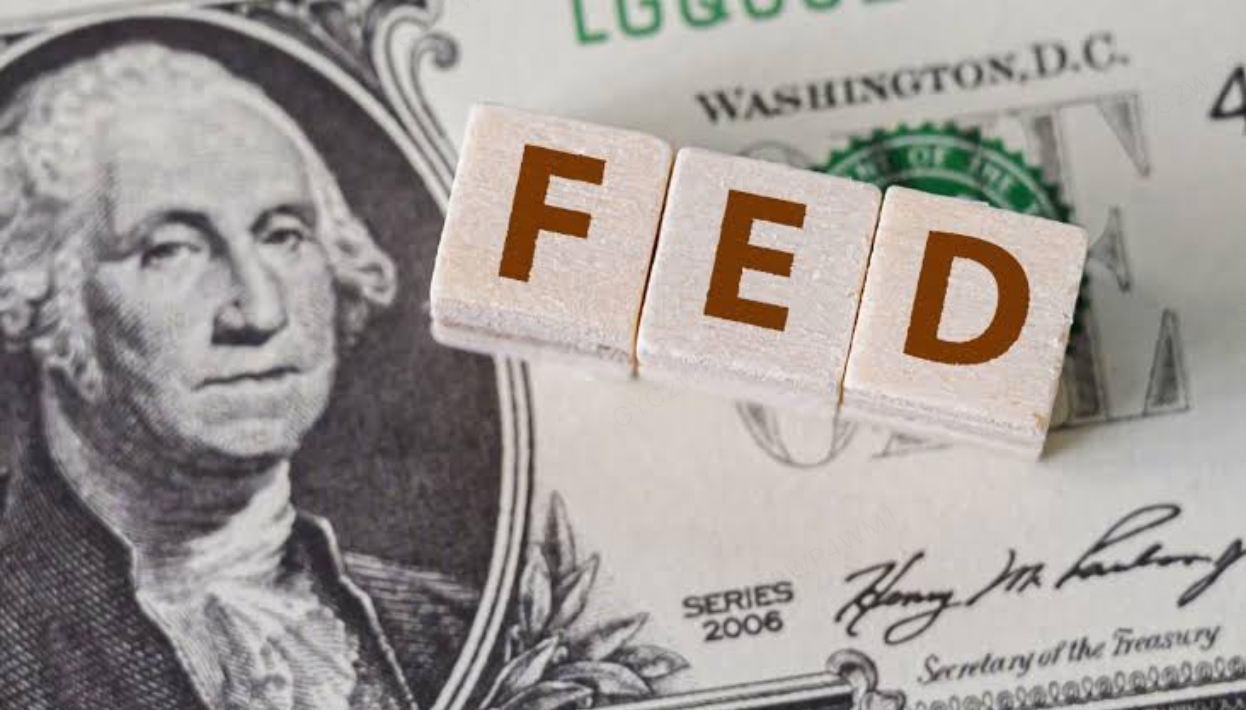
Understanding the Relationship Between Interest Rates and Currency Strength
Interest rates are one of the most influential drivers of currency valuation. In theory, when a country raises its interest rates, it attracts foreign capital seeking higher returns. This increases demand for that country’s currency, strengthening its value. The US dollar has historically benefited from this dynamic, especially during periods when the Federal Reserve maintains higher rates than other central banks.
However, the relationship is not always linear. Currency strength depends not only on absolute interest rates but also on relative interest rate differentials between economies. If other central banks also raise rates, the advantage of holding dollars may diminish.
Moreso, expectations matter just as much as actual policy. Markets often price in future rate moves well in advance. If investors anticipate that rate hikes are temporary or nearing their peak, the dollar may weaken even while rates remain high.
Other macroeconomic factors, such as inflation, economic growth, and geopolitical stability, also play an important role. According to research, currency movements are influenced by a mix of interest rates, trade flows, and global investment demand, not just monetary policy alone.
The Federal Reserve’s Policy Path in 2026
The Federal Reserve entered 2026 in a relatively cautious position. After implementing multiple rate cuts in late 2025, the Fed has largely held rates steady within the 3.5% -- 3.75% range while assessing inflation and labor market trends.
There is significant uncertainty surrounding the Fed’s next move. Some analysts expect gradual rate cuts as inflation moderates, while others warn that persistent inflation could force the Fed to pause or even resume tightening.
Geopolitical factors are also complicating the outlook. Recent global tensions and energy price shocks may delay expected rate cuts, as inflation risks remain elevated.
Why Higher Interest Rates Traditionally Strengthen the Dollar
Higher interest rates increase the yield on US assets such as Treasury bonds, making them more attractive to global investors. This leads to increased capital inflows and, consequently, higher demand for the dollar.
This dynamic has been a key driver of dollar strength in recent years. The US has maintained relatively high real yields compared to other major economies, reinforcing its position as a preferred destination for global capital.
Moreover, during periods of economic uncertainty, investors often seek both safety and yield. The US dollar uniquely offers both, as it is backed by deep financial markets and strong institutional frameworks.
However, this advantage depends on the persistence of high rates. If markets begin to expect rate cuts, capital flows may shift elsewhere, reducing demand for the dollar.
The Impact of Rate Cuts on the Dollar
Normally, the dollar tends to weaken when the Federal Reserve cuts interest rates. Lower rates reduce returns on dollar-denominated assets, making them less attractive to international investors.
But now this dynamic is particularly relevant. Markets are already pricing in potential rate cuts, and this expectation has contributed to a softer outlook for the dollar.
Some forecasts suggest that the dollar could experience a gradual decline throughout the year as rate differentials narrow and global growth improves. However, this weakness is unlikely to be uniform. Periods of volatility and temporary rebounds are expected, especially during times of economic or geopolitical stress.
This shows a key point: rate cuts do not automatically lead to a sustained decline. Instead, they interact with a broader set of factors, including investor sentiment and global economic conditions.
Can Rising Rates in 2026 Still Support the Dollar?
If interest rates were to rise again in 2026, due to persistent inflation or economic resilience, the dollar could regain strength. Higher rates would increase yields and attract capital inflows.
However, the effectiveness of this mechanism depends on context. If inflation is the reason for higher rates, the real return on assets may not improve significantly. In such cases, the dollar may not benefit as much as expected.
Logically, if other central banks also tighten policy, the relative advantage of US rates may diminish. Currency strength is ultimately a comparative measure.
Short-term dollar rallies are still possible. Analysts note that inflation surprises or shifts in risk sentiment could trigger temporary strength, even within a broader weakening trend.
Perspective
A critical dimension often overlooked in dollar analysis is market positioning and capital flow dynamics. Even when interest rates remain elevated, the dollar’s performance can be heavily influenced by how institutional investors, hedge funds, and global asset managers are already positioned. If the market is heavily “long” on the dollar. meaning most participants already expect it to strengthen, there may be limited upside left, as new buyers become scarce.
In such scenarios, even positive catalysts like higher interest rates can lead to muted gains or even reversals as traders take profits. Data from institutions such as Bank for International Settlements and the International Monetary Fund consistently highlight that cross-border capital flows, reserve allocations, and hedging activity play a major role in currency valuation.
Additionally, sovereign wealth funds and central banks periodically rebalance their currency reserves, which can either support or weaken the dollar independent of short-term rate movements. This means that in 2026, even if interest rates remain relatively high, shifts in global portfolio allocation and positioning could limit the dollar’s ability to sustain prolonged strength, reinforcing the idea that currency trends are ultimately driven by a broader ecosystem of financial forces rather than a single macro variable.
The Role of Inflation in Shaping Dollar Strength
Inflation plays a critical role in determining the real value of interest rates. Even if nominal rates are high, elevated inflation can erode real returns, reducing the attractiveness of a currency.
This year, inflation remains a key concern for policymakers. Persistent price pressures, driven by energy costs, supply chain disruptions, and geopolitical tensions, have complicated the Fed’s decision-making process.
If inflation remains elevated, the Fed may be forced to keep rates higher for longer. While this could support the dollar in the short term, it may also signal underlying economic weakness, which could weigh on the currency.
This delicate balance between controlling inflation and supporting growth is one of the defining challenges for monetary policy in 2026.
Global Interest Rate Differentials and Their Importance
One of the most important factors influencing currency strength is the difference between interest rates in different countries. This is known as the interest rate differential.
If US rates are significantly higher than those in Europe or Asia, investors are more likely to hold dollars. However, if other central banks begin to raise rates while the Fed cuts or pauses, this advantage diminishes.
In 2026, there are signs that global rate differentials may narrow. Other economies are stabilizing, and some central banks are maintaining tighter policies relative to the US.
This change could reduce demand for the dollar and contribute to a gradual weakening trend, even if US rates remain relatively high.
The Safe-Haven Status of the US Dollar
Despite fluctuations, the US dollar remains the world’s primary reserve currency. During periods of financial stress, investors often flock to the dollar as a safe haven.
This status provides a strong underlying support for the currency. Even when interest rates are not particularly high, global demand for safety can sustain dollar strength.
Recent analysis highlights that investors continue to trust US assets during times of uncertainty, reinforcing the dollar’s dominant position in global finance
Why the Dollar May Still Weaken Despite High Rates
Several structural factors could weigh on the dollar in 2026, even if interest rates remain elevated.
These include:
-
Slowing US economic growth
-
Rising fiscal deficits
-
Shifting global capital flows
Analysts suggest that much of the dollar’s recent weakness reflects cyclical and policy-driven forces rather than a structural collapse.
Additionally, increased use of local currencies in global trade could reduce reliance on the dollar over time, further limiting its upside potential.
Market Expectations vs. Reality: Pricing in Rate Moves
Financial markets are forward-looking. Investors often price in expected rate changes well before they occur.
Right now, much of the anticipated policy easing has already been reflected in currency markets. This means that the actual impact of rate cuts or hikes may be less dramatic than expected.
If the Fed surprises markets, by delaying cuts or raising rates, the dollar could experience sharp but short-lived movements. Conversely, if policy evolves as expected, the reaction may be muted. This shows the importance of expectations in driving currency movements.
Short-Term Volatility vs. Long-Term Trends
The outlook for the dollar in 2026 is characterized by volatility. Short-term movements are likely to be driven by data releases, central bank decisions, and geopolitical events.
Some forecasts suggest a “two-way” year for the dollar, with periods of weakness followed by temporary rebounds.
Over the longer term, however, the trend may lean toward gradual weakening, particularly if the Fed shifts toward a more accommodative stance. This combination of short-term volatility and long-term uncertainty makes the dollar a complex asset to analyze.
The Role of Geopolitics and Global Risk Sentiment
Geopolitical events can have a significant impact on currency markets. Conflicts, trade tensions, and political instability often drive investors toward safe-haven assets like the US dollar.
Plus now, global tensions have already influenced monetary policy decisions and market sentiment. These factors can create sudden spikes in dollar demand, even in the absence of strong economic fundamentals.
However, geopolitical support is often temporary. Once risks subside, the underlying economic factors, such as interest rates and growth, reassert themselves.
Conclusion: Can the Dollar Hold Up in 2026?
The answer is nuanced. While rising interest rates can provide support for the US dollar, they are not the only factor at play.
In 2026, the dollar faces a complex environment shaped by:
-
Uncertain Federal Reserve policy
-
Persistent inflation risks
-
Narrowing global rate differentials
-
Structural shifts in global finance
Most forecasts suggest a volatile year, with periods of strength driven by risk aversion or policy surprises, but an overall tendency toward mild weakness.
Ultimately, the dollar’s ability to “hold up” will depend less on interest rates alone and more on the broader macroeconomic landscape. For traders and investors, this means focusing not just on Fed decisions, but on the full spectrum of global economic forces shaping currency markets.
FAQ Section
1、Do higher interest rates always strengthen the dollar?
2. Not always. While higher rates can attract capital, other factors like inflation and global rate differentials also matter.
3. Why does the dollar fall when rates are cut?
Because lower rates reduce returns on US assets, making them less attractive to investors.
4. Can the dollar rise even if rates are falling?
Yes, especially during times of global uncertainty when safe-haven demand increases.
5. What is the biggest risk to the dollar in 2026?
A combination of Fed policy uncertainty, inflation, and shifting global capital flows.