

US Reinstates Iran Maritime Blockade: Top 3 Crypto Tokens to Watch Amid the Chaos
2026/07/15 14:05:00
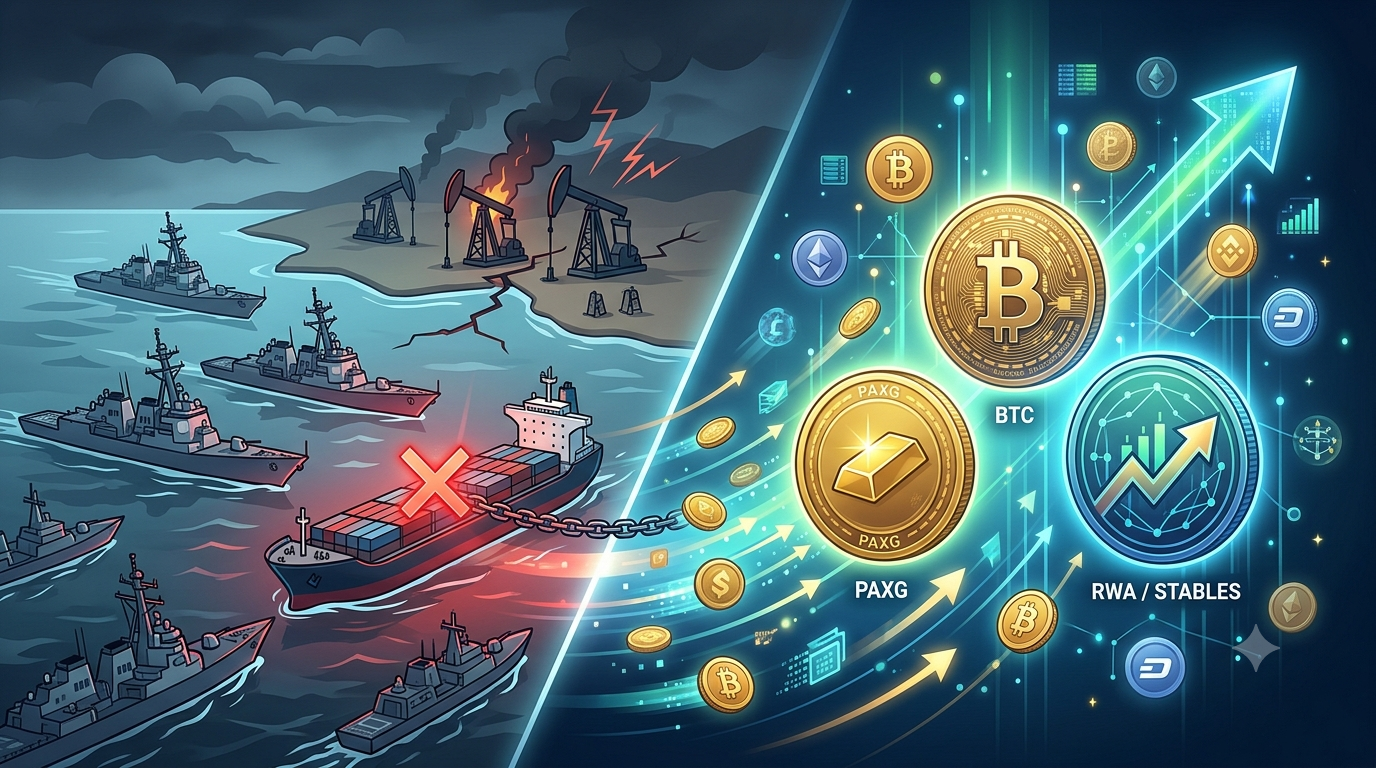
The geopolitical chessboard has just been upended. On July 14, 2026, at precisely 16:00 EDT (20:00 GMT), the United States Central Command (CENTCOM) officially reinstated a comprehensive naval blockade on all Iranian ports, oil terminals, and coastal areas. This drastic move followed a series of intense drone and missile exchanges that shattered the fragile 60-day interim ceasefire signed just weeks prior on June 17.
With U.S. President Donald Trump declaring that airstrikes will continue "until I say it’s enough," and threatening to expand targets to Iran’s civilian power grids and bridges by next week, global markets are bracing for a prolonged crisis.
For the global cryptocurrency community, this is not just another headline. As traditional markets reel under the threat of a massive energy supply shock and escalating liquidity constraints, a profound structural shift is underway. Capital is beginning to flee traditional high-risk instruments, sparking what macro analysts are calling "The Great Migration" into decentralized alternatives.
The Breaking Crisis: Inside the Reinstated Strait of Hormuz Blockade
To understand the sudden rush into digital assets, we must first parse the raw mechanics of the escalating conflict in the Middle East. The situation is moving rapidly, characterized by crumbling diplomatic frameworks and aggressive military posturing.
The Collapse of the June 2026 Truce
The interim ceasefire brokered in mid-June was intended to buy 60 days of diplomatic breathing room to resolve the broader conflict that ignited earlier this year. However, the agreement disintegrated rapidly over the past week. Citing repeated Iranian harassment of commercial vessels and targeted drone strikes on U.S. regional outposts in Kuwait and Bahrain, Washington officially declared the truce null and void. The battle lines have been redrawn with a singular focus: absolute control over the Strait of Hormuz.
Trump’s Airstrike Mandate & Infrastructure Ultimatum
In a volatile interview with Fox News on Tuesday night, President Trump made it clear that the current campaign is designed to force Tehran into total submission. The U.S. military has conducted continuous waves of airstrikes against coastal positions.
More alarmingly, Trump delivered a strict one-week ultimatum: if Iranian officials do not return to the negotiating table immediately, the Pentagon will systematically destroy Iran's domestic infrastructure, starting with municipal power plants and major transit bridges, reserving strategic oil fields for the final phase of escalation.
The 20% Toll U-Turn: How the Policy Shift Settled
In typical high-stakes negotiating fashion, Trump initially sent shockwaves through global logistics by proposing that the U.S. Navy take over the Strait of Hormuz and levy a mandatory 20% protection fee on all transiting cargo.
Following immediate legal backlash from the International Maritime Organization (IMO) and severe warnings regarding the customary international laws of transit passage, the administration executed a swift policy pivot. Trump withdrew the unilateral shipping toll, announcing instead that the U.S. would seek multi-billion-dollar direct investment and security agreements with Gulf Cooperation Council (GCC) allies to offset the costs of patrolling the waterway.
The Oil Shock: Real-Time Transmission to the Crypto Market
Geopolitical crises in the Middle East possess a distinct transmission mechanism that invariably snakes its way into global financial markets, eventually igniting crypto asset volatility.
-
Energy Inflation Resurgence: While CENTCOM has stated that neutral transit heading to non-Iranian ports will not be physically blocked, the mere presence of over 20 U.S. warships and active combat operations has caused maritime insurance premiums to skyrocket. Crude oil prices have already surged to a four-week high. This guarantees a renewed wave of global supply-side inflation, complicating central banks' efforts to manage interest rates.
-
The Margin Debt Feedback Loop: In traditional equities, institutional investors heavily leveraged on margin loans are facing sudden margin calls due to sudden market pullbacks. To cover these traditional liabilities, automated risk-management systems often trigger a broad liquidation of liquid assets. Crypto markets frequently experience brief, sharp correlation drops during these moments as legacy players panic-sell liquid digital assets to defend their equity positions.
-
24/7 Liquidity Settlement: Unlike legacy stock exchanges that close over weekends or observe rigid daily trading hours, the digital asset ecosystem operates continuously. When military developments break in the middle of the night, crypto markets serve as the global financial thermometer, absorbing the shockwaves immediately and offering active traders an instant, frictionless avenue to hedge macro risk.
Market Matrix: Assets Performance in the 2026 Conflict Era
The following matrix highlights the core behavioral differences between major asset classes in the wake of the July 14 blockade:
| Asset Class | Operational Status Post-July 14 | Capital Flow Tendency | Vulnerability to Sanctions & Disruptions |
| Traditional Equities | Bound by exchange hours; vulnerable to overnight gaps. | Aggressive Outflow: High-tech and manufacturing sectors sold off due to rising input costs. | High: Extreme vulnerability to physical supply chain halts and energy price volatility. |
| Crude Oil / Gold | High physical friction; futures markets subject to trading halts. | Speculative Inflow: Strong upward price action, but highly restricted by institutional access points. | High: Prone to direct government requisition, export bans, and shipping route disruptions. |
| Decentralized Assets | Continuous 24/7 operations; algorithmic processing. | Strategic Reallocation: Capital rotating dynamically out of equities into digital stores of value. | Zero Counterparty Risk: Entirely immune to naval blockades and localized maritime sanctions. |
🔥 The Top 3 Crypto Assets to Watch Amid the Chaos
As the macro landscape shifts toward extreme volatility, crypto capital is concentrating heavily within a few distinct asset classes. Here are the top three tokens to watch closely as this crisis unfolds.
Bitcoin (BTC) – The Uncensored Sovereign Store
Bitcoin remains the premier destination for capital fleeing sovereign risk. With the U.S. explicitly threatening the physical destruction of an entire state’s infrastructure, the value proposition of an asset anchored entirely outside the reach of any nation-state becomes blindingly clear.
Bitcoin is acting as a digital safe haven precisely because it cannot be seized by a naval fleet or frozen by a central bank decree. When physical commerce in the Persian Gulf slows down, digital commerce on the blockchain accelerates.
-
Metrics to Watch: Monitor the rate of BTC withdrawals from centralized exchanges into self-custodial wallets. A sharp spike in exchange outflows indicates long-term accumulation by entities preparing for an extended macro storm.
PAX Gold (PAXG) – The Frictionless Shield
While raw digital assets offer high upside, many conservative institutional allocations require a direct tie to hard commodities during wartime. PAX Gold (PAXG) perfectly bridges this gap. As physical gold delivery faces immense logistical friction and widening spot premiums across the Middle East due to canceled flights and restricted shipping lanes, PAXG allows investors to acquire direct ownership of London Good Delivery gold bars instantaneously via the blockchain.
-
Metrics to Watch: Track the PAXG price premium relative to the traditional spot price of gold. If PAXG begins trading at a noticeable premium on major platforms, it indicates a bottleneck in physical acquisition channels and intense chain-bound panic buying.
Tokenized RWA (Real-World Assets) & Premium Yield Stablecoins
The 2026 market environment differs fundamentally from previous cycles due to the maturity of Real-World Asset (RWA) tokenization. Rather than fleeing entirely into volatile assets or yielding zero on traditional stablecoins, institutional funds are migrating heavily into tokenized U.S. Treasury funds (such as BlackRock's BUIDL or USDV). These instruments allow traders to maintain a highly liquid, dollar-denominated cash position that continuously accrues yield, effectively shielding them from equity drawdowns while keeping their capital natively deployed on-chain to capitalize on sudden crypto market dips.
-
Metrics to Watch: Follow the total value locked (TVL) in major RWA tokenization protocols and the utilization rates of stablecoin lending pools across top decentralized finance (DeFi) platforms.
Safe Harbor: Advanced Risk Management for High-Engagement Traders
Navigating a macro black swan event requires clinical discipline. Geopolitical trading environments are unforgiving, and volatility cuts both ways.
Macro Risk Warning: While decentralized networks are completely immune to physical maritime blockades, prolonged international conflicts can trigger unpredictable global internet routing latencies and extreme derivative liquidation cascades. Lower your leverage profile immediately.
-
Amplify Stablecoin Reserves: Do not commit 100% of your capital to volatile assets immediately. Maintain a robust cash buffer of at least 40% in highly liquid, compliant stablecoins. This preserves your optionality, allowing you to buy major market flushes if panic liquidations occur.
-
Isolate Protocol and Front-End Vulnerabilities: Geopolitical flare-ups are frequently accompanied by state-sponsored cyber warfare. Ensure that the DeFi protocols you interact with utilize decentralized front-ends (like IPFS) and robust oracle networks to avoid manipulation during localized network disruptions.
-
Track Regional Premium Spikes: Closely observe localized trading premiums on major East Asian and Middle Eastern exchanges. These localized spikes serve as excellent real-time indicators of hyper-localized retail panic, offering early clues for global market reversals.
Conclusion: The Dawn of a Decentralized Macro Paradigm
The enforcement of the U.S. naval blockade on July 14 is far more than a localized military event; it is an economic turning point that highlights the structural fractures inherent in the legacy financial system. When global trade lanes can be altered by a single television interview or an executive decree, traditional assets carry hidden structural risks that most investors are unequipped to manage.
"The Great Migration" represents the natural evolution of capital seeking safety. As the world watches to see if the ultimatum of next week will translate into a full-scale infrastructure war, the blockchain stands apart—an immutable, always-on parallel financial system providing shelter from the geopolitical storm.
🔍 FAQs
If Trump actually targets Iran's power grids next week, could it impact global crypto mining hash rates?
The impact would be negligible. Following several waves of internal domestic regulatory crackdowns and dynamic shifting of mining operations over the years, Iran accounts for a very minor share of the aggregate global Bitcoin hash rate. The primary impact on crypto will manifest through global energy price spikes rather than direct network disruption.
Why should I hold tokenized gold (PAXG) instead of standard stablecoins during an escalation?
Traditional stablecoins protect your purchasing power against local fiat currency collapses, but they remain highly vulnerable to the systemic inflation driven by soaring crude oil prices. Tokenized gold operates as a dual-layered shield: it captures the raw commodity upside sparked by the energy crisis while retaining the instantaneous transferability of native digital assets.
How do wartime capital controls implemented by governments affect regional crypto premiums?
When sovereign nations impose capital controls to protect their foreign exchange reserves during intense military conflicts, local citizens lose the ability to move fiat out of the country. Consequently, retail capital rushes toward localized crypto off-ramps, rapidly pushing local digital asset prices significantly higher than the global spot average.
Is it safe to participate in high-yield DeFi liquidity pools while a major macro black swan unfolds?
It carries heavily elevated risks. Rapid price swings in underlying crypto tokens can cause sudden liquidations within automated lending protocols. This can trigger high slippage, network congestion, or temporary oracle delays. During intense geopolitical shocks, migrating capital toward audited, single-asset staking vaults or direct tokenized Treasuries is generally safer than complex multi-asset yield farms.
Disclaimer: This content is for informational purposes only and does not constitute investment advice. Cryptocurrency investments carry risk. Please do your own research (DYOR).