

Strait of Hormuz Crisis Pushes Oil Shipping Costs Above $20 a Barrel: What It Means for Oil Prices and Inflation
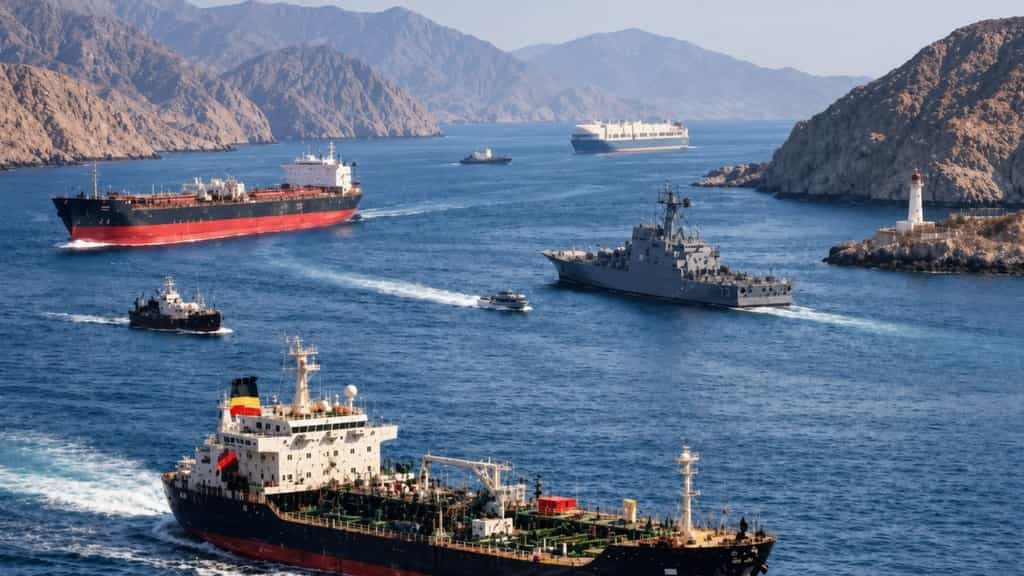
The Strait of Hormuz remains one of the world’s most critical energy chokepoints, handling a substantial share of seaborne crude oil trade. Recent escalations in regional conflict have transformed shipping logistics, driving freight rates to levels not seen in years. Global average crude oil freight costs have risen from roughly $3 per barrel a year earlier to more than $20 per barrel, according to analysis from Goldman Sachs. On key Middle East-Gulf-to-Asia routes, costs have climbed even higher, with International Energy Agency data showing figures exceeding $37 per barrel by mid-October 2026, more than five times pre-conflict levels.
These elevated shipping expenses are embedding higher delivered costs into the oil supply chain. Refiners, particularly in Asia, face compressed margins, while end consumers encounter rising fuel prices that feed into broader inflationary pressures. The core development is clear: war-risk premiums, inefficient ship-to-ship transfers, higher bunker fuel costs, and constrained vessel availability have combined to keep oil prices elevated near $110 per barrel for Brent even as physical export volumes from the Middle East have recovered toward or above pre-war averages in some weeks. The result is a logistics-driven cost floor that limits how far oil prices can fall and sustains pressure on inflation metrics tied to energy and transportation.
War Risk Premiums Drive the Bulk of Freight Rate Increases Across Key Routes
War-related risks concentrated around the Strait of Hormuz account for a major portion of the freight surge. Goldman Sachs estimates that a $7 per barrel premium for vessels crossing or operating near the strait forms the single largest component of the roughly $17 year-over-year rise in global average crude freight rates. This premium reflects insurance costs that have climbed sharply, with war-risk insurance now representing a much larger share of cargo value than the roughly 3 percent common before the conflict. Attacks on commercial vessels have intensified in recent weeks, with multiple sources reporting elevated strike rates that force shipowners and charterers to price in potential delays, damage, or diversions.
The premium is visible in price differentials between loadings inside and outside the high-risk zone. Crude loaded at safer points such as Fujairah in the Gulf of Oman commands different economics than barrels originating deeper in the Persian Gulf that must transit the strait. Freight on the Middle East Gulf-to-China VLCC voyages have reached levels around $24 per barrel in some assessments, while Gulf of Oman loadings sit lower but still elevated. These differentials encourage complex routing and transfer arrangements that themselves add cost. For refiners dependent on Middle Eastern grades, the war-risk layer becomes an unavoidable addition to the delivered price of crude, directly influencing refining margins and the eventual cost of gasoline, diesel, and jet fuel in import-dependent markets.
Ship-to-Ship Transfers Create Vessel Bottlenecks and Raise Effective Costs
To maintain export volumes while reducing exposure inside the strait, market participants have expanded ship-to-ship transfer operations in the Gulf of Oman and nearby waters. These transfers allow cargoes to move from vessels that have exited higher-risk areas onto larger carriers for the longer haul to Asia or other destinations. Goldman Sachs attributes roughly $4 per barrel of the freight increase to this practice. The operational reality is that a meaningful share of the VLCC fleet is now engaged in these shuttle-style movements, which take substantially longer than direct voyages. Round-trip times for vessels involved in transfers have stretched well beyond normal durations, tying up capacity that would otherwise serve other routes.
The efficiency loss compounds across the global tanker market. When a significant portion of large vessels spends extra days waiting for transfers or completing multi-stage voyages, overall tonne-mile demand rises even if total export volumes stabilize. This reduced effective fleet availability pushes rates higher on secondary routes as well, including movements from West Africa or the US Gulf Coast. Refiners and traders absorb these costs or pass them along, contributing to the broader elevation in delivered oil prices. The practice has helped keep Middle East exports near or above pre-war averages in recent periods, yet the logistical inefficiency ensures that the cost of moving each barrel remains structurally higher than in normal conditions.
Bunker Fuel Prices and Inefficient Allocation Add Further Layers to Shipping Expenses
Higher maritime fuel costs contribute another estimated $4 per barrel to the global freight increase. Bunker prices have risen substantially year-over-year, reflecting both elevated crude prices and regional supply dynamics for marine fuels. When vessels burn more expensive fuel on longer or less direct routes, the per-barrel cost of transportation climbs. In parallel, inefficient tanker allocation and increased vessel diversions add roughly $3 per barrel, according to the same analysis. A higher percentage of VLCCs sail in ballast or wait outside the Gulf, reducing the productive utilization of the fleet.
These factors interact. Elevated bunker costs make operators more sensitive to voyage length and speed, while diversions forced by security concerns or waiting for transfers further raise fuel consumption. Restrictions affecting the Iranian tanker fleet contribute an additional estimated $2 per barrel by limiting certain capacity. Together, the components explain why average global crude freight has moved above $20 per barrel. For Asian refiners processing Middle Eastern crude, the cumulative effect can turn refining margins negative when product cracks fail to keep pace, prompting reduced runs or a shift toward alternative crude sources that themselves carry higher transport costs on other long-haul routes.
Middle East Gulf-to-Asia Rates Reach Historic Levels Above $30 Per Barrel
On the critical Middle East Gulf-to-Asia corridor, freight rates have reached historic highs. The International Energy Agency reported that by mid-October the cost of shipping crude on large tankers exceeded $37 per barrel, more than five times pre-war levels. Other assessments place VLCC rates in the mid-to-high $20s per barrel range, still multiples of earlier norms. For a typical VLCC carrying around 2 million barrels, this translates into freight bills measured in tens of millions of dollars per voyage, compared with far lower figures before the conflict.
These rates have direct consequences for refiners. Asian plants that rely heavily on Middle Eastern grades face higher feedstock costs that erode crack spreads. In September, some Asian refining margins for Middle East crude moved into negative territory as delivered costs outpaced product realizations. The pressure is not uniform; lighter or alternative grades from other regions may offer relative relief, yet shipping costs have also risen on those routes. US Gulf Coast to Singapore or Europe voyages, for example, have seen substantial increases, limiting the economic advantage of switching sources. The net result is tighter refining economics and a tendency for higher product prices to reach consumers.
Recovering Export Volumes Mask Persistent Logistics Strain and Cost Pressures
Physical oil flows from the Middle East have recovered notably. Vessel-tracking data indicate that Middle East oil shipments averaged more than 24 million barrels per day in one recent week, exceeding the pre-war average in some measurements. Pipeline expansions and alternative export terminals have allowed a larger share of crude to bypass the strait entirely, rising from roughly 17 percent before the conflict to around 40 percent in certain periods. These adaptations have prevented a more severe physical shortage.
Recovery in volumes does not equate to normalization of costs. The system that supports higher flows, naval escorts, complex transfers, elevated insurance, and risk premiums remains expensive and fragile. Confidence in the strait as a reliable corridor has eroded, with markets treating reopenings as potentially temporary. As long as attacks continue and risk premiums persist, freight rates stay elevated even when barrels move. This dynamic keeps a floor under oil prices and ensures that the logistics premium continues to influence the all-in cost of crude for importers.
Effect on Brent and Regional Crude Differentials Widens Price Spreads
Brent crude has traded near or above $110 per barrel in recent sessions, with some reports noting moves toward $112. The spread between Brent and WTI has widened to around $14 per barrel at times, well above more typical levels near $5. Freight costs and risk premiums contribute to these differentials by raising the delivered cost of Middle Eastern barrels relative to other grades. Physical prices remain supported by low inventories and restocking demand alongside the security premium.
Higher freight effectively raises the cost of seaborne crude relative to landlocked or closer-sourced barrels. This can encourage shifts in refining slates and trade flows, yet the global interconnectedness of the market means the premium still influences overall price levels. Traders and refiners factor the transportation layer into forward curves, supporting elevated longer-dated contracts. The result is a market where even partial recovery in volumes fails to fully unwind the price impact of the shipping crisis.
Asian Refiners Face Margin Compression and Potential Run Cuts
Asian refiners, as major importers of Middle Eastern crude, absorb a disproportionate share of the freight increase. When transport costs push delivered crude prices higher while product cracks soften, margins suffer. Reports indicate that some refining margins for key grades moved negative in September as freight surged. Operators may respond by reducing runs, seeking alternative crude sources, or attempting to pass costs downstream into higher product prices.
The pressure is amplified by the fact that many Asian plants are optimized for specific Middle Eastern grades. Switching to other crudes involves yield and operational adjustments that are not costless. Higher freight on alternative routes further limits relief. In practice, some refiners have turned to delivered-basis purchases from producers, effectively transferring logistics risk and cost. These arrangements can stabilize supply but still embed elevated costs into the system, contributing to higher regional fuel prices that affect industrial activity and consumer expenses.
Diesel and Product Markets Reflect the Shipping Cost Shock Most Acutely
Refined product markets, particularly diesel, have shown acute sensitivity. Diesel prices have reached elevated levels relative to crude in multiple regions, reflecting both refining constraints and the higher cost of moving intermediate and finished products. Freight rates for product tankers have also risen sharply on relevant routes. European diesel futures previously hit records near the equivalent of $210 per barrel in some periods of strain. Low global inventories of key fuels leave limited buffer against further disruptions.
Because diesel underpins freight, agriculture, and industrial activity, elevated prices transmit quickly into broader inflation measures. Higher transportation costs raise the price of moving goods across supply chains. Manufacturing and food production face input cost increases. The shipping crisis therefore amplifies inflationary effects beyond the crude price itself by raising the cost of the refined products that power the real economy.
Consumer Fuel Prices and Inflation Face Sustained Upward Pressure
Higher shipping costs feed into retail fuel prices. In the United States, gasoline and diesel have already reflected the broader oil market strength, with national averages well above pre-conflict levels in earlier reporting periods. Sustained high freight and insurance expenses make it harder for crude price declines, if they occur, to fully translate into lower pump prices. The logistics premium becomes sticky.
Central banks monitoring energy-driven inflation must contend with this layer. Headline inflation readings remain sensitive to fuel components. Persistent elevation in diesel and transportation costs can keep core measures under pressure by raising business operating expenses that eventually appear in goods prices. The shipping cost shock therefore complicates the path toward lower inflation even if geopolitical risk premiums in the crude market eventually ease.
Alternative Sourcing and Pipeline Bypass Offer Partial but Incomplete Relief
Producers have expanded pipeline capacity and use of terminals outside the strait to reduce reliance on the waterway. Saudi Arabia and the United Arab Emirates have increased the share of exports that avoid Hormuz. These measures support volume recovery and provide optionality. However, pipeline capacity is finite, and not all grades or volumes can shift easily. Remaining seaborne trade still faces the elevated freight environment.
Alternative crude sources from the Atlantic Basin or elsewhere carry their own higher transport costs under current market conditions. US Gulf Coast to Asia freight has risen substantially, limiting the economic benefit of switching. The net effect is partial mitigation of physical supply risk without eliminating the cost premium that higher shipping rates impose on the overall market.
How Sustained Shipping Costs Could Support Oil Prices and Fuel Inflation
The combination of war-risk premiums, inefficient logistics, and elevated vessel utilization creates a higher structural cost of moving oil from the Middle East. Even if physical flows stabilize near pre-war levels, the expense of maintaining those flows remains elevated. Analysts note that this dynamic supports higher oil price floors and prolongs energy-related inflation pressures. Goldman Sachs has flagged upside risks to oil price forecasts stemming from persistently high freight rates.
Markets are adjusting expectations for longer-dated contracts accordingly. The logistics crisis has shifted the character of the oil market from a pure supply disruption to one where transportation costs themselves act as a sustained price support. Until confidence in safe transit improves meaningfully and vessel efficiency recovers, shipping costs above $20 per barrel on a global average basis, and substantially higher on key routes, are likely to remain a defining feature of the energy landscape and a contributor to inflation.
Frequently Asked Questions
1. What specific factors account for the rise in global crude freight rates above $20 per barrel?
Goldman Sachs attributes the increase primarily to a roughly $7 per barrel war-risk premium associated with the Strait of Hormuz, about $4 from expanded ship-to-ship transfers, $4 from higher maritime fuel prices, $3 from inefficient tanker allocation and diversions, and $2 from restrictions affecting Iranian tanker capacity. These components together explain the move from approximately $3 per barrel a year earlier to levels above $20.
2. How have Middle East Gulf-to-Asia shipping costs specifically changed?
The International Energy Agency reported that by mid-October the cost of shipping crude from the Middle East Gulf to Asia on large tankers exceeded $37 per barrel, more than five times pre-conflict levels. Other market assessments place VLCC rates in the mid-to-high $20s per barrel range on comparable routes, still representing a multiple of earlier norms and translating into very large absolute freight bills for full cargoes.
3. Are Middle East oil export volumes still restricted?
Export volumes have recovered substantially and in some recent weekly measurements have exceeded pre-war averages. Pipeline bypasses and alternative terminals have helped. The recovery in physical flows, however, occurs under a high-cost logistics regime that includes elevated insurance, risk premiums, and inefficient transfer operations, so volumes alone do not restore pre-crisis cost structures.
4. Why do higher shipping costs matter for inflation?
Elevated freight and insurance expenses raise the delivered cost of crude and refined products. Diesel and other transportation fuels become more expensive, increasing the cost of moving goods throughout the economy. These effects appear in consumer fuel prices and feed into broader inflation measures through higher business operating costs in manufacturing, agriculture, and logistics.
5. How are Asian refiners particularly affected?
Many Asian refiners rely heavily on Middle Eastern crude grades. Higher freight costs increase feedstock expenses and can push refining margins into negative territory when product cracks do not fully compensate. Some operators have reduced runs, sought alternative crudes, or shifted to delivered-basis purchases that still embed the elevated logistics costs.
6. What role do ship-to-ship transfers play in the current market?
Ship-to-ship transfers in the Gulf of Oman and nearby areas allow cargoes to move with reduced time inside the highest-risk zones. The practice supports export volumes but ties up a significant share of the VLCC fleet for longer periods, reducing overall vessel availability and contributing an estimated $4 per barrel to higher global freight rates through efficiency losses.
7. Could oil prices fall significantly if shipping risks ease?
A durable reduction in war-risk premiums and improved vessel efficiency would lower the logistics cost floor. Analysts have noted scenarios in which crude could move lower under more stable conditions. Persistent attacks, eroded confidence in the strait, and structural inefficiencies currently keep a meaningful premium in place that limits how far prices can decline.
8. How do current conditions compare with pre-conflict shipping economics?
Before the conflict, freight often represented a small single-digit percentage of the delivered crude price on major routes. Current levels see freight accounting for substantially higher shares, reaching 25 percent of the FOB crude price from the Middle East Gulf in some assessments, and absolute costs several times higher, fundamentally altering the economics of long-haul oil trade.
Disclaimer