

Russia Crypto Regulation 2026: Bank of Russia Plans Fully Regulated Crypto Market Rollout Before Year-End
Introduction
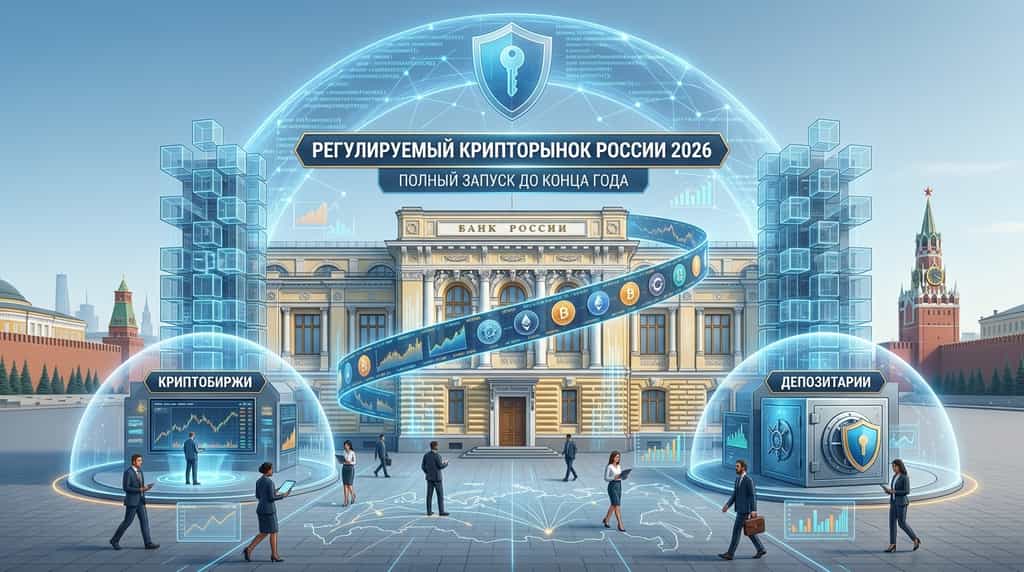
Russia could launch its first fully regulated domestic cryptocurrency market before the end of 2026, marking a historic shift in the nation's financial architecture. Following groundbreaking legislation passed by the State Duma that took effect on September 1, 2026, Russian authorities are transitioning from high-level statutory frameworks to operational infrastructure. Senior central bank leadership has confirmed that secondary implementation rules are being finalized rapidly to create a supervised environment for digital asset trading, custody, and clearing. Under this regime, cryptocurrency operations will move from a fragmented legal gray zone into a tightly controlled institutional perimeter overseen directly by monetary authorities.
When Will Russia’s Regulated Crypto Market Officially Launch?
Russia’s fully regulated cryptocurrency market is scheduled to begin operational trading before the end of 2026. According to official statements delivered on September 21, 2026, by Bank of Russia First Deputy Governor Vladimir Chistyukhin, regulators are working to complete a comprehensive regulatory package comprising 27 implementing acts—consisting of seven primary regulations and 20 secondary measures.
As confirmed by central bank updates, six of the seven primary measures have already been submitted to Russia’s Ministry of Justice for formal registration. The Bank of Russia intends to adopt the remaining secondary regulations by the end of October 2026, clearing the administrative runway for market infrastructure to go live before year-end.
This rapid implementation timetable builds directly upon federal legislation enacted by the State Duma in July 2026. The landmark law officially took effect on September 1, 2026, granting the central bank sweeping authority to supervise digital currencies as legal investment assets. While full transitional compliance for existing crypto service providers extends through July 1, 2027, the primary legal rails for authorized domestic trading exchanges and digital depositories will be active before December 2026.
How Will Crypto Exchanges and Digital Depositories Operate in Russia?
Regulated crypto intermediaries will operate under mandatory central bank licensing and strict capital reserves. The statutory framework establishes two dedicated institutional entities to facilitate digital asset circulation: legal crypto exchanges and specialized digital depositories.
Crypto exchanges will hold exclusive statutory authorization to execute spot purchases and sales of virtual assets within Russian jurisdiction. Complementing these trading venues, newly established digital depositories will act as central custody providers, recording ownership rights, holding private keys, and maintaining settlement infrastructure comparable to traditional financial clearinghouses. The Bank of Russia will supervise these entities through mandatory public registers.
To guarantee institutional durability, digital depositories must fulfill strict liquidity requirements. Official central bank guidelines mandate that digital depositories maintain minimum capital thresholds ranging from 50 million to 250 million rubles, depending on their operational complexity—such as whether they interact with external public blockchains or provide post-trade clearing services. These capital reserves must consist entirely of highly liquid, high-credit-quality financial instruments to protect market participants against custodial defaults.
What Is the Bank of Russia Crypto White List and Investor Limit?
The Bank of Russia is establishing an official "white list" to specify which digital assets are legal for public trading, while establishing tiered annual investment caps for retail participants. Under the regulatory parameters, only cryptocurrencies that meet strict criteria regarding market capitalization, token distribution, and average daily trading volume will receive authorization for organized exchange listing.
Retail market access is structured around investor qualification levels to mitigate systemic consumer risk:
-
Non-Qualified (Retail) Investors: Everyday individuals can legally trade approved white-listed cryptocurrencies provided they pass a mandatory digital financial literacy test. However, total purchases for non-qualified investors are capped at an annual ceiling of 300,000 rubles across each intermediary platform.
-
Qualified (Institutional) Investors: High-net-worth individuals and professional financial entities must also complete central bank competency testing. Once verified, qualified investors are exempt from the 300,000-ruble annual spending limit, allowing unrestricted capital allocation into approved digital assets.
This tiered framework balances retail protection with institutional capital depth, enabling controlled public access to high-liquidity digital currencies while curbing speculative overexposure.
Why Is Russia Imposing a 1% Crypto Risk Limit on Commercial Banks?
Russia is capping bank cryptocurrency exposure at 1% of total capital to protect traditional financial institutions from digital asset volatility. According to official regulatory policy released by the Bank of Russia on September 18, 2026, commercial banks will face strict prudential capital ratios that limit their aggregate exposure to digital assets.
This 1% ceiling is comprehensive in scope. The central bank's formula calculates total risk exposure by combining:
-
Direct balance-sheet holdings of spot cryptocurrencies.
-
Over-the-counter and exchange-traded derivative positions linked to crypto price indexes.
-
Exposure to foreign digital financial assets and tokenized instruments.
Under the supervisory timeline, commercial banks will be required to calculate and submit formal reports detailing their cryptocurrency turnover and prudential risk ratios starting in January 2027. By erecting a strict regulatory firewall between commercial balance sheets and crypto markets, the central bank prevents systemic contagion while allowing banks to act as payment channels for licensed crypto intermediaries.
How Does the 2026 Framework Impact Payments and International Settlements?
The 2026 legal framework strictly forbids domestic cryptocurrency payments while explicitly authorizing digital assets for cross-border international trade. Under Russian federal law, cryptocurrency remains prohibited as a legal tender or payment instrument for purchasing goods, services, or commercial contracts within domestic borders. All internal consumer and B2B transactions inside Russia must continue using the Russian ruble or the official Digital Ruble.
Conversely, the regulatory regime establishes a legal legal pathway for foreign trade settlements. Russian importers and exporters facing international banking restrictions are legally permitted to use cryptocurrencies and digital financial assets (DFAs) to clear cross-border transactions. This dual strategy allows Russian enterprises to utilize decentralized liquid tokens for international trade finance while preserving sovereign currency control over the domestic economy.
What Is the Expected Market Size for Russian Crypto Trading?
Official bank projections indicate that Russian legal crypto exchange volume could top tens of billions of dollars in its inaugural year. According to market forecasts published by Sberbank, Russia's largest financial institution, trading volume on licensed domestic crypto exchanges is projected to reach $46 billion within the first twelve months of full operational rollout.
This massive volume forecast reflects deep existing adoption across the country. Official central bank data reveals that Russian citizens and corporate entities hold an estimated $44 billion in crypto assets across foreign and domestic wallets. Channeling these holdings into licensed local platforms is expected to generate significant institutional liquidity.
Furthermore, domestic sentiment is reinforced by regulatory warnings regarding offshore platforms. Central bank officials explicitly cautioned investors on September 23, 2026, that holders of foreign stablecoins bear full financial loss risks in the event of issuer asset freezes or geopolitical sanctions. This supervisory stance creates strong structural incentives for domestic capital to migrate into locally regulated digital depositories.
Timeline of Russia's Crypto Regulation Rollout
The transition from total prohibition to a state-supervised crypto market followed a structured legislative roadmap between mid-2026 and late 2027.
| Target Date | Milestone | Regulatory Scope / Status |
| July 2026 | Legislation Enacted | State Duma passes landmark digital currency framework bill. |
| September 1, 2026 | Federal Law Takes Effect | Primary legal framework governing crypto circulation becomes active. |
| September 18, 2026 | Prudential Bank Limits | Bank of Russia proposes 1% total capital exposure ceiling for commercial banks. |
| September 21, 2026 | Regulatory Package Submission | First Deputy Governor confirms 6 of 7 primary acts submitted to Ministry of Justice. |
| Late October 2026 | Act Adoption Deadline | Central bank targets final adoption of 20 secondary implementing acts. |
| Q4 2026 (Pre-Year-End) | Market Operational Launch | First regulated crypto exchanges and digital depositories begin live operations. |
| January 2027 | Prudential Reporting Begins | Commercial banks commence mandatory reporting of crypto turnover and risk ratios. |
| July 1, 2027 | Licensing Transition Deadline | Existing crypto operators must obtain full central bank licenses to continue operating. |
Beyond the Headlines: What KuCoin 5.0 Means for You
Market news moves fast — but where you act on it matters just as much. This October, KuCoin launches KuCoin 5.0, transforming KuCoin into a rebuilt platform. Here's what actually changes for you:
-
One account for everything. Older platforms split your money across separate "spot," "margin," and "futures" accounts and expected you to understand why. KuCoin 5.0's unified account removes that entirely — deposit once, and everything is simply there.
-
Stocks, indices, and commodities. KuCoin 5.0 expands beyond crypto into global markets. When crypto chops sideways and equities rally (or the reverse), you rotate in minutes instead of opening a brokerage account and waiting days for fiat rails.
-
Real-world assets (RWA). Tokenized exposure to traditional assets like commodities, right inside your crypto account. One of the fastest-growing segments in global finance is no longer reserved for institutions — you access it from the same balance you trade with.
-
Earn while you learn. Not ready to trade? KCUSD lets your stablecoins earn daily, auto-compounding interest. The lowest-stress way to put your idle deposit to work for 4% yield.
-
An AI assistant in plain language. Ask questions, get market context, understand what you're looking at — built into the platform, no jargon required.
-
An app that doesn't overwhelm. Faster, cleaner, and consistent — intuitive from the first tap, not after a tutorial.
-
Safety you can check, not just trust. A MiCAR-licensed EU entity, Proof of Reserves you can verify yourself, and internationally certified security (SOC 2 Type II, ISO 27001:2022).
Create your account in minutes — and start on the platform built for where crypto is going, not where it's been.
Summary of Russia’s 2026 Crypto Market Transformation
Russia's transition toward a fully regulated cryptocurrency market before the end of 2026 marks a major milestone in global digital asset policy. By deploying a comprehensive framework of 27 implementing acts, the Bank of Russia is establishing legal trading venues, licensed digital depositories, and strict investor protection guardrails. Non-qualified retail investors will gain legal access to high-liquidity white-listed cryptocurrencies under a 300,000-ruble annual cap, while qualified traders and international trade settlements receive broader flexibility.
Simultaneously, monetary authorities are protecting financial stability by locking bank crypto exposure to a strict 1% risk ratio and keeping domestic payments strictly in fiat currency. With major financial institutions projecting $46 billion in first-year legal trading volume, Russia’s legal framework provides a blueprint for integrating decentralized assets into a highly monitored sovereign financial architecture.
Frequently Asked Questions (FAQs)
Can foreign investors open accounts on regulated Russian crypto exchanges?
Foreign investor participation depends on specific exchange licensing rules and anti-money laundering (AML) compliance procedures established by the Bank of Russia. Foreign entities engaging in cross-border trade settlements are permitted under legal frameworks, provided they satisfy institutional customer verification requirements.
Are stablecoins like USDT permitted for domestic retail trading in Russia?
Foreign stablecoins are subject to severe regulatory scrutiny, and central bank officials have warned that investors bear full risk if foreign issuers freeze funds. While white-listed digital assets can be traded on legal venues, regulators emphasize domestic digital financial assets (DFAs) and sovereign rails for stable asset transfers.
What happens to Russian crypto businesses that do not obtain a license by July 2027?
Unlicensed crypto platforms, brokers, and custodians operating within Russian jurisdiction after July 1, 2027, will face legal penalties and operational bans. Authorities require all market participants to complete mandatory registration and capital reserve auditing before the transition deadline expires.
Does Russia tax crypto trading gains under the new legal framework?
Crypto trading activities conducted through legal exchanges and depositories are subject to standard Russian tax obligations. Profits realized from digital asset transactions must be reported as taxable income, with licensed depositories and platforms providing transaction records for official auditing.
How does the Digital Ruble differ from regulated cryptocurrencies in Russia?
The Digital Ruble is a central bank digital currency (CBDC) issued directly by the Bank of Russia that serves as official legal tender for domestic payments. Cryptocurrencies are decentralized digital investment assets managed by market participants, legally barred from domestic goods and services payments, and restricted to trading venues and foreign trade clearing.
Disclaimer: This article is for informational purposes only and does not constitute financial, legal, or investment advice. Always conduct your own research before interacting with digital assets.