

Polygon to Permanently Burn 100 Million POL as Community-Triggered Burns Go Live
Polygon Cuts POL Supply as Network Launches Quarterly Community-Driven Burns
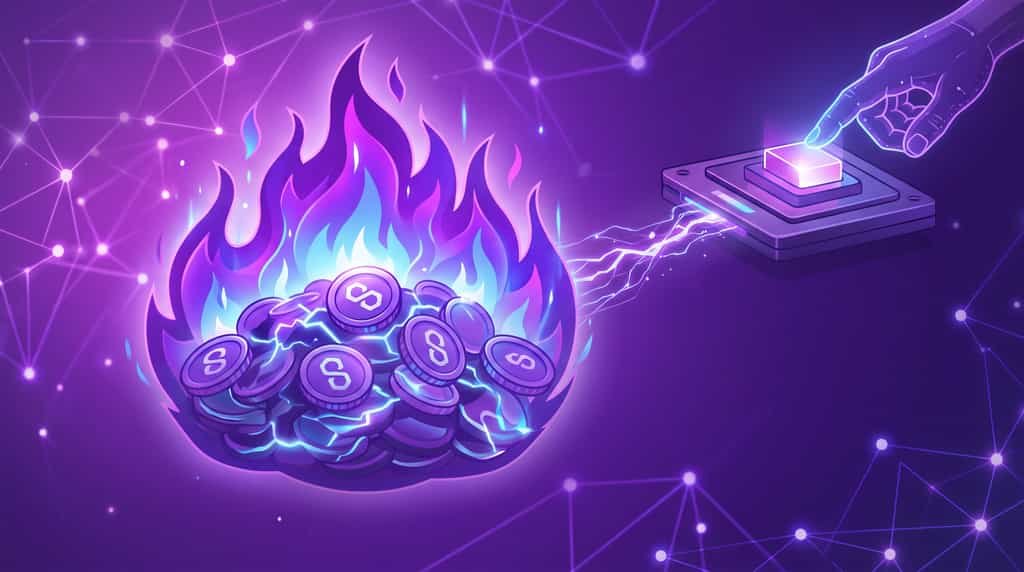
Polygon Foundation CEO Sandeep Nailwal confirmed on September 23, 2026, that the network had permanently removed 100 million POL tokens from circulation in a completed on-chain transaction. The tokens, valued at approximately $10.12 million to $10.22 million at the time based on PolygonScan pricing near $0.102, originated from the network’s base-fee collector rather than any treasury allocation. This marked the first major execution under a newly deployed permissionless burn system that had moved from testnet to mainnet after final Security Council signatures. The collector previously held around 121 million POL accumulated through EIP-1559-style base fees paid on transactions. Nailwal’s announcement on X stated clearly that the burn was complete and permanent, with the tokens transferred from an address associated with the burn process.
Transaction details recorded on PolygonScan show the transfer of exactly 100,000,000 POL in block 94312922 at 02:41:29 PM UTC on September 23. The action reduces practical circulating supply while the raw ERC-20 totalSupply figure continues to reflect tokens at the dead address. POL had already registered as net deflationary since January 2026, according to foundation statements comparing base-fee collections against new minting. Network activity supporting fee accumulation included scaling claims of 5,000 transactions per second and year-to-date 2026 revenue reported at $24.5 million. The completed burn establishes a model in which future quarterly reductions can be initiated by any community participant once sufficient base fees accumulate again.
First Major POL Burn Removes Tokens Accumulated From Network Base Fees
Polygon’s completed burn of 100 million POL drew exclusively from the base-fee collector contract that had accumulated roughly 121 million tokens through ordinary network usage. Under the EIP-1559-style fee structure active on the chain since 2022, each transaction splits fees into a base component directed toward burning and a priority component paid to validators or producers. Over successive months, the base fees built a substantial balance without immediate destruction. Nailwal’s earlier statements in mid-September indicated the collector held approximately 121 million POL, so the 100 million burn represented about 83% of that accumulated pool and left an estimated residual near 21 million POL. The transaction itself was executed successfully on the Polygon mainnet and confirmed publicly with an accompanying image of the on-chain record. Tokens were rendered permanently unusable by transfer to an address from which recovery is impossible, a standard burn technique that eliminates them from any future circulation or staking.
Valuation at the moment of execution hovered near $10.22 million, according to PolygonScan’s internal pricing. This approach differs from foundation-directed treasury burns because the source material is user-paid fees generated by actual network demand. The collector’s prior balance itself reflected months of activity that had already contributed to the token’s reported net-deflationary status since January 2026, when cumulative base fees exceeded new minting. Future residual balances will continue to grow with transaction volume, providing the feedstock for subsequent community-triggered events. The design therefore ties supply reduction directly to measurable network throughput rather than discretionary decisions.
Community Members Can Now Trigger Quarterly POL Burns Without Foundation Intervention
Once the burn contracts received final Security Council signatures and reached mainnet, any participant gained the ability to call the function that permanently destroys eligible accumulated POL. Nailwal described the system as permissionless for the initial 100 million POL removal and for later quarterly cycles. The contracts themselves define the eligible amount and conditions; callers simply initiate the already-authorized transfer to the burn address. This removes the operational requirement for the Polygon Foundation or a designated operator to execute every reduction. After the first burn, the residual collector balance plus newly accrued base fees becomes available for subsequent calls on a roughly quarterly cadence. Community triggering does not allow arbitrary changes to burn size or contract parameters; those remain fixed by the deployed code and governance processes that preceded mainnet activation.
The move lowers coordination friction and increases transparency because any interested party can monitor the collector balance on-chain and act when thresholds are met. Earlier testnet deployment allowed verification of the mechanism before the September 23 mainnet execution. The completed first burn demonstrates that the permissionless path functions as designed. Subsequent quarterly events will depend on the pace of new base-fee inflows, which themselves scale with transaction volume and network usage. This structure aligns incentives between active users who generate fees and holders who benefit from supply contraction. On-chain explorers provide continuous visibility into collector balances, enabling independent verification of readiness for the next call.
POL Supply Dynamics After the 100 Million Token Reduction
The permanent removal of 100 million POL equates to approximately 1% of the original 10 billion token supply established at the MATIC-to-POL migration and roughly 0.93% of the pre-burn total supply near 10.7 billion. Circulating supply estimates after the event settled near 10.61 billion according to market data providers. POL continues to operate under an effective annual emission rate of about 2% following the post-June 2025 schedule, with new tokens allocated to validator incentives and the Community Treasury. A single 1% reduction therefore covers less than half a year’s gross issuance under current parameters. Net supply change over any period depends on whether cumulative base-fee burns exceed the emissions total. Foundation statements indicated that POL had already been net deflationary from January through at least mid-2026, with one comparison showing roughly 107.7 million POL collected in base fees against 105.2 million minted in the first half of the year.
The September burn accelerates that trend by clearing a large existing balance in one transaction. Raw ERC-20 totalSupply figures do not decline by the full burned amount because tokens remain recorded at the dead address, yet practical circulating supply for trading, staking, and transfers is reduced. The long-term direction will be determined by sustained network activity that replenishes the collector and the continued operation of the quarterly community-triggered process. Emissions remain subject to potential future governance adjustment, though the current contract framework caps mint rates. Market capitalization calculations after the burn therefore reflect a modestly smaller circulating base at prevailing prices near $0.10.
Transaction Details Confirm Irreversible On-Chain Execution of the POL Burn
PolygonScan records document a successful transfer of precisely 100,000,000 POL in block 94312922 with a timestamp of September 23, 2026, at 02:41:29 PM UTC. The transaction originated from an address linked to the burn process and terminated at the POL token contract in a manner that renders the tokens permanently inaccessible. Nailwal publicly shared the confirmation along with an image of the explorer record, stating that the 100 million POL had been officially and permanently burned. Valuation embedded in the explorer data placed the transfer near $10.22 million, consistent with a contemporaneous POL price around $0.102. No reversal or recovery path exists once the tokens reach the designated burn destination. The execution followed the earlier testnet phase and the completion of required Security Council signatures that authorized mainnet deployment.
Prior announcements in mid-September had outlined the readiness of 100 million POL for destruction once the contracts went live. The on-chain record provides independent verification that does not rely solely on foundation statements. Block explorers continue to display the transfer as successful, allowing any observer to confirm the permanent removal. Residual collector balances after the event remain visible for monitoring of future accrual. This level of transparency supports the community-triggered model by enabling participants to verify both past execution and readiness for subsequent quarterly calls. The technical finality of the burn aligns with standard practices for irreversible token destruction across multiple networks.
Base-Fee Collector Mechanics Link Network Usage Directly to Supply Reduction
Polygon’s fee model separates each transaction payment into a base fee directed to the collector contract and a priority fee paid to network participants. The base component has accumulated steadily since the EIP-1559-style system activated years earlier, reaching approximately 121 million POL by mid-September 2026. The recent burn cleared the majority of that balance in a single operation. New transactions continue to add to the residual and to future accruals, creating a continuous feedstock for the quarterly community process. Higher transaction throughput therefore generates larger potential burns, directly coupling network demand to supply contraction. Nailwal referenced scaling to 5,000 transactions per second as part of the broader activity supporting fee generation.
Year-to-date revenue of $24.5 million in 2026 further illustrates the commercial scale of usage feeding the collector. Priority fees remain available for validator compensation, preserving incentive alignment for network security while the base portion funds the burn mechanism. The collector contract itself functions as a transparent on-chain reservoir whose balance can be inspected at any time. Once residual or newly accrued amounts meet the conditions encoded in the burn contracts, any community member may initiate the next destruction. This design converts routine user activity into a structural supply sink without requiring separate foundation funding. Sustained or growing transaction volumes will determine the size and frequency of future quarterly reductions. The mechanism therefore embeds deflationary pressure into the everyday economics of using the network.
POL Price Movement Around the Burn Announcement and Confirmation
POL traded near $0.1014 to $0.106 around the confirmation period of September 23–24, 2026, according to multiple market data sources. On the day of the burn confirmation, the token registered a decline of approximately 6.46% while remaining higher by nearly 10% over the preceding seven days. Trading volume expanded notably, with one report citing a 24-hour figure near $228 million, an increase of more than 70%. Market capitalization hovered near $1.07 billion to $1.13 billion depending on the precise circulating supply and price snapshot. Earlier announcements of the planned burn in mid-September coincided with some upward movement, yet the actual execution day occurred amid broader market softness.
Price action alone does not isolate the burn’s impact from wider crypto market conditions. The permanent supply reduction of roughly 0.93% of total supply provides a structural change whose longer-term influence depends on subsequent quarterly burns and overall demand for the token. Current pricing near the $0.10 level reflects the post-burn environment as of late September 2026. Volume spikes around the event indicate heightened attention from market participants monitoring the supply change. Sustained network activity that continues to feed the collector will determine whether additional burns reinforce any scarcity effects. Market data providers continue to track circulating supply adjustments following the permanent removal.
Deflationary Status of POL Since January 2026 Provides Context for the Large Burn
Foundation statements and independent on-chain comparisons indicated that POL operated in a net-deflationary condition from January 2026 onward. One mid-year reference cited approximately 107.7 million POL collected in base fees against 105.2 million newly minted, producing a modest net reduction in circulating supply during that period. Daily burn rates during high-activity intervals reached roughly 1 million POL in some reported windows, an annualized pace capable of exceeding the 2% emission schedule. The September 100 million burn cleared a large accumulated balance that had built during this deflationary phase, converting months of prior fee collection into an immediate supply reduction. Continued net deflation depends on base-fee inflows remaining above ongoing emissions.
The 2% annual issuance continues to allocate new tokens to validators and the Community Treasury, so future quarterly burns must keep pace if the net-deflationary condition is to persist. Network usage metrics, including the reported 5,000 TPS capacity and $24.5 million year-to-date revenue, supply the activity that generates the fees. The community-triggered process ensures that accumulated balances do not remain idle indefinitely. On-chain monitoring of minting versus collector inflows allows independent verification of the net supply trajectory. The completed large burn demonstrates the system’s capacity to act on previously accumulated fees while establishing the template for ongoing reductions. Whether the deflationary state endures will be measured by successive quarterly outcomes relative to the emission schedule.
Role of the Security Council and Contract Deployment Path to Mainnet
The burn contracts underwent testnet deployment before receiving final signatures from Polygon’s Security Council and migrating to mainnet. Nailwal’s mid-September updates confirmed that the contracts were live on testnet and awaited only the remaining approvals. Once those signatures were completed, the permissionless functions became available for the initial 100 million POL call and subsequent quarterly operations. The Security Council process provides a governance checkpoint that verifies the code and parameters before irreversible mainnet activation. After approval, execution authority shifts to any community participant rather than remaining with the foundation.
This sequence ensured that the mechanism was audited and authorized before the September 23 transaction. The completed burn validates that the full path from testnet through council signatures to mainnet execution operated as described. Future quarterly burns will rely on the same deployed contracts without requiring repeated council intervention for each call. Transparency around the approval steps and the subsequent on-chain record supports confidence in the process. Residual collector balances remain under the same contractual rules for later community initiation. The structured deployment path balances security review with eventual decentralization of the burn trigger itself.
Network Activity Metrics Supporting Fee Accumulation and Future Burns
Polygon reported scaling to 5,000 transactions per second and year-to-date 2026 revenue of $24.5 million as indicators of the activity generating base fees. These metrics provide the economic foundation for the collector balances that feed the burn system. Higher throughput increases the rate at which base fees accumulate, directly expanding the pool available for quarterly community-triggered reductions. Revenue figures place the network’s commercial scale in context relative to peer chains during the same period. Transaction volume during high-activity windows previously supported daily base-fee collections near 1 million POL in some reported intervals. Continued or expanded usage will determine the size of residual and new accruals after the September burn.
The collector’s transparency allows real-time observation of how activity translates into potential future burns. Validator incentives and priority fees remain separate, preserving security economics while the base component drives supply reduction. The linkage between measurable network demand and the burn mechanism creates a feedback loop in which greater adoption strengthens the deflationary process. On-chain data and foundation reports together supply the activity baseline against which future quarterly outcomes can be assessed. Sustained metrics at or above recent levels would support ongoing collector replenishment and the viability of the community-triggered schedule.
Future Supply Outlook Depends on Sustained Fee Generation Versus Emissions
POL’s long-term circulating supply will be shaped by the interaction between the 2% annual emission schedule and the volume of base fees routed through the collector for community-triggered burns. The completed 100 million POL removal clears a large prior accumulation and establishes the operational template. Residual balances plus new accruals will determine the scale of the next quarterly events. If network activity maintains or increases the fee generation rates observed earlier in 2026, cumulative burns can continue to offset or exceed new minting. Conversely, any sustained decline in throughput would reduce collector inflows and narrow the margin for net deflation.
Emissions continue to fund validators and the Community Treasury under current parameters, with governance retaining the ability to adjust rates within contractual limits. Circulating supply near 10.61 billion after the burn provides the baseline for subsequent calculations. Market capitalization and scarcity perceptions will reflect the evolving balance between these two forces. Independent on-chain tracking of minting, collector balances, and executed burns supplies the data required for ongoing evaluation. The community-triggered system ensures that accumulated fees are not left idle, converting them into permanent reductions repeatedly. The ultimate trajectory remains an empirical outcome of network demand relative to the fixed emission framework.
Market and Ecosystem Context Surrounding the Completed POL Burn
The burn occurred against a backdrop of POL trading near $0.10 with elevated volume and a network reporting both high throughput capacity and $24.5 million in 2026 revenue. Broader crypto market conditions on the confirmation day included overall softness, yet the token retained weekly gains near 10%. The permanent supply adjustment of roughly 0.93% of total supply constitutes a verifiable structural change independent of short-term price fluctuations. Ecosystem activity that generates the base fees, payments, trading, and consumer applications directly sustains the collector that feeds future burns.
The permissionless design distributes the operational role of initiating reductions across the community. On-chain finality of the September 23 transaction provides a clear reference point for subsequent analysis of net supply trends. Continued monitoring of collector balances, quarterly call activity, and emission volumes will determine whether the deflationary pattern observed since January 2026 extends further. The completed event and the activated mechanism together form a concrete update to POL’s tokenomics grounded in verified fee accumulation and public execution.
🔥 Beyond the Headlines: What KuCoin 5.0 Means for You
Market news moves fast — but where you act on it matters just as much. This October, KuCoin launches KuCoin 5.0, transforming KuCoin into a rebuilt platform. Here's what actually changes for you:
-
One account for everything. Older platforms split your money across separate "spot," "margin," and "futures" accounts and expected you to understand why. KuCoin 5.0's unified account removes that entirely — deposit once, and everything is simply there (only available to VIPs for now).
-
Stocks, indices, and commodities. KuCoin 5.0 expands beyond crypto into global markets. When crypto chops sideways and equities rally (or the reverse), you rotate in minutes instead of opening a brokerage account and waiting days for fiat rails.
-
Real-world assets (RWA). Tokenized exposure to traditional assets like commodities, right inside your crypto account. One of the fastest-growing segments in global finance is no longer reserved for institutions — you access it from the same balance you trade with.
-
Earn while you learn. Not ready to trade? KCUSD lets your stablecoins earn daily, auto-compounding interest. The lowest-stress way to put your idle deposit to work for 4% yield.
-
An AI assistant in plain language. Ask questions, get market context, understand what you're looking at — built into the platform, no jargon required.
-
An app that doesn't overwhelm. Faster, cleaner, and consistent — intuitive from the first tap, not after a tutorial.
-
Safety you can check, not just trust. A MiCAR-licensed EU entity, Proof of Reserves you can verify yourself, and internationally certified security (SOC 2 Type II, ISO 27001:2022).
Create your account in minutes — and start on the platform built for where crypto is going, not where it's been.
FAQs
What exactly was burned and when did the transaction occur?
On September 23, 2026, exactly 100 million POL tokens were permanently removed from circulation in a successful on-chain transaction recorded in block 94312922 at 02:41:29 PM UTC. The tokens came from the base-fee collector that previously held approximately 121 million POL. Valuation at the time of the transfer stood near $10.12 million to $10.22 million. Sandeep Nailwal, CEO of the Polygon Foundation, confirmed the completion publicly, stating that the burn was official and permanent.
How does the community-triggered burn mechanism work going forward?
After the contracts received final Security Council signatures and reached mainnet, any community member can call the burn function when eligible balances have accumulated in the collector. The first such call executed the 100 million POL removal. Subsequent burns are expected every quarter as new base fees accrue. Callers do not set the amount or alter the contract rules; they simply initiate the pre-authorized destruction of the available eligible tokens.
Where did the 100 million POL tokens originate?
The tokens were accumulated entirely through Polygon’s base-fee system. Under the EIP-1559-style structure, a portion of every transaction fee is directed to the collector contract rather than paid immediately to validators. Over time, this produced a balance of roughly 121 million POL. The 100 million burn cleared the majority of that pool. No foundation treasury or operational reserves were used.
Does the burn reduce the official totalSupply figure on the POL contract?
The practical circulating supply available for use declines by the full 100 million tokens because they are sent to an unusable address. The raw ERC-20 totalSupply() value may continue to reflect the tokens at the dead address, so explorer figures for total supply do not always decrease by the burned amount. Market data providers typically adjust circulating supply estimates to account for the permanent removal.
How does this burn relate to POL’s reported net-deflationary status since January 2026?
Foundation and on-chain comparisons indicated that base-fee collections exceeded new minting during the first half of 2026, producing a modest net reduction in circulating supply. The large discrete burn converts a substantial portion of that prior accumulation into an immediate permanent reduction. Continued net deflation will depend on whether future quarterly burns plus residual fee destruction keep pace with the approximately 2% annual emission schedule.
Disclaimer: This content is for informational purposes only and does not constitute investment advice. Cryptocurrency investments carry risk. Please do your own research (DYOR).