

AI Stock God Leopold Aschenbrenner Faces Another Setback as SanDisk and Micron Stocks Plunge
Introduction
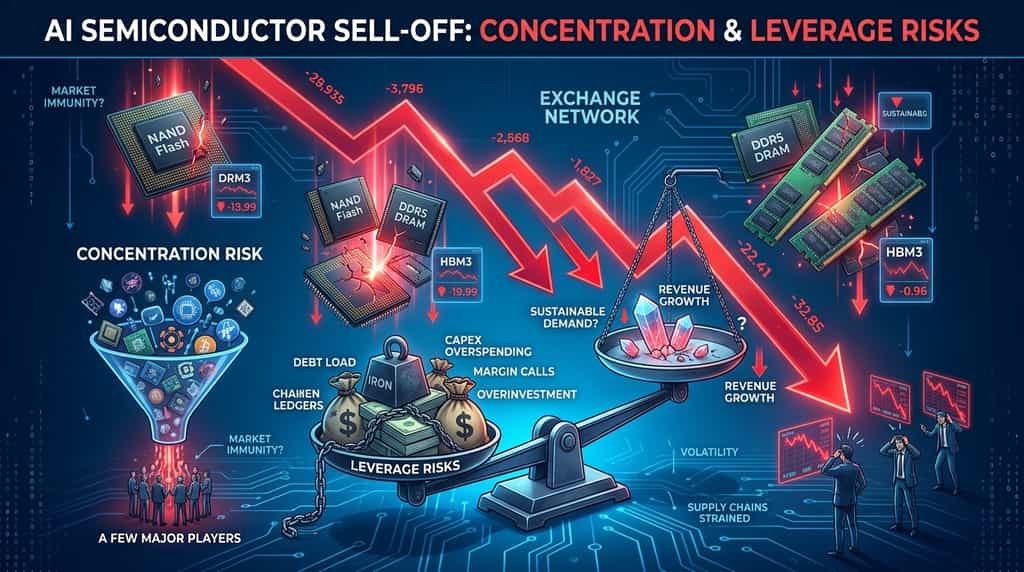
Leopold Aschenbrenner, the investor behind Situational Awareness LP, has attracted attention for his concentrated exposure to companies associated with AI infrastructure. However, a sharp November 5 sell-off in semiconductor and memory stocks has raised questions about the risks embedded in this investment strategy. SanDisk fell 22.26% during the session, while Micron declined 17.46%, adding to substantial losses from their earlier highs. Reports have also described Aschenbrenner's fund as liquidated, although publicly available regulatory filings do not independently confirm that the fund has been closed or that its positions have been forcibly sold.
The episode highlights a broader issue in AI investing: even companies benefiting from strong infrastructure demand can experience severe share-price declines when expectations, valuation, concentration, and financing risks shift simultaneously.
Key Takeaways
-
SanDisk and Micron experienced substantial declines on November 5, 2026, falling 22.26% and 17.46%, respectively, according to historical market data.
-
Situational Awareness LP's second-quarter 13F filing showed approximately $5.67 billion in SanDisk holdings and $5.57 billion in Micron holdings as of June 30, 2026.
-
The two positions represented approximately 55.5% of the fund's reported 13F portfolio, indicating significant concentration in memory-related stocks.
-
Public 13F disclosures do not establish whether the fund used fourfold leverage or whether it was liquidated.
-
The sell-off illustrates the risks of combining concentrated positions, elevated valuations, and leverage in a cyclical industry.
Who Is Leopold Aschenbrenner and What Is Situational Awareness LP?
Leopold Aschenbrenner is an investor and the founder of Situational Awareness LP, an investment firm associated with a strong focus on artificial intelligence and the infrastructure required to support its expansion.
His investment approach has attracted attention because it emphasizes companies positioned within the AI infrastructure supply chain. Rather than focusing exclusively on software developers or companies commercializing AI applications, the portfolio has included businesses involved in memory, semiconductor manufacturing, data-center infrastructure, and computing capacity.
This positioning reflects a particular investment thesis: the expansion of AI models and applications requires substantial investment in physical infrastructure. Data centers need advanced processors, high-bandwidth memory, storage devices, networking equipment, and reliable electricity. Companies supplying these components may benefit when demand for computing capacity increases.
However, a concentrated investment strategy also creates substantial exposure to a relatively narrow group of market drivers. If expectations for AI infrastructure spending weaken, or investors reassess the valuations of companies supplying that infrastructure, several holdings may decline simultaneously.
The distinction between a compelling industry thesis and a successful investment portfolio is important. A company can operate in a growing market while its stock price falls because investors have already priced in a significant portion of its expected future growth.
How Much Did Situational Awareness LP Hold in SanDisk and Micron?
Situational Awareness LP's second-quarter 2026 Form 13F filing shows that SanDisk and Micron were its two largest reported equity positions.
According to the fund's filing with the U.S. Securities and Exchange Commission (SEC), the portfolio included approximately $5.67 billion in SanDisk shares and $5.57 billion in Micron shares as of June 30, 2026.
The figures indicate that these two memory-related companies accounted for a substantial share of the fund's disclosed equity holdings.
| Holding | Reported Value | Approximate Portfolio Weight |
| SanDisk (SNDK) | $5.67 billion | 28.00% |
| Micron Technology (MU) | $5.57 billion | 27.50% |
| Combined | $11.24 billion | 55.50% |
Source: Situational Awareness LP's SEC Form 13F filing for the quarter ended June 30, 2026. Portfolio weights are based on reported 13F holdings and should not be interpreted as percentages of the fund's total net asset value.
The figures reveal two important characteristics of the portfolio.
First, its exposure was highly concentrated. More than half of its reported 13F holdings were allocated to two companies operating in the memory and storage market. This meant that developments affecting semiconductor demand, memory pricing, and AI infrastructure investment could have an outsized impact on the disclosed portfolio.
Second, the positions were closely related from a sector perspective. SanDisk focuses on flash storage products, including NAND-based solutions, while Micron supplies memory and storage products such as DRAM, NAND, and high-bandwidth memory. Although their products and business models differ, both companies are exposed to the broader semiconductor cycle and demand for data infrastructure.
There are also important limitations to what these figures establish. Form 13F reports certain securities held by institutional investment managers. It is a periodic disclosure, not a real-time account statement. It does not provide a complete picture of every asset, short position, derivative, borrowing arrangement, or financing obligation held by a fund.
Consequently, the reported $11.24 billion in combined SanDisk and Micron positions should not be treated as proof that the fund had $11.24 billion in net exposure or that it used a particular amount of leverage.
How Much Did SanDisk, Micron, and Other AI Stocks Fall on November 5?
SanDisk and Micron experienced particularly severe losses on November 5, 2026, as selling pressure spread across semiconductor and AI infrastructure stocks.
Historical market data show the following closing prices:
| Company | November 5 Closing Price | Daily Change |
| SanDisk (SNDK) | $806.43 | -22.26% |
| Micron (MU) | $656.39 | -17.46% |
| CoreWeave (CRWV) | Approximately $43.63 | -9.89% |
The declines were not limited to one company. CoreWeave, a cloud infrastructure provider closely associated with AI computing demand, also fell during the session. The simultaneous weakness across memory manufacturers and data-center infrastructure companies suggests that investors were reassessing exposure to a broader segment of the AI investment theme.
The distinction between daily losses and cumulative drawdowns is equally important. A stock falling 22% in one session does not mean it has lost 22% of its value over a longer period. Conversely, a company that has already declined substantially from a previous high may experience another sharp drop during a market-wide repricing.
Some circulating reports have also listed reference prices of $2,268 for SanDisk and $1,153 for Micron, comparing them with lower prices around the November sell-off. However, these figures have not been independently established as the fund's verified weighted-average acquisition costs. They should not be presented as confirmed purchase prices or used to calculate the fund's actual investment losses.
The same distinction applies to reported losses in other holdings. A stock's decline from a reference price does not automatically establish the amount lost by a particular investor. The actual result depends on acquisition dates, position sizes, transactions, hedges, financing costs, and whether the positions were still held when the prices changed.
What Does the Sell-Off Reveal About AI Stock Valuations?
The November 5 declines illustrate how quickly market expectations can change when a popular investment theme becomes crowded or investors question the sustainability of its growth assumptions. The AI infrastructure investment thesis involves several interconnected layers:
-
Semiconductors: Processors and accelerators provide the computing capacity required for AI workloads.
-
Memory and storage: DRAM, high-bandwidth memory, and NAND products support data processing and storage.
-
Data-center infrastructure: Cloud computing providers and specialized operators supply the facilities and computing capacity.
-
Power and networking: Electricity, cooling, and high-speed connectivity support the operation of large-scale computing systems.
These segments are related, but they do not have identical economics or risk profiles. A company supplying memory products may be affected by semiconductor pricing cycles, while a data-center operator may face financing costs, capital expenditure requirements, and customer concentration.
Consequently, a broad AI investment narrative should not be treated as a single uniform trade. The financial performance, balance sheet, valuation, and demand exposure of each company need to be assessed separately.
The sell-off also demonstrates why a strong long-term industry outlook does not eliminate short-term valuation risk. Even if AI adoption continues, individual companies may experience earnings volatility, margin pressure, financing challenges, or periods in which their share prices decline faster than their underlying businesses.
Conclusion
The November 5 sell-off in SanDisk, Micron, and other AI-related stocks has brought renewed attention to the risks of concentrated exposure to AI infrastructure companies. Situational Awareness LP's second-quarter 13F filing showed that SanDisk and Micron together represented approximately 55.5% of its reported equity holdings, making the two companies particularly important to the disclosed portfolio.
However, the available evidence does not independently confirm reports that the fund was formally liquidated or that it used fourfold leverage. Those claims should remain separate from the verifiable facts in its regulatory filing and the subsequent market-price declines.
The broader lesson is that an expanding industry does not automatically translate into steadily rising share prices. Memory demand, semiconductor supply cycles, AI infrastructure spending, company valuations, and financing conditions all influence investment outcomes. Concentrated positions can magnify exposure to these factors, while leverage can accelerate losses when markets move against an investor. The recent declines therefore highlight the importance of distinguishing a compelling technology trend from the financial risks associated with investing in companies connected to it.
FAQs
-
Who is Leopold Aschenbrenner?
Leopold Aschenbrenner is an investor associated with Situational Awareness LP, an investment firm known for its concentrated exposure to companies involved in AI infrastructure.
-
How much did Situational Awareness LP hold in SanDisk and Micron?
Its second-quarter 2026 Form 13F filing reported approximately $5.67 billion in SanDisk shares and $5.57 billion in Micron shares as of June 30, 2026.
-
Why can AI memory stocks fall despite strong earnings?
AI memory stocks can decline even when companies report strong earnings because share prices reflect expectations about future growth. Changes in valuation, supply conditions, customer demand, capital expenditure expectations, and broader market sentiment can all affect stock prices.
Disclaimer
This general market information, possibly from third-party, commercial, or sponsored sources, is provided for reference and educational purposes only and does not constitute financial or investment advice, an offer, solicitation, or guarantee. We disclaim liability for its accuracy, completeness, reliability, and any resulting losses. Investments/trading are risky; past performance doesn’t guarantee future results. Users should research, judge prudently, and take full responsibility. For further details, please consult KuCoin’s Terms of Use and Risk Disclosure.