

What is Ice Open Network (ION), and how do I buy it?
Ice Open Network (ION) stands out as a fresh approach to building a truly decentralized online space. Instead of relying on big tech companies that control data and content, ION aims to hand power back to everyday users through blockchain technology.
In this article, you’ll get a clear picture of what ION actually is, where it came from, what problems it tries to solve, and its main features. We’ll also break down its tokenomics in simple terms and walk through exactly how to buy the native token, ION, on KuCoin. By the end, you’ll have a solid understanding of whether this project fits into the bigger picture of Web3 and how you might get involved.
What Is Ice Open Network (ION)
Ice Open Network ION tokens started life as a way to improve on an existing blockchain called TON, which itself grew out of an earlier Telegram-related project that ran into regulatory hurdles. A dedicated team saw potential in TON’s fast, scalable design but felt it could go further by adding practical tools for real-world use. They forked the technology and built ION on top of it, focusing on making blockchain accessible to millions rather than just tech enthusiasts.
The project moved through an early mining phase in which anyone with a phone could participate, helping build a broad community from day one. Over time, the team shifted its focus to building a full ecosystem that includes its own Layer 1 blockchain, alongside tools deployed on chains like BNB. This hybrid setup enables ION tokens to offer high-speed transactions while remaining connected to other popular networks.
ION tokens aim to address the issues plaguing today’s internet: centralized control over personal data, censorship, and a lack of real ownership. People today often hand their photos, posts, and identities to corporations that can change rules overnight or sell information without clear consent. ION’s vision flips that script by giving individuals full control through decentralized identity, social tools, content delivery, and storage, all secured by blockchain.
The team behind it believes the internet should reward genuine participation and authentic content instead of algorithm-driven engagement. By combining strong infrastructure with user-friendly features, ION positions itself as a bridge between today’s social platforms and a future where users truly own their digital lives. It’s not just another Layer 1 chain chasing speed records; it’s an attempt to make decentralization feel normal for regular people.
Key innovations are organized into four main building blocks. First, ION ID supports decentralized identities that let users prove their identity without handing it over to third parties. Next, ION Connect creates a censorship-resistant social network where posts and interactions stay under user control. ION Liberty acts as a decentralized proxy and content delivery system to keep information flowing freely, even in restricted regions. Finally, ION Vault provides secure, private storage that rivals traditional cloud services but without the privacy risks.
Together, these pieces form a complete stack designed for billions of users. The network can handle millions of transactions per second thanks to its multi-threaded, multi-shard architecture, and it includes extras like a no-code drag-and-drop tool for building apps. This setup makes it easier for creators, brands, and communities to launch tokenized spaces that turn engagement into real economic value.
TLDR;
-
Ice Open Network (ION) is a high-performance Layer 1 blockchain designed for mass adoption, capable of processing millions of transactions per second with near-zero fees.
-
It builds on and improves TON's scalable architecture, adding real-world tools: decentralized identity (ION ID), censorship-resistant social networking (ION Connect), privacy-focused proxy/CDN (ION Liberty), and quantum-resistant storage (ION Vault).
-
The ecosystem empowers users with full control over their data, identity, and content while rewarding creators, consumers, and node operators through tokenized communities, tipping, and activity-based earnings.
-
Native token ION tokens drive governance, staking rewards, fees, and on-chain economies; total supply is capped at ~21.15 billion with built-in deflation via tipping burns.
-
After a smooth migration from its earlier form, ION is live, listed on KuCoin, and accessible via the Online+ app for social, wallet, and token-launch features.
Project Features
Scalable Layer 1 Blockchain
At the foundation lies ION's Layer 1 blockchain, engineered for real-world scale. Drawing from the multi-threaded, multi-shard architecture inherited and refined from its TON origins, the network handles millions of transactions per second while keeping fees negligible. This isn't just a theoretical claim; it's designed so that everyday actions like posting, messaging, tipping, or launching a small token don't compete with complex financial trades for block space.
Horizontal scaling means the system grows stronger as more nodes join, distributing load naturally rather than bottlenecking under pressure. For users, this translates to smooth experiences even during peak activity, whether chatting in an encrypted group or trading community tokens. The result is infrastructure that feels more like using a modern social app than wrestling with typical blockchain delays and costs.
No-Code dApp Builder
One of the most accessible innovations is the no-code drag-and-drop builder integrated into the ecosystem. Traditional dApp development often requires deep coding knowledge, limiting participation. ION tokens remove that gate by letting anyone, creators, small businesses, and hobbyists assemble decentralized applications using pre-built widgets and templates.
You select components like chat modules, token displays, or profile feeds, customize colors, layouts, and text styles, then preview changes live. No programming needed. Once complete, the app deploys directly within the ION tokens framework, inheriting the network's speed, security, and cross-chain compatibility.
This tool democratizes creation, enabling rapid experimentation: a community organizer might build a simple voting dApp in under an hour, or a content creator could craft a branded hub that ties social posts to on-chain rewards. The builder includes community-curated theme packs, API integrations for external data, and localization across dozens of languages, making it practical for global use.
Tokenized Communities
Tokenized Communities represent ION's push to turn social followings into real economies. Inside the Online+ app, the main user-facing hub, anyone can launch a token linked to their profile or specific content with a few taps. No complex launches or external tools required. When someone buys, sells, or interacts with that token, value flows directly back to the creator through on-chain activity. Followers gain ownership stakes, participate in governance-like decisions within the group, or earn from engagement.
Features like built-in tipping, buying/selling interfaces, and market cap tracking appear naturally in feeds and profiles. The PUMPit Chrome extension extends this further: users spot an interesting post on X, turn it into a token instantly, and bridge that momentum back into Online+. This creates fluid movement between traditional social platforms and blockchain, where engagement becomes measurable economic value rather than fleeting likes. Creators benefit from transparent revenue without platform cuts, while communities form around shared incentives rather than algorithms.
Decentralized Identity System (ION ID)
Privacy and control sit at the core of ION ID. Unlike centralized logins that demand full disclosure, this system lets users store personal data locally on their device, encrypted with quantum-resistant algorithms. You decide exactly what to share and when using zero-knowledge proofs to verify attributes (for example, proving you're over 18 without showing your birthdate). Assurance levels range from basic pseudonyms for casual peer-to-peer chats to high-tier verified identities suitable for real-world actions like signing contracts or transferring property.
Recovery options include multi-party computation for securely splitting keys, social recovery via trusted contacts, or biometric methods tied to device hardware. Interoperability follows W3C standards, so ION IDs work across ecosystems, and verifiable credentials allow trusted issuance of qualifications or documents. This setup supports practical uses while keeping sensitive information off-chain and under user control, bridging blockchain convenience with everyday reliability.
Censorship-Resistant Social Layer (ION Connect)
ION tokens form the social backbone, designed to resist censorship and protect privacy at every level. Posts, stories, videos, and long-form content live on decentralized nodes run by the community, with data redundantly stored across multiple points to prevent loss or takedowns. Garlic routing, bundling, and layering messages with multiple encryption rounds hides origins and contents, making traffic analysis extremely difficult.
End-to-end encrypted chats ensure only intended recipients read messages, with no metadata leaks in private groups. Nodes scale to support millions of users each, using in-memory databases for fast lookups, Byzantine fault tolerance, and Merkle trees to maintain integrity. If a node goes offline, standby nodes activate automatically, keeping access uninterrupted. Content moderation happens through decentralized consensus rather than corporate rules, balancing free expression with community safety.
The layer integrates tightly with ION ID for authentication, ION Vault for media storage, and ION Liberty for proxy delivery, creating a full social experience where users own their voice and connections.
These five pillars don't operate in isolation; they form a unified stack. The fast blockchain powers everything underneath; the no-code builder lets people extend the ecosystem quickly; tokenized communities add economic layers to social activity; ION ID provides trusted entry points; and ION Connect delivers the daily interaction surface.
Together, they eliminate the need for fragmented apps or services, offering a cohesive environment where identity, social life, content, and value creation happen on-chain in a natural, user-first way. This interconnected design aims to make decentralization practical and appealing for mainstream adoption, not just crypto natives.
Tokenomics of ION tokens
The tokenomics of ION follow a clear, community-focused design that encourages long-term holding and active use while keeping the network secure and growing. Here’s how it breaks down:
-
Total Supply: Fixed at 21,150,537,435.26 ION. This cap helps create scarcity over time.
-
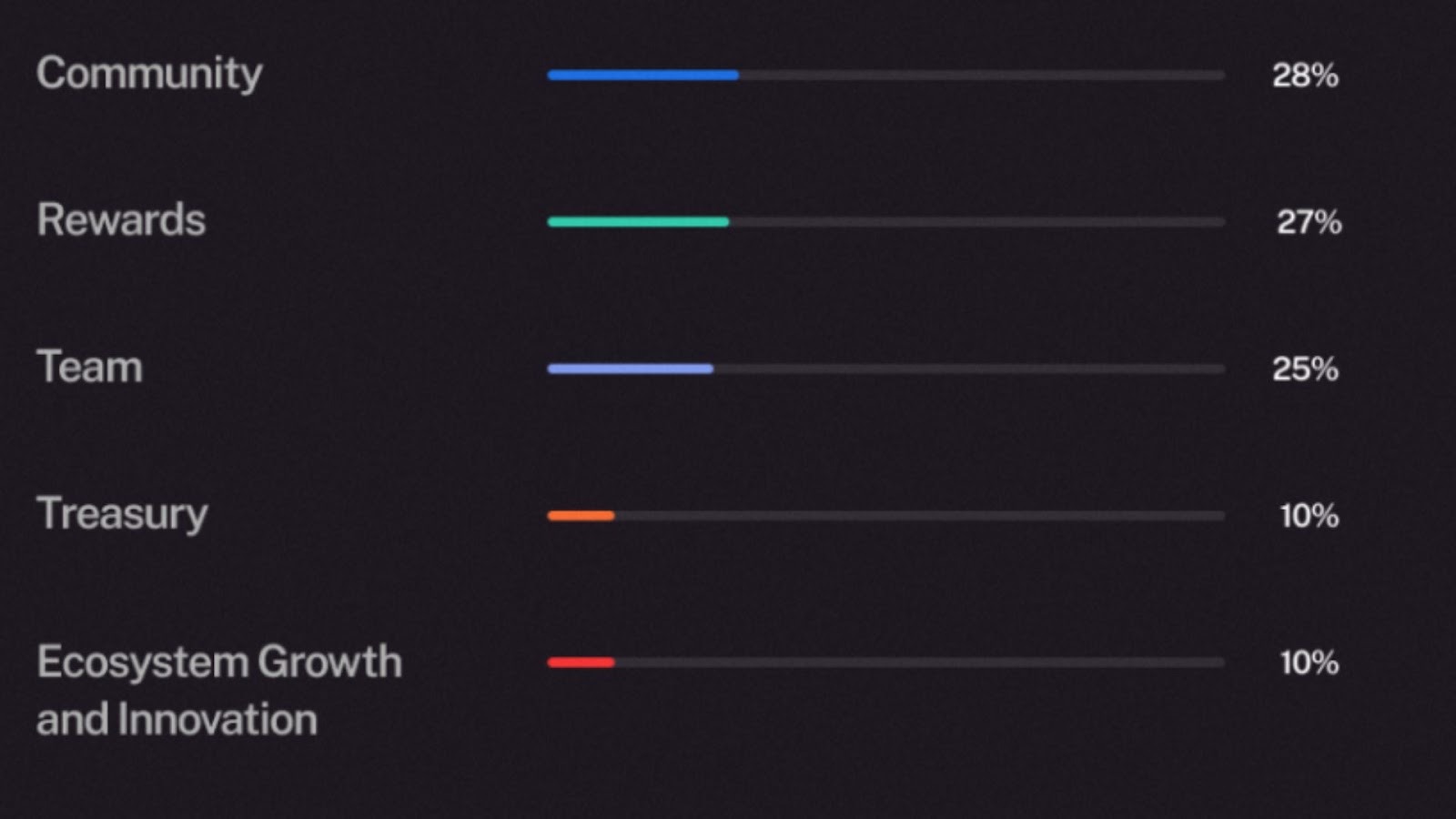
Initial Distribution: The coins were allocated thoughtfully across different groups. About 28% went to community members who mined during the early phase, rewarding early supporters. Another 12% sits in a mining rewards pool, locked for 5 years, to incentivize validators and nodes going forward.
The team holds 25% (also locked for five years), while 15% is in a DAO pool for community-voted projects. 10% each went to treasury (for liquidity and partnerships) and to ecosystem growth (for innovation and onboarding new projects).
Utility
ION is far more than just a tradable token; it's the central engine powering the entire Ice Open Network ecosystem. Holders use ION to pay for all standard network fees, from simple transfers to smart contract executions, keeping costs low and predictable thanks to the chain’s high throughput. Governance is another core role: anyone holding ION can participate in on-chain votes that decide protocol upgrades, commission rates, funding allocations for new dApps, and other key decisions through the decentralized community governance system.
Staking ION plays a dual purpose. By locking tokens, users help secure the Proof-of-Stake network as validators or delegators, earning regular rewards in return. This mechanism not only strengthens chain security but also incentivizes long-term holding. Specific services feed value directly back into the system: fees collected from ION ID verifications and usage are redistributed to stakers, creating a continuous reward loop for those who secure the network.
ION Connect, the decentralized social layer, introduces revenue-sharing that feels more like a creator economy than traditional platforms. Income from premium features, privacy-focused ads, subscriptions, or other monetization streams gets split weekly among participants.
Creators who post content, build communities, and drive engagement typically receive 35%. Active consumers (those who like, comment, share, view, or tip) get 25%, with additional bonuses for inviting high-quality users or creators early on. The core team takes 15% to fund ongoing development, decentralized community operations (DCO) receive 8% for supporting grassroots projects, ION Connect and ION Vault nodes share 10% for maintaining the social and storage infrastructure, and ION Liberty proxy/CDN nodes earn 7% for ensuring fast, uncensored content delivery.
Deflationary Element
A clever burning mechanism adds scarcity over time. When users tip creators with ION (a one-tap action in the app to show appreciation), 20% of the tip amount is burned and permanently removed from circulation. If consumers directed their full weekly rewards to tipping, roughly 5% of the total reward pool would be lost each cycle. This steady, activity-driven reduction in supply, paired with growing adoption and real utility, creates natural upward pressure on value without artificial pumps or forced scarcity.
Together, these mechanics make ION a token that rewards genuine participation, secures the network, empowers the community, and slowly tightens supply all while aligning incentives across users, creators, node operators, and the broader ecosystem.
As of early 2026, the circulating supply is around 6.6 billion ION, with the remaining tokens locked in the various pools mentioned. This structure balances incentives for users, creators, and infrastructure providers while giving the community real say through the DAO.
How to Buy ION tokens on KuCoin
Buying ION on KuCoin is straightforward, especially now that the token has been officially listed for spot trading. Here’s a clear, step-by-step guide that works whether you’re new to crypto or have some experience.
First, head to the KuCoin website or download the app and create an account. Use your email or phone number and set a strong password right away. Enable two-factor authentication (2FA) through Google Authenticator for extra security. It only takes a minute and protects against unauthorized access.
Next, complete any required identity verification (KYC). While basic trading is often possible without full KYC, completing KYC unlocks higher limits and faster deposits. Upload the requested documents and wait for approval, which usually happens quickly.
Once your account is ready, add funds. You can deposit fiat currency through supported payment methods like bank transfer or card if available in your region, or send crypto from another wallet. Common options include USDT or other stablecoins on networks like BSC, since many ION pairs trade against them. Make sure you select the correct network to avoid losing funds.
Now navigate to the spot trading section. In the search bar, type “ION” and select the trading pair you want, most likely ION/USDT, for simplicity. You’ll see the current price chart and order book. Decide whether to buy at market price (instant execution at the best available rate) or set a limit order (buy only when the price hits a level you choose).
Enter the amount of ION tokens you want or the dollar value you’re comfortable spending. Double-check the details, review any fees (KuCoin keeps them competitive), and confirm the purchase. Your ION will appear in your spot wallet almost immediately after the trade fills.
After buying, consider moving tokens to a secure wallet if you plan to hold them long-term, especially since ION supports self-custody in the project’s Online+ app. For active trading, leave them on the exchange and enable any available earning features, such as staking, if offered.
A few practical tips: Start small if you’re testing the waters, watch the 24-hour volume to gauge liquidity, and set price alerts so you don’t miss movements. Always use official KuCoin links to avoid phishing sites. As with any crypto purchase, only invest what you can afford to lose and do your own research on market conditions.
Conclusion
Ice Open Network (ION) brings together a fast blockchain, practical tools for identity and social interaction, and a token model designed around real user participation. From its roots in improving on earlier scalable chains to its focus on privacy, ownership, and community governance, the project tries to make Web3 feel approachable rather than complicated. Its tokenomics reward activity while slowly reducing supply through burns, and the recent listing on major exchanges like KuCoin opens the door for easier access.
In the broader cryptocurrency space, projects like ION remind us that technology alone isn’t enough. Real adoption comes when everyday people can control their data, express themselves freely, and earn from their contributions without middlemen taking most of the value. Whether you’re a creator looking to build a tokenized community or simply someone curious about decentralized social tools, ION offers a practical entry point.
If you’re interested in exploring further, take a look at the official resources or try the Online+ app to experience it firsthand. The crypto landscape moves quickly, so staying informed and starting small remains the safest way forward. Consider subscribing to updates or checking related articles on blockchain trends to keep learning.
Frequently Asked Questions
What is the difference between the old ICE token and the current ION token?
The earlier version traded under the ICE name on chains like BSC. After a planned migration in late 2025, the native token became ION on the Ice Open Network blockchain itself. Holders could swap via the project’s wallet tools, and centralized exchanges handled the transition by delisting ICE and listing ION.
Is ION listed on KuCoin right now?
Yes, trading for ION token pairs opened on KuCoin in March 2026. Check the exchange’s announcement page for exact pairs and deposit networks, as support started shortly after the official listing announcement.
Can I use ION for anything besides trading?
Absolutely. You can stake it for network security and rewards, pay fees inside the ecosystem, participate in governance votes, tip creators on the social layer, and even use it within tokenized communities for ownership and revenue sharing.
How secure is the ION ID system?
It relies on self-sovereign principles where your data stays on your device, encrypted with quantum-resistant methods. You control exactly what you share, and zero-knowledge proofs let you prove facts without revealing details. Recovery uses secure multi-party computation for safety.
Does running a node require expensive hardware?
Requirements vary by service. Proxy and content nodes need modest specs (decent internet, a few CPU cores, and storage), while social and storage relays ask for more RAM and disk space. The project provides clear guidelines, and rewards help offset costs for active operators.
Will the total supply of ION ever change?
No, the maximum is fixed at roughly 21.15 billion. Some portions remain locked for years, and the deflationary tipping mechanism permanently removes coins from circulation.
Is there a mobile app for ION?
Yes, the Online+ app serves as the main entry point. It includes the wallet, social features, tokenized community tools, and a browser extension for quick token launches from external platforms.
What makes ION different from other social blockchains?
The combination of Layer 1 speed, no-code app building, built-in identity verification for real-world use, and revenue sharing that rewards both creators and everyday users sets it apart. Plus, the focus on censorship resistance and privacy through multiple decentralized layers gives it a practical edge.