Resurgence of Attention Assets: Robinhood Chain Unlocks a New On-Chain Narrative via Memestocks
A notable marginal change in the crypto market last week was the resurgence of attention-driven assets appearing in batches. Robinhood Chain has emerged as one of the most concentrated markets for this trend. Compared to the striking volatility of a few leading tokens, a more significant phenomenon is the market's renewed willingness to pay attention to, trade, and rapidly disseminate a batch of entirely new assets. This situation has been relatively rare over the recent period, and it may indicate that on-chain trading sentiment is undergoing a structural recovery.
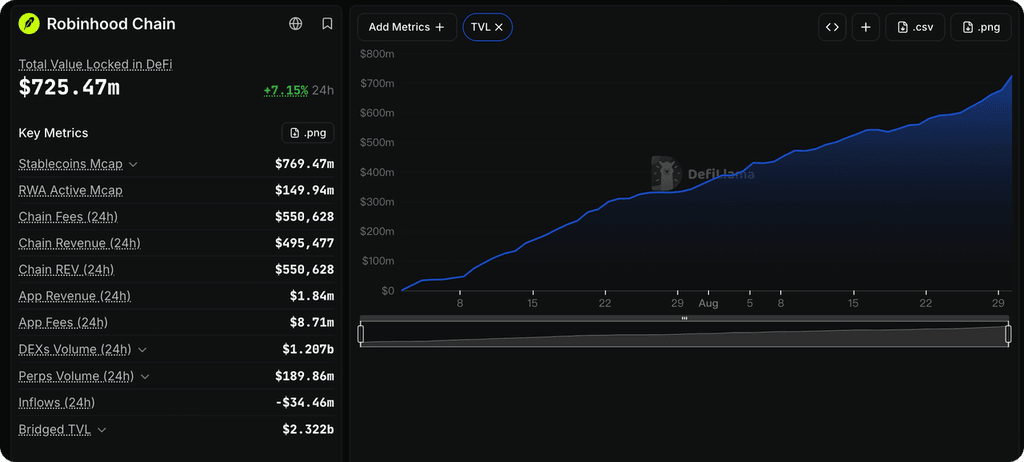
According to DeFiLlama data, Robinhood Chain's single-day DEX trading volume reached approximately $1.27 billion on August 30, with active wallets climbing back above 115,000, and on-chain TVL growing rapidly. More representatively, the top 10 ecological tokens by market capitalization on the Robinhood Chain at that time were all launched less than two months ago, bringing a completely new batch of Meme, Launchpad, and DeFi projects into the market's view simultaneously.
Data Source: DeFillama
This cycle does not simply replicate the Pump.fun-style Meme issuance trajectory. Combined with the intrinsic characteristics of the Robinhood Chain, the core of this new narrative stems from the recombination of Real-World Assets and crypto-native mechanisms.
In the past, "stocks on-chain" primarily focused on the holding and trading of the assets themselves post-issuance. However, the new experiments on the Robinhood Chain are beginning to explore the next step: once these assets are on-chain, why should crypto users trade or hold them, and how can stock token assets be integrated into DeFi to become part of the DeFi money legos.
Pons serves as a relatively typical case. As a Pump.fun-like launchpad infrastructure, early Pons still adopted the familiar Bonding Curve + AMM issuance mechanism, where new tokens enter a permanently locked Uniswap v4 liquidity pool upon reaching a threshold. Its recently introduced mechanics, however, begin to allow new tokens to be paired directly with Robinhood Stock Tokens such as NVDA, GME, and AAPL. Certain mechanisms can also distribute trading fees to holders in the form of supported RWAs, stablecoins, or ETH. Concurrently, the Pons Treasury has started providing liquidity for on-chain RWAs, summarizing its positioning as "the home of memestocks." Currently, Meme markets using the NVDA Stock Token as the quote asset are directly visible on the Pons platform.
Built on this foundation, the market has also seen more complex RWAfi experiments. For instance, NET, which has recently garnered market attention, reused an OlympusDAO-style Treasury LP Token structure: a portion of USDG can be deployed to Morpho for yield, while token trading fees flow into the treasury. Simultaneously, it incorporates gamified products using Stock Tokens like SpaceX and Microsoft as chips and rewards. On August 28, its Treasury assets were approximately $3.35 million, with each NET corresponding to a NAV of about $60. However, the market price once reached roughly $1,030, representing a premium of over 17 times. This pricing likely embeds a high degree of attention and future growth expectations, which also implies that a significant downward elasticity could occur once the flywheel reverses. Similarly conceptualized projects like Down to Finance are attempting to further bundle stock tokens, stablecoins, Uniswap v4 LP, and Morpho lending positions into new on-chain strategic assets.
However, this attention-driven market also exhibits highly visible characteristics of high volatility and rapid rotation. Following the sharp drop in the broader crypto market on the morning of August 31, the recently popular Robinhood Chain ecological assets rapidly diverged: PONS saw its market capitalization briefly surpass $400 million in the early hours before falling back to around $320 million, while AI and NET fell by approximately 21% and 37%, respectively, within 24 hours. New assets can garner massive trading volumes and market attention in a very short period, but price fluctuations can also be extremely violent. Such high volatility further reflects the current characteristic of capital chasing attention.
Overall, the current phenomenon may be difficult to directly define as a new round of a full-blown Meme Season. The newly added attention is primarily concentrated in a few specific ecosystems like Robinhood Chain and BSC, and hot assets exhibit relatively high downside sensitivity when the broader market weakens. Nevertheless, after experiencing a prolonged narrative vacuum, the market's ability to periodically incubate batches of attention tokens and successfully construct composite mechanics based on RWA, Launchpads, DeFi, and Memes serves as an observational signal worth continuous tracking regarding recent marginal changes in market risk appetite.
2. Weekly Selected Market Signals
Warsh Reinforces September Rate-Hike Expectations, Yen Breaks 160 Again and Renewed U.S.-Iran Tensions Amplify Rate and Energy Risks, While Crypto ETF Inflows Rebound Sharply
Warsh continued to emphasize the Federal Reserve’s 2% inflation target in his Jackson Hole speech, noting that further tightening may still be necessary if inflation does not decline quickly enough. Although he did not explicitly commit to a September rate hike, his remarks clearly strengthened market expectations for additional tightening.
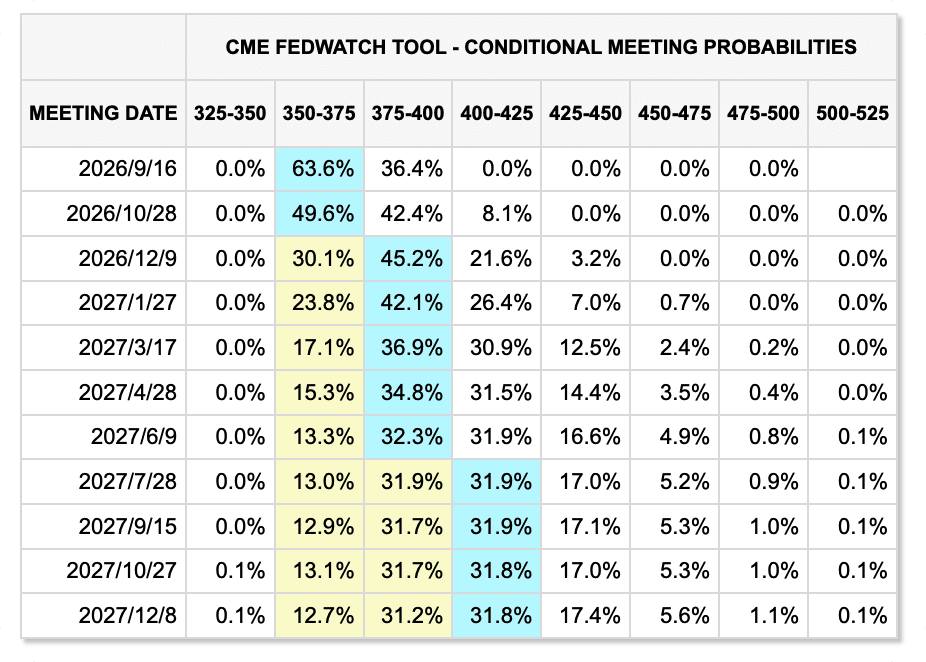
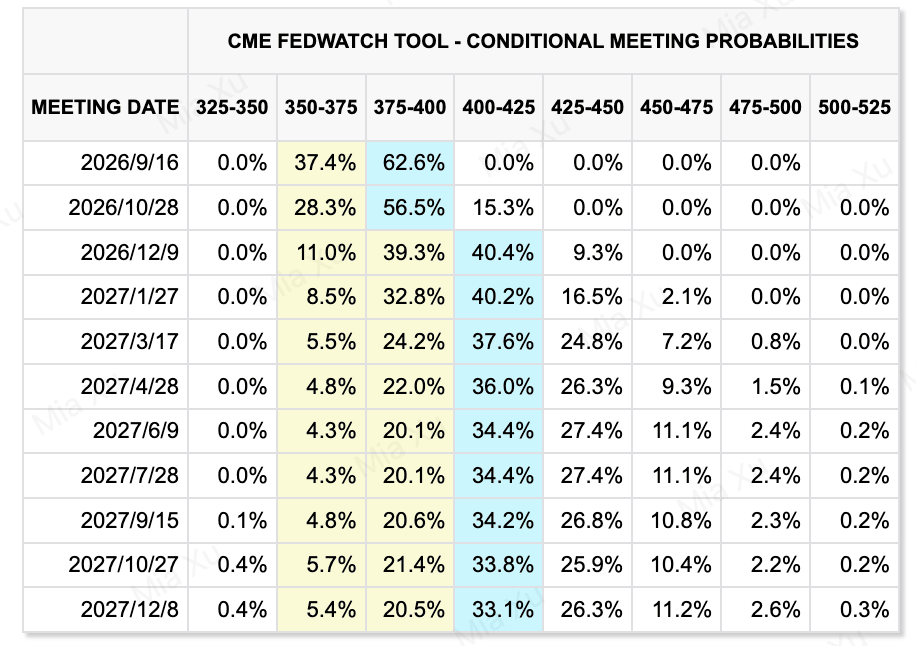
CME FedWatch showed that the market-implied probability of a 25-basis-point rate hike in September stood at around 36% before the speech, briefly rose to nearly 60% afterward, and remained above 50% by the end of the week. U.S. 2-year Treasury yields and the dollar strengthened in tandem, indicating that markets had shifted from a previous assumption that the Fed would most likely stay on hold in September toward a more cautious rate outlook.
Change in market pricing over the past two weeks
(Previous week shown first; current week shown second)
Data Source: CME FedWatchTool
Employment data, however, are creating a countervailing constraint. The latest annual benchmark revision lowered U.S. nonfarm payrolls through March 2026 by approximately 79,000 jobs. The size of this single adjustment is not particularly unusual, but the more important signal is that employment data have been revised downward repeatedly in recent months, while July payrolls also turned negative. This suggests that the U.S. labor market is cooling, forcing the Federal Reserve to weigh the impact of further rate hikes on growth and employment even as inflation remains a concern.
As a result, a September rate hike is still far from certain. Inflation and financial conditions support the Fed’s decision to keep further tightening on the table, but continued labor-market weakness could reduce the need for immediate action. The August nonfarm payrolls report and CPI release ahead of the September meeting will be key to the next round of market repricing.
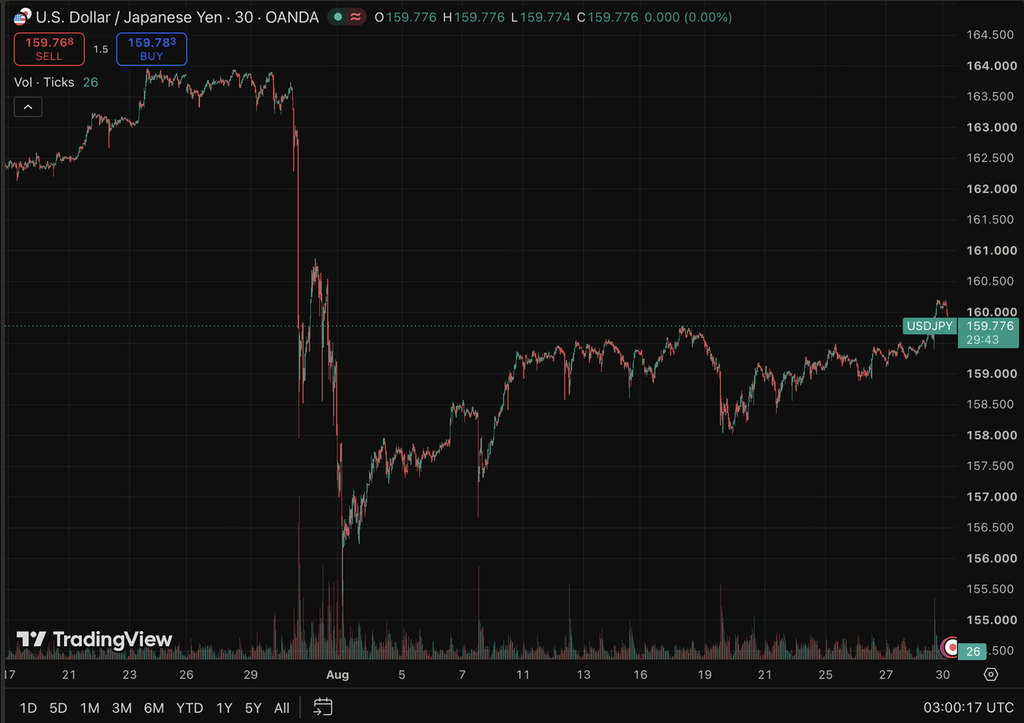
In foreign exchange markets, Japan spent approximately JPY 15.4 trillion supporting the yen between late July and late August. However, after Warsh’s speech pushed the dollar and U.S. Treasury yields higher again, USD/JPY returned to and broke above 160.
This highlights the limitations of relying on direct currency intervention alone. As long as the U.S.-Japan interest-rate differential remains wide, intervention may only slow yen depreciation temporarily. If Japan increasingly relies on rate hikes to narrow the yield gap, leveraged carry trades built on low-cost yen funding could face further deleveraging, creating potential liquidity pressure for technology stocks, crypto assets, and other high-volatility markets.
Data Source: TradingView
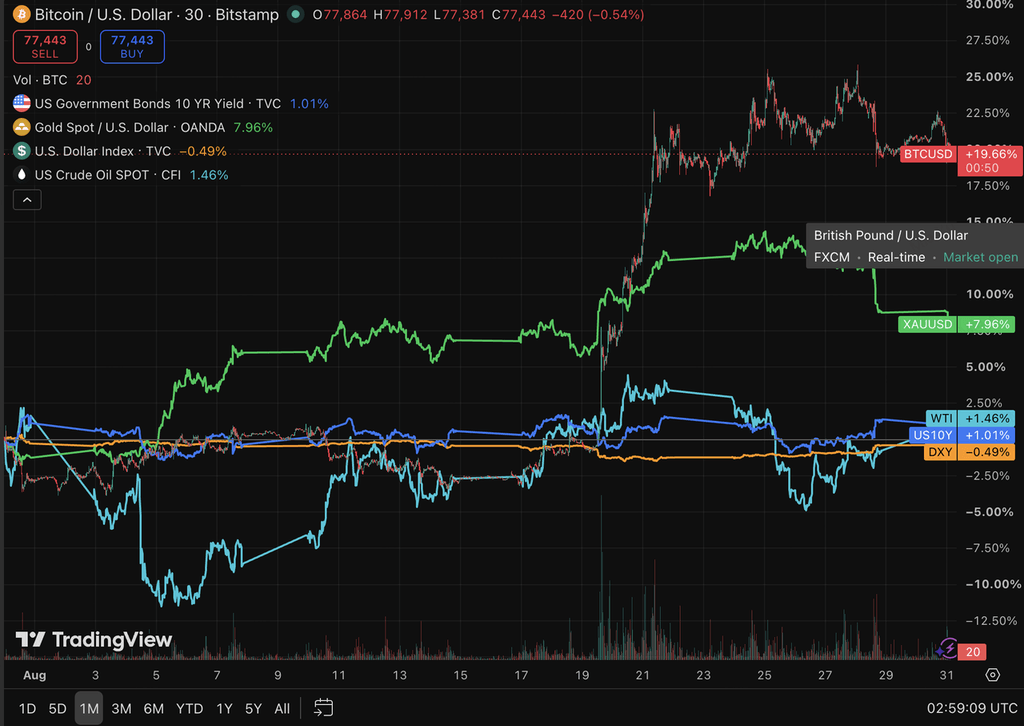
Gold initially rose last week on fiscal-risk concerns and expectations of U.S. dollar depreciation, but fell sharply after Warsh’s remarks revived expectations for higher rates, leaving prices lower on the week. The medium- to long-term fiscal-hedging case for gold remains intact, but short-term prices are still highly sensitive to the dollar and real yields. Whenever markets return to a “higher for longer” rate narrative, gold remains vulnerable to meaningful corrections.
Oil prices, meanwhile, declined as shipping conditions through the Strait of Hormuz showed marginal improvement. WTI and Brent fell approximately 4.2% and 5.4% over the week, respectively. However, on August 30, the U.S. military carried out its first new strike on Iran in more than a month, reigniting tensions and pushing Brent back above $90 per barrel. Oil therefore remains driven primarily by shipping conditions through the Strait of Hormuz and developments in U.S.-Iran military activity. The earlier decline in prices reflected a temporary reduction in the geopolitical risk premium rather than a full resolution of supply risks.
Data Source: TradingView
U.S. equities remained broadly resilient last week, with the S&P 500, Nasdaq, and Dow all posting modest gains. Nvidia’s results continued to validate demand for AI infrastructure and eased concerns that the capital-expenditure cycle may be peaking. However, technology stocks came under renewed pressure following Warsh’s speech, highlighting that while AI fundamentals remain strong, valuations are still constrained by interest rates and the cost of capital. The AI trade is therefore moving beyond simply tracking the scale of capital expenditure and toward assessing whether revenue growth, margins, and cash flow can ultimately justify sustained investment.
Crypto Assets and ETFs: BTC Returns Above $80,000 as ETF Inflows Rebound, but Macro Sensitivity Remains High
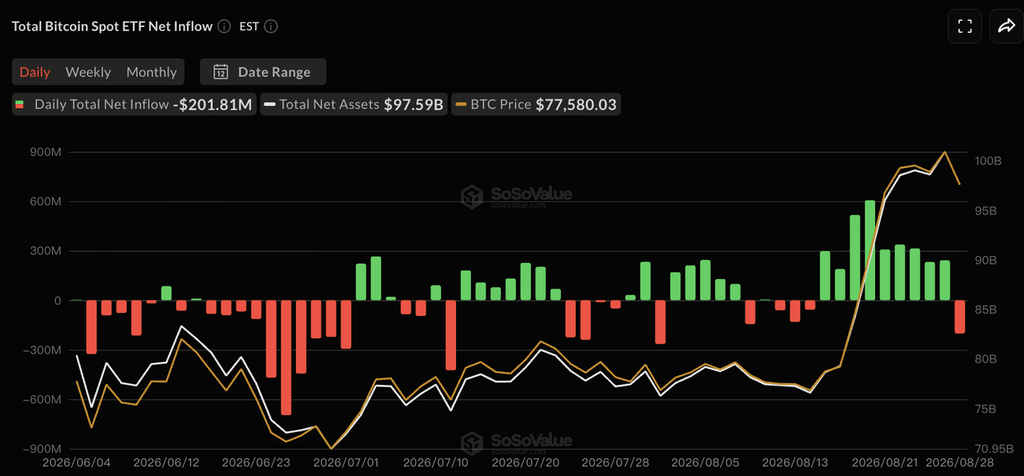
The crypto market rebounded sharply last week. BTC briefly moved above $80,000 during the week, returning to that level for the first time since mid-May, while ETH climbed toward $2,500 and outperformed BTC. A weaker dollar, renewed fiscal and monetary debasement trades, and returning institutional inflows jointly supported the recovery. However, after Warsh’s speech pushed rate expectations higher again, BTC quickly fell back toward $78,000. This shows that even with a clear improvement in crypto-native funding conditions, the market remains highly exposed to the broader macro constraints imposed by the dollar and real interest rates.
Data Source: SoSoValue
According to SoSoValue, U.S. spot BTC ETFs recorded approximately $924.5 million in net inflows between August 24 and August 28. The first four trading sessions all saw positive flows, but the day of Warsh’s speech reversed to approximately $201.8 million in net outflows. BlackRock’s IBIT recorded approximately $938 million in weekly net inflows and was the primary source of incremental demand.
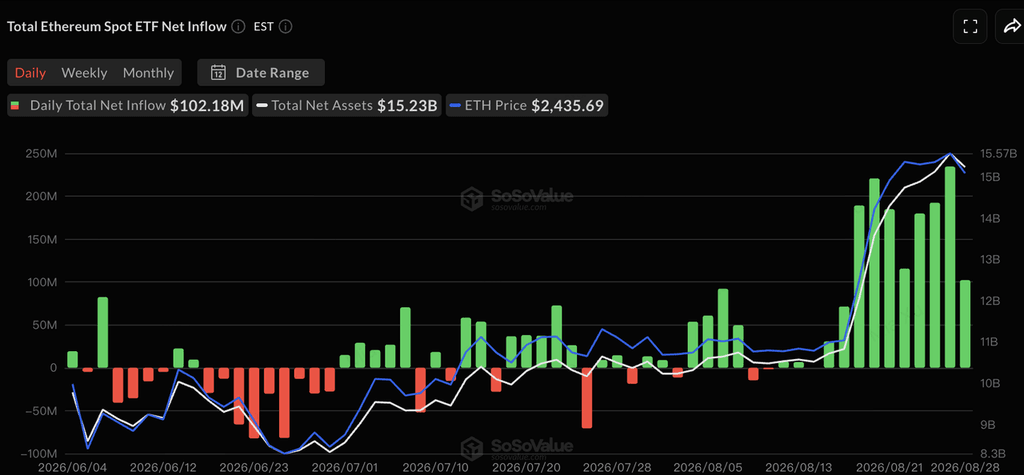
Spot ETH ETFs recorded approximately $824.4 million in net inflows over the same period, marking the strongest weekly performance of 2026. BlackRock’s ETHA contributed approximately $567 million. Even on Friday, when markets increased expectations for another rate hike, ETH ETFs continued to record net inflows.
Compared with previous weeks, ETF activity has shifted from sporadic dip-buying toward more visible institutional accumulation, with ETH flows particularly strong relative to its market size. However, BTC ETFs turning negative on Friday and BTC quickly falling back below $80,000 also show that institutional inflows are primarily improving downside support rather than fully offsetting renewed pressure from higher interest rates.
Stablecoin Supply: Market Capitalization Expands Again as On-Chain Dollar Liquidity Improves
Data Source: DeFiLlama
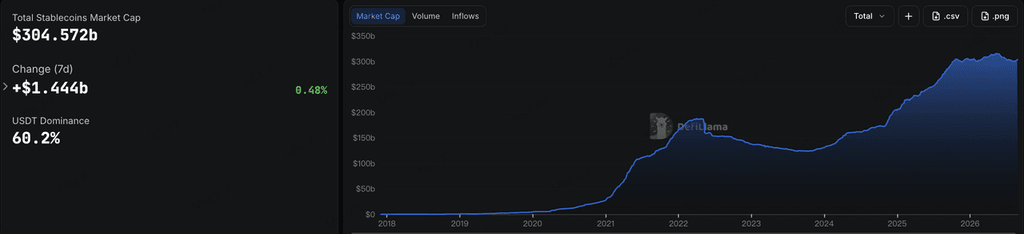
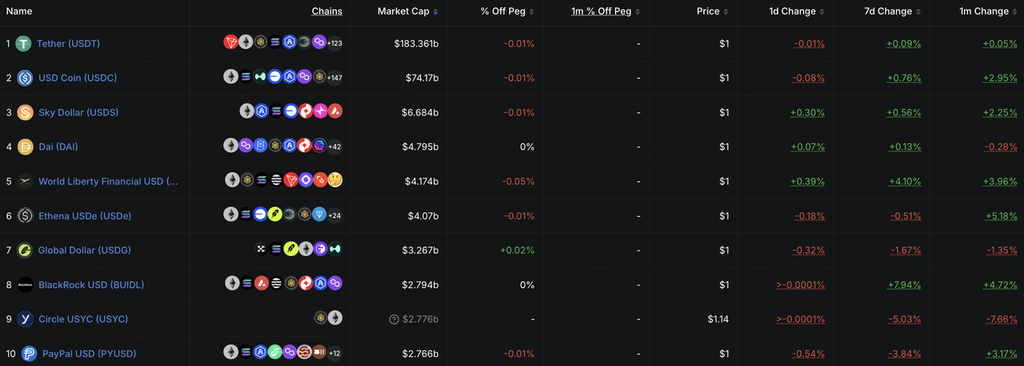
DeFiLlama data showed that total stablecoin market capitalization reached approximately $304.6 billion, increasing around 0.48% over the previous seven days and 1.51% over the previous 30 days. USDT’s market share stood at approximately 60.2%. After several weeks of contraction or stagnation, total stablecoin supply has begun to expand modestly again. Together with stronger ETF inflows, this suggests that U.S. dollar liquidity within the crypto market is beginning to improve.
Among the ten largest stablecoins, USDT was broadly unchanged, while USDC increased approximately 0.76% over the week. USD1 rose around 4.1% and BUIDL approximately 7.9%, indicating that incremental liquidity remains concentrated in products supported by distribution channels or real-world yield. By contrast, USYC and PYUSD fell by approximately 5.0% and 3.8%, respectively, showing that meaningful rotation is still occurring within the stablecoin market.
Overall, the stablecoin signal improved last week: both aggregate supply and USDC returned to positive growth, suggesting that incremental on-chain dollar demand is beginning to recover. Whether this develops into a sustained trend still requires further confirmation.
Key Events to Watch This Week
Markets will focus primarily on U.S. employment data and September rate-hike expectations, AI semiconductor earnings, and OPEC+ supply policy. The August nonfarm payrolls report will be one of the most important labor-market releases ahead of the September FOMC meeting and will directly affect the rate-hike expectations that strengthened following Warsh’s speech.
September 1: The U.S. releases JOLTS job openings data, providing a read on whether labor demand is continuing to cool.
September 2: The U.S. releases ADP private-sector employment data, providing an early signal ahead of the nonfarm payrolls report.
September 3: The Federal Reserve publishes the Beige Book. Broadcom reports earnings, with investors focusing on custom AI chips and networking businesses as another test of AI capital-expenditure momentum.
September 4: The U.S. releases August nonfarm payrolls, the unemployment rate, and average hourly earnings. If employment again comes in materially weaker than expected, the probability of a September rate hike could fall rapidly. If employment and wage growth remain resilient, tightening expectations could strengthen further.
September 6: OPEC+ holds its monthly meeting. With U.S.-Iran tensions rising again, the pace of production increases will influence both the oil risk premium and subsequent inflation expectations.
Overall, the key macro question this week remains whether the labor market is strong enough to support another rate increase. Weaker employment would likely reduce pressure on the dollar and interest rates, providing support for technology stocks and crypto assets. Resilient employment combined with a renewed rise in oil prices, by contrast, could reinforce a higher-rate environment.
Private-Market Funding: Large Strategic Deals Lift Headline Volumes as Capital Concentrates Further in Cross-Asset and Institutional Infrastructure
Data Source: CryptoRank
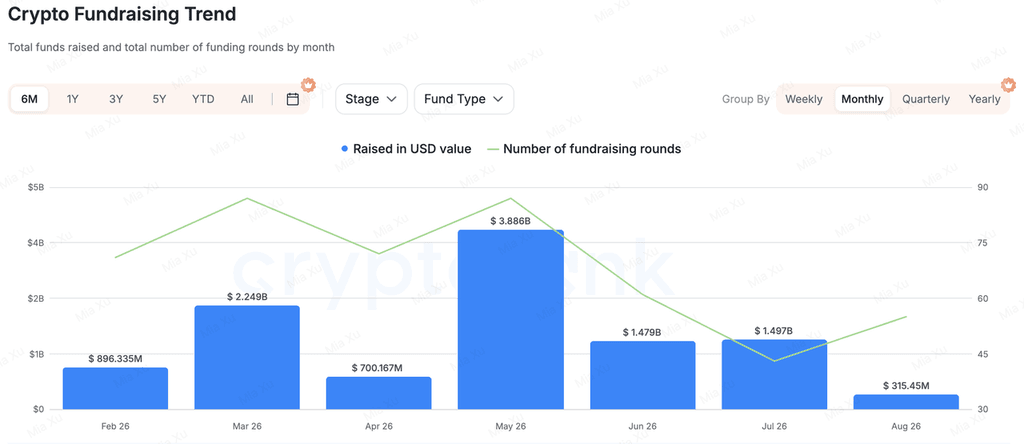
Based on broad funding data, private-market financing rose visibly last week, but the increase was driven primarily by a small number of large strategic and growth-equity transactions. This should not be interpreted as evidence of a broad recovery in early-stage Crypto VC risk appetite.
Among the larger transactions, SBI Holdings made a $270 million strategic investment in Indonesian investment platform Ajaib Group, acquiring approximately a 20% stake. Ajaib spans equities, bonds, funds, crypto, stablecoins, payments, and institutional stablecoin settlement, making it closer to a multi-asset financial platform integrating TradFi and digital assets than a pure crypto business. The transaction further reflects investors’ continued preference for mature platforms with established users, licenses, and distribution channels.
Clearing and custody infrastructure provider RQD Clearing raised $74 million, led by Bain Capital Tech Opportunities. The funding will be used to expand clearing, custody, digital-asset, and tokenization products. As tokenized securities and 24/7 markets continue to develop, clearing, custody, and institutional access are becoming increasingly important infrastructure segments for capital allocation.
Among crypto-native projects, Entropy.io raised $14 million in a round led by Ribbit Capital. The project is building perpetual markets for non-standard assets such as Pre-IPO shares and equity indices using Hyperliquid HIP-3, with the goal of creating continuous on-chain price discovery for assets that are difficult to trade directly in traditional markets.
Overall, funding activity last week continued to reflect three main areas of investor preference: mature multi-asset financial distribution platforms, institutional clearing and tokenization infrastructure, and on-chain tools that convert non-standard assets such as Pre-IPO shares and RWA exposures into tradable markets. By contrast, general-purpose protocols without meaningful users, revenue, or distribution capabilities continue to face a more cautious funding environment.
About KuCoin Ventures
KuCoin Ventures, is the leading investment arm of KuCoin Exchange, which is a leading global crypto platform built on trust, serving over 40 million users across 200+ countries and regions. Aiming to invest in the most disruptive crypto and blockchain projects of the Web 3.0 era, KuCoin Ventures supports crypto and Web 3.0 builders both financially and strategically with deep insights and global resources. As a community-friendly and research-driven investor, KuCoin Ventures works closely with portfolio projects throughout the entire life cycle, with a focus on Web3.0 infrastructures, AI, Consumer App, DeFi and PayFi.
Disclaimer This general market information, possibly from third-party, commercial, or sponsored sources, is not legal, compliance, financial, or investment advice, an offer, solicitation, or guarantee. We make no express or implied representations or warranties regarding its accuracy, completeness, or reliability, and disclaim liability for any resulting losses. Investments/trading are risky; past performance doesn't guarantee future results. Users should research, judge prudently, and take full responsibility. Please consult professional legal, tax, or financial advisors if necessary.