

Bitcoin Named July's Most Profitable Asset by Bank of Russia: What It Means for Investors
2026/08/12 15:19:00
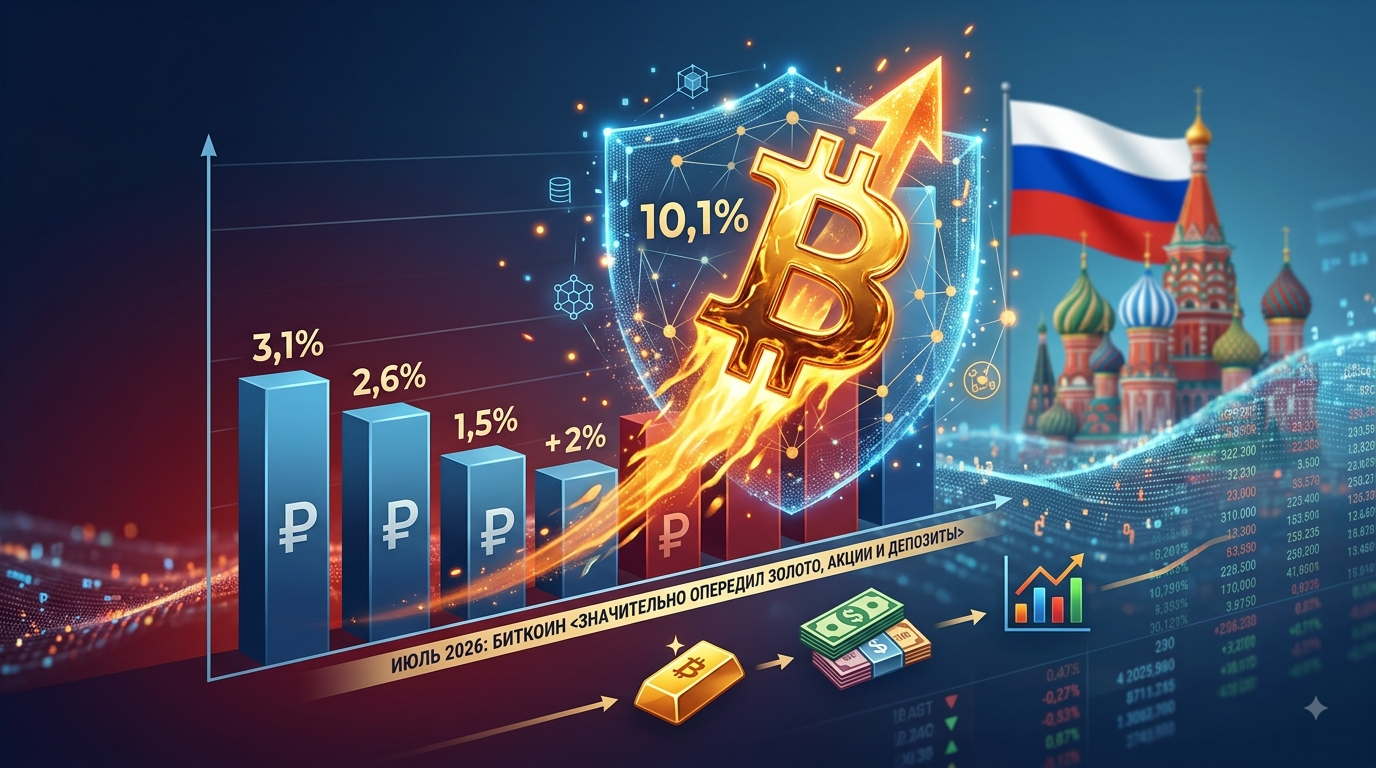
Did you know that in July 2026, Bitcoin officially outperformed all traditional financial instruments in Russia in terms of profitability, showing a 10.1% growth in ruble equivalent? According to the latest "Financial Market Risk Review" by the Bank of Russia, the first cryptocurrency demonstrated the best results among foreign assets, significantly outperforming gold, stocks, and foreign currency deposits. This fact confirms the growing role of digital currencies as an effective tool for risk hedging and capital growth under macroeconomic instability. In this article, we will break down the reasons for this success, analyze the new laws on cryptocurrency legalization in Russia, and explain how to safely invest in Bitcoin today.
Why Did Bitcoin Show a 10.1% Yield in July 2026?
The primary driver of Bitcoin's yield growth in July was the global increase in the asset's price on international markets, rather than just fluctuations in the national currency's exchange rate. According to Bank of Russia data, Bitcoin's yield in ruble terms was 10.1%, making it the absolute leader of the month among all tracked instruments. It is important to understand that while ruble volatility was present in July, it was the strengthening of Bitcoin's market positions that ensured such a significant lead over its competitors.
For comparison, the yields of other popular assets in July were significantly more modest. Investments in gold and foreign currencies brought investors returns in the range of 2.6% to 3.1% in rubles. Thus, Bitcoin proved to be almost three times more effective than traditional safe-haven assets. This highlights the uniqueness of cryptocurrency as a tool that combines the properties of a high-tech asset and a store of value, capable of showing double-digit growth even in short timeframes.
In its report, the Central Bank of Russia classifies Bitcoin as a "foreign financial instrument," which is an important signal for the market. The regulator acknowledges the high popularity of cryptocurrencies among Russian citizens, with the volume of digital asset operations remaining steadily high, accounting for a significant share of total retail investments. The official recognition of Bitcoin's profitability indicates that the regulator can no longer ignore this asset class in its macroeconomic calculations.
What is the Current Legal Status of Cryptocurrencies in Russia in 2026?
The legal status of cryptocurrencies in Russia as of August 2026 is fully defined thanks to a series of laws signed by President Vladimir Putin, which legalized the circulation and mining of digital currencies. In August 2026, a final package of laws on the "full legalization of cryptocurrency circulation" was signed, allowing the purchase, sale, and holding of digital assets through official Russian exchanges, brokers, and exchange offices. This was a logical continuation of the reforms started in 2024, when mining and experimental cross-border settlements (EPR) were legalized.
According to the new legislation, holding cryptocurrency is completely legal for individuals; however, its use as a means of payment within the country remains restricted. This means you can legally invest in Bitcoin, store it, and trade it, but you cannot pay for goods or services in a Russian store with it. The Central Bank's statistics recording Bitcoin's yield now serve as a capital monitoring tool rather than a mechanism for repression against private investors.
A key aspect of regulation in 2026 is mandatory reporting. Since July 2026, all currency residents of Russia—both individuals and companies—are required to notify the Federal Tax Service (FNS) of the opening and closing of blockchain wallets, as well as transactions within them if the turnover exceeds established limits. This makes the market transparent and allows investors to operate within the legal field, avoiding claims from law enforcement and financial monitoring agencies.
How Do Experimental Legal Regimes (EPR) for Cryptocurrencies Work?
Experimental Legal Regimes (EPR) in 2026 have become the primary mechanism for conducting cross-border payments and testing regulated crypto exchanges in Russia. Under the EPR overseen by the Bank of Russia, selected financial organizations and exporters have gained the right to use cryptocurrency for settlements with foreign counterparties, bypassing traditional banking restrictions. This allows Russian businesses to remain active in international trade by leveraging the high liquidity and speed of blockchain networks.
For ordinary investors, the development of EPR means the emergence of trusted infrastructure. Within these regimes, the first Russian platforms for digital currency exchange are being tested, integrated with the traditional banking system. This significantly reduces risks associated with account blocks under Law 115-FZ, as operations are conducted through licensed intermediaries verified by the regulator. Investors are advised to prioritize these legal channels or major international platforms with a high reputation.
Despite the success of EPR, P2P trading remains a popular method for buying Bitcoin among retail users. However, risks persist here as banks continue to closely monitor suspicious transactions. Using official tools approved under experimental regimes or working through verified exchanges like KuCoin provides a higher level of security and protection of investor rights in case of disputes.
What are the Risks of Investing in Bitcoin According to Central Bank Warnings?
Despite acknowledging Bitcoin's high profitability, the Bank of Russia maintains a stance of "recognizing success while emphasizing risks," reminding investors of the asset's high volatility. In its reports, the regulator often cites historical data where Bitcoin showed significant drops. For instance, previously recorded annual yield decreases of 29.1% serve as a warning to those who view cryptocurrency as a guaranteed source of profit.
The Central Bank classifies Bitcoin as a "high-risk alternative asset" that cannot serve as a full replacement for traditional ruble savings. The main risks pointed out by the regulator include:— Extreme volatility: the price can change by tens of percent within a few days.— Lack of centralized backing: the asset's value depends solely on market demand and supply.— Regulatory changes: although 2026 laws legalized the market, tax and monitoring rules continue to evolve.
Investors should adhere to a diversification strategy, not putting all funds into one asset. Bitcoin can occupy a portion of an investment portfolio as a tool for aggressive growth, but the bulk of savings should be distributed among more stable instruments. Understanding these risks and following professional analysts' advice will help avoid emotional decisions in a volatile market.
Comparison of Financial Instrument Yields in July 2026
To clearly understand Bitcoin's leadership, it is necessary to consider the yield indicators of various asset classes in ruble terms. Below is a table based on Bank of Russia report data for July 2026.
|
Financial Instrument
|
Yield in Rubles (July 2026)
|
Asset Type
|
|
Bitcoin (BTC)
|
10.1%
|
Foreign Digital Asset
|
|
Gold
|
3.1%
|
Precious Metal
|
|
Foreign Currency (Basket)
|
2.6%
|
Currency Market
|
|
Ruble Deposits
|
1.5% (Average)
|
Banking Sector
|
|
Russian Stocks
|
-0.8% (MOEX Index)
|
Stock Market
|
As seen in the table, Bitcoin showed a result several times higher than the yield of traditional instruments. While the Russian stock market was in a correction phase and deposit yields barely covered current inflation, digital gold provided investors with a real increase in capital. This makes Bitcoin an attractive choice for those willing to accept moderate risk for high returns.
Should You Trade Bitcoin on KuCoin?
Trading Bitcoin on KuCoin provides Russian users with access to one of the most liquid and technologically advanced platforms in the world, which is especially important in the context of crypto market legalization. KuCoin offers a wide range of tools: from spot trading to futures and staking, allowing any investment strategy to be implemented. With high security and support for various payment methods, the platform becomes a reliable bridge between traditional finance and the blockchain world.
Registering on KuCoin opens opportunities to participate in the global crypto market, which, as shown by the Bank of Russia's July report, outperforms local markets in efficiency. Users can benefit from low fees and deep liquidity, which is critical when working with a volatile asset like Bitcoin. Start your investment journey today to not miss the next wave of yield growth recorded by leading financial institutions.
Join KuCoin 9th Anniversary Trading Campaign
KuCoin is celebrating its 9th anniversary with a special platform campaign filled with exclusive rewards, trading activities, and limited-time offers. Don’t miss the chance to participate and enjoy the benefits as the exchange marks nine years of growth and innovation. Visit the official campaign page now:
Conclusion
The Bank of Russia's report for July 2026 became an important milestone for the crypto community, officially establishing Bitcoin as the month's most profitable financial instrument with a 10.1% figure. This result was achieved through a combination of global asset price growth and the adaptation of the Russian financial system to new realities. The legalization of cryptocurrency circulation, finalized with the signing of key laws in August 2026, opened doors for investors into the legal field, where holding and trading digital assets have become a norm backed by a state regulatory framework.
However, high yield is always associated with risks. Investors must remember volatility and obligations to declare assets to tax authorities. Using reliable platforms like KuCoin, combined with an understanding of the legal aspects of experimental regimes and FNS rules, allows for minimizing technical and legal threats. Bitcoin in 2026 is no longer just an experiment but a powerful financial tool requiring a professional approach and conscious risk management.
Frequently Asked Questions (FAQs)
1. Is it legal to buy Bitcoin in Russia in 2026?
Yes, buying and holding Bitcoin is completely legal under the law on the legalization of cryptocurrency circulation signed in August 2026. Citizens can conduct transactions through official brokers, exchanges, and exchange offices, provided they comply with tax laws and reporting rules.
2. Do I need to pay taxes on profits from Bitcoin sales?
Yes, income from cryptocurrency sales is subject to Personal Income Tax (PIT). Investors are required to independently declare profits and pay taxes in accordance with FNS norms, especially if the turnover across wallets exceeds limits requiring mandatory notification.
3. Why does the Bank of Russia call Bitcoin a "foreign instrument"?
This is because Bitcoin does not have a single issuer within Russia and is issued in decentralized networks worldwide. This classification allows the regulator to correctly account for it in cross-border capital flow statistics and compare it with other foreign assets like international stocks or currencies.
4. Can I lose money investing in Bitcoin?
Yes, the risk of capital loss exists due to high market volatility. As the Central Bank notes, Bitcoin's history includes periods of annual yield drops of nearly 30%. Investing in cryptocurrency should be conscious and constitute only a portion of your overall portfolio.
5. How can a beginner safely buy Bitcoin?
The safest way is to use major international exchanges with a proven reputation, such as KuCoin, or to turn to participants in Experimental Legal Regimes (EPR) in Russia. This ensures the protection of your data, the safety of funds, and minimizes the risk of bank blocks.
Disclaimer : This material is provided for informational purposes only and does not constitute financial, investment, legal, or tax advice. Transactions involving cryptocurrencies and tokenized assets carry substantial risks — including price volatility, limited liquidity, counterparty exposure, and the potential for total loss of invested capital. Readers should conduct their own research and, where appropriate, consult a qualified professional before making any financial decisions.