

XRP Ledger v3.3.0 Upgrade: What to Know About the Upcoming Release and New Features
2026/08/04 11:07:00
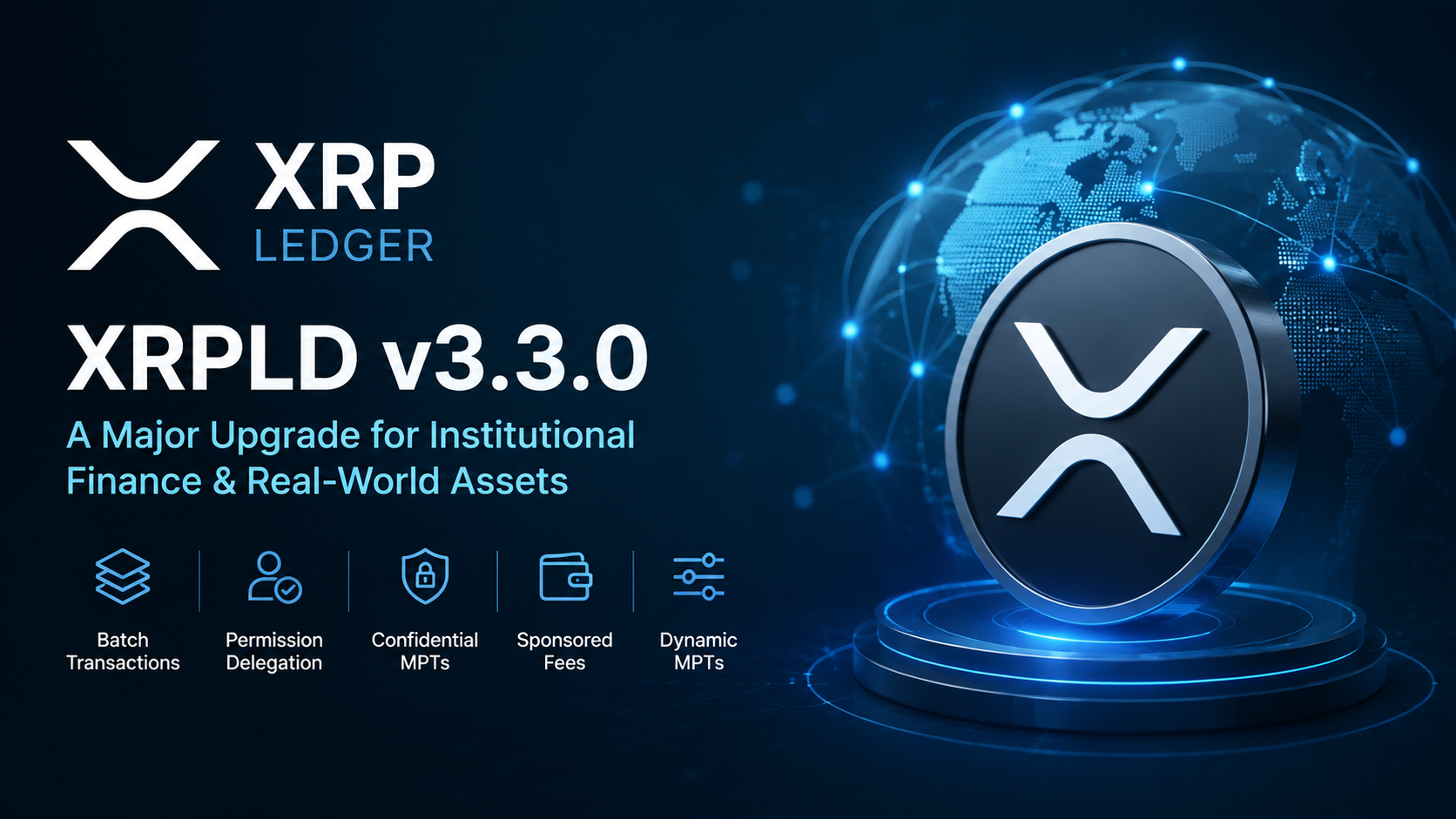
Key Takeaways
-
Major Protocol Upgrade: The XRP Ledger is set to release
xrpld v3.3.0, introducing five critical amendments aimed at institutional finance and real-world asset tokenization. -
Returning Features: Batch Transactions and Permission Delegation make their return following heavy refactoring and security audits to ensure mainnet reliability.
-
Advanced Capabilities: The update introduces Confidential MPTs for enterprise privacy, Dynamic MPTs for flexible asset management, and Sponsored Fees to reduce retail friction.
-
Validator Consensus Required: Features will not activate immediately upon software release; they require at least 80% continuous support from trusted validators over a 14-day window.
Introduction
The XRP Ledger (XRPL) is poised for a major architectural leap with the upcoming rollout of the
xrpld v3.3.0 server software release. According to announcements from RippleX executives in August 2026, the software package bundles five vital protocol amendments designed to optimize institutional finance, real-world asset (RWA) tokenization, and user access control. While the release arrives next week, these native network upgrades will not go live instantly; they require strict validator consensus before activation. This comprehensive update re-introduces previously pulled features alongside advanced privacy and token management capabilities, solidifying the ledger's trajectory as a premier venue for institutional capital.What is the XRP Ledger v3.3.0 Upgrade?
The v3.3.0 update serves as a major protocol enhancement package targeting institutional compliance, transaction efficiency, and asset flexibility on the XRP Ledger.
According to updates shared by RippleX Head of Product Jazzi Cooper, the ledger has already demonstrated its baseline capacity to support tokenized assets at scale. The core objective of
xrpld v3.3.0 is to transition those assets into active use cases, encompassing global value transfers, secondary market trading, decentralized collateralization, and complex settlement pipelines.The software package introduces five distinct protocol amendments:
-
Batch Transactions
-
Permission Delegation
-
Confidential Multi-Purpose Tokens (Confidential MPT)
-
Sponsored Fees and Reserves
-
Dynamic Multi-Purpose Tokens (Dynamic MPT)
By addressing these core pillars, the development team aims to bridge the gap between traditional banking infrastructure and decentralized ledger capabilities.
Re-Introducing Batch Transactions and Permission Delegation
Why are Batch Transactions and Permission Delegation returning to the XRP Ledger in this release?
Both Batch Transactions and Permission Delegation are making a highly anticipated return after being temporarily withdrawn earlier in the year following critical security audits. Based on recent developer documentation and network reports, the engineering team has heavily refactored these tools to ensure robust mainnet security.
Batch Transactions empower users to package up to eight separate transactions into a single atomic operation. Operating on an all-or-nothing basis, either every transaction within the batch succeeds collectively, or the entire bundle fails. This reduces overall network spam, trims execution costs, and streamlines complex trading strategies.
Simultaneously, Permission Delegation allows corporate and institutional accounts to assign granular, restricted wallet access to employees or third-party applications. Instead of exposing master private keys or relying solely on complex multi-signing schemes, organizations can establish role-based access control for day-to-day operations while keeping high-privilege keys safely offline.
Enhancing Privacy and Token Management with MPTs
How do Confidential MPTs and Dynamic MPTs transform asset issuance on the network?
The
xrpld v3.3.0 update introduces advanced Multi-Purpose Token iterations that directly answer corporate demands for enterprise-grade privacy and post-launch configuration control.Confidential Multi-Purpose Tokens mask individual token balances and specific transaction amounts from public ledger visibility. Crucially, this privacy-centric design incorporates view-key capabilities, permitting authorized auditors and regulatory bodies to inspect ledger movements when legally required. This satisfies strict institutional compliance frameworks without sacrificing user confidentiality.
Furthermore, Dynamic Multi-Purpose Tokens solve a historical pain point for token issuers by allowing them to modify specified token parameters after the initial creation event. Issuers no longer need to burn existing tokens and mint entirely new assets when adapting to shifting regulatory rules or changing business logic.
Removing Friction via Sponsored Fees and Reserves
In what ways do Sponsored Fees and Reserves improve the end-user experience on decentralized applications?
Sponsored Fees and Reserves remove the traditional onboarding barrier that requires everyday retail users to hold native XRP simply to interact with decentralized applications built on the ledger.
Through this amendment, application developers, enterprises, or institutional sponsors can programmatically cover network transaction costs and native reserve requirements on behalf of their customers. By absorbing these minor financial friction points, consumer-facing applications powered by the XRP Ledger can achieve user adoption curves comparable to standard web2 applications.
The Validator Consensus and Governance Process
How do proposed protocol amendments officially activate on the XRP Ledger mainnet?
The release of the
xrpld v3.3.0 server software by RippleX does not immediately turn these features on across the live network. Under the decentralized governance architecture of the XRP Ledger, each individual amendment must achieve and maintain at least 80% support from trusted network validators for a mandatory duration of 14 consecutive days.If consensus falls below the threshold during this window, or if node operators reject the implementation, the amendment remains inactive. This safeguard ensures that major updates undergo rigorous stress-testing and community alignment before becoming permanent rules of the protocol.
How to Trade XRP and Participate on KuCoin
How can traders access XRP and leverage major ecosystem developments on KuCoin?
KuCoin provides a secure, liquid gateway for market participants looking to trade XRP and interact with the broader digital asset economy. As major upgrades like
xrpld v3.3.0 drive new momentum across the ecosystem, traders can position themselves effectively by exploring platform opportunities. To celebrate ongoing milestones, you can check out the latest KuCoin 9th Trading Competition and Proof of Reserves campaign to trade, participate in platform activities, and maximize your trading strategies.To start trading XRP on KuCoin:
-
Register an Account: Create and verify your identity on the official KuCoin platform to ensure full feature access.
-
Fund Your Wallet: Deposit supported stablecoins (such as USDT) or fiat currency into your KuCoin trading account.
-
Navigate to the Spot Market: Search for the XRP trading pairs (such as XRP/USDT) via the KuCoin exchange interface.
-
Execute Your Trade: Choose between market orders for immediate execution or limit orders to target specific price entry points.
-
Secure Your Assets: Transfer your acquired tokens to a secure private wallet if you are holding for the long term, or utilize KuCoin’s secure custody solutions.
Conclusion
The impending rollout of
xrpld v3.3.0 marks a pivotal milestone in the evolution of the XRP Ledger. By introducing structured batch processing, secure permission delegation, confidential token architectures, dynamic settings, and sponsored fee models, the network is directly tailoring its infrastructure for widespread institutional adoption and real-world asset tokenization. While these five features still face the rigorous test of validator consensus, their inclusion in the core software build demonstrates a clear development trajectory. As blockchain technology bridges the gap with traditional finance, these protocol enhancements reinforce the ledger's technical readiness for global-scale financial operations.FAQs
What triggers the official activation of xrpld v3.3.0 features on the mainnet?
Features activate only after individual protocol amendments secure at least 80% continuous support from trusted network validators over a 14-day evaluation period. Simply installing the updated server software does not automatically turn the features on.
Can regular retail users benefit from the Sponsored Fees and Reserves feature?
Yes. Sponsored fees allow application developers or enterprise sponsors to cover transaction costs and reserve requirements, meaning end-users can interact with specific decentralized applications without holding native XRP.
Why were Batch Transactions and Permission Delegation pulled prior to this release?
Both features were temporarily removed earlier in the year following security audits that identified critical vulnerabilities in their initial designs. The v3.3.0 release introduces heavily refactored and secured versions of these tools.
How do Confidential Multi-Purpose Tokens maintain regulatory compliance?
While Confidential MPTs hide standard user balances and transaction values from public network visibility, they incorporate view-key structures that grant access to authorized auditors and regulatory bodies when legally required.
What is the primary operational advantage of Dynamic Multi-Purpose Tokens?
Dynamic MPTs allow token issuers to modify specific configuration parameters after the asset has been minted and launched, preventing the need to burn and recreate tokens when business models or regulations change.