

What Is Terra (Luna) and How Does It Work?
Introduction
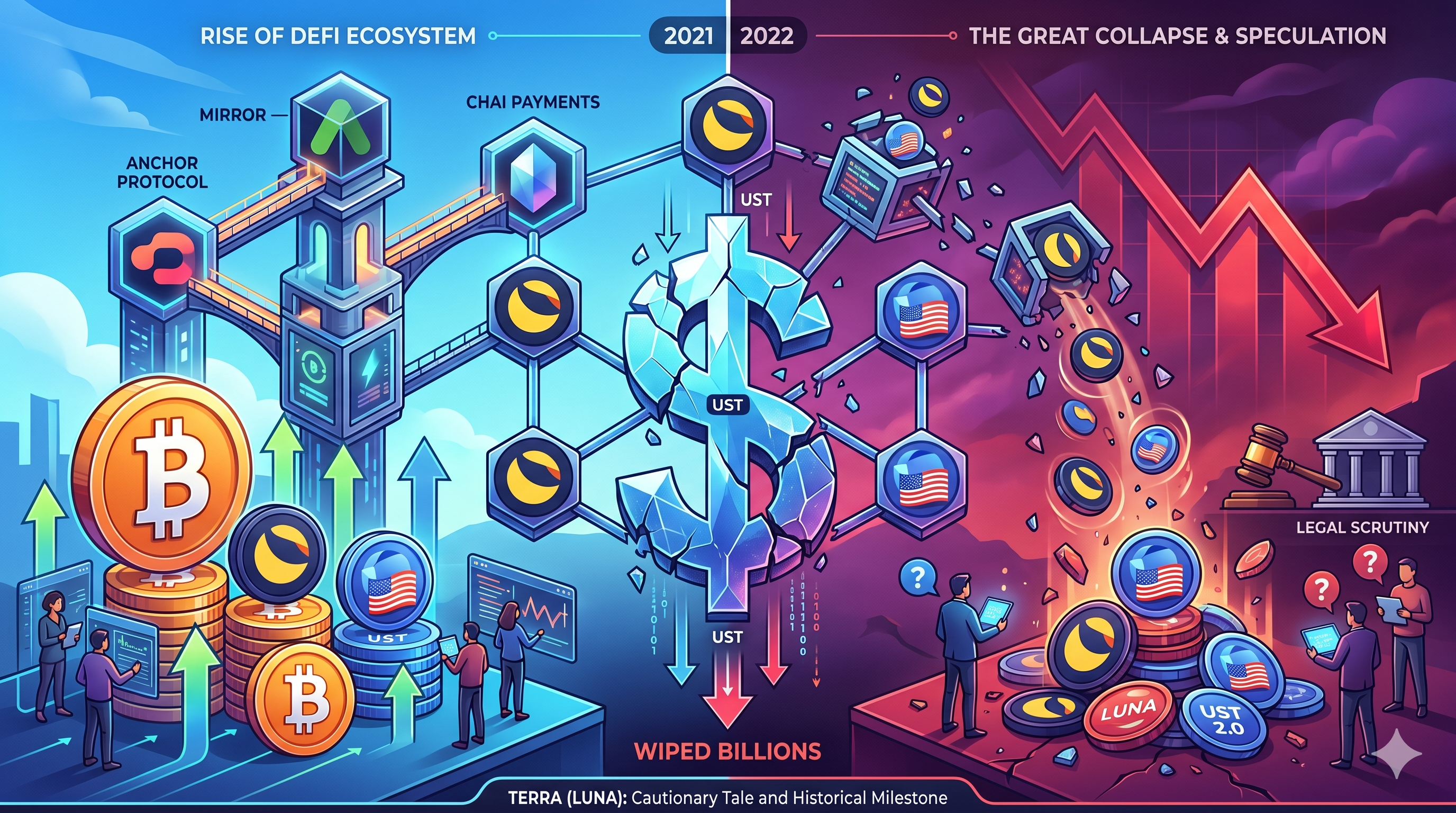
The story of Terra (LUNA) remains one of the most influential and controversial chapters in cryptocurrency history. Once celebrated as one of the fastest-growing decentralized finance (DeFi) ecosystems, Terra aimed to build a blockchain-powered financial infrastructure centered around algorithmic stablecoins, decentralized savings products, synthetic assets, and digital payments. At its peak in 2021 and early 2022, Terra’s ecosystem attracted billions of dollars in total value locked (TVL) and became a major competitor to Ethereum-based DeFi protocols.
However, the collapse of TerraUSD (UST) and LUNA in 2022 triggered one of the largest market crashes the crypto industry has ever experienced, wiping out tens of billions of dollars in value and accelerating a broader bear market across digital assets. Despite the collapse, Terra and LUNA still occasionally generate market attention in 2026 due to speculative trading activity, ongoing legal developments, community governance debates, and the historical importance of the Terra ecosystem in shaping modern crypto risk management.
Understanding how Terra originally worked, why it failed, and why traders still watch LUNA today provides important lessons about algorithmic stablecoins, DeFi sustainability, and systemic risk within blockchain ecosystems.
What Is Terra Blockchain?
Terra is a Proof of Stake (PoS) blockchain built on top of Cosmos SDK using Tendermint core, supporting stable programmable payments and open financial infrastructure development. LUNA is the native platform token of the Terra protocol that is used to collateralize all the stablecoins in the Terra blockchain ecosystem using a seigniorage model that maintains a fiat-peg and minimizes price volatility.
The seigniorage model for issuing currency is widely used in traditional financial markets. In simple terms, it is the difference between new minted currency and the cost of acquiring collateral. If a single US dollar costs $.05 to produce, the remaining $.95 difference is the profit which is called the seigniorage. Terra issues its stablecoins using the seigniorage model, and adds all the profits to Terra seigniorage pool to fund projects in the ecosystem.
LUNA achieves a peg of stablecoins using expansion and contraction methods. If the Terra stablecoin (UST) is above $1 peg, the supply is contracted by maximizing the amount of collateral (LUNA) required to mint an equivalent amount of UST. Similarly, if the UST is below the $1 beg, the supply is expanded by minimizing the LUNA collateral required to mint UST tokens.
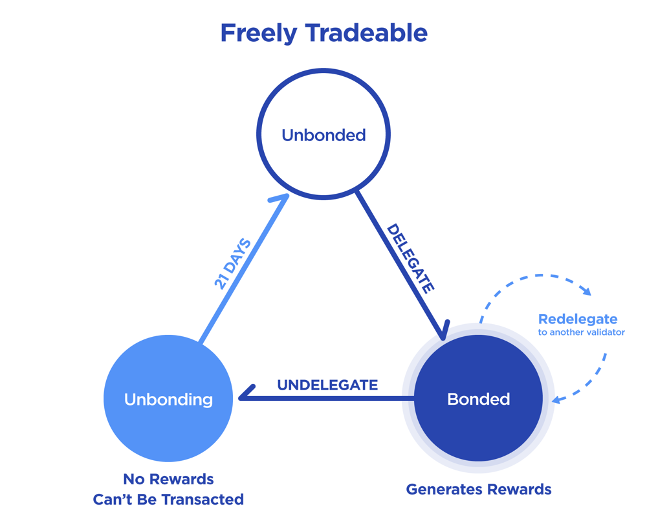
Aside from serving as the collateral, the LUNA token is also used for staking and platform governance. LUNA tokens holders can enjoy staking rewards in three forms: gas (compute fees), taxes (transaction fees), and seigniorage rewards from the issuance of stablecoins. LUNA tokens exist in three states:
- Unbonded (freely tradeable).
- Bonded (these are the locked LUNA tokens that generate rewards).
- Unbonding (the tokens are in the process of unstaking).
Source: Terra.money
What Caused the Collapse of Terra (LUNA)?
Although Terra was once considered one of the most innovative DeFi ecosystems in crypto, the project experienced a catastrophic collapse in May 2022 after its algorithmic stablecoin, TerraUSD (UST), lost its peg to the US dollar.
The Terra ecosystem relied on a mint-and-burn mechanism between UST and LUNA to maintain price stability. When UST traded below $1, users were incentivized to burn UST and mint LUNA, theoretically reducing UST supply and restoring the peg. However, during periods of extreme market panic, this mechanism created a destructive feedback loop.
As large amounts of UST were sold on the market, confidence rapidly disappeared. Massive quantities of new LUNA tokens were minted in an attempt to defend the UST peg, leading to hyperinflation of the LUNA supply. Within days, both UST and LUNA collapsed in value, wiping out billions of dollars from investors and institutions exposed to the ecosystem.
The Terra collapse became one of the defining moments of the 2022 crypto bear market and significantly changed how investors evaluate stablecoin designs, DeFi yields, and protocol sustainability. Regulators around the world also increased scrutiny on algorithmic stablecoins following the event.
Why Does LUNA Still Attract Attention in 2026?
Even years after the collapse of the original Terra ecosystem, LUNA and Terra-related tokens continue to attract speculative interest from parts of the crypto market.
One reason is historical relevance. Terra was once among the top blockchain ecosystems by market capitalization and total value locked, meaning many long-term crypto participants still closely follow developments related to the project. Major market crashes involving Terra also continue to be referenced in discussions about stablecoin risk management and DeFi security.
Another factor is speculative trading activity. In crypto markets, heavily discounted legacy tokens sometimes experience short-term price surges driven by trader sentiment, social media discussions, or exchange listing activity. LUNA periodically experiences volatility spikes as traders attempt to capitalize on these speculative movements.
The Terra community also remains partially active through governance proposals, ecosystem revival attempts, and blockchain development under Terra 2.0. While the ecosystem is significantly smaller than during its peak years, some developers and community members continue building decentralized applications on the network.
In addition, ongoing legal proceedings involving Terraform Labs and former executives occasionally bring Terra back into public discussion. News surrounding regulations, settlements, or court rulings can trigger renewed market attention toward LUNA-related assets.
For newer crypto investors, the Terra collapse has also become an important case study for understanding the risks associated with unsustainable yields, excessive leverage, and algorithmic stablecoin mechanisms.
The Terra Team and Terraform Labs
Terra was originally developed by Terraform Labs (TFL), a South Korean blockchain company founded in 2018 by Do Kwon and Daniel Shin. During the early growth phase of the project, Terraform Labs attracted significant support from venture capital firms and crypto-focused investment funds.
At its peak, Terra received backing from several major industry investors, including Galaxy Digital, Coinbase Ventures, Pantera Capital, Binance Labs, Polychain Capital, and Huobi Capital. The rapid growth of Terra’s ecosystem and the popularity of Anchor Protocol helped position LUNA as one of the largest cryptocurrencies by market capitalization during the 2021 bull market.
However, following the collapse of UST and LUNA in 2022, Terraform Labs faced intense legal and regulatory scrutiny across multiple jurisdictions. The event became a major turning point for crypto regulation globally, especially regarding stablecoins and investor protection frameworks.
Despite these challenges, the Terra blockchain community continues operating through decentralized governance mechanisms, while the broader crypto industry continues analyzing the rise and fall of Terra as one of the most important lessons in DeFi history.
Conclusion
Terra (LUNA) was once viewed as one of the most ambitious attempts to build a decentralized financial ecosystem powered by algorithmic stablecoins. Through products such as Anchor, Mirror, and Chai, Terra demonstrated how blockchain technology could potentially support payments, savings, and synthetic assets at scale.
At the same time, the collapse of UST and LUNA revealed the structural weaknesses of algorithmic stablecoin models during periods of extreme market stress. The event reshaped investor attitudes toward DeFi risk, stablecoin sustainability, and protocol transparency.
Even in 2026, Terra remains relevant as both a cautionary tale and a historical milestone within the crypto industry. While the ecosystem no longer holds the dominant position it once enjoyed, discussions surrounding LUNA still emerge whenever markets revisit themes such as speculative trading, stablecoin innovation, or systemic crypto risk.
For crypto investors and traders, the Terra story highlights the importance of risk management, sustainable tokenomics, and understanding how blockchain protocols function beyond bullish market conditions.