

Serenity’s 10x Korean AI Small Caps: Tiny Suppliers to Samsung, SK Hynix, and Micron
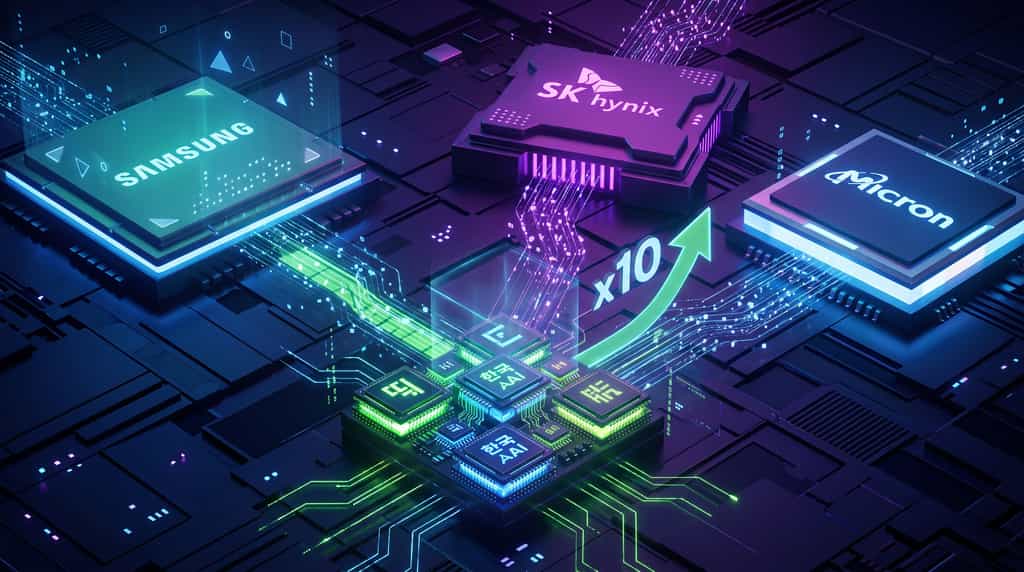
Smaller Semiconductor Suppliers Gain From South Korea’s AI-Driven Memory Expansion
South Korea’s semiconductor sector continues to reshape global artificial intelligence infrastructure as demand for high-bandwidth memory remains intense. Latest commentary from the investor known as Serenity has drawn attention to a quieter layer of this ecosystem: small-capitalization companies that supply critical components, equipment, and materials to the dominant memory producers. These firms, often valued between tens of millions and a few hundred million dollars, sit at points of potential operational inflection driven by the same AI-related capital spending that has lifted larger players.
Serenity indicated positions have already been established in several such names tied to memory, testing tools, machinery, and optical parts serving Samsung Electronics, SK Hynix, Micron Technology, and selected U.S. customers. The thesis is straightforward. Persistent tightness in advanced memory production, combined with multi-year expansion plans by the major chipmakers, creates conditions in which selected smaller suppliers can experience meaningful revenue acceleration and valuation re-rating if execution matches the broader demand direction.
Serenity’s Focus on Undervalued Korean Supply-Chain Nodes
Serenity, an anonymous analyst recognized for identifying upstream bottlenecks in AI hardware, recently stated that several South Korean public companies with market capitalizations ranging from roughly 30 million to 250 million dollars have been added to personal holdings. These firms manufacture or supply memory-related products, testing equipment, production machinery, and optical components used by Samsung, SK Hynix, Micron, and certain American enterprises. According to the comments, many of these businesses operate at commercial turning points where rising AI-driven orders could translate into sharper earnings growth. Serenity noted the higher risk and volatility inherent in such small names as the reason specific tickers remain undisclosed, yet observed that a move from approximately 40 million dollars in market value to 400 million dollars in even one or two cases would represent an attractive risk-reward balance for a concentrated position.
This approach aligns with a broader pattern of seeking choke points rather than the most visible large-cap beneficiaries of the AI buildout. Industry reporting confirms that the same capital expenditure cycle supporting high-bandwidth memory expansion at the major producers is beginning to filter into specialized equipment and materials vendors further down the chain. Verification of order trends and capacity utilization at these smaller firms remains essential, as liquidity constraints and execution risks are material. Still, the underlying logic rests on observable multi-year investment commitments by the memory leaders rather than short-term speculation.
AI Memory Demand Creates Structural Tightness Across the Ecosystem
High-bandwidth memory has become central to AI accelerator performance, and the three primary producers, Samsung, SK Hynix, and Micron, continue to face demand that exceeds readily available advanced capacity. Market data from earlier in 2026 showed SK Hynix holding a leading share of the HBM segment before Samsung narrowed the gap through successive qualifications with major customers. Persistent shortages have been described by executives and analysts as likely to extend well beyond the current year, prompting long-term supply agreements at elevated prices. This environment reduces the traditional cyclical volatility of memory markets and provides greater visibility for suppliers whose products are consumed in the expanded wafer starts and packaging steps required for next-generation stacks.
Small Korean firms providing specialized testing tools or optical components stand to benefit when the large producers increase input rates and accelerate equipment installation. Counterpoint Research and other trackers have documented shifts in HBM revenue shares among the majors, illustrating how quickly customer allocations can change and how quickly secondary suppliers must scale. The practical implication is that companies already qualified into these production lines gain operating leverage as volumes rise, while those still seeking qualification face a narrower window. Factual tracking of monthly wafer inputs and packaging capacity additions at the major fabs therefore becomes a leading indicator for the smaller ecosystem participants.
Samsung and SK Hynix Capacity Expansions Open Doors for Specialized Vendors
Samsung Electronics and SK Hynix have outlined multi-hundred-billion-dollar investment programs focused on new fabrication sites and high-bandwidth memory facilities. In mid-2026, the South Korean government and the two companies announced plans involving hundreds of trillions of won for additional memory fabs in the southwestern region and packaging hubs elsewhere. These projects aim both to meet global AI demand and to diversify production geography within Korea. For small suppliers of process equipment, materials, and testing systems, the expansions translate into multi-year order pipelines once construction and tool installation phases begin. Historical patterns show that when leading memory makers raise wafer starts by tens of thousands of sheets per month, demand for supporting capital equipment and consumables rises in parallel.
Latest reporting indicates Samsung intends to lift HBM wafer input significantly in the coming year while SK Hynix advances completion timelines at its Yongin cluster. Smaller Korean firms already embedded in these supply relationships can capture incremental volume without the same capital intensity required of the chipmakers themselves. The risk remains that delays in permitting, power infrastructure, or skilled labor availability could stretch schedules, yet the scale of committed spending provides a concrete backdrop against which secondary suppliers can plan capacity of their own. Investors monitoring these programs watch for detailed tool-order announcements that often precede broader revenue recognition at the smaller companies.
Optical Components and Advanced Packaging as Emerging Bottlenecks
Beyond pure memory die production, optical interconnects and advanced packaging have emerged as critical enablers for high-performance AI systems. Co-packaged optics and high-speed transceivers reduce latency and power consumption in data center racks, creating demand for specialized Korean optical component makers. Firms producing laser diodes, alignment equipment, or related modules have reported rising engagement with global customers serving Nvidia platforms and other accelerators. Parallel developments in flip-chip ball-grid-array substrates and multilayer ceramic capacitors further illustrate how packaging complexity multiplies the number of specialized inputs required. Samsung Electro-Mechanics, for example, has expanded capacity for AI-related substrates and noted demand exceeding current output in certain product lines.
Smaller pure-play optical or packaging equipment companies operating at lower market capitalizations sit closer to the inflection Serenity described. Industry sources in 2026 highlighted Korean suppliers securing positions in co-packaged optics component flows and active alignment tools. These segments remain relatively concentrated, so successful qualification with a major memory or accelerator customer can produce outsized revenue growth relative to the company’s existing base. Verification of actual shipment data and customer concentration remains necessary, yet the technological direction of AI systems continues to increase reliance on these intermediate layers of the supply chain.
Testing Equipment and Machinery Suppliers Positioned for Volume Leverage
Testing and process-control equipment form another essential layer that scales with rising wafer starts and more complex three-dimensional stacking. Korean small-cap firms specializing in probers, inspection tools, or specialized machinery for memory production have historically moved with the capital-spending cycles of Samsung and SK Hynix. As both companies accelerate HBM4 and successor product ramps, the need for higher-throughput testing solutions increases. Recent industry commentary has identified primary suppliers designated for major cluster projects, including equipment makers selected for the Yongin semiconductor complex. These relationships provide a degree of order visibility that is rarer among purely commodity component vendors.
When major producers raise monthly wafer inputs by tens of percent, the corresponding rise in test capacity requirements can drive utilization and new tool orders at the specialist firms. Serenity’s emphasis on testing equipment suppliers reflects this dynamic: the companies are small enough that a meaningful share of incremental industry demand can produce significant percentage revenue growth. Liquidity and customer concentration risks remain elevated, so position sizing and continuous monitoring of order backlogs are required. Public filings and supply-chain disclosures from the large chipmakers occasionally name key equipment partners, offering independent confirmation points for the investment thesis.
Market Capitalization Range and Liquidity Considerations for Small-Caps
The market-capitalization band cited by Serenity, approximately 30 million to 250 million dollars, places these companies firmly in the micro- and small-cap category on the Korean exchange. Liquidity is correspondingly thinner than in large-cap semiconductor names, and daily trading volumes can be modest. This characteristic contributes both to the potential for rapid percentage moves and to the elevated risk of sharp drawdowns. Historical performance of Korean semiconductor equipment and materials stocks during prior up cycles shows that once operating leverage becomes visible in quarterly results, re-ratings can occur quickly. At the same time, limited institutional coverage and lower float can amplify volatility around any news flow.
Investors evaluating the opportunity must therefore weigh the potential for market-value expansion against the practical challenges of entering and exiting positions without material market impact. Serenity’s decision not to disclose specific names is consistent with an awareness of these liquidity constraints. Independent research into order books, customer concentration, and balance-sheet strength becomes more important precisely because sell-side coverage is sparse. The 10x framework presented, moving from roughly 40 million to 400 million dollars in market value, illustrates the magnitude of change required to offset the higher risk profile, rather than a guaranteed outcome.
HBM Technology Roadmap and Supplier Qualification Dynamics
The progression from HBM3E to HBM4 and HBM4E continues to raise technical barriers in stacking, thermal management, and interconnect density. Each new generation requires tighter process control and more sophisticated testing, increasing the value of specialized equipment and materials already qualified into high-volume lines. Samsung, SK Hynix, and Micron have all secured positions as suppliers to major accelerator platforms, including successive Nvidia generations. Qualification cycles for secondary suppliers can be lengthy, so companies that have already passed customer audits hold a structural advantage when volumes ramp.
Public statements from the memory makers in 2026 confirmed multi-year partnerships and capacity allocations that lock in a portion of future demand. These commitments reduce uncertainty for the large producers and, by extension, for the smaller firms whose products are consumed in the same production flows. Tracking the timing of new process tool installations and the share of advanced HBM within total wafer starts therefore provides a practical framework for assessing the operating outlook of the specialized suppliers. Delays in next-generation qualification at any of the majors would correspondingly slow the secondary demand, underscoring the linked nature of the ecosystem.
Regional Investment Plans and Supporting Infrastructure Effects
South Korea’s coordinated push to expand semiconductor capacity outside the traditional Seoul-area clusters introduces both opportunities and logistical considerations for the supply base. Planned fabs in the southwest and packaging facilities in central regions will require local or regional supplier networks for materials, maintenance, and certain equipment categories. Government support for power, water, and workforce development is intended to accelerate timelines, yet the practical build-out of supporting infrastructure will determine how quickly new capacity can ramp. Small Korean companies with existing manufacturing footprints or engineering presence near the new sites may gain preferential access once construction moves into the tool-install phase.
Larger international equipment makers will also participate, but domestic firms often hold advantages in responsiveness and cost for certain categories of specialized tools and consumables. The scale of announced investment, hundreds of billions of dollars across memory and related infrastructure, creates a multi-year demand backdrop that is independent of short-term market sentiment. Monitoring progress on site preparation, power allocation, and initial equipment orders will offer early signals of when secondary suppliers begin to see corresponding order flow.
Valuation Context Relative to Historical Semiconductor Cycles
Korean semiconductor equipment and materials stocks have historically exhibited sharp valuation swings tied to the capital-expenditure cycles of the memory majors. During periods of sustained capacity expansion, multiples expand as earnings visibility improves; during downturns, the same stocks can compress rapidly. The current AI-driven cycle differs in duration and customer commitment structure because multi-year supply agreements and high-bandwidth memory’s structural role in AI systems reduce the amplitude of traditional boom-bust patterns. Analysts have noted that a larger share of capacity at Samsung and SK Hynix is now covered by longer-term contracts, supporting higher through-cycle valuations for the sector overall.
For the smallest suppliers, however, the same visibility may arrive later and with greater lag. Valuation analysis therefore requires careful comparison of current enterprise values against expected free-cash-flow generation once the incremental volume materializes. The 10x market-capitalization scenario outlined by Serenity implies a combination of earnings growth and multiple expansions that would be consistent with a successful transition from a niche supplier to a more established participant in the AI memory ecosystem. Independent modeling of revenue sensitivity to major-customer wafer-start growth remains the most reliable way to test the plausibility of such outcomes.
What Could Pressure Micro-Cap Semiconductor Suppliers
Investment in companies of this size carries distinct risks that extend beyond the usual semiconductor cyclicality. Customer concentration is frequently high; a single large memory maker can account for a substantial portion of revenue. Loss or delay of a major qualification can therefore produce outsized negative effects. Balance-sheet strength varies widely, and access to additional capital for capacity expansion may be limited or expensive. Currency fluctuations between the Korean won and the dollar affect reported results for firms with significant export exposure.
Geopolitical or trade-policy developments that alter equipment or materials flows can also impact smaller participants more severely than the diversified majors. Liquidity constraints mean that even positive fundamental developments can take time to be reflected in share prices, while negative news can produce rapid declines. Serenity’s own commentary acknowledged these risks by declining to name specific holdings and framing the opportunity in terms of asymmetric upside sufficient to compensate for the elevated volatility. Thorough due diligence on governance, order backlog quality, and competitive positioning is therefore indispensable before any capital allocation.
Signals to Monitor Among Semiconductor Sub-Suppliers
Investors seeking to track the progress of this theme can focus on a set of observable indicators rather than relying solely on forward-looking statements. Monthly or quarterly wafer-start data from the major memory producers, when available, provide a direct measure of volume growth that eventually reaches equipment and materials suppliers. Announcements of new tool orders or capacity expansions at Samsung, SK Hynix, or Micron often name key equipment partners and can serve as confirmation of participation. Quarterly earnings releases from the smaller companies themselves, while sometimes less detailed, still reveal trends in revenue mix, gross margin, and backlog.
Industry conferences and trade publications periodically disclose qualification wins or new product introductions in optical, testing, or packaging segments. Share-price performance relative to the larger semiconductor indices can also highlight periods when the market begins to price in operating leverage at the smaller names. Combining these data points creates a practical framework for assessing whether the inflection points described by Serenity are materializing in reported results.
What This Means for AI Infrastructure Investment Strategies
The attention directed toward Korean small-cap suppliers reflects a maturation of AI infrastructure investing. Early phases concentrated capital in the most visible accelerator and memory companies. Subsequent phases have extended analysis further upstream and downstream into specialized materials, equipment, and interconnect technologies. This progression mirrors patterns observed in prior technology buildouts, where the largest absolute returns sometimes accrue to intermediate suppliers once the primary demand drivers are well established.
For portfolios already holding exposure to Samsung, SK Hynix, or Micron, selective addition of smaller complementary names can provide incremental leverage to the same underlying demand. The reverse is also true: weakness in the majors would likely transmit quickly to the secondary suppliers. Position sizing, diversification across multiple small names where possible, and continuous verification of order trends therefore remain central to risk management. The framework Serenity articulated, identifying businesses at commercial inflection points within a structurally expanding market, offers a disciplined starting point, provided it is applied with rigorous independent verification of the underlying data.
FAQs
What specific types of products do the Korean small-cap suppliers highlighted by Serenity provide to the major memory companies?
These firms supply a range of inputs, including specialized memory-related components, testing and inspection equipment, production machinery, and optical parts used in high-bandwidth memory manufacturing and advanced packaging. The common thread is their position as intermediate suppliers whose volumes scale with wafer starts and process complexity at Samsung, SK Hynix, and Micron. Because the products are often highly specified and require customer qualification, once a supplier is embedded, the relationship can generate multi-year revenue streams.
Why does Serenity choose not to disclose the specific company names?
The decision reflects the combination of elevated volatility, limited liquidity, and the risk that public identification could itself move prices in thin markets. Micro-cap stocks can experience exaggerated reactions to any high-profile mention, creating both opportunity and potential for rapid reversals. By keeping the names private, the investor avoids contributing to short-term crowding while still articulating the broader thematic logic.
How does the current AI-driven memory cycle differ from previous semiconductor upturns for smaller suppliers?
Earlier cycles were characterized by sharper boom-bust swings in pricing and capacity utilization. The present environment features longer-term supply agreements, structurally higher content of high-bandwidth memory in AI systems, and multi-year capacity expansion commitments by the major producers. These factors improve earnings visibility further down the supply chain once secondary suppliers are qualified.
What role do optical components play in the AI supply chain that benefits Korean specialists?
Optical interconnects, including co-packaged optics and high-speed transceivers, address power and latency constraints in large-scale AI clusters. As rack-scale systems grow denser, the value of specialized laser sources, alignment equipment, and related modules rises. Korean firms active in these areas have reported increasing engagement with global customers serving accelerator platforms.
Are there government or regional development programs that could accelerate opportunities for these small companies?
South Korea’s coordinated semiconductor and AI infrastructure initiatives include substantial investment in new fabrication sites and supporting infrastructure outside traditional clusters. These programs create potential demand for local equipment, materials, and service providers once construction and tool installation phases advance. Progress depends on timely delivery of power, water, and skilled labor resources.
What are the primary risks associated with investing in these micro-cap suppliers?
Key risks include high customer concentration, limited liquidity, variable balance-sheet strength, and sensitivity to any slowdown or delay in the major memory producers’ expansion timelines. Currency movements and potential changes in trade policy can also affect results. Because many of these companies have thinner research coverage, information asymmetry is greater than in large-cap names.
Disclaimer: This content is for informational purposes only and does not constitute investment advice. Investments carry risk. Please do your own research (DYOR).