KuCoin Ventures Weekly Report:Stronger U.S. Policy Signals and Renewed ETF Inflows Drive a Repricing in Crypto Markets
KuCoin Ventures Weekly Report:Stronger U.S. Policy Signals and Renewed ETF Inflows Drive a Repricing in Crypto Markets
2026/08/25 11:01:00
1. Weekly Market Highlights
U.S. Crypto Policy Signals Intensify: Shifting Regulatory Expectations Coincide with Improving Market Risk Appetite
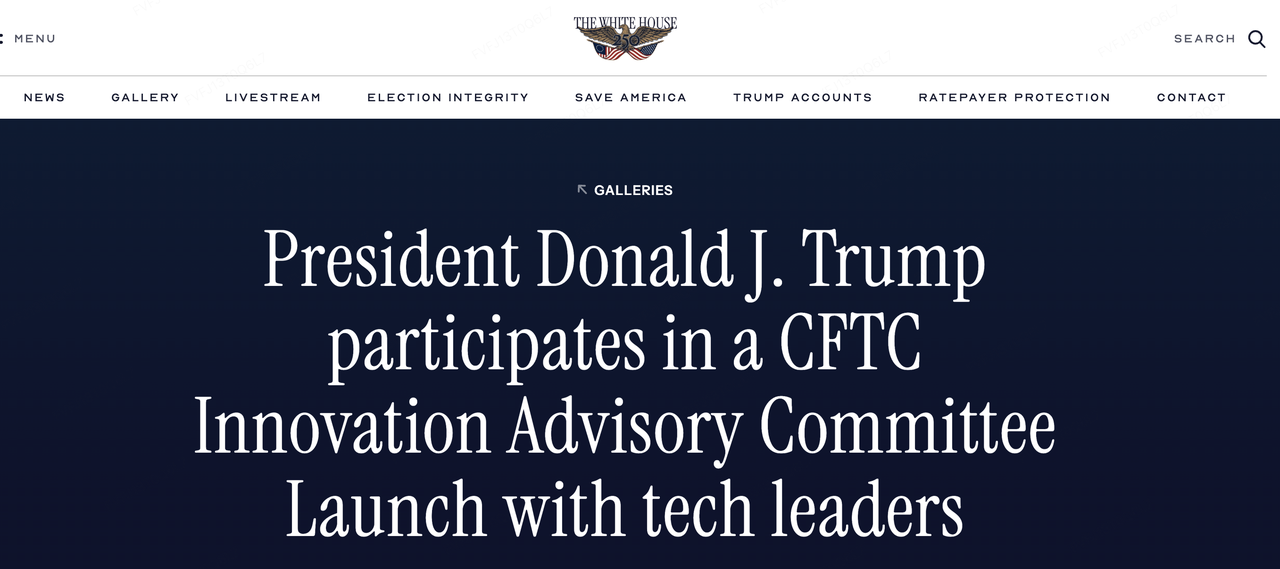
Last week saw a notable increase in U.S. crypto-related regulatory developments, alongside an improvement in crypto market risk appetite. President Trump met with representatives from both the crypto and traditional financial sectors at the White House and again called on Congress to advance the CLARITY Act. The SEC proposed its Regulation Crypto Assets framework, introducing potential exemptions, disclosure requirements, and safe-harbor arrangements for certain crypto-asset fundraising activities and investment contracts. The U.S. Treasury also issued another proposed rulemaking related to the implementation of the GENIUS Act. Importantly, the CLARITY Act remains in the legislative process, while the SEC and Treasury proposals are still proposed rules rather than final regulatory requirements currently in effect.
The concentration of these developments has brought renewed market attention to the direction of U.S. crypto regulation. The CLARITY Act primarily addresses digital-asset market structure and the allocation of regulatory responsibilities among agencies including the SEC and CFTC. The SEC proposal focuses more specifically on token fundraising, disclosure requirements, and the treatment of investment contracts. The GENIUS Act has already been enacted, while the Treasury is now developing more detailed implementing rules for the issuance, offering, and sale of payment stablecoins. Although the three policy tracks differ in stage and scope, they collectively reflect a broader shift toward legislative and rulemaking processes rather than regulation being shaped primarily through individual enforcement cases.
Data Source: The White House
Over the same period, trading markets also showed a notable shift in risk appetite. BTC gained nearly 20% over the week, marking one of its strongest weekly performances in roughly two and a half years, and briefly traded above $79,000. ETH gained approximately 20%–30% over the same period. Meanwhile, U.S. equities were generally weaker, with the Nasdaq declining around 2.1% for the week, creating a degree of short-term divergence between crypto assets and traditional risk assets. Crypto-related equities including Coinbase, Strategy, and Circle also posted notable gains during the week, meaning the shift in market sentiment was not limited to token markets.
However, the rally should not be attributed solely to regulatory developments. The U.S. Treasury’s expansion of long-duration Treasury buybacks, a weaker dollar, and the covering of previously accumulated short positions may also have affected risk-asset performance, while leverage within crypto markets amplified short-term price movements. A more cautious observation is that regulatory headlines, macro liquidity conditions, positioning adjustments, and capital flows occurred within the same time window. Some market commentary viewed improving policy expectations as one of the factors supporting the recovery in sentiment, rather than as the sole driver.
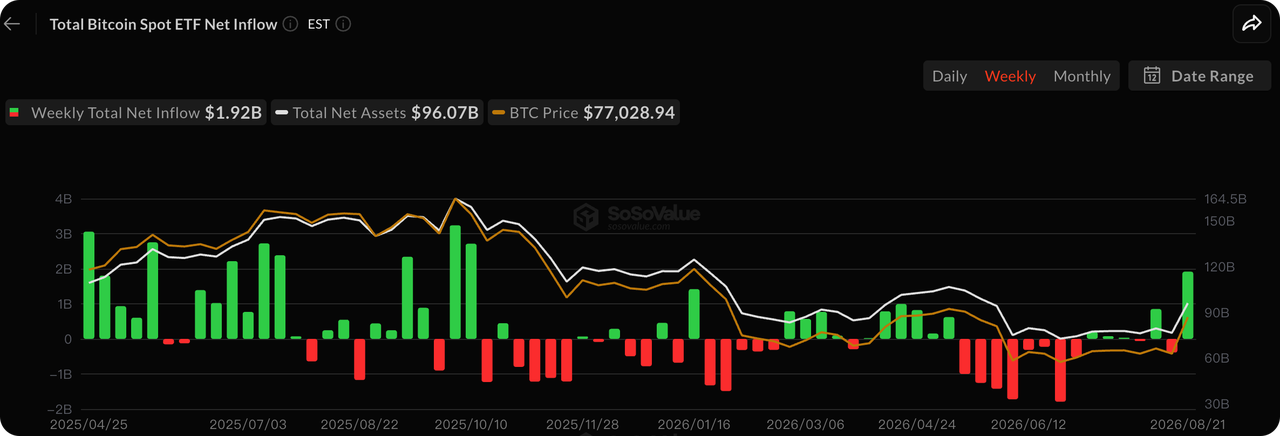
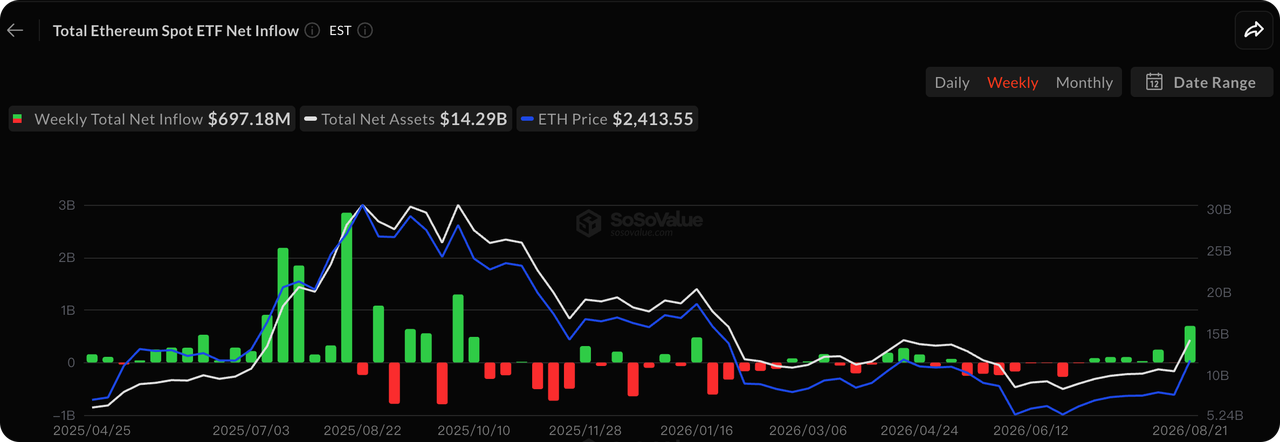
Fund flows also moved in the same direction as prices. U.S. spot BTC and ETH ETFs both recorded some of their strongest inflows of the year, accompanied by a significant increase in trading volumes. At the same time, activity increased across spot markets, ETFs, and crypto-related equities, suggesting that the improvement in market sentiment was reflected across multiple trading channels rather than being concentrated solely in highly leveraged derivatives markets. U.S. spot BTC and ETH ETFs attracted a combined $2.6 billion during the week, their strongest weekly inflow since October 2025.
From a market-structure perspective, these policy developments do not mean that the U.S. crypto regulatory framework has already been settled. In the past, market pricing around U.S. policy changes often centered on enforcement actions, litigation outcomes, or statements from individual regulators. More recently, attention has increasingly shifted toward legislative progress, public-comment processes, and the design of specific rules. For traders, these developments may affect risk premia and positioning, while their longer-term impact will still depend on final legislative and regulatory texts, implementation timelines, and coordination among different regulatory agencies.
Going forward, key areas to monitor include the progress of the CLARITY Act in Congress, potential revisions to the SEC proposal following the public-comment process, and the final scope of implementing rules under the GENIUS Act. In the short term, changes in regulatory expectations, macro liquidity conditions, and market positioning have coincided with noticeable shifts in crypto prices and trading activity. Whether these conditions translate into more sustained trading activity and capital participation will remain dependent on subsequent policy developments and market data.
2. Weekly Selected Market Signals
A Weaker Dollar Fuels a Crypto Rebound as ETF Inflows Return, but Liquidity Has Yet to Turn Broadly Easier
Global asset performance diverged noticeably last week. U.S. long-term Treasury yields rose sharply at one point, with the 30-year yield reaching around 5.34%, its highest level since 2007. Elevated long-term rates continued to weigh on duration-sensitive assets such as technology stocks, leaving all three major U.S. equity indices lower for the week. On August 19, the U.S. Treasury announced that it would increase the size of individual liquidity-support buybacks for 10–20-year and 20–30-year Treasuries from a maximum of $2 billion to at least $4 billion. Following the announcement, the 30-year yield retreated from its highs.
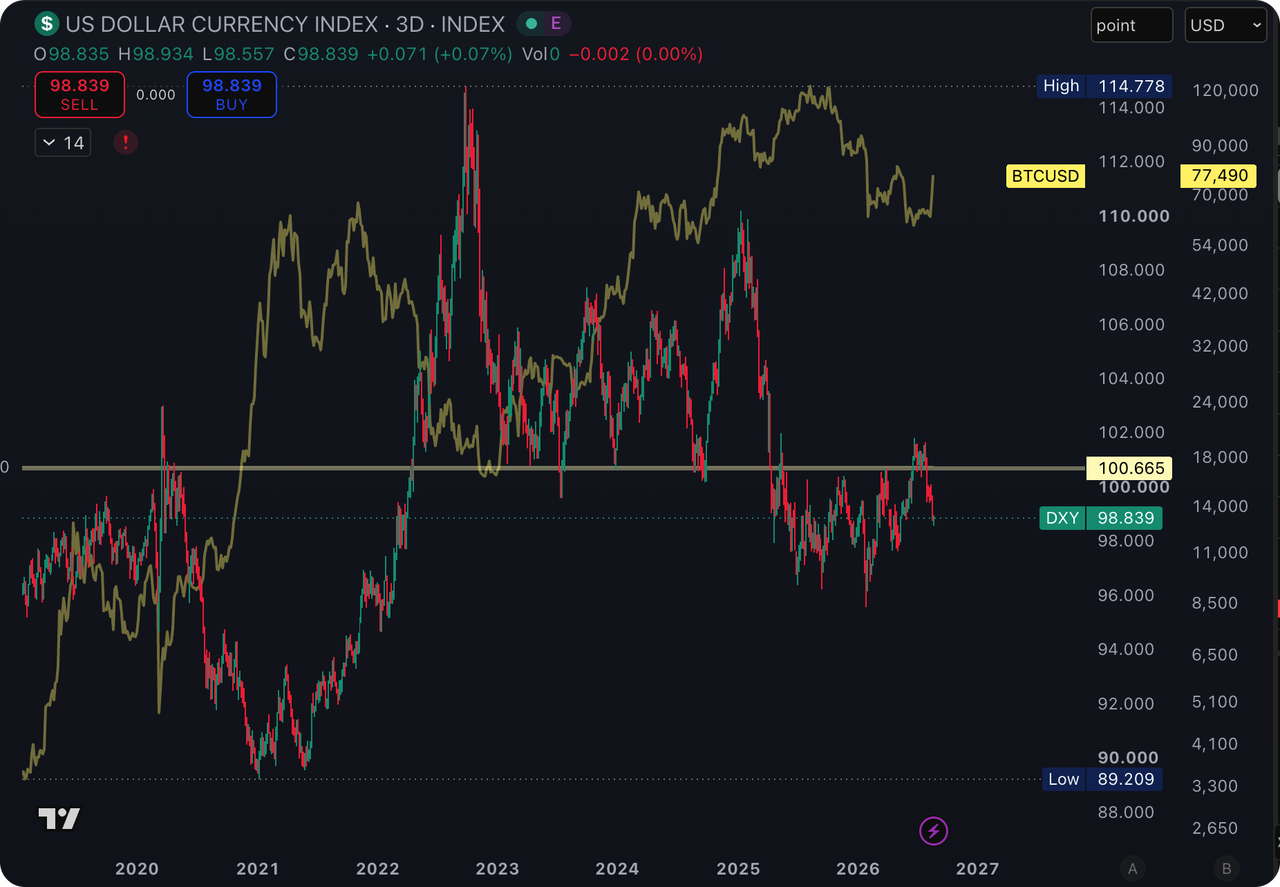
Data Source: TradingView
On August 19, the U.S. Treasury announced that it would raise the size of individual liquidity-support buybacks for 10–20-year and 20–30-year Treasuries from a maximum of $2 billion to at least $4 billion, with the new arrangement running from September 9 through November 4.
The announcement briefly pushed the 30-year Treasury yield noticeably lower from its highs. Importantly, Treasury buybacks are primarily designed to improve liquidity in off-the-run and long-duration Treasury securities and are fundamentally different from Federal Reserve QE. They also do not change the overall fiscal deficit or the government’s financing needs. Their more direct effect is therefore to ease short-term term-premium and market-liquidity pressures, rather than create a sustained increase in base money.
Another notable development was that rising Treasury yields did not translate into a stronger dollar. The U.S. Dollar Index weakened meaningfully over the week, falling close to 1%, while gold and BTC advanced at the same time. This suggests that market attention is gradually shifting away from the conventional “higher yields → stronger dollar” framework toward long-term fiscal financing costs, term premia, and the additional risk compensation investors require to hold long-duration U.S. dollar assets.
From this perspective, higher Treasury yields do not necessarily support the dollar. If the rise in yields is driven mainly by a higher term premium rather than stronger growth or expectations for higher policy rates, both the dollar and long-duration Treasuries could come under pressure simultaneously.
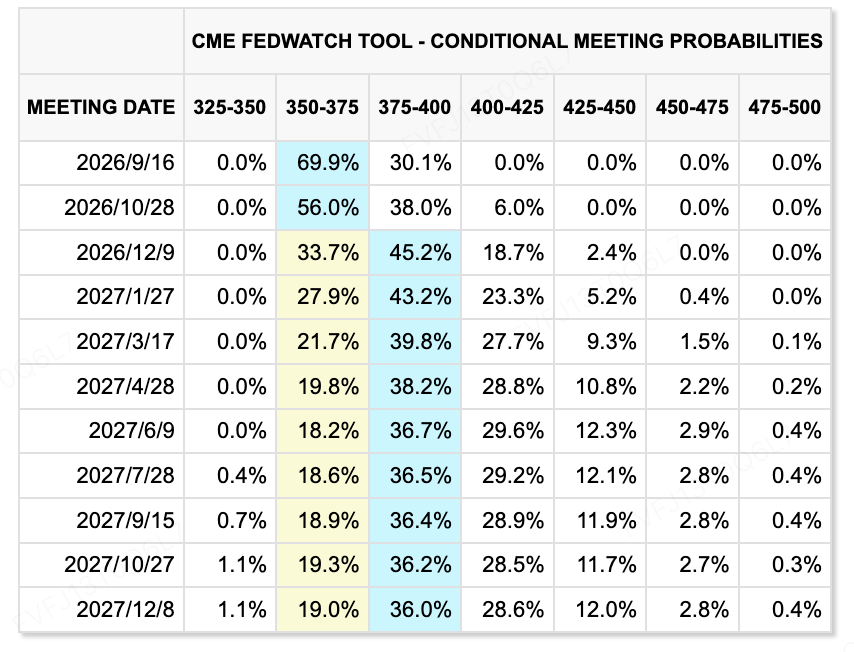
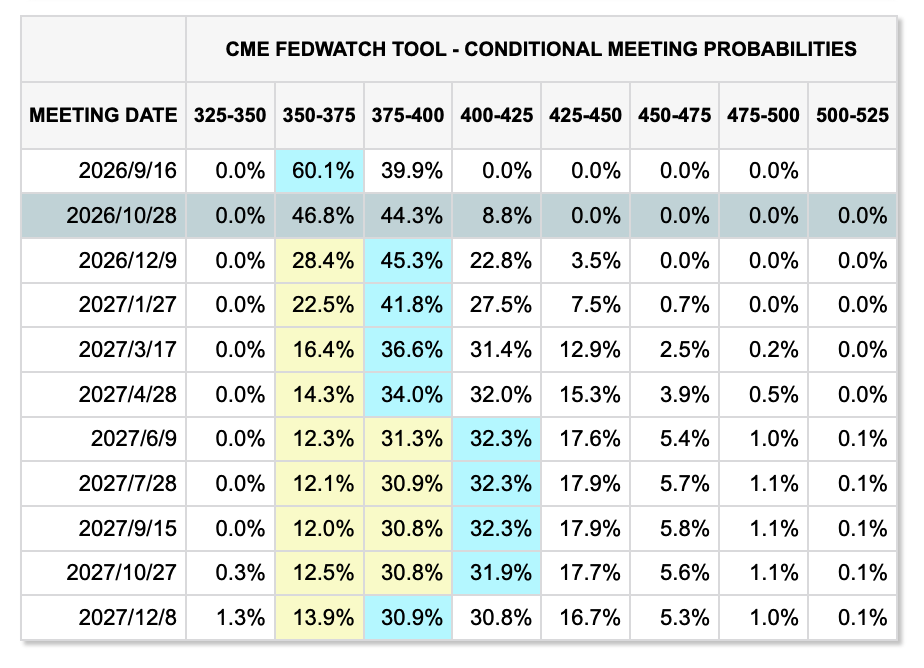
Change in market pricing over the past two weeks
(Previous week shown first; current week shown second)
Data Source: CME FedWatchTool
The July FOMC minutes released last week maintained an overall hawkish tone, while internal divisions became more pronounced. The minutes showed that many participants believed further policy tightening could become necessary if inflation failed to decline as expected. Some officials also argued that current financial conditions might still be insufficiently restrictive to bring inflation sustainably back toward the 2% target. Combined with CME FedWatch pricing, the market is still actively reassessing the Fed’s terminal rate path for the remainder of the year, with expectations continuing to fluctuate.
Crypto Assets and ETFs: BTC Returns to $77,000 as Risk Appetite Broadens Beyond Bitcoin
Data Source: SoSoValue
Crypto significantly outperformed traditional risk assets last week. Bitcoin rebounded sharply from its recent low near $60,000, briefly breaking above $79,000 before ending the week around $77,000, for a weekly gain of roughly 23%. ETH rose about 26% over the same period, recovering to around $2,400. Both BTC and ETH posted one of their strongest weekly performances in recent years. HYPE, LINK, and ZEC gained more than 30%, while major high-beta assets such as SOL also materially outperformed BTC, indicating that risk appetite is beginning to spread from Bitcoin into the broader altcoin market.
The macro backdrop for this rebound has been relatively unusual: U.S. equities came under pressure while BTC rallied, and long-term Treasury yields remained elevated even as the dollar weakened. This divergence suggests that the current move may be less closely tied to the typical Fed-driven liquidity cycle. The market dynamics appear more consistent with a broader repricing of U.S. dollar assets, with some capital rotating toward scarce assets such as gold and BTC. In addition, after an extended period of deleveraging and price declines, improving macro conditions triggered short covering, which also amplified the magnitude of the rebound.
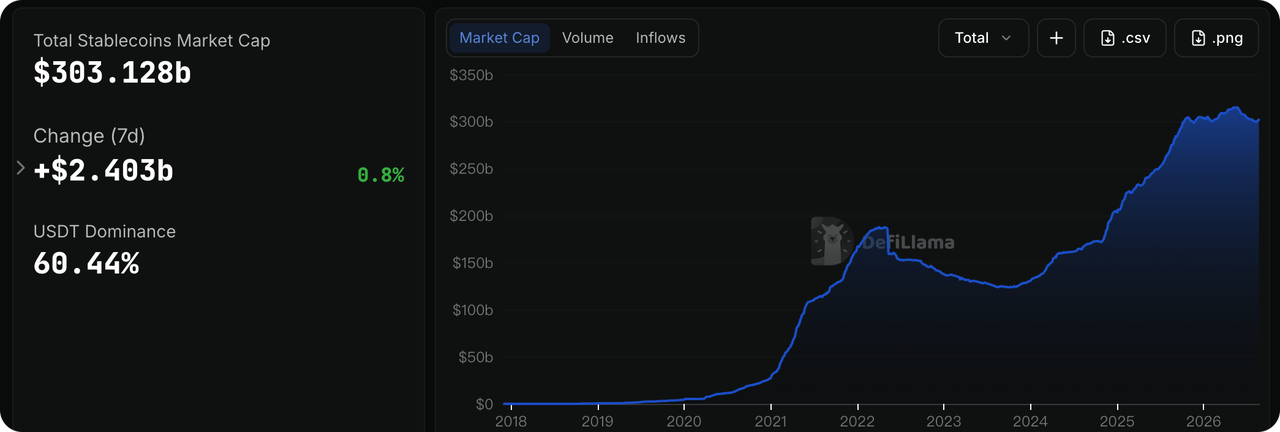
A short-term technical breakout alone is therefore still insufficient to establish a longer-term trend reversal. The ability of both onshore and offshore capital to continue absorbing supply may become one of the key indicators for judging whether the rally can extend further. The two most important indicators to track are the persistence of spot ETF inflows and the expansion of stablecoin supply. If rising prices are accompanied by continued growth in both ETF assets and stablecoin liquidity, the funding base behind the rally would become more robust. If ETF inflows slow rapidly while stablecoin supply stagnates, the market would face a greater risk that short covering and short-term trading flows account for a large share of the recent move.
Stablecoin Supply
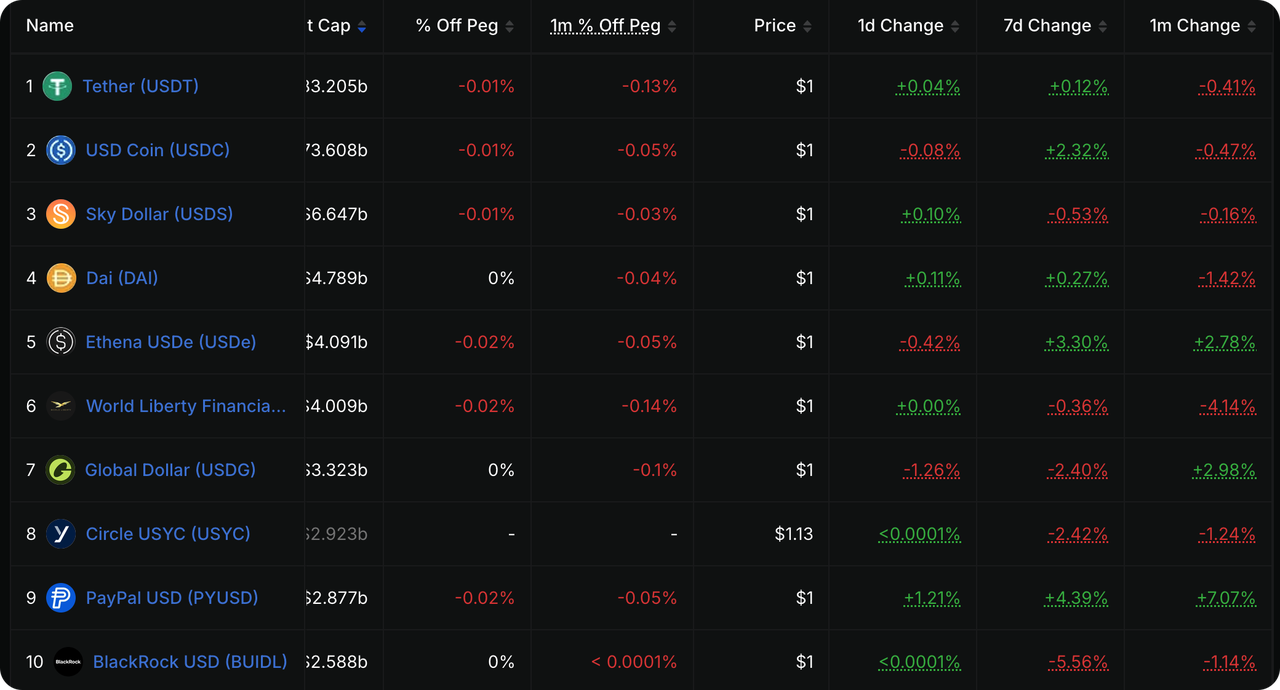
Data Source: DeFiLlama
Crypto-native U.S. dollar liquidity improved further last week. According to DefiLlama, total stablecoin market capitalization rose to approximately $303.1 billion, increasing by around $2.4 billion over seven days, or 0.8% week over week. USDC supply increased by 2.32% over the same period, equivalent to approximately $1.7 billion in new supply, making it the largest source of incremental growth among the major stablecoins. Ethena USDe rose by around 3.30% for the week, while PayPal USD increased by approximately 4.39%.
Although the pace of growth remains well below the stronger liquidity-expansion phases seen since 2025, stablecoin supply has moved back into net growth after a period of stagnation.
Key Events to Watch This Week
A dense schedule of macro data releases and central-bank events over the next one to two weeks could materially influence expectations for cross-asset liquidity:
August 26: U.S. core PCE inflation and the revised quarterly GDP estimate will be released. NVIDIA will also report earnings, providing another test of the sustainability of AI-related capital expenditure.
August 27–29: The Jackson Hole Economic Policy Symposium will take place.
Given the recent persistence of inflation and the internal divisions highlighted in the FOMC minutes, the tail risk of a more hawkish policy message at Jackson Hole has increased. If the easing path previously priced by markets fails to materialize, long-duration risk assets could face renewed valuation pressure in the near term.
Private-Market Funding: Activity Remains Subdued as Capital Shifts Further Toward Institutional Finance and RWA Infrastructure
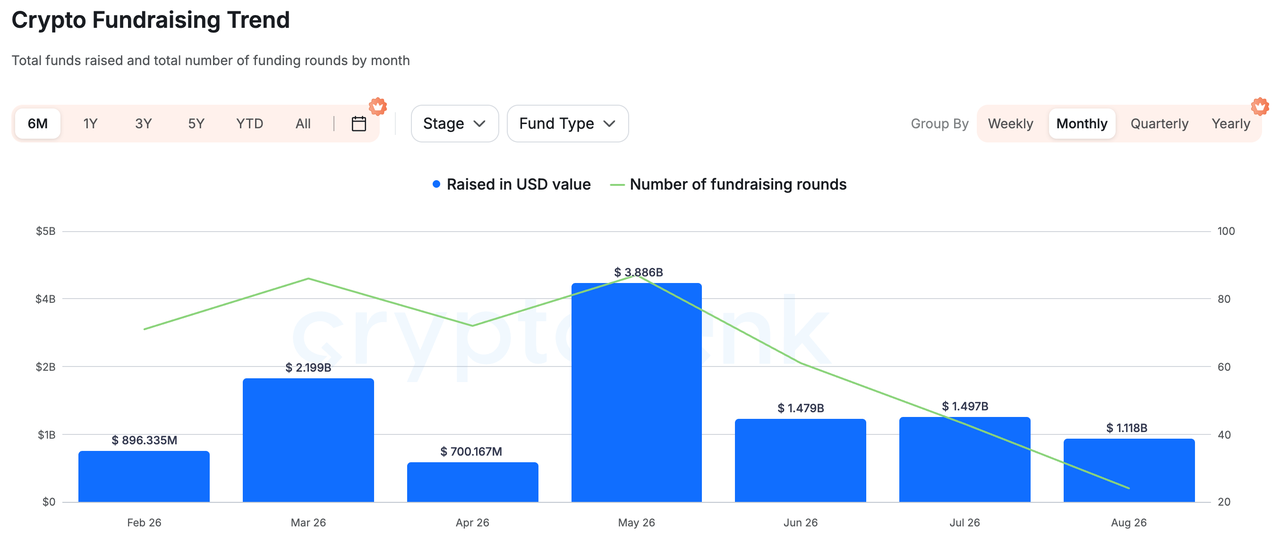
Data Source: CryptoRank
Crypto private-market fundraising activity remained broadly in line with the subdued levels seen over the past several months, while capital continued to tilt toward institutional finance and infrastructure. Headlines around large transactions increased, but traditional VC funding for early-stage crypto projects remained relatively weak.
AI × Crypto remained one of the clearer themes in the private market last week.
The largest conventional funding round came from NeoSoul, which raised $11 million in a Pre-Series A round from investors including MH Ventures, Amber Group, ArkStream Capital, 0G Foundation, and Kirin Capital. The funding will primarily support its Agentic Trading products and AI-economy infrastructure. The project aims to enable AI agents to autonomously perform forecasting, trading, and other on-chain economic activities.
Beldex also raised $8 million, led by Sigma Capital, with participation from NTC, Nxgen, Digital Consensus Fund, EAK Ventures, and others. The capital will be used to develop privacy infrastructure across AI-agent identity, encrypted communications, and private payments.
Compared with the previous wave of Crypto AI investment, which was concentrated more heavily on computing infrastructure, models, and agent-launch platforms, recent projects are increasingly focused on agent execution, identity, privacy, and underlying financial infrastructure. This suggests that the intersection of AI and Crypto is becoming more specialized and gradually moving closer to practical, application-oriented use cases.
About KuCoin Ventures
KuCoin Ventures, is the leading investment arm of KuCoin Exchange, which is a leading global crypto platform built on trust, serving over 40 million users across 200+ countries and regions. Aiming to invest in the most disruptive crypto and blockchain projects of the Web 3.0 era, KuCoin Ventures supports crypto and Web 3.0 builders both financially and strategically with deep insights and global resources. As a community-friendly and research-driven investor, KuCoin Ventures works closely with portfolio projects throughout the entire life cycle, with a focus on Web3.0 infrastructures, AI, Consumer App, DeFi and PayFi.
Disclaimer This general market information, possibly from third-party, commercial, or sponsored sources, is not legal, compliance, financial, or investment advice, an offer, solicitation, or guarantee. We make no express or implied representations or warranties regarding its accuracy, completeness, or reliability, and disclaim liability for any resulting losses. Investments/trading are risky; past performance doesn't guarantee future results. Users should research, judge prudently, and take full responsibility. Please consult professional legal, tax, or financial advisors if necessary.