

Fidelity International Fund Doubles Gold Holdings Amid Fed Credibility and Dollar Safe-Haven Concerns
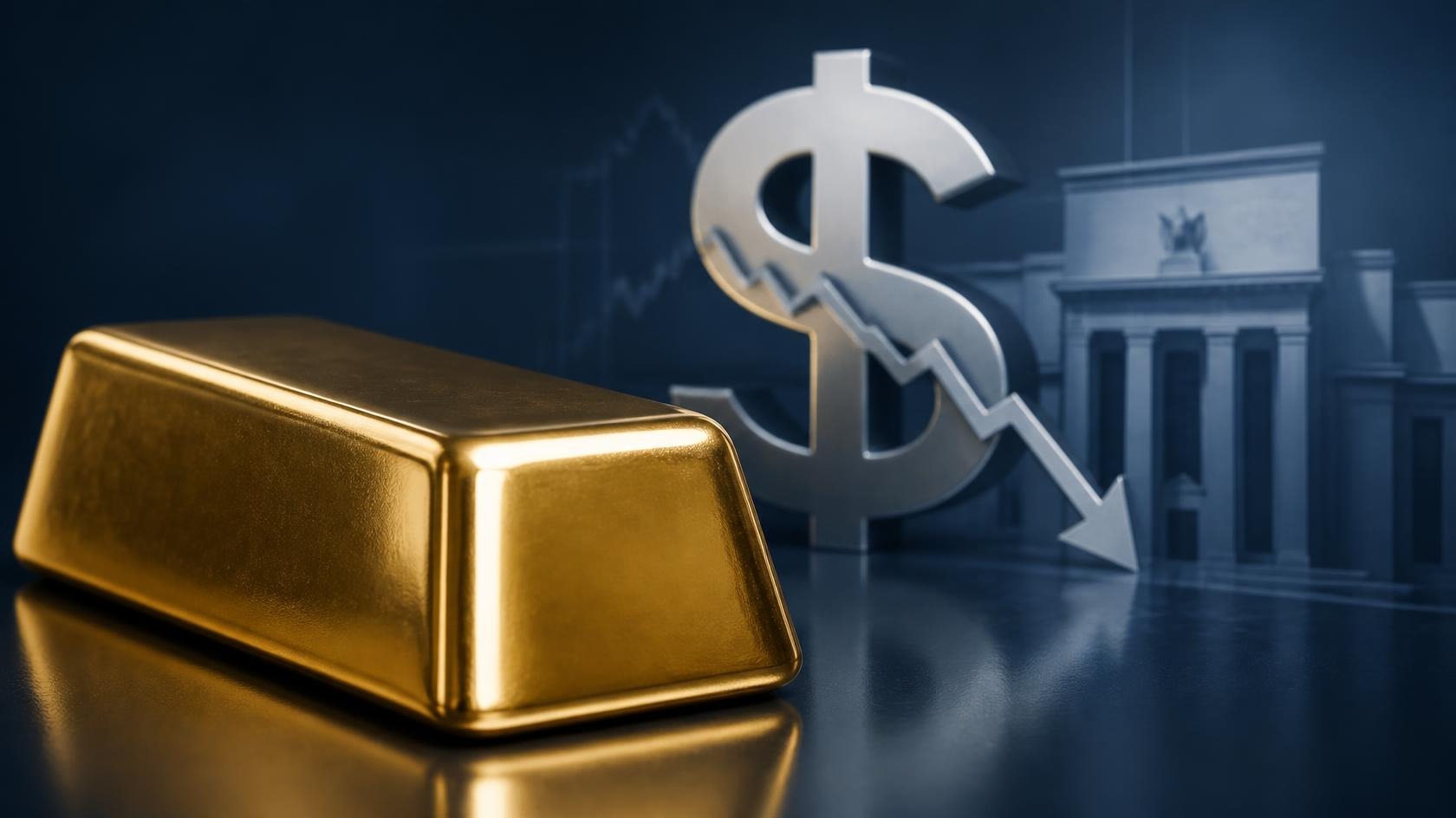
When a major asset manager significantly changes the gold exposure of one of its funds over a short period, markets tend to pay attention. That is what happened in August 2026 at Fidelity International, where portfolio manager George Efstathopoulos doubled the gold holdings in the fund he oversees, taking the position to a self-imposed 5% ceiling.
The move does not represent a decision by Fidelity as a whole. Rather, it refers specifically to Efstathopoulos's portfolio and his assessment of changing macroeconomic conditions. In an interview reported by Bloomberg, he linked the move to increasing uncertainty over Federal Reserve policy, the sell-off in long-dated U.S. Treasury bonds following the Fed's July meeting, and concerns about the dollar's traditional safe-haven role.
The timing was notable. The increase in gold exposure came after investors pulled back from longer-dated U.S. government bonds following the Federal Reserve's July 28–29 meeting. The Fed kept its benchmark interest-rate target unchanged at 3.50% to 3.75%, while three voting members preferred a quarter-point increase.
The U.S. Treasury also announced in August that it would at least double the maximum size of certain liquidity-support buyback operations for longer-dated Treasury securities, from $2 billion to at least $4 billion per operation. Treasury said the measure was designed to provide greater liquidity in the longer-dated market.
Meanwhile, gold prices recovered sharply during August. Spot gold reached $4,680.70 per ounce on August 24 before settling at $4,639.49, while December gold futures closed at $4,697.80. Gold-backed exchange-traded funds also recorded substantial inflows during the rally.
This article examines what prompted the Fidelity International portfolio move, how the Federal Reserve's July decision affected bond markets, what the Treasury's buyback announcement means, and how gold prices, ETF flows, and institutional positioning have responded.
What Prompted Fidelity International's Gold Move
George Efstathopoulos manages multi-asset strategies at Fidelity International. According to Bloomberg reporting cited by several financial publications, he doubled the gold holdings in the fund he oversees over a three-week period in August, taking the exposure to a self-imposed maximum of 5%. He also indicated that he could reconsider that ceiling if the U.S. dollar's safe-haven status continued to weaken.
The distinction between Fidelity International and Fidelity Investments in the United States is important. The reported move concerns Fidelity International and one portfolio managed by Efstathopoulos, rather than a company-wide decision covering all Fidelity funds or assets.
The change also represented a reversal from earlier in 2026. Efstathopoulos had reduced gold exposure earlier in the year as the metal declined significantly from its January peak. He subsequently began rebuilding the position after the sell-off in long-dated Treasury bonds that followed the Federal Reserve's July meeting.
The reported reasoning centered on the relationship between bond yields, monetary policy credibility, and the dollar. Rather than focusing only on whether yields were rising, Efstathopoulos emphasized the reasons behind the move in yields and what those reasons could imply for markets.
The Catalyst: Fed Meeting and Market Reaction
The Federal Reserve's July 28–29 meeting was an important part of the sequence.
On July 29, the Federal Open Market Committee voted 9–3 to maintain the federal funds target range at 3.50% to 3.75%. The three dissenters were Beth Hammack, Neel Kashkari, and Lorie K. Logan, all of whom preferred a quarter-point increase. The Fed said inflation remained elevated relative to its 2% objective, while also noting uncertainty connected partly to the conflict in the Middle East.
The three dissents were significant because the decision represented a clear split among voting members over the appropriate response to inflation. Reuters reported that the decision raised questions about how Fed Chair Kevin Warsh would pursue the central bank's inflation objective.
The disagreement also came as markets were already closely watching longer-term Treasury yields. Following the meeting, investors continued to reassess the outlook for inflation, interest rates, and government debt.
Efstathopoulos described the bond-market reaction in terms of what he viewed as a lack of Federal Reserve credibility and greater policy uncertainty. His interpretation was that investors were paying attention not only to the Fed's decision to hold rates but also to the uncertainty surrounding the future policy path.
That distinction is important for understanding the gold move. Higher interest rates can generally create a headwind for an asset that does not pay interest. However, the market reaction can differ when higher long-term yields are driven by concerns about inflation, fiscal policy, or confidence in monetary policy.
Why the Reason Behind Rising Yields Matters for Gold
Efstathopoulos's comments focused on the reason behind rising yields rather than simply on their level.
Gold traditionally faces pressure when real interest rates rise because bullion does not generate interest income. However, gold can also attract demand when investors are concerned about inflation, currency stability, fiscal risks, or uncertainty surrounding monetary policy.
That creates a more complicated relationship between gold and Treasury yields.
If rising yields reflect stronger economic growth and confidence in monetary policy, gold can face a different environment from one in which yields rise because investors demand greater compensation for inflation or fiscal uncertainty.
Efstathopoulos's reported comments reflected this distinction. In his view, the important question for gold was not simply that yields were increasing, but why they were increasing.
This helps explain why the Fidelity International portfolio adjustment occurred even though long-term Treasury yields were elevated. The move was connected to the portfolio manager's interpretation of the underlying macroeconomic risks rather than a simple expectation that gold would rise whenever bond yields increased.
Gold's Market Response and Broader Participation
Gold prices strengthened significantly during August.
Reuters reported that spot gold reached $4,680.70 per ounce on August 24 before settling at $4,639.49. December gold futures closed at $4,697.80. MarketWatch reported that the most-active gold contract was trading around $4,687 per ounce on August 25.
The August rally represented a significant recovery after gold had declined substantially from its January peak. On August 18, gold futures had settled at $4,366 per ounce, illustrating how quickly prices had moved during the month.
Gold-backed ETFs were also part of the renewed market activity. Reuters reported that gold-backed ETFs recorded their largest inflows in 10 months around August 24, with 46.7 metric tons of inflows valued at approximately $6.4 billion. North American and European funds accounted for much of the activity.
Gold and precious-metals funds also attracted capital during the broader August market period. Reuters reported that gold and precious-metals funds drew $2.04 billion in one recent weekly period, while gold and precious-metal equity funds attracted $536 million.
These flows indicate that the August rally was not limited to a single portfolio manager. Institutional funds, ETFs, and other market participants were active at the same time, although the reasons for their purchases may differ.
How Fed Uncertainty and Dollar Concerns Are Reshaping Markets
The July Federal Reserve meeting highlighted an unusual degree of disagreement among voting policymakers.
The 9–3 vote showed that three officials preferred an immediate rate increase even as the majority chose to maintain the existing target range. The Fed's official statement also acknowledged that inflation remained elevated relative to its 2% goal.
For markets, the disagreement added another variable to an already complicated policy environment.
Investors were simultaneously assessing inflation, energy-price pressures, government borrowing needs, long-term Treasury yields, and the direction of monetary policy. The conflict in the Middle East also remained an important source of uncertainty, particularly through its potential effects on energy prices and inflation.
The dollar's role as a global safe-haven currency has also become part of the discussion. Efstathopoulos specifically linked his gold decision to concerns about the dollar's safe-haven status, saying he could reconsider his self-imposed gold ceiling if that status continued to weaken.
This does not mean the dollar has ceased to function as a major reserve and safe-haven currency. Instead, the discussion concerns whether investors are becoming more willing to diversify away from traditional dollar-denominated safe assets under certain market conditions.
Treasury Buybacks and Questions About Intervention
Treasury's expanded buyback program added another layer to that debate.
The official purpose of the program is liquidity support. Treasury said the longer-dated sectors have continued to receive strong sponsorship from market participants and that the department has received significant volumes of high-quality offers.
The scale is also important. Treasury is increasing the maximum operation size from $2 billion to at least $4 billion, rather than committing to a $4 billion purchase of bonds every day or immediately spending $4 billion on the market. The operations are scheduled to begin in September.
Nevertheless, the timing led some market participants to question whether the measure could influence long-term yields.
Reuters reported that the Treasury announcement came after the 30-year yield had reached 5.34%, while subsequent market trading saw yields move lower.
For Efstathopoulos, the development reinforced his concern that investors were increasingly focused on the forces driving long-term yields and on the interaction between monetary policy, fiscal policy, and the Treasury market.
Why Gold Gains Attention When Dollar Confidence Softens
Gold's role in this environment is closely tied to its status as an asset not issued by a government or central bank.
Unlike Treasury securities, gold does not represent a claim on the U.S. government. Unlike bank deposits, it does not depend on the solvency of a financial institution. Its market value is determined by global supply and demand.
That does not make gold immune to market volatility. Prices can fall sharply when real yields rise, the dollar strengthens, or investors reduce exposure to commodities.
However, these characteristics help explain why gold often draws attention during periods when investors question traditional monetary and fiscal assumptions.
A weaker dollar can also support gold because the metal is priced internationally in U.S. dollars. When the dollar declines, gold can become less expensive in other currencies, potentially increasing international demand.
The August 2026 rally reflected several of these forces simultaneously, including a weaker dollar, lower bond yields following the Treasury announcement, and renewed demand from gold ETFs.
Gold's Role in the Current Market Environment
Gold's recent market behavior can be understood through several key factors.
A Hedge Against Monetary and Policy Uncertainty
One factor is monetary-policy uncertainty.
The Federal Reserve's July meeting produced a 9–3 vote, with three officials preferring a rate increase. The disagreement came while inflation remained above the Fed's 2% objective.
That combination has kept attention focused on the future path of interest rates and the credibility of the central bank's inflation strategy.
Gold can attract attention in such circumstances because its value is not directly tied to the future policy decisions of a single central bank.
Demand When the Dollar's Safe-Haven Role Is Questioned
A second factor is the dollar.
Efstathopoulos's decision was partly connected to his assessment that the dollar's traditional safe-haven status could weaken. He indicated that this was one reason he had increased gold exposure in the fund he manages.
The August gold rally also coincided with periods of dollar weakness. Reuters reported that the metal's move toward three-month highs was supported partly by a weaker U.S. dollar.
That relationship is not permanent, however. A stronger dollar can put downward pressure on gold prices, while a weaker dollar can provide support.
Diversification Within Institutional Portfolios
A third factor is diversification.
The Fidelity International example shows how gold can be incorporated into a multi-asset portfolio alongside equities, bonds, cash, and other assets. Efstathopoulos's reported decision involved changing the composition of a fund he manages rather than making a company-wide declaration about gold.
The 5% figure therefore represents the manager's own stated ceiling for that portfolio, not a recommended allocation for investors generally.
This distinction is important because portfolio construction depends on factors such as investment objectives, liquidity needs, risk tolerance, and time horizon. The Fidelity International decision provides an example of institutional positioning, not a template for individual portfolios.
Expert Views and Market Access
The renewed interest in gold has also attracted attention from analysts and asset managers.
MarketWatch reported that Wells Fargo Investment Institute continued to see strong factors supporting gold, including global demand, geopolitical uncertainty, and renewed central-bank purchases. However, the same report noted that the path for gold could remain uneven because of monetary-policy risks.
ETF activity provides another way to observe institutional participation. The large inflows reported in August show that investors were increasing exposure through exchange-traded products as the metal recovered.kucoin
These developments demonstrate that gold demand can come from several sources at the same time. Central banks, institutional funds, ETFs, hedge funds, and individual market participants can all influence the market, but their motivations and investment horizons may differ.
Challenges and Risks to Keep in Mind
Gold remains subject to significant price volatility.
The metal reached a record high of about $5,318 in January 2026 before falling substantially. On August 18, gold futures settled at $4,366, while by August 24 December futures had reached $4,697.80.
The move demonstrates how quickly prices can change even within a relatively short period.
Interest rates remain another important variable. If real yields rise because the Federal Reserve adopts a tighter policy stance or inflation falls faster than expected, gold could face renewed pressure.
The dollar is also significant. A sustained strengthening of the U.S. currency can make gold more expensive for international buyers and reduce demand at the margin.
Fiscal policy presents another source of uncertainty. Treasury's expanded buyback program may influence liquidity and long-term yields, but it does not resolve broader questions about federal deficits, debt servicing, or the long-term supply of government debt. The Treasury itself described the buybacks primarily as liquidity support rather than a solution to fiscal imbalances.
Geopolitical developments can also change market expectations quickly. The Federal Reserve specifically cited uncertainty associated partly with the conflict in the Middle East in its July statement.
These factors mean that gold's recent strength should not be interpreted as a one-directional market trend.
Looking Ahead
The decision by Fidelity International portfolio manager George Efstathopoulos to double gold holdings in the fund he manages to a self-imposed 5% ceiling is a notable example of institutional repositioning amid heightened macroeconomic uncertainty.
The move followed the July Federal Reserve meeting, where policymakers maintained the federal funds target range at 3.50% to 3.75% in a 9–3 vote. Three officials preferred a quarter-point rate increase.
The subsequent Treasury announcement to increase the maximum size of certain long-dated buyback operations from $2 billion to at least $4 billion added another important development to the bond-market discussion.
Gold subsequently moved into the $4,600–$4,700 range, while ETF inflows and other measures of market participation indicated renewed demand. Reuters reported that gold-backed ETFs attracted 46.7 metric tons of inflows worth approximately $6.4 billion around August 24.
The Fidelity International move should therefore be viewed in the context of several simultaneous market developments rather than as an isolated call on gold.
Efstathopoulos has indicated that he could reconsider his self-imposed ceiling if the dollar's safe-haven role continues to weaken. That remains his portfolio-management view and does not constitute a broader Fidelity recommendation.
For market observers, the developments leave several indicators to watch: future Federal Reserve decisions, inflation data, long-term Treasury yields, Treasury buyback activity, movements in the U.S. dollar, gold ETF flows, and institutional positioning.
Whether the current gold rally continues will depend on how those factors evolve. A change in inflation expectations, monetary policy, fiscal conditions, or geopolitical risks could alter the balance of demand and supply.
Frequently Asked Questions
Why did Fidelity International increase its gold holdings in August 2026?
Fidelity International portfolio manager George Efstathopoulos doubled the gold holdings in the fund he manages over roughly three weeks, taking the exposure to a self-imposed 5% ceiling.
He linked the move to increased uncertainty over Federal Reserve policy, the sell-off in long-dated Treasury bonds following the July Fed meeting, and concerns about the dollar's safe-haven status.
Was the decision made by Fidelity as a whole?
No. The reported decision concerns Fidelity International and the portfolio managed by George Efstathopoulos. It should not be described as a company-wide decision by all Fidelity businesses or funds.
What was the outcome of the Fed's July 2026 meeting?
The Federal Reserve maintained the federal funds target range at 3.50% to 3.75% on July 29. The decision passed 9–3, with Beth Hammack, Neel Kashkari, and Lorie K. Logan preferring a quarter-point increase.
What did the U.S. Treasury announce about buybacks?
On August 19, Treasury announced that the maximum size of certain liquidity-support buyback operations for longer-dated nominal securities would increase from $2 billion to at least $4 billion per operation. The change applies to the 10-to-20-year and 20-to-30-year sectors and begins September 9.
What was the gold price in late August 2026?
Gold traded in the mid-$4,600s during late August. Reuters reported that spot gold reached $4,680.70 on August 24, and December gold futures closed at $4,697.80. MarketWatch reported that the most active contract was around $4,687 on August 25.
Did gold ETFs see increased demand?
Yes. Reuters reported that gold-backed ETFs recorded their largest inflows in 10 months around August 24, with 46.7 metric tons of inflows valued at approximately $6.4 billion.
What does the Fidelity International move indicate about gold?
It indicates that at least one institutional portfolio manager is responding to concerns about monetary policy uncertainty, long-term Treasury market conditions, and the dollar's safe-haven role by increasing its gold exposure.
It does not establish a universal institutional view or imply that the same allocation is appropriate for other investors.
Could Efstathopoulos increase the gold allocation above 5%?
He has indicated that he could consider lifting the self-imposed ceiling if the dollar's safe-haven status continues to weaken. This is specific to his portfolio-management approach and should not be treated as a general allocation recommendation.
Is gold still considered a safe-haven asset?
Gold continues to be used by central banks, institutions, and other market participants as a store of value and diversification asset during periods of market or policy uncertainty. However, its price can also decline significantly when real yields rise, the dollar strengthens, or market conditions change.
What risks could affect gold prices?
Gold remains sensitive to interest rates, real yields, dollar movements, inflation expectations, geopolitical developments, and investor flows. Its sharp movements during 2026 demonstrate that strong demand does not eliminate short-term volatility.
What sources support the key 2026 developments?
The Federal Reserve's official July 29 statement confirms the 3.50%–3.75% target range and the 9–3 vote. The U.S. Treasury's August 19 announcement confirms the increase in long-end buyback operation sizes to at least $4 billion.
Reuters and MarketWatch provide recent gold-price and ETF-flow data, while Bloomberg reporting, cited by financial publications, provides the details of Efstathopoulos's gold-position change.
Disclaimer: This article is for informational and educational purposes only. It does not constitute financial, investment, or legal advice. Cryptocurrency investments carry significant risk and high volatility. Always conduct your own research (DYOR) and consult a qualified financial advisor before making any investment decisions. Past performance is not indicative of future results.