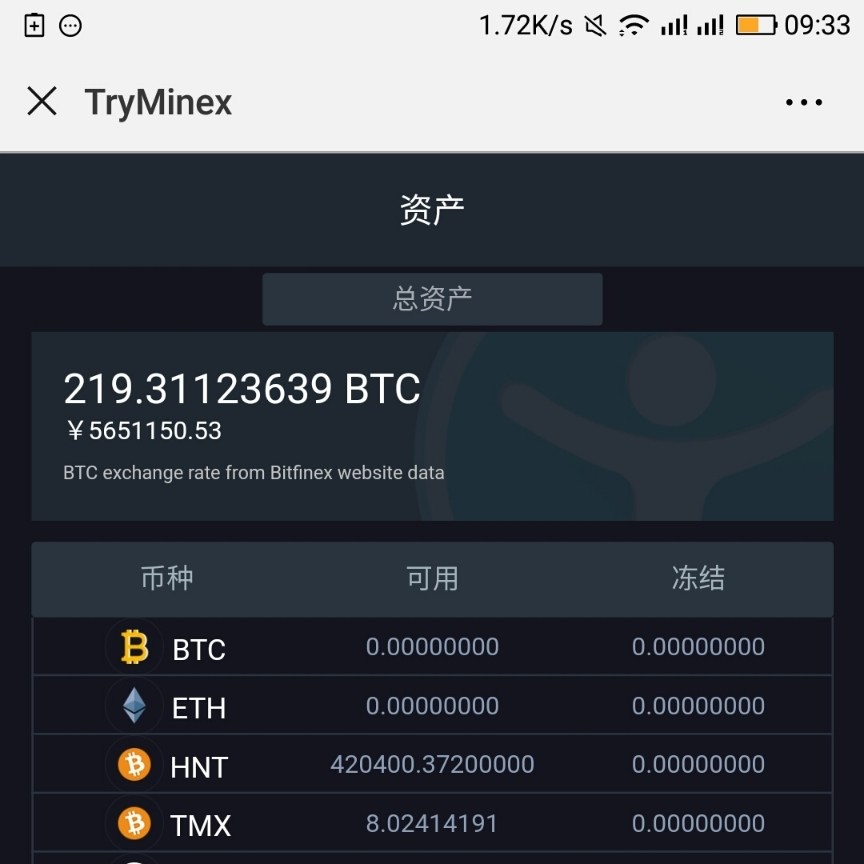
If you wanna establish a passive income and make profits 24/7, try your best to do content creating on KuCoin
here is Learn and earn page:
https://www.kucoin.com/learn-and-earn

If you wanna establish a passive income and make profits 24/7, try your best to do content creating on KuCoin
here is Learn and earn page:
https://www.kucoin.com/learn-and-earn
How about this?
Bitcoin is the world’s first cryptocurrency. It operates without central banks, powered by blockchain technology.
Key features include:Limited supply: Only 21 million coins will ever exist.Total transparency: Open ledger prevents tampering.
Peer-to-peer: Direct, fast global transfers without middlemen.It serves as inflation-resistant "digital gold"
and a high-growth innovative asset. Will it replace traditional currency?
Now most countries officially claims that embracing crypto and new generation digital assets, and bitcoin is its representative, so if I were you, I will buy and be a holder in a long run .$BTC $KCS $SIREN $XRP
$KCS What's the potential price will it hit for the H2? Since KCS is the core of ecosystem of KuCoin, we have to believe that it can be a representative of KuCoin. Let's look at the value of KuCoin, when compare to other crypto exchanges, it ranks in 10, so no denying that KCS will hit $20 then it will match its market capitalization. Do you believe me on above?
How to stake KCS for a passive income in a long run?
KCS is the native token of the KuCoin platform, and KCS Staking 2.0 is a flexible-term financial product, which transforms what was once known as the KuCoin Bonus feature into a new staking opportunity. Users can subscribe to this via KuCoin Earn to enjoy staking rewards.
What if Bitcoin runs up to $120,000 again, what will happen?
As we all known that the liquidity of crypto market is distracted by U.S stock market, instead of mention crypto market is a growth market, we call it a mature market or sunset industry due to its dying ecosystem. Originally, when Bitcoin was invented, it's brand new, but nowadays when 500 m users all select to adopt bitcoin as an alternative of fiat money in terms of the high inflation rate, we have to confront the issue of the dumping price and its increased adoption. So what's your point of view when facing up to this issue?
$BTC #Bitcoin mining difficulty drops #Anthropic AI models shut down
Stablecoins are no longer just a crypto utility; they are actively reshaping the plumbing of traditional finance (TradFi).
By anchoring digital tokens to fiat currencies like the US dollar, stablecoins bridge the gap between legacy banking and decentralized networks.
Their biggest disruption lies in cross-border payments and settlements. Traditional wire transfers rely on the fragmented, multi-day SWIFT network, racking up steep intermediary fees. Stablecoins bypass this entirely.
Running on networks like Ethereum or various Layer 2s, they settle international transactions in seconds for mere pennies, operating 24/7. For multinational businesses and global remittances, this liquidity efficiency renders traditional banking rails obsolete.
Furthermore, stablecoins are democratizing financial inclusion and banking-as-a-service. In inflation-heavy or unbanked regions, anyone with an internet connection can hold digital dollars, undermining weak local banking sectors.However, this rapid growth poses a systemic threat to macroeconomic stability and commercial banks.
Top stablecoin issuers hold hundreds of billions in US Treasury bills to back their tokens, effectively making them major players in traditional debt markets.
If a major stablecoin faces a sudden run, the forced liquidation of these Treasuries could trigger a liquidity shock in legacy financial markets.Ultimately, traditional institutions are being forced to adapt.
To avoid losing market share, central banks are accelerating Central Bank Digital Currency (CBDC) frameworks, while major Wall Street firms are launching their own tokenized deposit initiatives. Stablecoins have effectively forced TradFi into a race toward an on-chain future.
#DeFi stablecoin debate #stablecoin #CLARITY Act regulatory framework
Bitcoin is building the ultimate global store of value ("digital gold"), while Ethereum is running a decentralized operating system for the future of finance and Web3.If your priority is pure scarcity, regulatory safety, and long-term wealth preservation, Bitcoin holds the edge. If you are looking for explosive ecosystem growth, utility, and tech-driven upside, Ethereum carries a lot more raw, elastic potential.Here are the 6 core metrics and angles that break down their real-world standing today.
1. Market Size and Network DominanceBitcoin: It remains the undisputed heavy hitter of the crypto world. With a market cap hovering around $1.33 trillion, Bitcoin commands a massive 50% to 60% share of the entire crypto market. It is the asset that dictates the mood of the broader space.Ethereum: Holding the clear #2 spot, Ethereum's market cap sits at roughly $233 billion. While it’s about one-sixth the size of Bitcoin, its smaller size makes it highly elastic. During bull runs, ETH historically has the momentum to outpace BTC's percentage gains by a wide margin.
2. Monetary Design: Hard Cap vs. Ultrasound MoneyBitcoin: Built on absolute mathematical scarcity. The total supply is strictly capped at 21 million coins, and new issuance cuts in half every four years. This immutable supply curve makes BTC a premier hedge against currency debasement and inflation.Ethereum: There is no hard supply cap, but it utilizes a dynamic burn mechanism (introduced in EIP-1559). A portion of the ETH spent on network fees is permanently destroyed. When the network is highly active, more ETH is burned than issued, pushing the asset into "deflationary" territory.
3. Network Security and Consensus StyleBitcoin: Sticks to the battle-tested Proof-of-Work (PoW) model. With a network hash rate crushing over 850 EH/s, compromising Bitcoin via a 51% attack is practically impossible from both an economic and physical standpoint. It is the most secure computing network on earth.Ethereum: Fully transitioned to a Proof-of-Stake (PoS) model. Security is maintained by validators staking their ETH rather than energy-guzzling mining rigs. This cut network energy consumption by over 99.9%, making it highly corporate-friendly, though hardline decentralization purists still view PoW as the gold standard for censorship resistance.
4. Speed, Fees, and ScalabilityBitcoin: Designed for stability, not speed. The base layer maxes out at roughly 7 transactions per second (TPS), and settlements can take anywhere from 10 to 60 minutes. Base fees generally stick between $0.30 and $0.50 under normal conditions.Ethereum: Following several major infrastructure overhauls (like Fusaka and PeerDAS), Layer 2 scaling networks (like Base and Arbitrum) have absorbed the heavy lifting. While base layer fees sit around $0.10, Layer 2 transactions cost a fraction of a cent ($0.001 to $0.05). Upcoming upgrades like Glamsterdam aim to push total ecosystem capacity past 10,000 TPS.
5. Real-World Utility and Ecosystem GripBitcoin: Primarily serves as a pristine collateral asset and macro store of value. Innovations like Ordinals and BRC-20 tokens have brought some development to Bitcoin, but its main investment thesis is simply sitting securely in a vault.Ethereum: The powerhouse of decentralized applications. It dominantly anchors Decentralized Finance (DeFi), NFTs, and Real-World Asset (RWA) tokenization. Out of the $18 billion+ in real-world assets digitized on-chain today, the vast majority sits on Ethereum, driving over 2.6 million daily transactions across its ecosystem.
6. Institutional Adoption and Regulatory LandscapeBitcoin: Enjoys pristine regulatory clarity. Global watchdogs unequivocally categorize it as a "digital commodity," exempt from securities litigation. Spot ETFs have institutionalized Bitcoin, cementing it into sovereign funds, corporate balance sheets, and mainstream retirement accounts.Ethereum: While it successfully launched its own spot ETFs, its PoS staking model—where users earn yield on their locked ETH—keeps regulators on edge. It frequently operates in a legal grey area between a commodity and a security. Furthermore, Ethereum faces intense market competition from alternative fast chains like Solana for developer market share.
$BTC Bitcoin ranks 15th with $10.31 T currently, there are 6 supporting points to buy and hold:
1. Absolute Scarcity
Inflation Rate Officially Below GoldLatest Data: Following the fourth halving in April 2024, Bitcoin's circulating supply stands at roughly 19.97 million (95.12% of the total 21 million limit).Core Logic: Bitcoin's annual inflation rate has dropped to 0.823%. This marks the first time in history that any asset is scarcer than physical gold (which has a historical annual mining inflation rate of 1.5%–2%). This absolute mathematical scarcity makes its "Digital Gold" thesis stronger than ever.
2. Deep Institutional Anchoring by Wall StreetLatest Data
Total assets under management (AUM) for US Spot Bitcoin ETFs hold steady at approximately $102.6 billion, accounting for 6.48% of the total Bitcoin market cap.Core Logic: While prices have entered a healthy consolidation phase after the late-2025 peaks, major investment firms like Bernstein highlight that ETF inflows and wealth management platforms have built a highly resilient, diversified buyer base. This structural shift provides a strong market cushion that never existed in prior cycles.
3. Corporate Strategy
Treasury Adoption Reaches MainstreamLatest Data: Around 160 publicly traded companies globally have added Bitcoin to their balance sheets, accumulating over 1.105 million BTC (5.53% of total supply).Core Logic: Led by MicroStrategy, the trend has gone mainstream with entities like SpaceX ranking as the 8th largest corporate holder (18,712 BTC) and Asian firms like Boyaa Interactive aggressively buying. "Corporate-level treasury reserves" are shifting Bitcoin from a speculative tech asset to standard protection against fiat currency degradation.
4. Halving Cycle Bottom
A Golden Window for AccumulationLatest Data: Historically, Bitcoin peaks 12–18 months after a halving (which occurred in October 2025 this cycle) and bottoms out 25–30 months post-halving.Core Logic: June 2026 marks exactly 26 months since the last halving—placing the current market right in the historical macro bottom window (May–October 2026). With the on-chain "Realized Price" (average network cost basis) providing a strong mathematical safety floor around $53,000, this is a prime opportunity for long-term Dollar-Cost Averaging (DCA).
5. Explosive Global Adoption and Sovereign InterestLatest Data
The global number of cryptocurrency holders officially surpassed 1 billion in 2026.Core Logic: Driven by Metcalf’s Law (network value scales exponentially with user count), Bitcoin has evolved into an essential financial lifeline across Asia, Latin America, and Africa. Countries like Nigeria and India lead the charge, turning Bitcoin from a tradeable asset into a fundamental piece of global infrastructure.6. Institutionalized Compliance and Regulatory SecurityLatest Data: The regular approval of crypto derivatives alongside established spot ETFs has fully legitimized digital assets in major global financial centers.Core Logic: Regulators in hubs like Hong Kong have implemented rigorous licensing and compliant retail trading frameworks. This transition from "crackdowns" to "institutionalized rulebooks" has effectively removed the existential, systemic policy risks of the past, granting long-term investors peace of mind.
#Anthropic model banned by US government #Bitcoin outperforms gold prediction #AI data centers face water and energy challenges
#Bitcoin drops below $63K When to return to $120,000 agian?
I think the second half year will be a good timing for most average investors. If I were you, open a long position at 2-3x then hold on.